ICD-10 Code Y76.0: Diagnostic obstetric and gynecological devices
ICD-10 Code Y76.0: Definition and billable status ICD-10 Code Y76.0 is a valid, ...

Last Updated: Oct 23, 2026
Billable Code Specific Code
S42.265D is the billable ICD-10-CM code for nondisplaced fracture of lesser tuberosity of left humerus, subsequent encounter for fracture with routine healing.
It is a billable code, valid for FY2026 HIPAA-covered transactions. The right-side equivalent, S42.264D, sits one digit away.
Let Pabau's smart automation suggest the right codes, reduce claim denials, and keep your practice compliant—effortlessly.
Automate repetitive tasks and focus on what matters most—your patients.
Reduce coding errors and ensure compliance with the latest regulations.
Clean claims, fewer denials, and faster reimbursements.
Powerful insights and reporting to help your practice thrive.
HIPAA compliant SOC 2 certified GDPR-compliant Trusted by 4,000+ clinics worldwide

ICD-10 code S42.265D describes a nondisplaced fracture of the lesser tuberosity of the left humerus, subsequent encounter for fracture with routine healing. It is a billable code valid for FY2026 HIPAA-covered transactions.
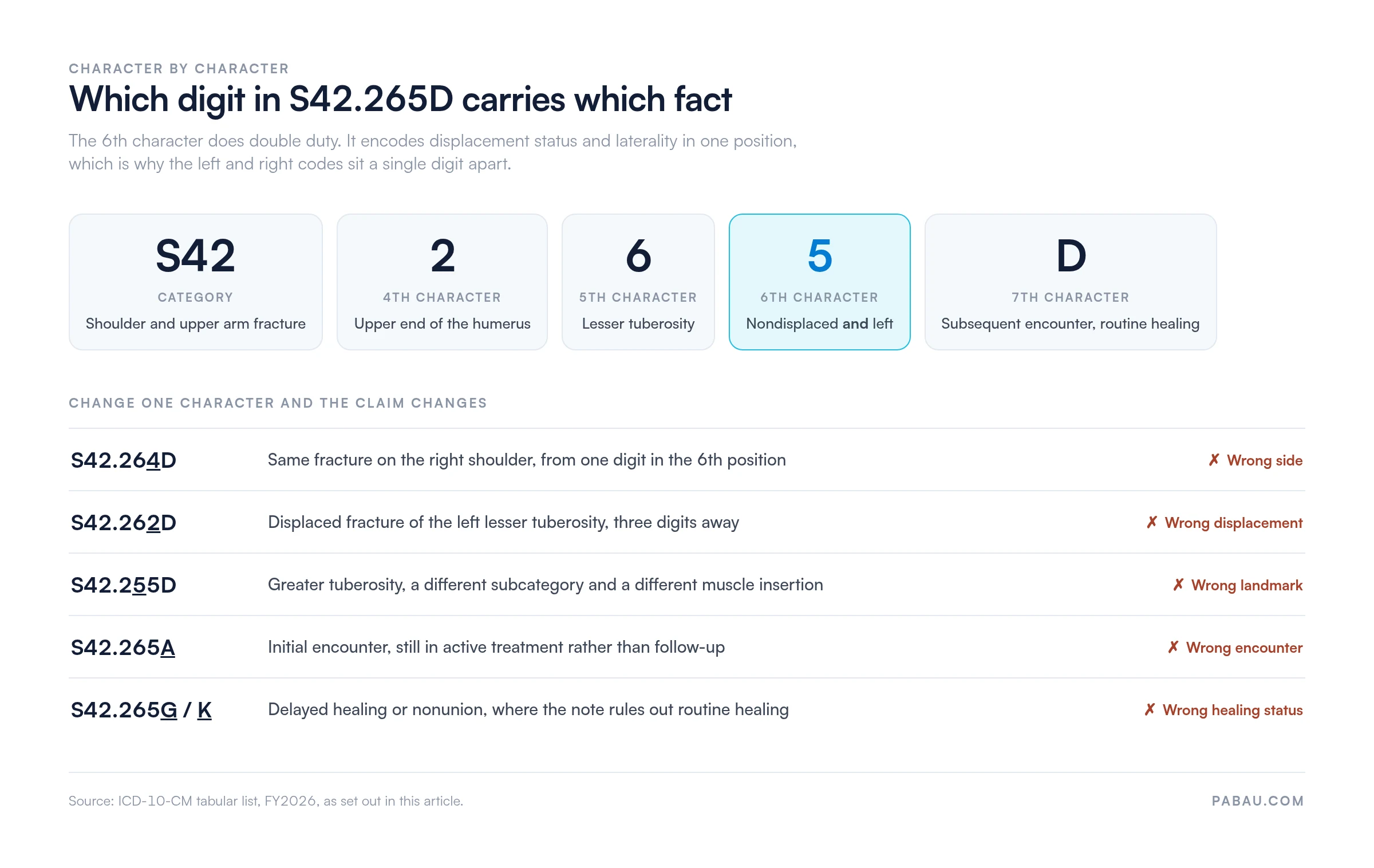
S42.264D is the right-side code, not the left one. The 6th character carries displacement status and laterality together, so a single digit is all that separates the two shoulders.
The 7th character D is correct only when the patient is in follow-up care and the fracture shows routine healing. Use A or B for the initial encounter, and G, K or P when healing is complicated.
Lesser tuberosity fractures sit in S42.26x, while greater tuberosity fractures sit in S42.25x. Crossing between the two groups is the most common source of wrong-code denials on proximal humerus claims.
Practice management software like Pabau integrates with Claim.MD, so codes such as S42.265D are validated against payer edits before submission. That cuts denials at follow-up visits.
S42.265D is a CDC/NCHS ICD-10-CM billable code valid for HIPAA-covered transactions. The table below captures the core facts coders need before selecting it.
Every character in S42.265D carries a specific clinical meaning. Misread one and you are coding a different shoulder, or a different bony landmark. Here is the breakdown:
That double-duty 6th character is where the S42.26x series trips coders up. Because displacement and side share one position, S42.264D and S42.265D differ by a single digit but describe opposite shoulders. According to CMS ICD-10-CM coding guidance, every character must be present and accurate before a code is billable for a given encounter type.
Build the code from the note in this order: site first, then displacement, then side, then encounter. Coders who start from laterality tend to land on the neighboring digit, which is exactly how a left-sided fracture ends up billed as S42.264D. Reading the 6th character as a pair, not as two separate facts, removes the guesswork.
The lesser tuberosity sits on the anterior surface of the proximal humerus, just medial to the bicipital groove. It is the insertion point for the subscapularis, the largest of the four rotator cuff muscles. Because the subscapularis generates significant internal rotation force, avulsion-type fractures here typically follow high-energy trauma or a forced external rotation event.
The greater tuberosity sits lateral and posterior to it, and takes the supraspinatus, infraspinatus and teres minor. The two landmarks are millimeters apart on a radiograph but sit in different ICD-10-CM subcategories. That is why imaging reports naming only “tuberosity fracture” are not codeable without clarification.
Clinicians treating these patients need to document the anatomical site explicitly. “Proximal humerus fracture” alone will not support S42.265D. The note must identify the lesser tuberosity by name.
Nondisplaced means the fractured fragments remain in their normal anatomical position, with no gap, overlap or angulation. Clinically, that often allows conservative management with a sling and staged rehabilitation. From a coding standpoint it is a distinct classification, and displaced fractures take their own codes.
The 7th character is where most coding errors occur in this series. The S42.265 base takes seven valid 7th characters, and knowing when each applies is what keeps follow-up claims clean.
For S42.265D specifically, “D” is correct only where the treating physician documents that healing is progressing as expected. If the note describes delayed union, switch to S42.265G. If nonunion is documented, S42.265K applies instead. That distinction is a clinical determination, not a coder’s judgment call.
The same D-to-G switch runs across the rest of the shoulder girdle. A left clavicle fracture with documented delayed union takes S42.002G, the same 7th character applied to a different bone.
For lesser tuberosity fractures of the left humerus, displacement status drives the 6th character. It also shapes treatment planning documentation and payer medical necessity review, particularly around therapy authorization.
Note that the displaced and nondisplaced codes for the same shoulder are not adjacent. S42.262D and S42.265D sit three digits apart, because ICD-10-CM lists all three displaced lateralities first and all three nondisplaced lateralities second. Any mental shortcut that treats displacement as “add one” produces the wrong code.
Per the ICD-10-CM Official Guidelines, a fracture not documented as displaced is coded as nondisplaced. Coders leaning on that default should still flag ambiguous notes for physician clarification before submitting. Payers running medical necessity edits may request the underlying imaging report to support a displacement determination.
S42.265D sits inside the S42.26x sibling group, which covers lesser tuberosity fractures across both lateralities and both displacement statuses. Coders in orthopedic and sports medicine practices move through this set constantly. The AAPC ICD-10-CM code lookup carries the full S42.2 subcategory tree for reference.
Unspecified laterality codes such as S42.266D and S42.263D are appropriate only when the documentation genuinely does not state a side. In practice, treating physicians almost always specify laterality, so these codes should be rare. Payers and revenue cycle teams increasingly flag unspecified laterality for additional documentation requests.
Upper end fractures at a site ICD-10-CM does not name, such as the anatomical neck, code to the S42.29 other-fracture group. The right-side nondisplaced version with documented delayed union is code S42.294G.
The greater tuberosity has its own subcategory, S42.25, with the same six-code pattern. The codes look almost identical to the lesser tuberosity set, which is why they get swapped so often on proximal humerus claims.
Read down the grid and the trap is obvious. S42.255 is a nondisplaced left greater tuberosity fracture, and S42.265 is a nondisplaced left lesser tuberosity fracture. One digit in the fifth position is the only difference, and each of these bases still needs its 7th character before it is billable. The same one-digit logic runs through every position in the code.
Clean coding of S42.265D depends on the clinical note carrying four specific elements. Missing any one of them forces a query back to the provider before the claim can go out. Billing compliance audits regularly cite incomplete fracture documentation as a root cause of undercoding and claim delays.
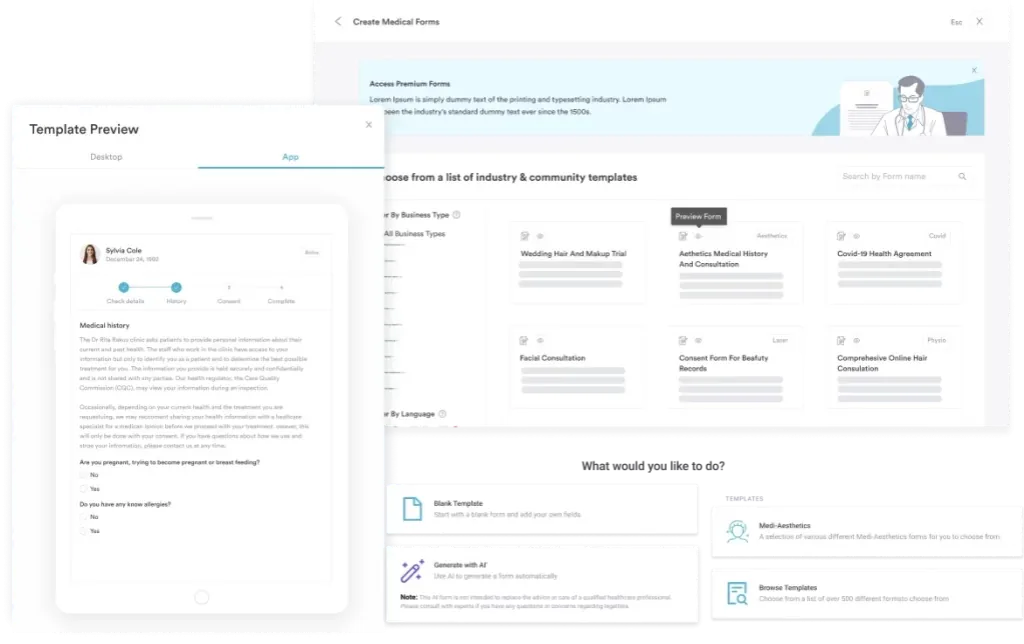
Many orthopedic and physical therapy practices use digital forms and structured note templates to capture these elements at every visit. That front-loads the work, so incomplete documentation is caught before the coder ever opens the chart.
Encounter type is one of the most misunderstood concepts in fracture coding. The ICD-10-CM Official Guidelines are clear on this point. “Initial” and “subsequent” describe the type of care being delivered, not how many times the patient has been seen.
A practical example. A patient sustains a nondisplaced left lesser tuberosity fracture in a fall, and the emergency physician renders initial care as S42.265A.
The orthopedic surgeon fits a sling and reviews the patient at two, six and twelve weeks. Imaging shows expected callus formation each time, so all three follow-ups are coded S42.265D. Six months later the patient returns with shoulder stiffness traced to that fracture. That is S42.265S, sequenced after the code for the stiffness itself.
Check your practice’s encounter workflow. If an orthopedic surgeon takes over from the ED on day two, that visit is still an initial encounter. The surgeon is initiating active treatment, so the 7th character remains A for that encounter. The switch to D happens when active treatment concludes and follow-up monitoring begins, not when the patient changes provider.
CPT and ICD-10-CM do not line up at this site. CPT names the surgical neck and the greater tuberosity in its shoulder fracture care codes, but it carries no code specific to the lesser tuberosity. So the diagnosis is highly specific while the procedure code is not.
The global period is the detail that decides whether a follow-up visit is paid. Fracture care codes such as 23600 carry a 90-day global period, so routine follow-up inside that window is bundled into the original payment. In that scenario S42.265D still appears on the claim, but attached to 99024 rather than a separately paid office visit.
Practices that never billed a fracture care code face a different picture. There the follow-up visit is a standard established patient E/M, supported by S42.265D and the imaging that documents routine healing. Knowing which of the two models applies before the visit is what prevents a bundling denial later.
There is no clean single equivalent for S42.265D in the legacy system. ICD-9-CM named the greater tuberosity but never the lesser one, and it had no laterality at all. Record conversions and historical claim reviews still reach for these codes, so the closest stand-ins are worth knowing.
The mismatch runs in one direction only. ICD-9-CM carried a named greater tuberosity code, so a legacy chart recording 812.03 tells you the site, while one recording 812.09 does not.
Use these mappings for record conversion and payer queries only. ICD-9-CM codes are not valid for FY2026 billing.
For inpatient coders, S42.265D groups to the aftercare DRGs rather than the acute fracture ones. That reflects the nature of the encounter, which is continued management of a fracture already treated.
Which of the three applies depends on the secondary diagnoses on the claim. Osteoporosis, diabetes and other comorbidities can move a case up a tier. A surgical procedure at the same encounter changes the picture again, because the procedure code drives grouping ahead of the diagnosis.
Grouping logic shifts with each IPPS final rule. Confirm the current assignment against the CMS ICD-10 resources and your Medicare Administrative Contractor before relying on it.
S42.265D is billable for HIPAA-covered transactions and is recognized by Medicare, Medicaid and most commercial payers. It covers subsequent encounter visits for a nondisplaced lesser tuberosity fracture of the left humerus. Several payer-specific considerations still affect clean claim submission.
A clearinghouse integration can validate ICD-10 codes against real-time payer edits before a claim leaves the building. That matters most for fracture codes. The 7th character and displacement status interact with payer policy in ways that are hard to track by hand. The Claim.MD integration reaches thousands of US payers and supports CMS-1500 claim submission.
Five errors account for the majority of rejected or down-coded claims involving S42.265D. Each one is preventable with the right documentation habits and a pre-submission review step.
Practices with ongoing denial patterns on S42.265D and its siblings should work through the denial codes behind each rejection. That maps which payer edit fired, which finds the root cause far faster than reading raw EOBs.
Run a monthly audit of every S42.2xx claim that carries the initial-encounter character A in the 7th position. Any such claim dated more than 30 days after the injury deserves a documentation review. Most payers assume active treatment concludes within about 30 days for conservative fracture management, so a late initial-encounter character can trigger a medical necessity query.
In most orthopedic and physical therapy practices, the fracture code is chosen once and then copied forward. The 7th character never changes as the patient heals, and laterality is inherited from an old note. Nobody notices until the remittance advice arrives weeks later.
Pabau, practice management software built for busy clinical teams, closes that loop earlier. Structured clinical notes capture site, side, displacement and healing status at each visit. The coder then works from a complete chart rather than a query list. Cleaner claims management then checks the code against live payer edits before submission.
When a claim does come back, the remittance advice flows into the same system as an ERA/835 file. That means every S42.265D denial sits in one place. You can see whether the pattern is a 7th character issue or a laterality issue. From there you fix the workflow, rather than reworking claims one at a time.
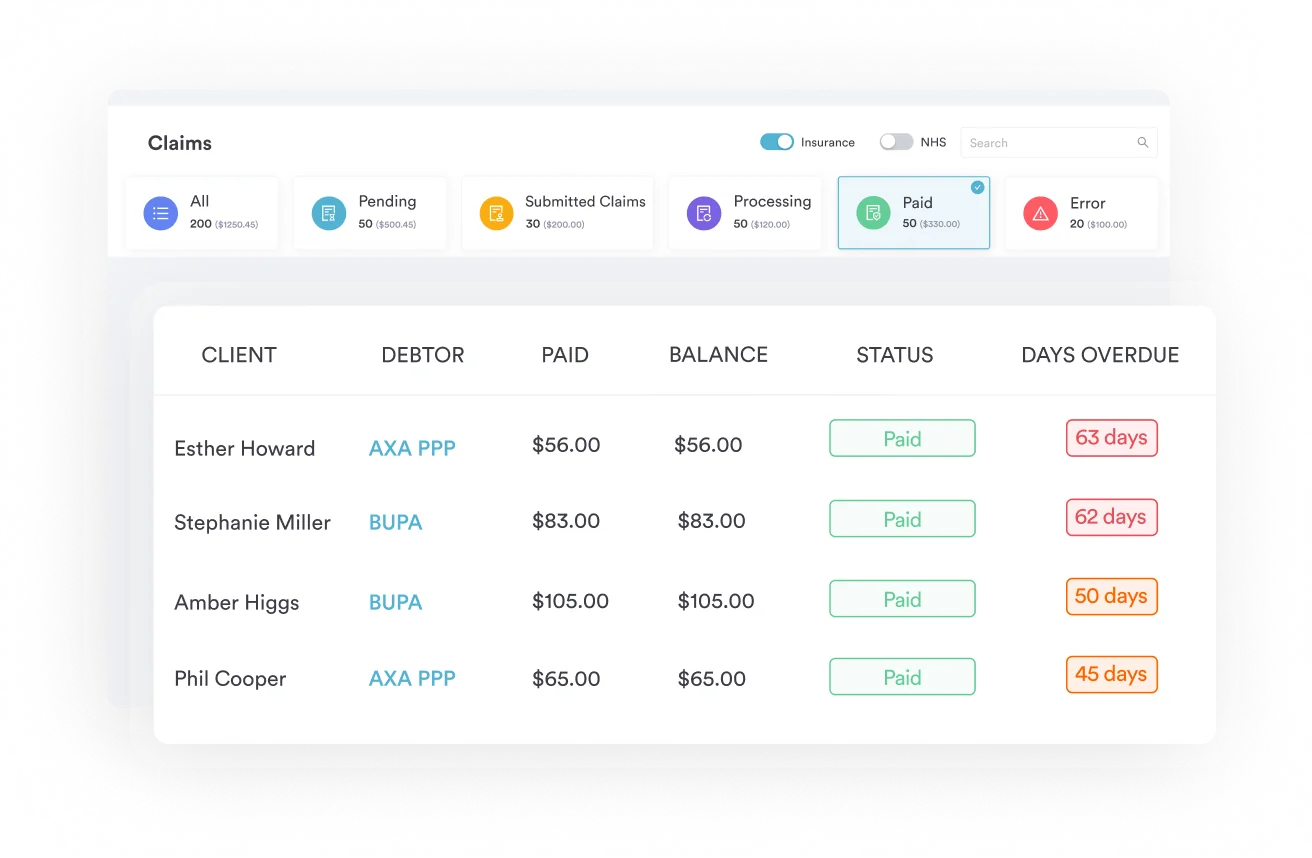

Pabau integrates with Claim.MD to validate ICD-10 codes against payer edits before claims go out. See how orthopedic and physical therapy practices use Pabau to catch 7th character and laterality errors on fracture follow-up visits.

ICD-10 code S42.265D needs four documented elements. Those are left laterality, the lesser tuberosity as the fracture site, nondisplaced status, and a follow-up encounter with routine healing. Two of those four live in a single digit, the 6th character, which is why S42.264D and S42.265D are so easily swapped. One is the right shoulder, the other the left.
Get that digit and the 7th character right, and this code rarely causes trouble. Get either wrong and the rework compounds quickly across a busy orthopedic practice.
Pabau’s Claim.MD integration validates S42.265D and thousands of other ICD-10 codes against live payer edits before submission. To see how it works in your own workflow, book a demo.

Following the same fracture into nonunion? ICD-10 code S42.302K covers a left humerus nonunion, which is the case where 7th character K replaces D.
Managing billing compliance across your practice? Medical billing compliance outlines the documentation and submission standards that reduce audit risk and keep claims clean.
Want to understand the clearinghouse process end to end? 837 file submission explains how electronic claims move from your practice management system to the payer through an 837P transaction.
Tracing where a coding error costs the practice cash? Revenue cycle management maps every step between the encounter and the payment, so you can see where a claim stalls.
Choosing a clearinghouse for your practice? Claim.MD clearinghouse walks through how claims are scrubbed, submitted and then tracked through to remittance.
S42.265D is a billable ICD-10-CM code for a nondisplaced fracture of the lesser tuberosity of the left humerus, subsequent encounter for fracture with routine healing. S42 covers fracture of shoulder and upper arm, and the 4th character 2 narrows it to the upper end of the humerus. The 5th character 6 names the lesser tuberosity. The 6th character 5 carries two facts at once, nondisplaced and left. The 7th character D marks a subsequent encounter with routine healing.
S42.264D is the right humerus. It is a nondisplaced fracture of the lesser tuberosity of the right humerus, subsequent encounter with routine healing. The left-sided equivalent is S42.265D. This pair is the most commonly confused in the series, because the 6th character carries displacement status and laterality in the same position.
Yes. S42.265D is a specific, billable ICD-10-CM code valid for HIPAA-covered transactions under the current code set. It can be submitted on outpatient, emergency and inpatient claims wherever it accurately reflects the diagnosis and the encounter type.
The 7th character D designates a subsequent encounter for a fracture with routine healing. It applies once the patient has received definitive initial treatment and is in the recovery and monitoring phase, with healing progressing as clinically expected. It differs from G for delayed healing, K for nonunion, P for malunion, and S for sequela.
S42.262D is the displaced fracture of the lesser tuberosity of the left humerus, subsequent encounter with routine healing. The nondisplaced equivalent is S42.265D. The two are not adjacent, because ICD-10-CM lists all three displaced lateralities before all three nondisplaced ones. Under the Official Guidelines, a fracture not documented as displaced is coded as nondisplaced.
They sit in different subcategories. Lesser tuberosity fractures are S42.26x and greater tuberosity fractures are S42.25x, so the difference shows up in the 5th character. A nondisplaced left greater tuberosity fracture is S42.255, while a nondisplaced left lesser tuberosity fracture is S42.265. Because the codes look so similar, the clinical note must name the tuberosity explicitly.
Use an initial encounter character while the patient is actively receiving treatment for the fracture, no matter how many visits have happened. That is A for a closed fracture and B for an open one. Switch to a subsequent encounter character, D, G, K or P, once definitive treatment is complete and the patient enters the healing and monitoring phase. The transition point is clinical, not calendar-based.
Four elements must appear in the clinical note. It must confirm laterality as left and identify the fracture site as the lesser tuberosity. It must state displacement status as nondisplaced, or at least not indicate displacement. It must also document the encounter as a follow-up visit with routine healing progress. Missing any element calls for a provider query before the code is submitted.
There is no CPT code specific to the lesser tuberosity. CPT names only the surgical neck and the greater tuberosity in its shoulder fracture care codes. Practices commonly report closed treatment with 23600, or use the unlisted shoulder procedure code 23929 where a payer will not accept it. At a routine follow-up, S42.265D usually pairs with an established patient E/M code. If the visit falls inside the 90-day global period of a fracture care code, it pairs with 99024 instead.