ICD-10 code S61.201A: Open wound of left index finger without nail damage
ICD-10 code S61.201A covers a left index finger wound of unstated type ICD-10 co...

Last Updated: Oct 16, 2026
Billable Code Specific Code
S21.252A is the billable ICD-10-CM code for open bite of left back wall of thorax without penetration into thoracic cavity, initial encounter.
Getting this code right hinges on two details the clinical note has to spell out: which side the bite is on, and whether the wound reaches into the chest cavity. Here's how S21.252A fits in the S21 hierarchy, which seventh character applies at each stage of treatment, and what the documentation needs to hold up under a payer audit. Benefit verification tells the practice what the plan covers, which is a separate question from whether the patient is active.
Let Pabau's smart automation suggest the right codes, reduce claim denials, and keep your practice compliant—effortlessly.
Automate repetitive tasks and focus on what matters most—your patients.
Reduce coding errors and ensure compliance with the latest regulations.
Clean claims, fewer denials, and faster reimbursements.
Powerful insights and reporting to help your practice thrive.
HIPAA compliant SOC 2 certified GDPR-compliant Trusted by 4,000+ clinics worldwide

ICD-10 code S21.252A describes an open bite of the left back wall of the thorax without penetration into the thoracic cavity, initial encounter.
S21.252A is a billable, specific ICD-10-CM code valid for the 2024, 2025, and 2026 fiscal years.
The seventh character ‘A’ is required for initial encounters, while ‘D’ marks subsequent encounters and ‘S’ marks sequela.
Documentation must specify wound type (open bite), laterality (left), wall location (posterior), penetration status, and encounter type.
ICD-10 code S21.252A is a billable, specific ICD-10-CM (International Classification of Diseases, 10th Revision, Clinical Modification) diagnosis code. It describes an open bite of the left back wall of the thorax without penetration into the thoracic cavity, coded during the initial encounter for active treatment.
The code became effective on October 1, 2025 for the FY2026 edition and remains valid across the 2024, 2025, and 2026 ICD-10-CM editions.
Coders and clinicians can verify the current validity of this code using the CDC/NCHS ICD-10-CM tool, which is maintained by the Centers for Disease Control and Prevention as the official U.S. reference.
The table below summarizes the essential coding attributes for S21.252A at a glance.
Each element of the S21.252A description carries a distinct clinical meaning. Misreading any one of them produces the wrong code.
Laterality is a frequent source of errors. Coding left when the bite is on the right (or failing to document which side) triggers a claim edit. The AAPC Codify ICD-10-CM lookup allows coders to compare sibling codes side by side to confirm the correct laterality selection before submission.
For all S-chapter injury codes, the seventh character encodes the encounter type. Getting this wrong is a predictable denial trigger.
A common misconception: “initial encounter” does not mean the very first visit in the entire care episode. A patient transferred from an ED to a trauma center for continued active wound management is still coded with A. Once the wound is healing and no active intervention is occurring, switch to D.
Understanding where S21.252A sits in the broader S-chapter structure helps coders navigate parent codes and related categories. Trauma coders working across multiple diagnostic code families.
S21.252A has clearly defined siblings based on laterality and encounter type. Selecting the right sibling code depends entirely on what the clinical note specifies. The ICD List provides a free sibling code browser that coders can use to verify all variants within the S21.25 family.
Note: S21.259A (unspecified laterality) should be a last resort. Coders should query the provider to confirm left vs. right rather than default to “unspecified” when the note is unclear.
Accurate documentation is the foundation of a defensible S21.252A claim. Using structured medical forms at your healthcare practice helps ensure every required element is captured at the point of care. The clinical record must include all five of the following.
Practices using digital intake forms can pre-structure clinical notes to capture these fields systematically, reducing the risk of an incomplete record at the time of coding. Maintaining structured client records across encounters also simplifies the transition from initial encounter (A) to subsequent encounter (D) coding.

Review your documentation before submitting a claim for S21.252A: confirm five elements are present in the note. Wound type (open bite), laterality (left), wall location (posterior), penetration status (none), and encounter type (active treatment). Missing any one of these five elements creates an audit vulnerability, even if the claim initially pays.
The ICD-10-CM Official Guidelines for Coding and Reporting, maintained jointly by the Centers for Medicare and Medicaid Services (CMS) and the CDC, govern how S21 codes are applied. Several recurring errors affect claim accuracy for this code family.
Coders working in emergency medicine and trauma settings can see the same specificity logic play out in procedure coding too.
Adjacent tissue transfer closure is stratified by anatomic site group, so a thorax defect does not use the scalp, arm and leg codes. When the same bite attack also opens an arm or leg wound, that defect is reported separately under CPT code 14020.
For practices managing clinical documentation across specialties, physical therapy EMR and sports medicine software workflows offer a parallel example of how encounter-type tracking reduces coding errors.
Clinicians may document this injury using various alternative terms. Each of the following maps to S21.252A in the ICD-10-CM index and is acceptable as a clinical note descriptor.
When a provider’s clinical note uses any of these phrasings, the coder can trace the index entry to S21.252A without needing to query for different terminology, provided the five core documentation elements (wound type, laterality, wall location, penetration status, encounter type) are all present.
Claim denials tied to incorrect ICD-10 code selection cost practices significant time in appeals and rework. Integrated practice management software reduces this exposure by connecting clinical documentation to billing workflows directly at the point of care.
Practice management software like Pabau links diagnosis codes directly to patient encounters within the same platform used for scheduling, charting, and communication.
This reduces the transcription lag that often introduces errors when coders work from incomplete printed notes.
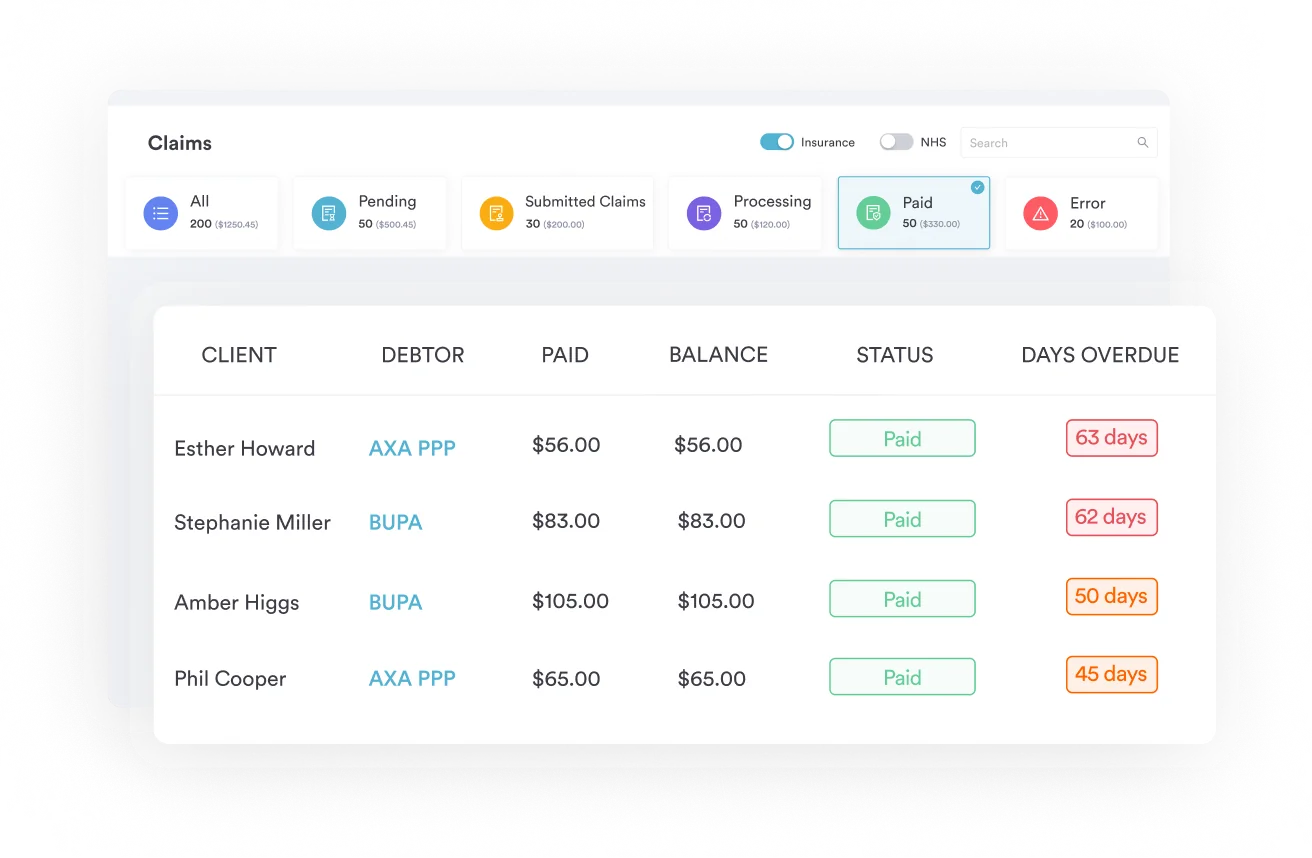
For practices managing high volumes of injury presentations.

Pabau links diagnosis codes to the patient encounter at the point of care, so the wound type, laterality, and encounter-phase details a coder needs are already in the record instead of chased down after a denial.

S21.252A denials trace back to the clinical note far more often than to the coder’s judgment call. Once the record states which side the bite is on and whether it reached the chest cavity, the code follows automatically — the harder part is capturing that detail before the chart reaches billing.
The seventh character deserves the same attention as the anatomy. Coding A on a wound that’s already in its healing phase carries the same denial risk as mixing up left and right.
Practices that build both checks into their intake and charting workflow spend less time on appeals and more on patient care. Book a demo to see how Pabau helps reduce S21.252A claim denials by carrying accurate diagnostic detail from the clinical note straight through to the claim.

Coding a laceration repair instead of a bite wound? 12015 covers billing and documentation for simple face wound repairs.
Working an open fracture debridement claim? 11010 walks through the documentation needed for skin and subcutaneous tissue debridement.
Billing supplies alongside a wound care claim? A4558 covers conductive gel coverage criteria and documentation requirements.
Billing a diaphragmatic hernia repair? Anesthesia for diaphragmatic hernia repair covers billing for the transabdominal repair of a diaphragmatic hernia procedure.
ICD-10 code S21.252A is a billable diagnosis code that describes an open bite of the left back wall of the thorax without penetration into the thoracic cavity, coded during an initial encounter for active treatment. Each part of the code encodes a specific clinical element: the wound mechanism (open bite), the anatomical site (left posterior thoracic wall), the depth (non-penetrating), and the encounter phase (initial/active treatment).
Yes, S21.252A is a billable, specific ICD-10-CM code valid for fiscal years 2024, 2025, and 2026. It can be used as a standalone diagnosis code for reimbursement purposes without requiring a more specific child code.
Use S21.252A during the initial encounter, when the patient is receiving active treatment for the bite wound. Switch to S21.252D for follow-up visits during the healing phase. Use S21.252S only when documenting late effects or complications (such as scarring) that arise after the wound has healed.
Five elements must appear in the clinical note: the wound type must be specified as an open bite (not laceration or puncture), laterality must be stated as left, the wall location must be identified as back or posterior, the provider must document no penetration into the thoracic cavity, and the encounter must be identified as an initial/active treatment visit.
S21.252A codes an open bite of the left back wall of the thorax; S21.251A codes the same injury on the right side. Laterality is the only distinguishing factor. If the clinical note does not specify left or right, S21.259A (unspecified) applies, though coders should query the provider to clarify before defaulting to unspecified.
The closest sibling codes are S21.251A (right side, initial encounter), S21.259A (unspecified laterality, initial encounter), S21.252D (left side, subsequent encounter), and S21.252S (left side, sequela). All share the same wound type and penetration status but differ in laterality or encounter type.