ICD-10 code S61.201A: Open wound of left index finger without nail damage
ICD-10 code S61.201A covers a left index finger wound of unstated type ICD-10 co...

Last Updated: Oct 16, 2026
Billable Code Specific Code
S12.191B is the billable ICD-10-CM code for other nondisplaced fracture of second cervical vertebra, initial encounter for open fracture.
Let Pabau's smart automation suggest the right codes, reduce claim denials, and keep your practice compliant—effortlessly.
Automate repetitive tasks and focus on what matters most—your patients.
Reduce coding errors and ensure compliance with the latest regulations.
Clean claims, fewer denials, and faster reimbursements.
Powerful insights and reporting to help your practice thrive.
HIPAA compliant SOC 2 certified GDPR-compliant Trusted by 4,000+ clinics worldwide

S12.191B is a billable ICD-10-CM code for other nondisplaced fracture of the second cervical vertebra (C2/axis), initial encounter for open fracture, effective FY2026 (October 1, 2025).
The 7th character B specifies open fracture at initial encounter. Use A for closed fracture and D for subsequent encounter with routine healing.
Common documentation errors include using S12.191B for follow-up visits or for closed fractures. The wrong suffix triggers claim denials.
Pabau’s claims management software helps orthopedic and spinal care practices apply the correct 7th character suffix and reduce fracture code denials.
S12.191B is a billable, specific ICD-10-CM code valid for FY2026. It became effective October 1, 2025 under the 2026 edition of ICD-10-CM, as confirmed by CDC/NCHS ICD-10-CM tool. “Billable” means the code may be submitted for reimbursement without further specificity.
The full code hierarchy is S00-T88 (Injury, poisoning, and certain other consequences of external causes) > S10-S19 (Injuries to the neck) > S12 (Fracture of cervical vertebra and other parts of neck) > S12.1 (Fracture of second cervical vertebra) > S12.191 (Other nondisplaced fracture of second cervical vertebra) > S12.191B (initial encounter, open fracture).
S12.191B applies precisely when the fracture is nondisplaced, located at C2, and the skin overlying the injury is broken — an open fracture — at the time of the initial clinical encounter.
Other fracture sites use their own severity systems.
Each component of this diagnosis code has a precise clinical meaning. Breaking it down prevents the most common selection errors.
This distinction is the most common documentation failure point for S12.191B.
The 7th character is not optional. ICD-10-CM guidelines require a complete code, and S12.191 requires a 7th character to be valid for billing. The character defines the encounter type, not the fracture type. All six valid 7th characters for S12.191 are shown below.
The 7th character applies to the encounter, not the fracture itself. A patient with S12.191B at the trauma center will have S12.191D, G, or K coded at all follow-up visits, depending on healing status. The same encounter-based logic applies to other fracture codes.
Our roundup of alternatives to Jane App looks at platforms that pair injury coding with rehab treatment plans.
The single character separating S12.191A and S12.191B represents a significant clinical and reimbursement difference. Both codes apply at the initial encounter for a nondisplaced C2 fracture. The distinction is entirely about fracture wound status.
Payers audit open fracture claims carefully because they affect DRG assignment and reimbursement weight. The operative or emergency department note must explicitly describe the wound character and its communication with the fracture site to support S12.191B. Lack of this documentation is the leading reason for open fracture code denials.
S12.191D applies once active, definitive treatment has ended and the patient enters routine healing follow-up. This transition is where coders make the most frequent errors with the S12.191 family.
The CMS ICD-10-CM coding guidelines govern the correct application of S12.191B. Following these rules prevents common payer denials and audit findings for trauma and orthopedic departments handling spinal injuries.
Using compliance management tools within practice management systems helps enforce these coding rules at the point of documentation, reducing downstream claim rejections. Good medical documentation workflows that capture wound status at intake are the single most effective prevention against S12.191B denials.
Document open fracture status explicitly in the chief complaint, physical examination, and procedure note. Phrases like ‘open wound overlying fracture site’ or ‘wound probing to bone/fracture’ provide the clearest support for S12.191B. Vague language such as ‘laceration near fracture’ is routinely insufficient for payer review.
S12.191B sits within a large family of second cervical vertebra and cervical spine codes. Knowing the sibling codes prevents selection errors when a more specific code applies. The AAPC ICD-10-CM code lookup provides the full S12 hierarchy for reference.
Coders handling spinal trauma cases should also be aware of the S14 category (injury of nerves and spinal cord at neck level), which may be coded alongside S12.191B when neurological deficits are documented.
Similar polytrauma pairings include S13.4 for a co-occurring ligament sprain or S06.6X0A for an associated traumatic brain injury. These are separate codes that do not replace the fracture code.
Clinicians and coders may encounter several clinical terms that map to ICD-10 Code S12.191B. Recognizing these synonyms prevents missed code selection when the operative or emergency note uses alternative language.
Note that classic C2 fracture subtypes, such as odontoid (dens) fractures or traumatic spondylolisthesis of the axis (hangman fractures), have their own specific ICD-10-CM codes under S12.10-S12.13. S12.191B is reserved for nondisplaced C2 fractures that do not meet the criteria for those more specific types.
Submitting S12.191B accurately is only part of the billing challenge. Payer requirements, DRG assignment, and documentation standards all affect whether the claim pays at the expected rate.
Applying ICD-10 Code S12.191B correctly depends on documentation quality as much as coder knowledge. The fracture type, wound status, and encounter stage must all be captured clearly in the clinical record before the coding team sees the note. Missing any one of these elements triggers a denial.
Structured intake templates prompt clinicians to document wound status and fracture characteristics at the point of care.
Encounter-type tracking flags when a patient moves from initial to subsequent encounter, reducing the risk of billing S12.191B past the active treatment period. Pabau’s clinical documentation tools attach imaging reports and operative notes to the encounter record, giving coders the evidence they need to select the correct 7th character without relying on memory or chart reconstruction. A coding error surfaces as a cash flow problem weeks later, which is why the healthcare revenue cycle is measured end to end.
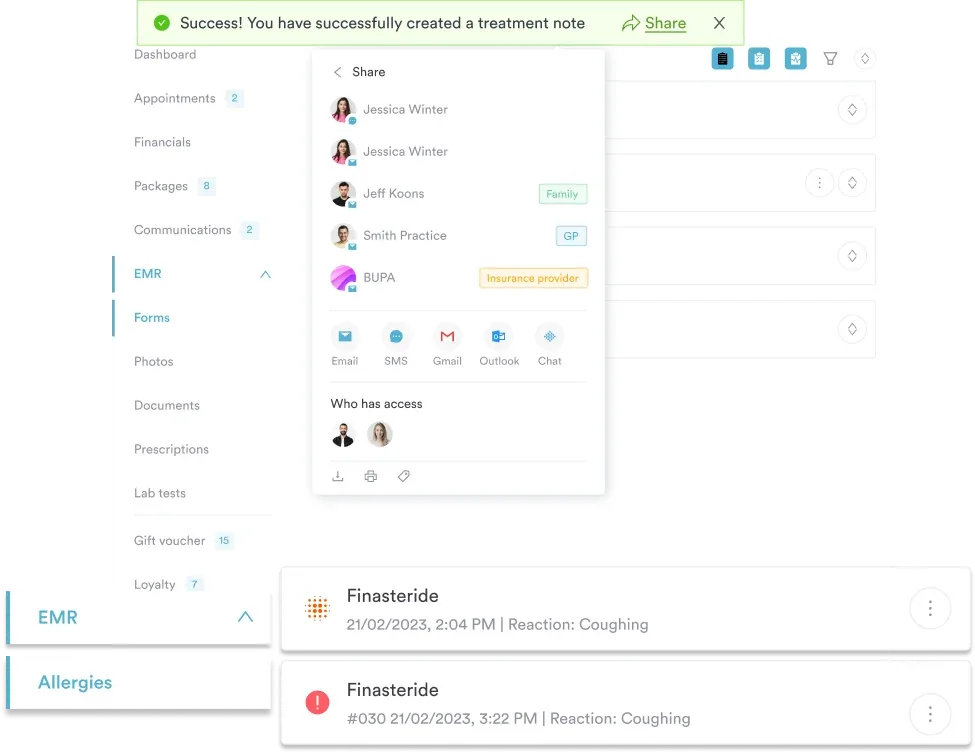
Practices handling high volumes of trauma and spinal injury cases particularly benefit from structured documentation workflows like these. The cost of a single open fracture DRG downgrade from a coding error typically exceeds what Pabau costs to help prevent it.
Run a quarterly audit of claims submitted with S12.191B. Pull the corresponding clinical notes and check for three items: explicit open wound description, confirmation that the encounter was active treatment (not follow-up), and the presence of imaging or operative report supporting nondisplaced fracture status. Claims missing any of these elements should be flagged for documentation improvement.

Pabau helps orthopedic and spinal care practices capture the right clinical details at intake and during treatment, so the correct ICD-10 code is supported by the note every time. See how it works for your practice.

Open fractures of the second cervical vertebra require precise coding at every encounter stage. ICD-10 Code S12.191B is the correct billable code for the initial encounter when the fracture is nondisplaced and the overlying skin is broken.
The 7th character changes with every subsequent visit, and documentation must support each encounter type selection. Getting this right protects reimbursement and ensures the clinical record reflects the true acuity of the injury.
Pabau helps spinal and orthopedic practices build the documentation habits that prevent S12.191B denials before claims are submitted. To see how Pabau supports your coding and documentation workflows, book a demo.

Billing anesthesia for an esophageal procedure? Anesthesia for esophageal procedures covers the billing code for procedures on the esophagus, from diagnostic endoscopy to open esophagectomy.
Coding a closed chest procedure instead? Anesthesia for closed chest procedures explains base-unit counts and modifier rules for closed chest anesthesia billing.
Coding a different fracture site? Mandible fracture coding guide walks through the same encounter-based 7th character logic for a fracture of the jaw.
S12.191B is a billable ICD-10-CM code for other nondisplaced fracture of the second cervical vertebra (C2/axis), documented at the initial encounter for an open fracture. It is valid for FY2026, effective October 1, 2025, and is used to support reimbursement for trauma and emergency department visits where the fracture site communicates with an open wound.
Yes. S12.191B is a billable, specific ICD-10-CM code that may be submitted for reimbursement without additional specificity. Billable status is confirmed for FY2026 by the CDC/NCHS ICD-10-CM official tabular list. Billable status should be verified annually, as code validity may change with each October 1 update.
S12.191A applies to an initial encounter for a closed fracture of the second cervical vertebra, where the overlying skin remains intact. S12.191B applies when the fracture is open: there is a wound that communicates with the fracture site, significantly increasing infection risk and typically requiring surgical debridement. The clinical note must explicitly describe the open wound to support S12.191B over S12.191A.
The 7th character B specifies that the encounter is an initial encounter for an open fracture. In the S12.191 family, B indicates the patient is receiving active treatment for a C2 fracture with an open wound. Other 7th characters for S12.191 include A (initial, closed), D (subsequent, routine healing), G (subsequent, delayed healing), K (subsequent, nonunion), and S (sequela).
Use S12.191B during active treatment at the initial encounter, including emergency department visits, admission, and definitive surgical or wound management procedures. Switch to S12.191D for all subsequent follow-up visits where the patient is in routine healing. Continuing to use S12.191B at follow-up visits is one of the most common and audited coding errors for this code family.
ICD-10 Code S12.191B became effective October 1, 2025 under the FY2026 edition of ICD-10-CM. The ICD-10-CM fiscal year runs from October 1 through September 30. Codes should be verified against the current edition annually, as validity may change.