

ICD-10 Code S42.444P: Medial epicondyle fracture, right humerus
ICD-10 Code S42.444P: full descriptor and code validity ICD-10 Code S42.444P car...

Last Updated: Oct 13, 2026
Billable Code Specific Code
R81 is the billable ICD-10-CM code for glycosuria.
Let Pabau's smart automation suggest the right codes, reduce claim denials, and keep your practice compliant—effortlessly.
Automate repetitive tasks and focus on what matters most—your patients.
Reduce coding errors and ensure compliance with the latest regulations.
Clean claims, fewer denials, and faster reimbursements.
Powerful insights and reporting to help your practice thrive.
HIPAA compliant SOC 2 certified GDPR-compliant Trusted by 4,000+ clinics worldwide

ICD-10 Code R81 (Glycosuria) is a billable ICD-10-CM diagnosis code effective October 1, 2025 (FY2026)
R81 applies only when glycosuria is documented without a confirmed underlying diagnosis such as diabetes mellitus
Using R81 when a diabetes diagnosis (E10-E13) is established is one of the most common coding errors for this code
Practice management software like Pabau lets clinicians search and attach ICD-10 codes including R81 directly within clinical notes, so the billing team gets a complete record without re-entering data
ICD-10 Code R81 is the ICD-10-CM diagnosis code for glycosuria: the presence of glucose in urine detected on examination, without a confirmed underlying diagnosis. It is a billable and specific code, valid for use on claims submitted for encounters occurring on or after October 1, 2025 (the FY2026 edition effective date). Per the ICD-10-CM Tabular List, maintained by NCHS, R81 carries an Excludes1 note for renal glycosuria (E74.818), meaning the two codes are mutually exclusive and must never be reported together. Its parent category heading, “without diagnosis,” signals the core rule: assign R81 only when no definitive diagnosis, including the specific renal-tubular defect that defines renal glycosuria, has been established to explain the glucose finding.
The table below summarizes the key administrative facts coders need at a glance before submitting a claim using this code.
Because R81 sits in Chapter 18 among symptom and sign codes, the ICD-10-CM Official Guidelines apply a specific rule: do not assign a symptom code when a definitive diagnosis that explains the symptom has been established. This single rule drives most of the coding decisions covered in this guide. Practice management software like Pabau lets clinicians attach R81 directly within the clinical note, so it reaches the billing record without a manual transfer step between documentation and the billing team.

Glycosuria is the abnormal presence of glucose in urine. Under normal physiological conditions, the kidneys reabsorb virtually all filtered glucose, so a routine urinalysis should show none. When blood glucose exceeds the renal threshold (typically around 180 mg/dL in most adults), glucose spills into the urine. A dipstick urinalysis during a routine check or acute workup most commonly reveals the finding.
The clinical causes split into two broad categories, and the category matters for coding. Accurate documentation of which cause applies determines whether R81 is appropriate at all.
The CDC/NCHS ICD-10-CM tabular list confirms glucosuria as the applicable-to term for R81 and carries an explicit Excludes1 note directing renal glycosuria to E74.818, so the two presentations are coded separately even when no other diagnosis has been documented.
R81 is one of three sibling codes in the R80-R82 block. Understanding where R81 sits in the hierarchy helps coders navigate adjacent codes correctly, particularly when multiple abnormal urine findings appear on the same encounter. This is especially relevant for primary care, endocrinology, nephrology.
Three documentation elements must appear in the clinical record before a coder can safely assign R81. Missing any one of them leaves the code unsupported and exposes the encounter to a medical necessity denial or a compliance audit finding.
Outpatient coding guidelines under the ICD-10-CM Official Guidelines (Section IV) prohibit coding “probable” or “suspected” diagnoses as if confirmed. This means that if the physician documents “possible diabetes,” glycosuria remains the appropriate code for that outpatient encounter, not an E-code diabetes diagnosis. Inpatient settings follow different UHDDS principal-diagnosis rules, where a probable diagnosis may be sequenced as principal if it represents the condition chiefly responsible for the admission. Coders working across both settings must not apply outpatient rules to inpatient scenarios.
Structured digital documentation forms within the EHR can prompt clinicians to record whether they have established a confirmed diagnosis, reducing the incidence of incorrect R81 assignment before the encounter reaches the coding queue. The HIPAA compliance requirements also reinforce the importance of complete and accurate clinical records that support every code submitted on a claim.

Run a pre-claim documentation check: confirm the urinalysis result is explicitly recorded in the note, the physician has not documented a confirmed diagnosis explaining the finding, and the clinical intent is stated. All three must be present before R81 is assigned.
The R81-versus-E11 decision is the most common coding error associated with this code. The logic is straightforward: R81 is a symptom code. E10-E13 are definitive diagnosis codes. ICD-10-CM coding guidelines require that when a definitive diagnosis explains a symptom, the symptom code gives way to the diagnosis code.
Coders sometimes encounter notes where a diabetes diagnosis appears in the problem list but is not specifically linked to the current encounter or the urinalysis result. In those cases, clinical query to the physician is appropriate before assigning an E-code rather than R81. The distinction matters for risk adjustment, quality reporting, and payer audits. Once the care team confirms and codes a diabetes diagnosis.
Renal glycosuria is the scenario coders most often code wrong, precisely because the presentation looks like ordinary glycosuria. Blood glucose is normal. The patient does not have diabetes. The renal tubules simply cannot reabsorb glucose at normal thresholds, so glucose appears in urine on a routine dipstick, sometimes because of an inherited SLC5A2 sodium-glucose transporter defect (familial renal glycosuria).
R81 explicitly excludes this presentation. The ICD-10-CM tabular list carries an Excludes1 note under R81 for renal glycosuria, directing coders to E74.818 (Other disorders of glucose transport) instead. Because an Excludes1 note means you can never report the two codes together, coders assign renal glycosuria, including the familial/genetic tubular-defect form, to E74.818, not R81, even when the note documents no other diagnosis and describes the condition purely as a tubular defect. Reserve R81 for glycosuria caused by hyperglycemia or by an unconfirmed or unexplained cause. Once documentation identifies the renal-tubular mechanism (with or without confirmed SLC5A2 genetic testing), E74.818 is the correct code, and a specific metabolic diagnosis such as Fanconi syndrome, which includes renal glycosuria as one of several tubular dysfunctions, takes precedence over both. This same principle, that a confirmed diagnosis code displaces a general symptom code, applies broadly across Chapter 18 and its Excludes1 partners in other chapters. Practices managing renal-tubular patients can pair this documentation with a dietary resource such as a renal diet meal plan once the condition is confirmed. A claim denial and a claim rejection arrive from different places and are worked differently. Accounts receivable aging shows which codes are slow to pay long before anyone calls it a denial problem.
Other scenarios worth noting:
For practices managing metabolic health patients, integrating ICD-10 code lookup into the clinical documentation workflow helps differentiate these scenarios at the point of care rather than downstream in the billing queue.
Four mistakes account for the majority of R81 coding errors seen in audit findings and claims edits.
Coding workflows for related diagnosis codes such as E11.9 show the same pattern: the costliest errors happen at the documentation step, before the coder even opens the encounter. Building a documentation checklist into the clinical workflow catches the vast majority of these errors upstream.
Practices looking to reduce code-selection errors can use Pabau’s client record features to structure clinical notes in a way that makes diagnosis status visible to the coding team at a glance, rather than buried in free-text narrative.
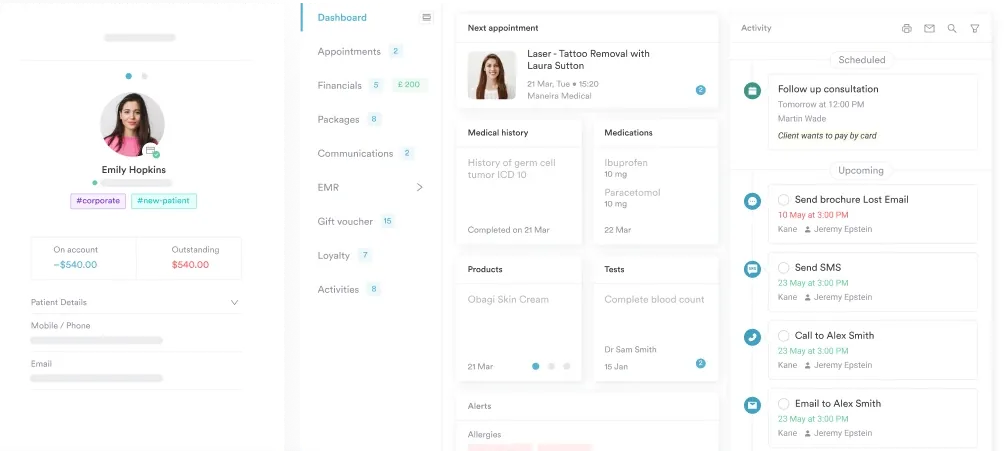

Pabau lets clinicians attach diagnosis codes including R81 directly within clinical notes and billing records, closing the loop between documentation and the billing team in a single workflow.

The codes below appear most often alongside R81 in the same clinical context, as differentials, co-findings, or sequencing partners. Understanding the landscape of related codes reduces the risk of under-coding or over-coding the encounter. Additional reference detail on how Chapter 18 symptom codes interact with confirmed diagnoses is available through AAPC’s ICD-10-CM code lookup and the ResDAC coding guide.
Coders documenting patterns across related diagnosis codes. The governing principle is consistent across Chapter 18: the more specific definitive code always displaces the symptom code when a confirmed diagnosis is present.
When two or more abnormal urine findings appear on the same urinalysis (for example, glucose and protein), assign a separate code for each finding that lacks an explaining definitive diagnosis. R81 and R80.0 can appear together on the same claim if both are documented and neither has a confirmed underlying cause.
The most costly glycosuria coding errors happen before the coder opens the encounter: the physician completes the note without explicitly recording whether a confirmed diagnosis explains the finding, and the coder is left guessing between R81 and an E-code. Pabau addresses this at the documentation layer.
Clinicians using Pabau can search and attach ICD-10-CM codes including R81 directly within SOAP notes and treatment records, without switching to a separate lookup tool. The code attaches to the billing record automatically, so the billing team has accurate documentation without chasing it down. That eliminates the manual re-entry step where transcription errors typically occur. For practices that manage metabolic health, endocrinology, or weight loss clinic workloads where glycosuria and diabetes coding decisions are frequent, the reduction in context-switching between clinical documentation and billing systems is material. The practice management software workflow also makes the coding decision visible at the point of care rather than downstream in a billing audit.
Structured note templates within Pabau can prompt clinicians to confirm whether they have established a definitive diagnosis, reducing the incidence of R81 being submitted when an E11 code is correct. That prompt costs a clinician about five seconds during note completion. It saves the billing team a query, a clinical hold, and a potential rework cycle.

Coding a second Achilles tendon repair? secondary Achilles tendon repair coding This guide covers CCSD code T6810 for secondary repair of the Achilles tendon in UK private practice.
Billing for diabetic retinal exams alongside a diabetes diagnosis? The S3000 billing guide covers documentation requirements for this common diabetes-related service.
Billing a microvascular tissue transfer? microvascular free tissue transfer coding This guide explains CCSD code T7602 for microvascular free tissue transfer, including add-on code classification.
ICD-10 Code R81 is a straightforward code with a clear application rule: assign it when glycosuria is documented and no confirmed underlying diagnosis explains the finding. The coding errors that generate claims queries and audit findings almost always trace back to incomplete documentation, specifically a note that does not clearly state whether a diagnosis has or has not been confirmed. Catching that at the point of documentation is faster and cheaper than catching it in the billing queue.
Pabau’s integrated ICD-10 code search and structured note workflows help clinicians attach the right diagnosis code at the time of care, keeping documentation complete before the encounter reaches the billing team. To see how the workflow operates in practice, book a demo with the Pabau team.
ICD-10 Code R81 is the ICD-10-CM diagnosis code for glycosuria, glucose present in urine on examination without a confirmed diagnosis. It is billable and specific, effective for encounters from October 1, 2025 (FY2026), and sits within the R80-R82 category.
Yes. R81 is a billable, specific ICD-10-CM code valid for claim submission for encounters from October 1, 2025. It can serve as a primary diagnosis when glycosuria is the presenting finding and no confirmed underlying diagnosis explains it.
Use R81 when the note documents glycosuria as unconfirmed and no diabetes diagnosis is established. If the physician confirms Type 2 diabetes, assign E11.65 instead. If diabetes is only possible, R81 still applies, since outpatient guidelines prohibit coding suspected diagnoses as confirmed.
No. R81 carries an Excludes1 note for renal glycosuria, so the two are never reported together. Renal glycosuria, including the inherited SLC5A2 tubular-transporter form, is coded to E74.818 (Other disorders of glucose transport), not R81. Once documentation identifies the renal-tubular mechanism, E74.818 replaces R81.
The ICD-9-CM equivalent of R81 is 791.5 (glycosuria), per the General Equivalence Mappings (GEMs) crosswalk. ICD-9-CM codes are not valid for HIPAA transactions today; all claims must use ICD-10-CM for encounters since October 1, 2015.
R81 falls under parent category R80-R82, abnormal findings on examination of urine without diagnosis, within Chapter 18 (symptoms, signs, and abnormal clinical and laboratory findings, not elsewhere classified). The without-diagnosis qualifier in the heading captures the code’s primary usage rule.




