ICD-10 Code R34: Anuria and oliguria
ICD-10 Code R34 is the billable ICD-10-CM diagnosis code for anuria and oliguria...

Last Updated: Oct 6, 2026
Billable Code Specific Code
R12 is the billable ICD-10-CM code for heartburn.
Let Pabau's smart automation suggest the right codes, reduce claim denials, and keep your practice compliant—effortlessly.
Automate repetitive tasks and focus on what matters most—your patients.
Reduce coding errors and ensure compliance with the latest regulations.
Clean claims, fewer denials, and faster reimbursements.
Powerful insights and reporting to help your practice thrive.
HIPAA compliant SOC 2 certified GDPR-compliant Trusted by 4,000+ clinics worldwide

ICD-10 Code R12 is a billable ICD-10-CM code for heartburn, valid for FY2026 reimbursement.
R12 reports a symptom only, so confirmed GERD moves the claim to K21.0 or K21.9.
An Excludes1 note blocks R12 and functional dyspepsia code K30 on the same claim.
Since April 1, 2026, R12 carries an Excludes2 note for R10.13, so both can be reported when documented.
Suspected or probable GERD still codes to R12 on an outpatient claim.
ICD-10 Code R12 is the designated billable code for heartburn in the ICD-10-CM classification. It represents a symptom rather than a confirmed disease. The code sits in Chapter 18, block R10-R19, which covers symptoms and signs involving the digestive system and abdomen.
The code is valid for FY2026 reimbursement, and that code set took effect on October 1, 2025. R12 was not deleted or renumbered this year, but its Excludes notes did change. The April 1, 2026 addenda moved the dyspepsia NOS note (R10.13) from Excludes1 to Excludes2.
R12 stays valid for HIPAA-covered electronic transactions. Medicare, Medicaid, and commercial payers all reimburse it when the documentation supports a symptom-level diagnosis.
The approximate synonyms for R12 are pyrosis and waterbrash, which the index also lists as brash (water). Both map to R12, so a note using either term supports the code. Retrosternal burning is a common clinical phrase, but it is not an official R12 synonym.
The table below summarizes the key technical attributes of ICD-10 Code R12 for quick reference.
Heartburn is a burning feeling in the chest or throat caused by stomach acid rising into the esophagus. It is a symptom rather than a disease entity, and that distinction drives the coding. Chapter 18 codes such as R12 and R52 apply when a provider records the complaint but has not established a cause.
Three clinical scenarios support ICD-10 Code R12 as the primary diagnosis:
Chest burning that could be cardiac changes the order of work. If the provider is ruling out a cardiac cause with an ECG or echocardiogram, code the reason documented for that encounter. R12 belongs on the claim once heartburn is the working explanation.
Once GERD is confirmed by endoscopy, pH monitoring, or clinical criteria, R12 no longer applies. The coder moves to a specific GERD code. Using R12 for a patient with documented GERD is an error, whatever symptom brought them in.
The line between R12 and K21.x depends on whether the record confirms GERD. What the patient calls the symptom does not decide the code.
A three-question test picks the right code at the point of claim submission:
That test settles most R12 versus K21 decisions without a manual review of every prior chart note.
R12 now carries two Excludes notes, and they work in opposite directions.
Excludes1: Functional dyspepsia (K30)
An Excludes1 note means the two codes are mutually exclusive. R12 and K30 cannot appear on the same claim for the same encounter. Functional dyspepsia describes upper abdominal discomfort without an organic cause, and ICD-10-CM treats it as a separate condition.
The practical effect is a rejection. If a provider documents heartburn and functional dyspepsia as separate diagnoses for one encounter, a payer edit will stop the claim. Code the condition the encounter primarily addresses, or ask the provider which diagnosis is accurate.
Excludes2: Dyspepsia NOS (R10.13)
This one is new. The April 1, 2026 addenda reclassified the R10.13 note on R12 from Excludes1 to Excludes2. An Excludes2 note means the condition is not part of R12, but a patient can have both.
So R12 and R10.13 may now appear on the same claim when heartburn and epigastric pain are documented separately. Before April 1, 2026, that pairing tripped an Excludes1 edit. Claims that straddle the change date are worth checking against the date of service.
Documentation drives most heartburn denials. Providers often write “heartburn consistent with GERD” or “possible GERD”, and the coder then has to decide what that phrasing supports. Under outpatient ICD-10-CM guidelines, it supports R12.
The standardized medical forms and note templates a practice uses shape what the coder sees. Outpatient guidelines bar coding an uncertain diagnosis as though it were confirmed. So a note reading “GERD suspected” still codes to R12, not K21.9.
Inpatient coding works differently. In short-term acute care, a diagnosis documented as probable at discharge can be coded as confirmed. That rule does not reach physician office claims, which is where R12 mistakes cluster.
A documentation checklist for supporting ICD-10 Code R12:
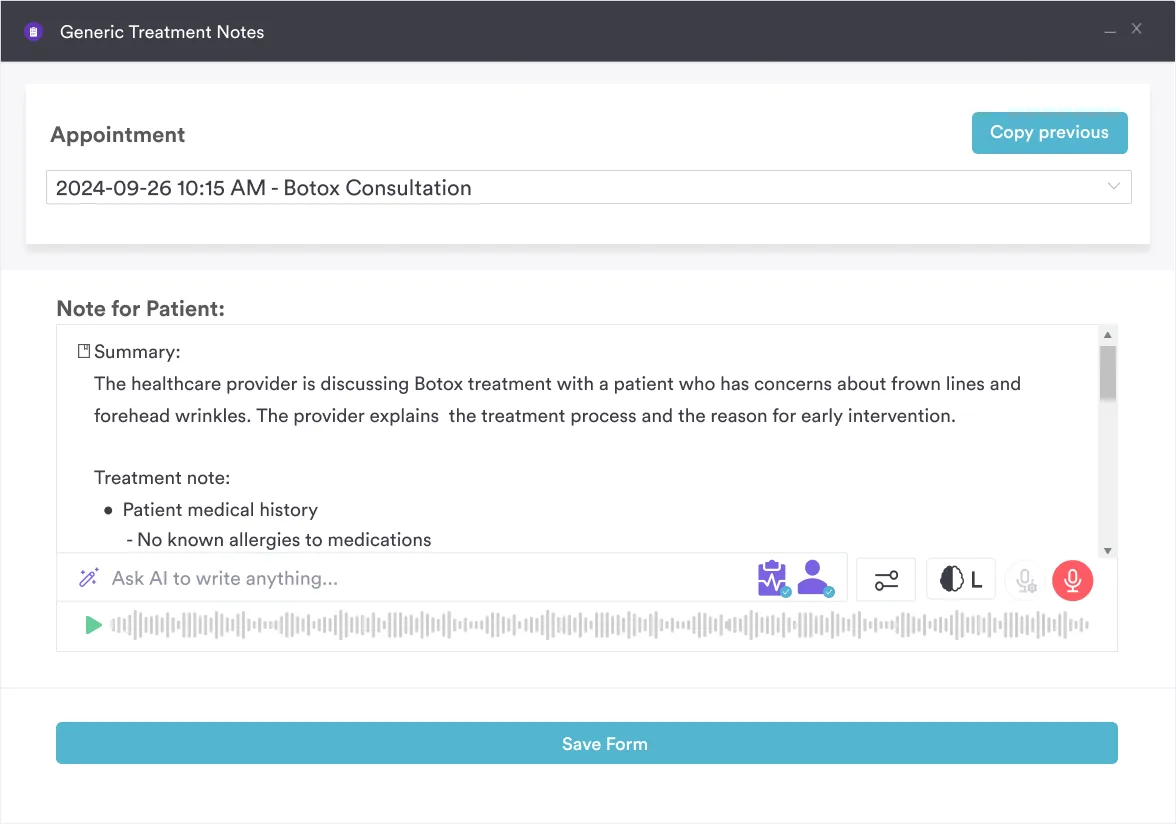
Practices using AI-assisted clinical documentation can prompt providers for the language that separates R12 from K21.x at the point of care. Practice management software like Pabau does this with Pabau Scribe, our AI scribe, which drafts the note from the consultation.
Three mistakes account for most R12 billing errors. Each one is preventable with a documentation habit and a coding check before submission.
A fourth error is worth flagging. Using R12 as a secondary code next to a confirmed GERD code adds nothing, because K21.0 and K21.9 already capture the symptom. Some payers reject the claim for it.
Run a quarterly audit of R12 claims. Pull any encounter where R12 appears and the patient has a prior GERD diagnosis in their record. Those cases are your highest-risk miscodings and the most common source of recoupment requests. Also check claims dated around April 1, 2026 that pair R12 with R10.13.
ICD-10 Code R12 is a diagnosis code only. It must be paired with an appropriate procedure or evaluation and management CPT code on every claim. The codes below are the ones most often billed with heartburn encounters. Check each pairing against current AAPC coding resources and your payer’s coverage policies. Documentation that arrives after the claim raises audit risk even when the coding was correct.
CPT 43239 and 91034 belong to a gastroenterology setting. Paired with R12, they signal a workup still in progress, which matches the symptom-only nature of the code. Once the procedure establishes GERD, the follow-up encounter uses K21.0 or K21.9.
Coders working on upper GI complaints meet the same handful of neighboring codes. Knowing where each one sits prevents a miscode when the documentation is thin.
Chapter 18 also holds abnormal-findings codes such as R84.4. Those come from documented test results, while R12 comes from what the patient reports.
ICD-11 files the same disease under DA22, which is useful context for teams already mapping their code sets forward.
The CDC/NCHS ICD-10-CM web tool carries the authoritative tabular list for R10-R19 and K20-K31. Check code validity and Excludes notes there before submission, especially after an April addenda update.
The distance between documentation and billing is where most R12 errors start. A provider writes the note. A coder reads it hours or days later, when the phrasing in the assessment gets less scrutiny than it needs.
Pabau’s claims management software carries the diagnosis recorded during the encounter through to the claim. Nothing is retyped between the chart and the billing screen, so a transcription slip cannot turn R12 into K21.9.

For practices with high GI symptom volumes. That tells the provider whether they are seeing a first heartburn complaint or a returning GERD patient before the chart note opens.

A coder opening a new encounter for a patient with a K21.9 history can see it without searching old notes.

Reflux complaints turn up constantly in primary care and in functional medicine, so both settings carry the same R12 risk. Pabau’s GP clinic software and functional medicine software pages show the coding-to-claim path for each.

Pabau carries the diagnosis from the consultation through to the claim. Your team stops retyping codes between systems, so fewer R12 claims leave the practice wrong.

R12 is a narrow code, and one question settles it. Does the record confirm GERD? If it does, the claim belongs to K21.0 or K21.9, and R12 stops being defensible.
Two changes are worth carrying away. The April 1, 2026 addenda made R10.13 an Excludes2, and suspected GERD still codes to R12 in the office setting. Both prevent denials that get blamed on clinical judgment when the cause is a coding habit.
Practices that settle the code during the encounter, rather than after it, see fewer of these claims come back. Book a demo to see how Pabau keeps the diagnosis, the note, and the claim in one place.

Coding a minor ENT procedure? Preauricular appendage excision billing guide covers billing this minor ENT procedure performed on paediatric and adult patients.
Billing a suspicious ear lesion? Pinna lesion biopsy billing guide explains why these claims often get rejected even when the procedure itself was correct.
Wondering how the diagnosis code reaches the payer? Superbill guide explains which diagnosis and procedure details a claim form has to carry to be paid.
Coding an endoscopic ENT procedure? Pharyngeal pouch procedure billing guide walks ENT and upper GI surgeons through coding this endoscopic procedure correctly.
Billing a nasolaryngopharyngoscopy procedure? CCSD code E2500 billing guide explains the sole procedure rule and code pairing that determine claim acceptance.
ICD-10 Code R12 is used to report heartburn as a presenting symptom when no confirmed diagnosis such as GERD has been established. It applies in outpatient encounters where the provider documents heartburn, pyrosis, or waterbrash as the reason for the visit. The note must not attribute the symptom to a confirmed condition. Once GERD or another esophageal diagnosis is confirmed, R12 is replaced by the appropriate specific code.
The approximate synonyms for ICD-10 Code R12 are pyrosis and waterbrash, which the index also lists as brash (water). Both terms map directly to R12 in the ICD-10-CM alphabetic index. Retrosternal burning is often used clinically, but it is not an official synonym for R12.
Common pairings include office visit codes 99213 and 99214 for primary care encounters. In a gastroenterology setting, 43239 covers upper GI endoscopy with biopsy and 91034 covers esophageal pH monitoring. Esophageal motility studies use 91010. The right pairing depends on the setting, the payer, and any local coverage determination.
Yes. Outpatient ICD-10-CM guidelines do not allow an uncertain diagnosis to be coded as confirmed, so suspected or probable GERD stays on R12. That holds for phrasing such as consistent with GERD, GERD likely, or rule out GERD. Inpatient short-term acute care follows a different rule, where a diagnosis documented as probable at discharge can be coded as confirmed.