ICD-10 code S61.201A: Open wound of left index finger without nail damage
ICD-10 code S61.201A covers a left index finger wound of unstated type ICD-10 co...

Last Updated: Oct 16, 2026
Billable Code Specific Code
M76.9 is the billable ICD-10-CM code for unspecified enthesopathy, lower limb, excluding foot.
Let Pabau's smart automation suggest the right codes, reduce claim denials, and keep your practice compliant—effortlessly.
Automate repetitive tasks and focus on what matters most—your patients.
Reduce coding errors and ensure compliance with the latest regulations.
Clean claims, fewer denials, and faster reimbursements.
Powerful insights and reporting to help your practice thrive.
HIPAA compliant SOC 2 certified GDPR-compliant Trusted by 4,000+ clinics worldwide

ICD-10 Code M76.9 describes enthesopathy of lower limb, unspecified – a disorder at the tendon or ligament attachment site within the lower limb (excluding foot), valid for the 2026 fiscal year
M76.9 is a billable and specific ICD-10-CM code, effective October 1, 2025, used when clinical documentation does not identify a more precise anatomical site within the M76 group
Always query for a more specific M76 code (M76.0 through M76.8) before assigning M76.9 – using the unspecified code when site and laterality are documented is a common and auditable error
Practice management software like Pabau supports structured note templates that prompt for anatomical site and laterality, creating an audit trail that reduces unspecified-code errors
The table below surfaces the key reference facts coders need before using M76.9 in a claim or clinical record.
Enthesopathy describes pathological changes at the enthesis – the insertion point where a tendon or ligament attaches to bone. Inflammation, degeneration, calcification, or microtearing at these sites produces the pain and functional limitation that brings patients to physical therapy, sports medicine, or orthopedic practices.
The qualifier “of lower limb” restricts the code to sites between the hip and ankle. The further qualifier “unspecified” means the clinical record does not identify which lower-limb enthesis is affected. That distinction matters for payers: a claim carrying M76.9 signals that the site was not documented, which can trigger medical necessity queries for procedures billed alongside it.
Understanding where ICD-10 Code M76.9 sits in the classification tree helps coders select the right level of specificity and identify when a more precise code is available. The hierarchy for M76.9 runs from the broadest chapter down to the individual code.
The M76 category is part of the broader M70-M79 soft tissue disorders block. Foot enthesopathies fall outside M76 entirely. According to the ICD-10-CM Tabular List, plantar fasciitis and heel spur are classified under a separate code family, which explains why the M76 category heading explicitly reads “excluding foot.” Coders who apply M76.9 to a calcaneal spur are miscoding – that condition belongs in the M77 group.
With a physical therapy platform, an M-code diagnosis becomes a tracked program rather than a standing appointment.
Before assigning ICD-10 Code M76.9, verify that none of the specific M76 subcategory codes apply. The table below covers the full M76 group. Codes marked with laterality indicators (1 = right, 2 = left, 9 = unspecified side) require that the record document which limb is affected.
Practices in sports medicine and chiropractic care. Having this table embedded in clinical workflow or accessible from the practice management system reduces the time coders spend cross-referencing the tabular list on each encounter.
The ICD-10-CM Tabular List sets out the inclusion terms and Excludes notes that govern when M76.9 applies and when it does not. The ICD-10-CM Official Guidelines for Coding and Reporting define what the Excludes1 and Excludes2 convention means: an Excludes1 note means the two conditions cannot be coded together, while an Excludes2 note means the excluded condition may be reported alongside M76.9 when both are documented. Adjustment and remark codes on the ERA separate a contractual write-off from a genuine denial.
M76.9 inherits the M76 parent-category inclusion terms. These are conditions that are classified to M76.9 when the specific site is not further documented:
Verify the current Excludes notes against the CDC/NCHS ICD-10-CM web tool for the active fiscal year, as CMS updates Excludes logic annually.
Run a spot audit on any M76.9 encounter where the associated CPT code is a targeted anatomical procedure – for example, an ultrasound-guided injection at the patellar tendon paired with M76.9 instead of M76.50 (patellar tendinitis, unspecified). That mismatch is a common documentation flag. Practice management software like Pabau supports structured treatment notes that prompt for the specific enthesis at the point of documentation, so the mismatch surfaces before the note is finalized.
Clinical documentation must support any ICD-10 code assigned. For M76.9, the documentation burden is low by design – but using the code without first seeking specificity is a compliance risk.
The following elements must appear in the record to support M76.9 use:
For practices using electronic client records, structured note templates that prompt for anatomical site at the point of documentation reduce the frequency of unspecified codes reaching the billing queue.
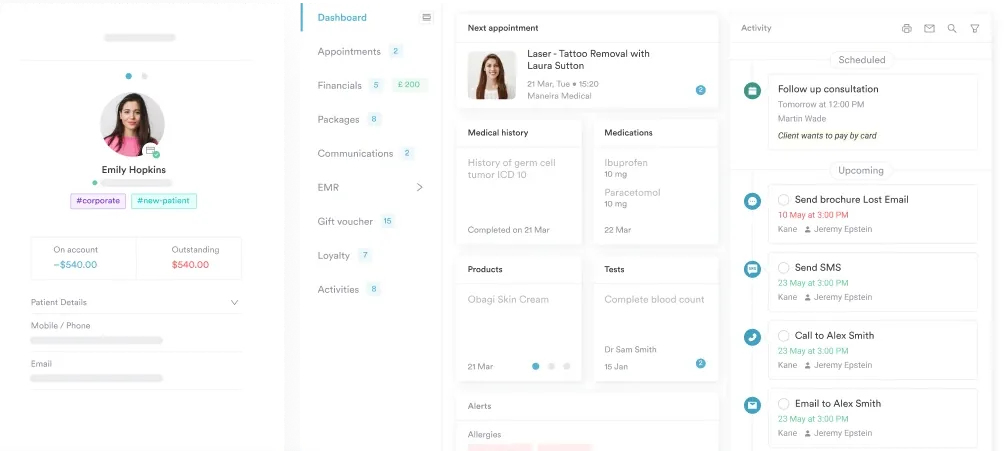
Three errors account for the majority of M76.9 coding problems seen in practice audits. Each is preventable with the right documentation workflow and pre-submission claim checks.
Practices can reduce these errors through practice management systems that validate diagnosis-to-procedure code pairings before claim submission. The AAPC code lookup includes documentation tips for M76 codes that help coders understand when specificity is expected.
M76.9 has been part of the ICD-10-CM classification since the US adoption of ICD-10-CM. The code has not undergone description changes in recent annual update cycles. The table below summarizes the version history relevant to current practice.
Confirm current status using the official CDC/NCHS ICD-10-CM code lookup tool at the start of each fiscal year. CMS publishes the updated code files each August for the October effective date, which means the FY 2027 update files will be available in August 2026.
Set a calendar reminder for August each year to download the CMS ICD-10-CM update files. Review the M76 group for any description changes before the October 1 effective date. Practices that catch changes in August have two months to update templates, charge masters, and EHR code lists before the new fiscal year begins.
This distinction trips up even experienced coders. Both codes are “unspecified enthesopathy” but they sit in different categories with different anatomical scopes. Using the wrong one creates a coding error that is difficult to correct after submission.
The decision rule is straightforward: if the documentation confirms the lower limb as the site – even if the specific enthesis within that limb is unclear – use ICD-10 Code M76.9. If the record says “enthesopathy” with no anatomical qualifier, use M77.9. Verify both codes against the ICD-10-CM Tabular List for the current fiscal year edition to confirm no definitional changes have occurred since the last update cycle.
Entering a billable diagnosis code is only the first step. Clean claims require the code to pair correctly with procedure codes and pass payer-side edits. Practices in osteopathy and sports rehabilitation that see musculoskeletal enthesopathy regularly benefit from structured workflows that surface this requirement at the point of care. In UK private practice, the diagnosis pairs with CCSD procedure codes rather than CPT. The manipulation-under-anesthetic code W9240 still requires the joint and laterality on the record.
Pabau’s EHR tools let practice teams build structured treatment notes that prompt for anatomical site and laterality, and keep an audit trail of provider queries tied to each encounter. For practices handling a high volume of musculoskeletal visits.
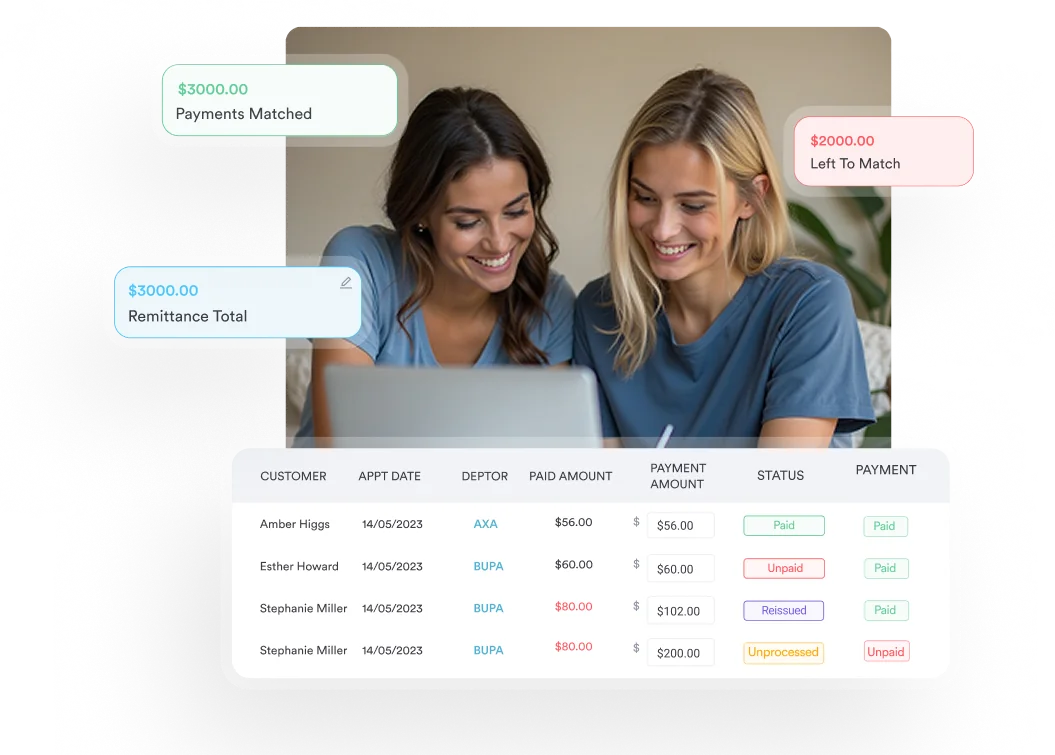

Pabau’s structured note templates prompt for anatomical site and laterality at the point of documentation, and keep an audit trail of provider queries. See how it works for musculoskeletal and physical therapy practices.

ICD-10 Code M76.9 is a legitimate and billable code – but it is a last resort, not a default. The M76 group contains 11 specific subcategories covering every named lower-limb enthesopathy from gluteal tendinitis to Achilles tendinitis. When clinical documentation supports a more precise code, use it. M76.9 earns its place only when the site is genuinely indeterminate at the time of coding.
For practices managing a high volume of musculoskeletal visits, the cost of unspecified-code errors compounds quickly. Pabau supports structured documentation and an audit trail for provider queries, helping physical therapy, sports medicine, and osteopathy practices keep their M76.9 records precise. Book a demo to see how it works in a musculoskeletal practice.

Coding an acquired deformity of the lower limb? M95.8 covers structural changes that do not fit a more specific M95 code, the same specificity-first logic that applies to M76.9.
Working a cervical deformity case instead? M95.3 explains when to use this billable code for acquired deformity of the neck.
Coding a shoulder dislocation at a follow-up visit? ICD-10 code S43.014D covers an anterior right shoulder dislocation once active treatment has ended, for follow-up and PT visits.
Coding a lingering effect of an old shoulder injury? ICD-10 code S43.312S covers subluxation of the left scapula as a sequela, the residual problem an old injury left behind.
Coding a vascular injury near the shoulder? ICD-10 code S45.019A covers an initial-encounter axillary artery laceration, unspecified side, with the FY2026 laterality and documentation rules.
ICD-10 Code M76.9 describes enthesopathy of lower limb, unspecified – a disorder at the site where a tendon or ligament attaches to bone within the lower limb (hip to ankle, excluding foot), where the specific enthesis affected has not been identified in the clinical record. It is a billable ICD-10-CM code valid for the 2026 fiscal year.
Yes. M76.9 is a specific and billable ICD-10-CM code, confirmed as valid for reimbursement purposes in the 2026 edition (effective October 1, 2025). It can be submitted on claims to Medicare, Medicaid, and commercial payers when the documentation supports lower-limb enthesopathy without a more precise anatomical site identified.
M76.9 specifies that the enthesopathy is in the lower limb (excluding foot) but the precise site within the limb is unknown. M77.9 describes enthesopathy with no anatomical qualifier at all – it could be any site on the body. Use M76.9 when the clinician has confirmed lower-limb involvement; use M77.9 only when the record contains no site information whatsoever.
M76.9 does not capture laterality at all – it describes an unspecified site within an unspecified side of the lower limb. For bilateral conditions where the site is known, assign the left-side and right-side specific M76 codes separately. M76.9 is appropriate bilaterally only when neither the site nor the affected side has been documented in the clinical record.