ICD-10 code S61.201A: Open wound of left index finger without nail damage
ICD-10 code S61.201A covers a left index finger wound of unstated type ICD-10 co...

Last Updated: Oct 16, 2026
Billable Code Specific Code
M04.1 is the billable ICD-10-CM code for periodic fever syndromes.
Let Pabau's smart automation suggest the right codes, reduce claim denials, and keep your practice compliant—effortlessly.
Automate repetitive tasks and focus on what matters most—your patients.
Reduce coding errors and ensure compliance with the latest regulations.
Clean claims, fewer denials, and faster reimbursements.
Powerful insights and reporting to help your practice thrive.
HIPAA compliant SOC 2 certified GDPR-compliant Trusted by 4,000+ clinics worldwide

ICD-10 Code M04.1 is a billable/specific ICD-10-CM diagnosis code for periodic fever syndromes, effective FY2026 (October 1, 2025).
M04.1 covers three hereditary autoinflammatory conditions: familial Mediterranean fever (FMF), TRAPS, and HIDS/MKD.
The code sits under parent code M04 (Autoinflammatory syndromes) in chapter M00-M99; it carries an Excludes2 note only (no Excludes1 note) that coders must check before assigning.
Pabau’s claims management software supports accurate ICD-10 coding workflows, helping practitioners document and submit diagnosis codes like M04.1 without errors.
ICD-10 Code M04.1 is a billable, specific ICD-10-CM diagnosis code representing periodic fever syndromes. It is valid for use on claims submitted for dates of service on or after October 1, 2025, under the FY2026 edition of ICD-10-CM. Coders who work in general practice or rheumatology will encounter this code when documenting hereditary autoinflammatory diseases that cause recurrent fever episodes.
The CDC/NCHS ICD-10-CM web tool confirms M04.1 as a valid FY2026 code. Because it is a specific, billable code rather than a header or non-billable parent, it can appear as a primary or secondary diagnosis on a claim without further subdivision.
The Applicable To note in the ICD-10-CM tabular list defines the conditions that map to ICD-10 Code M04.1: familial Mediterranean fever (FMF), TNF receptor-associated periodic syndrome (TRAPS), and hyperimmunoglobin D syndrome / mevalonate kinase deficiency (HIDS/MKD, two names for the same condition).
These are distinct hereditary autoinflammatory diseases, each driven by mutations in specific genes that dysregulate the innate immune system. All three cause recurrent fever episodes and systemic inflammation.
FMF is the most common hereditary periodic fever syndrome. It results from mutations in the MEFV gene and causes recurrent episodes of fever lasting 12-72 hours, typically accompanied by serositis (peritonitis, pleuritis, or pericarditis). Episodes resolve spontaneously. Clinicians at functional medicine practices managing patients with recurrent unexplained fevers should consider FMF and use M04.1 when the diagnosis is confirmed. A code lookup that lives beside the desk gets used; one buried in a shared drive does not. Patients who claim reimbursement themselves need an itemized receipt, which is what a superbill template sets out.
The remaining two conditions under M04.1 share the periodic fever pattern but differ in genetic basis, episode duration, and associated features.
Both are rare diseases. Clinical diagnosis typically involves genetic testing, inflammatory marker panels, and specialist referral. The documentation in the medical record must reflect a confirmed or suspected autoinflammatory syndrome to justify M04.1 on a claim.
The same principle applies across the M00-M99 chapter: an unspecified code such as M12.9 carries the same denial risk as vague fever documentation does here.
Document the specific named syndrome (FMF, TRAPS, or HIDS/MKD) in the clinical note, not just ‘periodic fever.’ Payers and auditors reviewing claims under M04.1 expect the record to identify which autoinflammatory condition supports the code. Generic fever language in the note creates denial risk.
ICD-10 Code M04.1 sits beneath parent code M04 (Autoinflammatory syndromes), which is itself within the musculoskeletal and connective tissue diseases chapter (M00-M99). M04 is a non-billable header code. It cannot be submitted on a claim. Coders must use a specific subcategory such as M04.1 or one of the sibling codes listed below.
Two related autoinflammatory syndromes are coded elsewhere, not under M04.1: cryopyrin-associated periodic syndromes (CAPS) — including CINCA, familial cold autoinflammatory syndrome, Muckle-Wells syndrome, and NOMID — have their own dedicated code, M04.2, and periodic fever aphthous stomatitis pharyngitis adenitis (PFAPA) syndrome is coded under M04.8 (Other autoinflammatory syndromes).
Coders should confirm the specific diagnosis in the record before assigning M04.1, M04.2, or M04.8, since these are distinct, non-overlapping codes. The CMS ICD-10 codes page provides the official tabular list to resolve these distinctions.
In software built for chiropractic practices, M-code diagnoses drive care plans measured visit by visit.
Coding accuracy depends on understanding what a code explicitly excludes. The ICD-10-CM tabular list defines two types of exclusion notes (Excludes1 and Excludes2), but M04.1 itself carries only an Excludes2 note — there is no Excludes1 note attached to this code.
Clinicians managing patients with complex inflammatory histories, such as those seen at integrative medicine practices, should review this before applying M04.1.
M04.1 carries an Excludes2 note, inherited from parent code M04, which lists Crohn’s disease (regional enteritis), K50.-, as a condition not included in M04.1 but which may legitimately coexist with it.
A patient can have both M04.1 and an Excludes2 condition such as Crohn’s disease. Both codes may be reported if documented. The M00-M99 chapter also carries its own chapter-level Excludes2 notes that apply across the block.
The specific excluded codes should be confirmed against the official ICD-10-CM tabular list before submission. The AAPC ICD-10-CM code reference and the CDC web tool both display the current excludes notes for M04.1 with the applicable code numbers. Review the official tabular list for FY2026 to confirm the precise Excludes2 entry before billing.

Pabau’s claims management tools help your practice document diagnosis codes correctly, track submissions, and resolve denials faster. See how it works in a live demo.

Practices still reconciling older claims or auditing historical records need to know which legacy ICD-9-CM code corresponds to M04.1. Per the EHR integration workflows used by most modern practices, code crosswalks are handled automatically by billing software. For manual reconciliation, the General Equivalence Mappings (GEMs) published by CMS provide the authoritative mapping.
The ICD-9-CM code that crosswalks to M04.1 is 277.31 (Familial Mediterranean fever), which was the closest legacy equivalent. Because ICD-9-CM had limited granularity for autoinflammatory syndromes, the crosswalk is approximate: 277.31 maps to M04.1 as a forward mapping, but M04.1 also receives patients who were previously coded under broader fever or arthropathy categories.
Verify the crosswalk against the ResDAC ICD-Medicare guide before using legacy codes for claims reconciliation. Crosswalk data is not always one-to-one, and payers may have specific guidance for adjudicating historical claims.
The American Hospital Association (AHA) Coding Clinic and the CMS ICD-10-CM Official Guidelines for Coding and Reporting set the documentation standards that support M04.1 assignment. These guidelines apply to all providers billing under HIPAA’s mandated ICD-10-CM code set.
The record must support the code. For M04.1, the minimum documentation includes:
The same standard applies to other musculoskeletal diagnoses. A note that says “recurrent fever, query FMF” is not equivalent to “familial Mediterranean fever, confirmed by MEFV gene mutation testing.” Orthopedic coding demands comparable detail: S52.261R needs the note to record an open right ulna fracture healed in malunion.
M04.1 may be reported as the principal diagnosis when the periodic fever syndrome is the condition primarily responsible for the visit. It may also be a secondary diagnosis when the patient is seen for a related complication or comorbidity.
The ICD-10-CM Official Guidelines require that the condition established after study to be chiefly responsible for the encounter becomes the principal diagnosis. For outpatient visits, the condition after the highest level of evaluation during the encounter guides code selection.
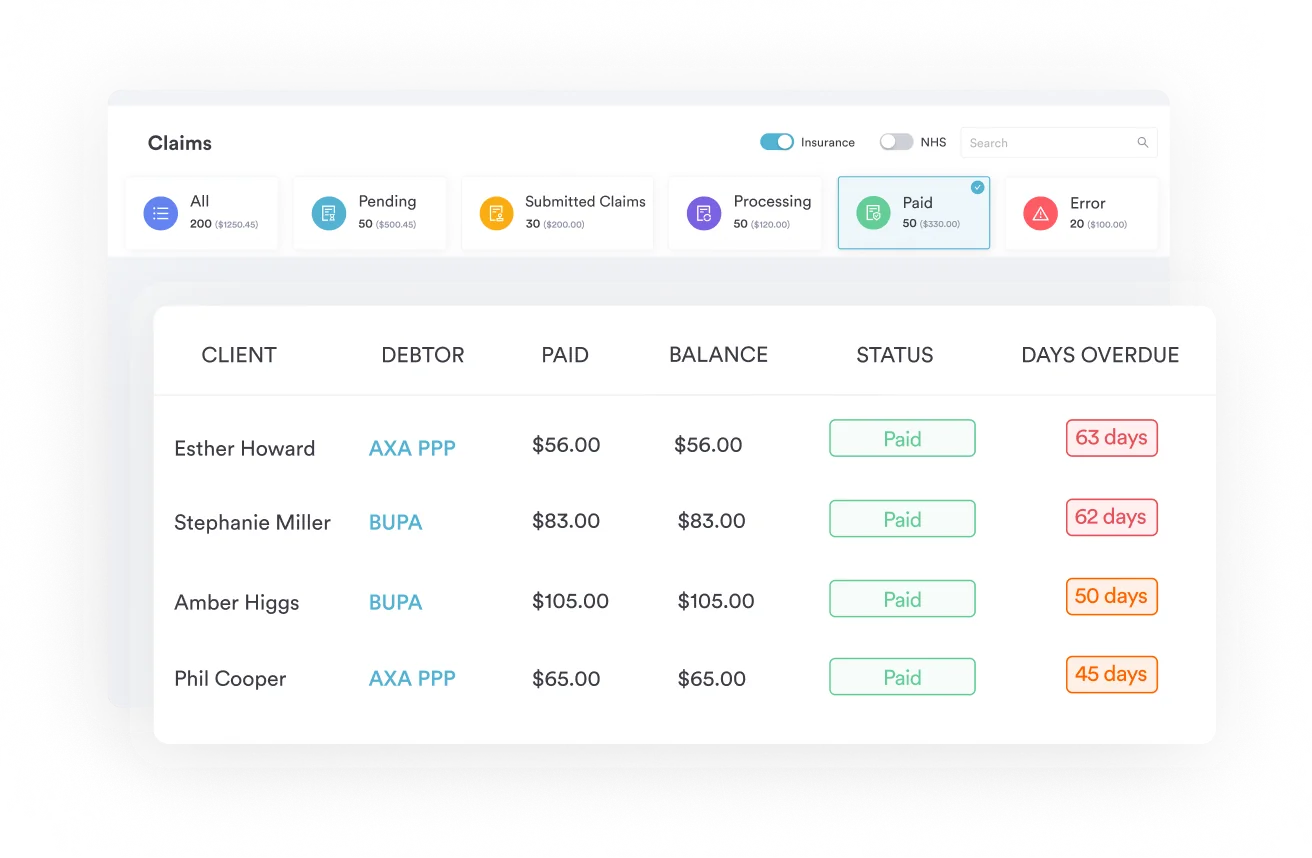
Practices using claims management software can flag encounters where secondary diagnosis codes like M04.1 require supporting documentation before submission, reducing the audit exposure that comes from unsupported autoinflammatory coding.
Code reference sites list the definition and excludes notes for M04.1, but they stop before the workflow question: how does a busy practice apply the code correctly inside its EHR and billing system?
Practices using practice management software like Pabau can attach ICD-10 codes directly to treatment records via the client record system, ensuring that every claim submission has a corresponding clinical note rather than a standalone diagnosis entry.
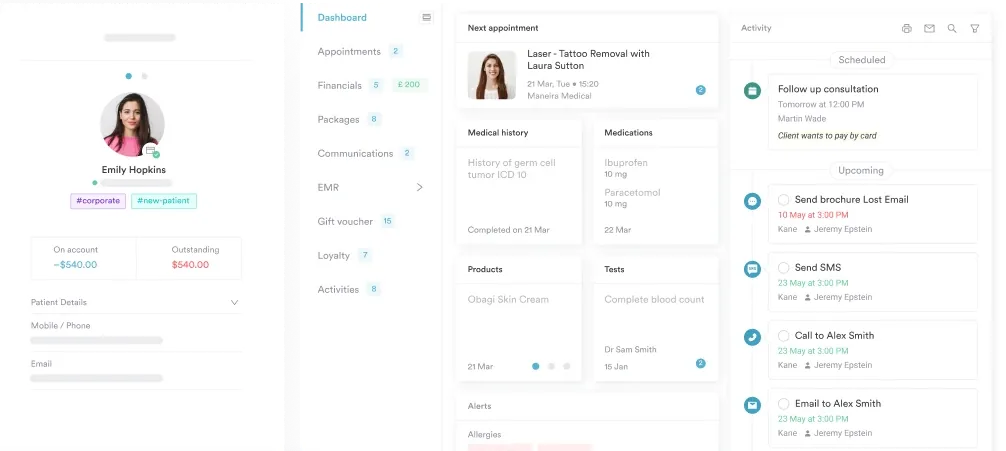
Run a quarterly audit of all claims submitted with M04.1. Pull encounters where the code was used and verify that the associated note names the specific syndrome and includes supporting documentation. Payers flagging autoinflammatory codes for audit will look for exactly this chain of evidence.
ICD-10 Code M04.1 has been a stable code since the ICD-10-CM category M04 (Autoinflammatory syndromes) was introduced. Other codes in the M00-M99 chapter. M04.1 is active and billable for FY2026 (October 1, 2025 through September 30, 2026).
The World Health Organization maintains the ICD classification framework on which ICD-10-CM is based. The National Center for Health Statistics (NCHS) and CMS jointly maintain the US clinical modification. Practices should check the CMS ICD-10 update files each October to confirm that codes used routinely remain active in the new fiscal year edition.
For practices managing patient data security alongside clinical coding, keeping ICD-10 code libraries updated in EHR systems is part of maintaining accurate, HIPAA-compliant records. Outdated codes on claims trigger automated edits and can delay payment for legitimate encounters.
Periodic fever syndromes are rare, but coding them incorrectly is a common and preventable problem. ICD-10 Code M04.1 is the right code for confirmed hereditary autoinflammatory diseases including FMF, TRAPS, and HIDS/MKD. The documentation threshold is higher than for common diagnosis codes: the clinical note must name the specific syndrome and reference supporting evidence.
Practices that pair accurate ICD-10 coding with a structured workflow can reduce denials and audit exposure. Pabau’s claims management software helps practices attach diagnosis codes to encounter notes, review submissions before they leave the practice, and track denial patterns over time. To see how this works in your practice, book a demo.

Coding a different but equally rare diagnosis? H35.54 walks through the same specificity requirements for a retinal condition.
Coding a complete rotator cuff tear? Complete Rotator Cuff Tear, Left Shoulder covers the laterality and trauma qualifier details that prevent denials.
Billing for a related joint procedure? 20605 covers arthrocentesis billing for joint injections and aspirations.
ICD-10 Code M04.1 is a billable, specific ICD-10-CM diagnosis code for periodic fever syndromes. It covers hereditary autoinflammatory diseases including familial Mediterranean fever (FMF), TNF receptor-associated periodic syndrome (TRAPS), and hyperimmunoglobin D syndrome / mevalonate kinase deficiency (HIDS/MKD), all of which cause recurrent episodes of fever and systemic inflammation driven by innate immune dysregulation.
Yes. M04.1 is a billable/specific ICD-10-CM code and can be used as a primary or secondary diagnosis on claims. It is valid for the FY2026 edition, effective October 1, 2025. The parent code M04 is not billable and cannot be submitted on a claim.
The Applicable To note for M04.1 includes three conditions: familial Mediterranean fever (FMF), TNF receptor-associated periodic syndrome (TRAPS), and hyperimmunoglobin D syndrome / mevalonate kinase deficiency (HIDS/MKD, two names for one condition). CAPS is coded separately under M04.2, and PFAPA syndrome is coded under M04.8.
The primary ICD-9-CM crosswalk for M04.1 is code 277.31 (Familial Mediterranean fever). Because ICD-9-CM had limited specificity for autoinflammatory syndromes, the mapping is approximate. Verify against the CMS General Equivalence Mappings (GEMs) before using this crosswalk for historical claims reconciliation.
M04.1 became effective October 1, 2025 under the FY2026 edition of ICD-10-CM, and it remains active through September 30, 2026. The code description has not changed from the FY2025 edition.
M04.1 applies only to confirmed hereditary autoinflammatory syndromes with documented genetic or clinical evidence. Nonspecific fever codes (such as R50.9 for fever unspecified) are appropriate when the cause is undetermined. Coders should not assign M04.1 based on symptom presentation alone. The clinical record must confirm the specific syndrome.