

HCPCS code E0198: Water pressure pad billing guide
HCPCS code E0198 is a water pad for a standard mattress HCPCS code E0198 is the ...

Last Updated: Oct 13, 2026
Billable Code Specific Code
I32 is the billable ICD-10-CM code for pericarditis in diseases classified elsewhere.
Let Pabau's smart automation suggest the right codes, reduce claim denials, and keep your practice compliant—effortlessly.
Automate repetitive tasks and focus on what matters most—your patients.
Reduce coding errors and ensure compliance with the latest regulations.
Clean claims, fewer denials, and faster reimbursements.
Powerful insights and reporting to help your practice thrive.
HIPAA compliant SOC 2 certified GDPR-compliant Trusted by 4,000+ clinics worldwide

ICD-10 Code I32 is a billable diagnosis code for pericarditis in diseases classified elsewhere, valid for FY2026 from October 1, 2025 through September 30, 2026.
I32 is a manifestation code: the underlying disease driving it, such as histoplasmosis or chronic kidney disease (uremic pericarditis), must be sequenced first, but excluded etiologies like tuberculosis and lupus have their own combination code and must never be paired with I32.
Common coding errors include using I32 as a standalone primary code or omitting the required etiology code, which triggers claim denial.
Pabau’s claims management software helps cardiology and primary care practices apply etiology-first sequencing rules and reduce ICD-10 coding errors at the point of documentation.
ICD-10 Code I32 is a billable ICD-10-CM diagnosis code that represents pericarditis in diseases classified elsewhere. It sits within the I30-I5A block (Other forms of heart disease) under Chapter IX of the ICD-10-CM tabular list. Specifically, this chapter covers diseases of the circulatory system (I00-I99). The 2026 edition became effective on October 1, 2025, and remains valid through September 30, 2026.
What makes I32 distinct from other pericarditis codes is its role as a secondary code. In practice, it cannot stand alone on a claim.
The pericarditis it describes is a manifestation of an underlying disease coded elsewhere in ICD-10-CM. As a result, coders must always list the underlying condition first. Misunderstanding this sequencing requirement is the most common source of claim denials for this code.
According to the CDC/NCHS ICD-10-CM web tool, I32 is classified as billable and specific. This makes it suitable for reimbursement purposes. Coders and clinicians searching for the right pericarditis code face one key question first. Does the condition arise independently, or is it a consequence of another disease? Only then can they choose between I32 and codes like I30 or I31.
The table below provides a quick-reference summary of ICD-10 Code I32’s core attributes for FY2026.
Understanding where I32 sits within the broader ICD-10-CM structure matters for two reasons. First, it helps coders navigate to the right code quickly. Second, it clarifies which parent-level excludes notes and coding conventions apply.
The I30-I5A block covers a wide range of cardiac conditions beyond coronary artery disease. For example, it includes pericarditis (I30-I32), endocarditis and heart valve disorders (I33-I39), and cardiomyopathy (I42-I43). Coders working with cardiac diagnoses should be familiar with the sibling codes in this block. As a result, they avoid selecting the wrong pericarditis code.
For reference, similar diagnostic coding patterns appear in other specialty areas. There, understanding code hierarchy prevents missequencing errors.
Managing hypertension and heart disease long-term is exactly what GP clinic software with recalls and reviews is for.
I32 is a manifestation code. Under ICD-10-CM Official Guidelines Section I.A.13, manifestation codes describe conditions that result from an underlying disease. Therefore, coders may not use them as the principal diagnosis. The underlying etiology must be coded and sequenced first.
This is not optional. Submitting I32 as a standalone primary code will result in a claim rejection from most payers. In practice, the correct sequencing is always: etiology code first, then I32 as the secondary manifestation code.
Before working through these steps, confirm the underlying disease is not one of I32’s seven Excludes1 etiologies. Check the Excludes notes section below for the full list. For those conditions — including tuberculous and lupus pericarditis — coders report the combination code alone and do not add I32.
This etiology-first rule applies regardless of the clinical setting. Whether the encounter is inpatient or outpatient, the underlying disease drives the sequencing.
The same discipline carries over to other ICD-10-CM entries. There, documentation must capture both the underlying procedure and its complication accurately.
Only a small number of underlying diseases are actually reported alongside I32. The table below lists the two etiologies with documented ICD-10-CM support for pairing with I32. Specifically, a “use additional code” note under the relevant B39 subcategory in the tabular list confirms histoplasmosis. The alphabetic index, meanwhile, confirms uremic pericarditis under “Pericarditis, uremic”.
The tabular “Code first” note under I32 itself is generic (“Code first: underlying disease”) and does not name specific etiologies. I32 excludes other causes of secondary pericarditis entirely, including tuberculosis and lupus. Instead, the Excludes notes section below covers them.
Clinical documentation must clearly establish the causal relationship between the underlying disease and the pericardial inflammation. A chart that simply notes “pericarditis” without documenting the associated systemic disease will not support I32 billing. This is a frequent audit finding in cardiology, infectious disease. In these settings, several systemic diagnoses often coexist in the same chart.
Before assigning I32, also confirm the underlying disease is not one of the seven Excludes1 etiologies covered below. Instead, coders bill those with a single combination code, without I32.
Always confirm the causal relationship is explicit in the clinical note before assigning I32. Documentation that reads ‘pericarditis and histoplasmosis’ is not sufficient; the note should state ‘pericarditis due to histoplasmosis’ or use equivalent language that clinically links the two conditions. If the chart instead documents tuberculous or lupus pericarditis, do not add I32 at all — code A18.84 or M32.12 alone.
The ICD-10-CM alphabetical index and tabular list map several clinical terms to I32. Coders often encounter these synonyms in physician documentation and need to recognize that they all route to the same code.
When physician documentation uses the histoplasmosis or uremic phrasing above, I32 is the appropriate manifestation code to assign. However, the underlying etiology must also be coded and sequenced first. Coders unfamiliar with this index entry sometimes default to I30 (Acute pericarditis) incorrectly. That default would represent primary rather than secondary pericarditis.
I32 carries excludes notes that define the boundaries of its use. Understanding whether a note is Excludes1 or Excludes2 determines whether the excluded codes can appear on the same claim.
These seven Excludes1 notes share a common logic. Each names an etiology-specific pericarditis that already has its own complete combination code. So adding I32 on top of it would double-code the same manifestation.
This is different from I32’s relationship with codes like I30 (Acute pericarditis) or I31 (Other diseases of pericardium). Those codes are not on I32’s Excludes1 list. Instead, coders distinguish them from I32 by whether the chart documents a classifiable underlying disease.
A coder who adds I32 alongside any of the seven excluded codes above will create a diagnosis-code conflict. As a result, most payers’ claim-editing systems will flag or deny the claim. Verify the excludes structure for I32 using the AAPC ICD-10-CM lookup or the official CDC tabular list.
Choosing the correct pericarditis ICD-10 code comes down to what the documentation supports. Specifically, does the pericarditis stand alone, or does it involve an effusion or tamponade? By contrast, has it turned constrictive, or is it a manifestation of another disease?
The table below maps each scenario to the right code in the I30-I5A block. As a result, you can confirm whether I32 applies before the claim goes out. Acute pericarditis ICD-10 assignments (I30 and its subtypes) are primary codes, while I32 is always secondary.
The most clinically nuanced distinction is between I30.1 (Infective pericarditis) and I32. A bacterial or viral infection can cause pericarditis. When the record documents it as the primary reason for the encounter, I30.1 may be the appropriate code.
I32 applies when the pericarditis is a manifestation of a classifiable underlying disease that is not excluded from I32. For example, this includes histoplasmosis coded at the appropriate B39 subcategory. It also includes chronic kidney disease (uremic pericarditis), coded first with N18.9. The CMS ICD-10 codes page provides the current FY2026 tabular list and guidelines for resolving these distinctions.
A documented viral pericarditis ICD-10 case maps to I30, typically I30.0 or I30.1, not I32. That changes only if a classifiable systemic disease drives it. Recurrent pericarditis ICD-10 coding follows the same logic. Coders capture the recurrence under I30, unless the record ties it to a codable underlying disease.
Inpatient claims submitted to Medicare and Medicaid require a Present on Admission (POA) indicator for every diagnosis code, including I32. The POA indicator tells the payer whether the condition was present at the time of admission. Instead, it may indicate the condition developed during the hospital stay.
I32 is not on the CMS POA exempt list, so inpatient claims require POA reporting. Since I32 is always a secondary manifestation code, the POA indicator applies to both I32 and the sequenced etiology code. In addition, both must carry the appropriate POA indicator.
Coders should check the current CMS POA exempt list at the start of each fiscal year. So they can confirm whether any changes affect their workflows. The primary care compliance checklist offers related guidance on documentation requirements for claim accuracy.
Accurate coding for I32 depends on the quality of the clinical note. Coders cannot infer the causative relationship between pericarditis and an underlying disease; the physician must document it explicitly.
A structured note format. In practice, this happens during the encounter itself. In addition, these documentation requirements apply whether the encounter is inpatient or outpatient.
Effective clinical documentation workflows help catch these issues before claim submission rather than after denial. Practices using structured medical forms. As a result, clinicians capture the causal relationship at the point of care.
Similarly. As a result, they reduce the missing documentation that causes payers to return I32 claims.
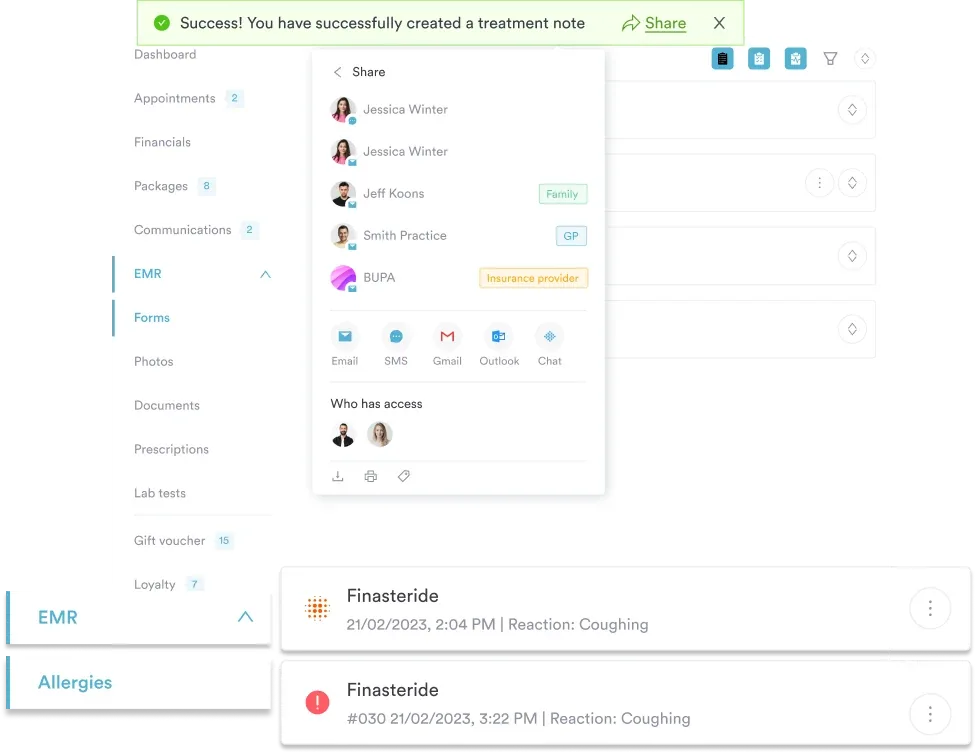
Building that etiology-first habit into the record is what keeps I32 claims clean. So the quick monthly check below catches the misses before they ever reach the payer.
Run a monthly audit of claims where I32 appears without a paired etiology code in the first position. This single check identifies the most common sequencing error for pericarditis in diseases classified elsewhere and reduces denial volume before it compounds into write-offs.
Coding errors on manifestation codes like I32 rarely stem from a lack of coder knowledge. They stem from documentation workflows that do not prompt clinicians to capture the causal relationship at the right moment.
By the time a coder reviews the chart, the note may say “pericarditis” and “histoplasmosis” without linking language. As a result, the documentation cannot support I32 billing. A coder may also miss that documented tuberculous or lupus pericarditis needs its own code. Specifically, coders should code it with A18.84 or M32.12 alone, without I32.
Pabau’s claims management software helps cardiology and internal medicine practices reduce this type of error. It does this by structuring the documentation and billing workflow around the clinical encounter. Clinicians can use digital intake forms configured to capture presenting conditions and their relationships. As a result, this surfaces the data coders need without requiring a physician addendum.
The platform’s EHR integration connects the clinical note directly to billing. This reduces the lag time between documentation and claim submission, where errors tend to accumulate.
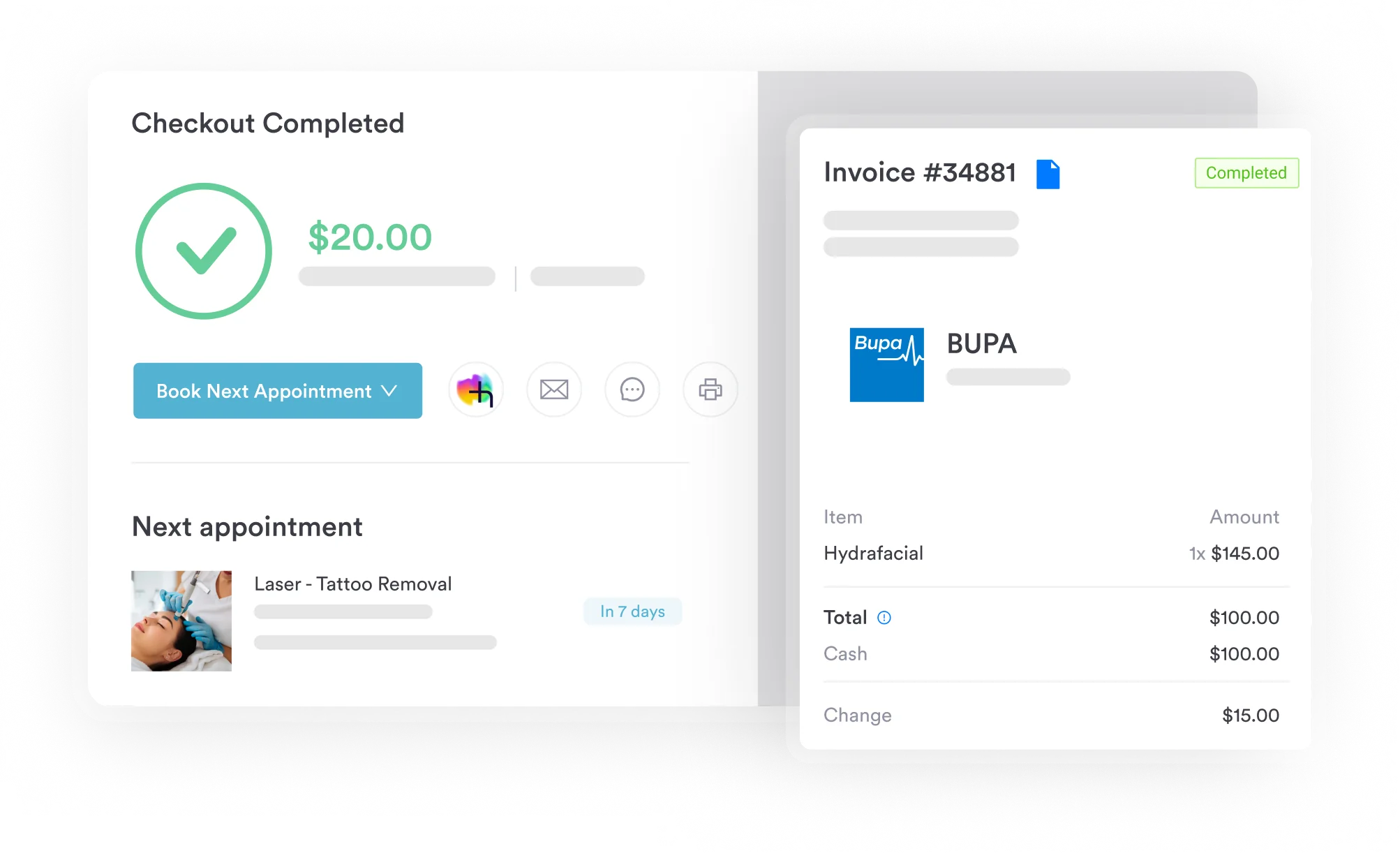
Practices managing HIPAA-compliant practice management across multiple providers benefit from Pabau’s centralized record structure. It keeps the etiology and manifestation codes visible together in the patient record. So sequencing errors become easier to catch during internal review.
Practices that want to see this in their specific cardiology, internal medicine, or general practice workflow can book a demo. In practice, the demo walks through the billing module.
ICD-10 Code I32 is a precise but often misused code. Three requirements create the most common failure points for denial or audit exposure:
Getting them right depends less on memorizing the rules. Instead, it depends more on having documentation workflows that capture the clinical information at the point of care.
Pabau’s practice management software helps clinical teams build those workflows into the encounter itself. So coders receive notes that already contain the causal language and etiology detail needed to assign I32 correctly.

Pabau helps cardiology and internal medicine practices structure clinical documentation so that manifestation codes like I32 are sequenced correctly from the first submission. See how the billing and EHR workflow works for your practice.

If you want to go deeper on documentation and coding accuracy, these related guides are worth a look.

Coding an aortic aneurysm of unspecified site? Aortic aneurysm coding guide covers when to use this code and when a more specific site code takes precedence.
Billing for a different specialty? The chiropractic billing cheat sheet walks through sequencing and documentation rules for another commonly miscoded specialty.
Need guidance on a related symptom code? R81 explains billability and sequencing for another commonly confused ICD-10-CM entry.
ICD-10 Code I32 is the diagnosis code for pericarditis in diseases classified elsewhere, meaning it represents pericarditis that occurs as a manifestation of another underlying disease that is not itself excluded from I32, such as histoplasmosis or chronic kidney disease (uremic pericarditis). Some causes of pericarditis, including tuberculosis and lupus, have their own dedicated combination code instead and must never be paired with I32.
Yes, I32 is a billable, specific ICD-10-CM diagnosis code valid for fiscal year 2026 (October 1, 2025 through September 30, 2026). However, it cannot be billed as a standalone primary code; it must always be paired with and sequenced after the underlying etiology code.
I30 covers acute pericarditis where pericarditis is the primary diagnosis with no classifiable underlying disease. I32 covers pericarditis that is a manifestation of another classifiable disease, such as histoplasmosis or uremic pericarditis (secondary to chronic kidney disease), and always requires the etiology code to appear first. I30 is not actually on I32’s Excludes1 list; the conditions formally excluded from I32 are coxsackievirus, gonococcal, meningococcal, rheumatoid arthritis, syphilitic, systemic lupus erythematosus, and tuberculous pericarditis, each of which has its own combination code and must never be paired with I32.
Only underlying diseases that are not on I32’s Excludes1 list should be sequenced first with I32. Histoplasmosis (B39.-) is confirmed by a “use additional code” note under the relevant B39 subcategory in the ICD-10-CM tabular list, and uremic pericarditis is confirmed under “Pericarditis, uremic” in the Alphabetic Index (code first the underlying chronic kidney disease, N18.9). Tuberculosis (A18.84) and systemic lupus erythematosus (M32.12) are Excludes1 for I32: each is a complete combination code that already includes the pericarditis manifestation, so it is coded alone and never paired with I32.
Code M32.12 (Pericarditis in systemic lupus erythematosus) alone. M32.12 is a combination code that already captures both the SLE diagnosis and the pericardial manifestation, and it is listed as an Excludes1 for I32 — do not add I32 to the claim.
I32 is not on the CMS POA exempt list, so a POA indicator (Y, N, U, or W) is required for inpatient claims. Both I32 and its paired etiology code require POA indicators. Check the current CMS POA exempt list each October when the new fiscal year takes effect to confirm the status has not changed.
Noninflammatory pericardial effusion is coded to I31.3, not I32. I32 applies only when pericarditis is a manifestation of a classifiable underlying disease that is coded and sequenced first, such as histoplasmosis or uremic pericarditis. When an effusion accompanies documented pericarditis, code from the pericarditis categories the record supports and reserve I32 for the manifestation scenario.
Chronic constrictive pericarditis is coded to I31.1. Reach for I32 only when the record documents the pericarditis as a manifestation of another classifiable disease that is sequenced first, such as chronic kidney disease driving uremic pericarditis.



