GI bleed nursing care plan
A GI bleed nursing care plan is a structured document for a patient with gastroi...

1
Last Updated: Oct 15, 2026

Thought blocking is a formal thought disorder where speech stops mid-sentence without warning
Most commonly associated with schizophrenia spectrum disorders and acute psychotic episodes
Documented through mental status examination with specific observational criteria
Differential diagnosis requires ruling out absence seizures and medication side effects
EHR integration supports standardised documentation and longitudinal symptom tracking
Thought blocking represents one of the most recognisable disruptions in the flow of speech observed during psychiatric evaluation. The patient speaks mid-sentence, then stops abruptly-often mid-word-and cannot resume the original train of thought. Unlike circumstantiality or tangentiality where speech continues along different paths, thought blocking creates a complete interruption. The patient typically appears aware something has happened but cannot retrieve what they were saying.
This phenomenon presents most frequently in schizophrenia spectrum disorders, though clinicians encounter it across acute psychotic states regardless of underlying diagnosis. Accurate identification matters because thought blocking signals active symptomatology requiring clinical attention and often indicates inadequate symptom control in treated patients. Modern mental health EMR systems now include structured fields for formal thought disorder documentation, helping practitioners track symptom patterns across visits and treatment adjustments.
Understanding thought blocking requires distinguishing it from similar presentations: thought withdrawal (where patients report thoughts being removed by external forces), simple word-finding difficulty, or medication-induced cognitive slowing. Each carries different diagnostic and treatment implications. This guide examines the clinical presentation, assessment methodology, differential diagnosis considerations, and documentation strategies that support evidence-based psychiatric care.
Thought blocking belongs to the category of formal thought disorders-disruptions in the form rather than content of thinking. According to the American Psychiatric Association’s DSM-5, formal thought disorders manifest as observable abnormalities in how thoughts connect and flow during speech. Thought blocking specifically describes an abrupt cessation of speech where the patient loses the thread entirely.
During a thought blocking episode, several observable features occur. The patient stops speaking mid-sentence without completing their idea. A brief silence follows, typically lasting several seconds to a minute. When speech resumes, the patient either starts a completely new topic or acknowledges they cannot remember what they were discussing. No external distraction explains the interruption. The patient does not appear to be actively searching for a word; instead, the entire thought chain has vanished.
The mechanism behind thought blocking remains debated. One hypothesis suggests excessive cognitive filtering where the brain screens out thoughts too aggressively. Another proposes disconnection between cortical regions responsible for thought generation and speech production. Neuroimaging studies show altered activity in prefrontal and temporal regions during episodes, though causality remains unclear. What matters clinically is recognising the presentation and its diagnostic significance.
Thought blocking differs from normal thought patterns in its completeness and lack of awareness. Everyone experiences occasional word-finding pauses or decides mid-sentence to change direction. Thought blocking involves no such conscious redirection. The patient genuinely cannot access what they were saying moments before. This distinguishes it from circumstantiality (excessive unnecessary detail but eventual point completion) and tangentiality (speech wanders but continues flowing).
Thought blocking is considered one of the less common formal thought disorders in schizophrenia, with prevalence varying across studies and clinical settings. Exact prevalence figures for thought blocking specifically are not well established in the literature. Rates drop substantially with antipsychotic treatment, though some patients experience persistent subtle forms even when stabilised. Thought blocking also appears in schizoaffective disorder, acute mania with psychotic features, and occasionally severe depression with psychotic features. Its presence generally correlates with positive symptom severity.
Recognising thought blocking during clinical interviews requires attention to speech pattern disruptions rather than content abnormalities. The mental status examination provides the structured framework. Under “thought process” assessment, clinicians note organisation, flow, and continuity of speech. Thought blocking appears as an abrupt stop without clear cause-the patient neither searches for words nor shows signs of distraction.
Several assessment considerations improve detection accuracy. Interview pacing matters: rushed appointments may miss subtle blocks or misattribute them to nervousness. Open-ended questions allow longer responses where blocks become more apparent. Asking patients to describe complex events or explain abstract concepts increases cognitive load, making blocks more likely. Some practitioners ask patients to count backwards by sevens, though this tests concentration more than thought organisation.

The patient’s subjective experience varies. Some describe thoughts “being taken away” or “disappearing.” Others report a sudden blank feeling. A subset experiences thought blocking as distressing, particularly when aware something has gone wrong but unable to correct it. This subjective dimension helps differentiate thought blocking from thought withdrawal (where patients attribute the phenomenon to external forces) and alogia (poverty of speech with decreased thought generation).
Frequency and severity assessment matters for treatment monitoring. Documenting episodes per hour of conversation provides a rough metric. Noting whether blocks occur during all topics or specific content (especially delusional material) offers diagnostic clues. Some patients show worse blocking when discussing emotionally charged subjects. Psychiatry EMR software increasingly includes rating scales for formal thought disorders, allowing quantitative tracking across appointments.
Context shapes interpretation. A single brief block in an otherwise organised interview carries less weight than frequent severe blocks disrupting all communication. Blocks occurring only during psychotic decompensation versus persistent blocks during treated stability signal different prognoses. Collateral information from family or prior records helps establish baseline and change patterns.

Modern mental health EMR systems include structured fields for formal thought disorder assessment, helping practitioners track symptom patterns and treatment responses across visits. Standardised documentation supports clinical decision-making and improves care continuity.

Distinguishing thought blocking from similar presentations prevents diagnostic error. Absence seizures produce brief unresponsiveness with speech interruption but differ in several ways: seizures involve impaired consciousness, typically last under 20 seconds (though range varies), may involve subtle motor automatisms such as eyelid flutter, and patients typically have no memory of the episode. Thought blocking involves retained consciousness, variable duration, no automatisms, and inability to resume the original thought despite awareness that something has stopped.
Medication side effects occasionally mimic thought blocking. High-dose anticholinergics cause confusion and speech disruption. Benzodiazepines at excessive doses slow processing. Antipsychotics themselves may worsen cognitive function paradoxically. The key distinction: medication effects show dose-relationship, improve with adjustment, and typically affect multiple cognitive domains simultaneously rather than isolated thought flow.
Alogia presents as poverty of speech with brief empty responses, but thoughts when present flow continuously. Patients with alogia generate fewer thoughts overall; those thoughts expressed remain organised. Thought blocking involves normal thought generation that suddenly ceases mid-expression. The two often co-occur in schizophrenia but represent distinct phenomena.
Thought withdrawal shares phenomenological similarity but differs crucially in attribution. Patients experiencing thought withdrawal report external forces removing their thoughts-a passivity experience classified as a Schneiderian first-rank symptom. Those with thought blocking simply experience thoughts stopping without external attribution. This distinction matters diagnostically, as first-rank symptoms carry greater specificity for schizophrenia spectrum disorders.
Document the exact words preceding and following each observed block. This captures the clinical phenomenon precisely and helps differentiate thought blocking from other speech disruptions. Record whether the patient acknowledges the interruption or attempts to resume the original thought. These details support accurate diagnosis and treatment planning.
Accurate thought blocking documentation supports diagnosis, treatment planning, and outcome tracking. The mental status examination provides the standard framework. Under “thought process,” note specific observations: “Speech stopped abruptly mid-sentence three times during interview. Patient unable to resume original thought after each block. Lasted 10-20 seconds per episode. Patient aware of interruptions, expressed frustration.”
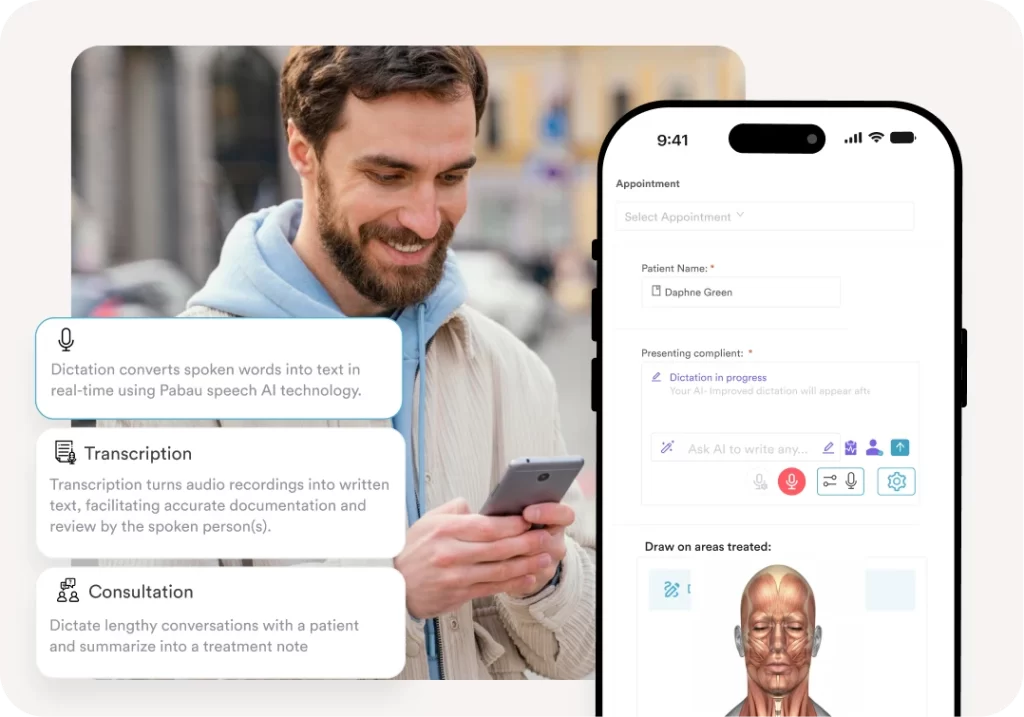
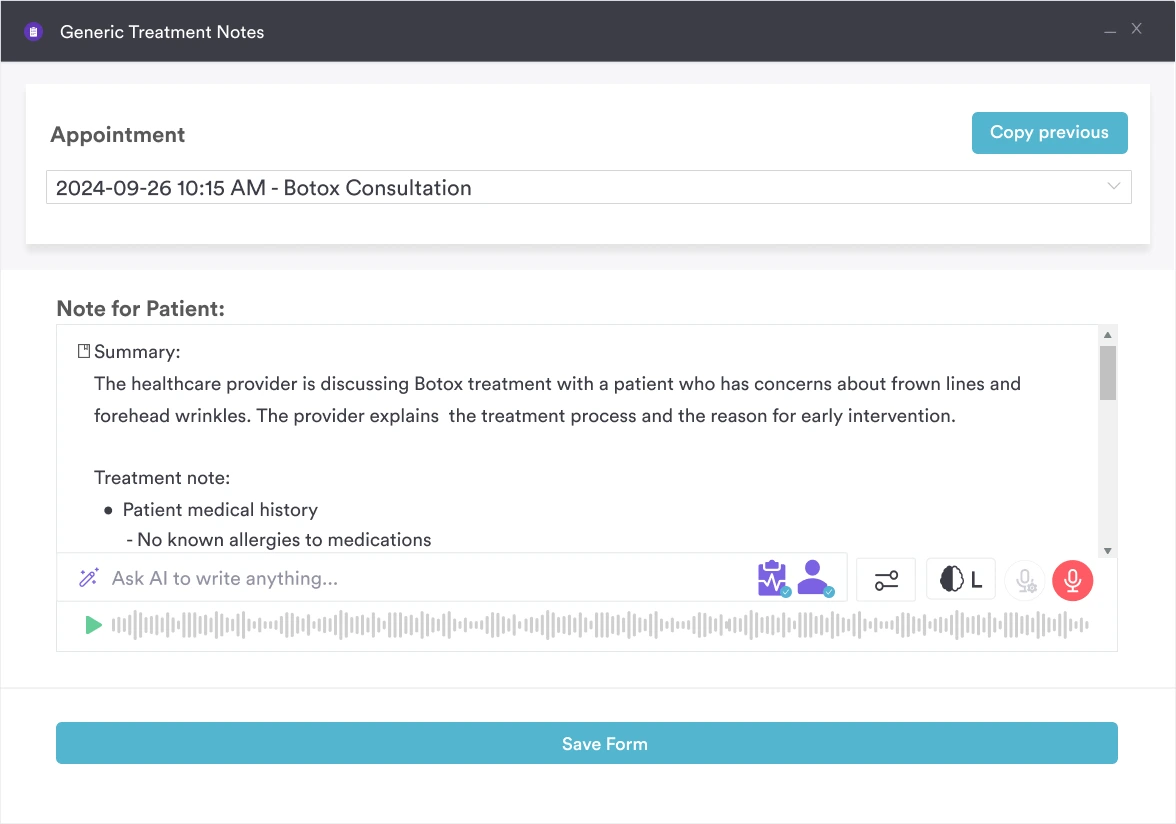
Quantitative elements improve documentation utility. Episode frequency, duration, and triggers (if identifiable) create a baseline for comparison. Many AI-powered clinical documentation systems now flag formal thought disorder mentions and suggest standardised phrasing. This reduces documentation time while maintaining clinical precision.
ICD-10 coding presents challenges since thought blocking lacks a specific code. Most clinicians code the underlying disorder (F20.9 for schizophrenia, F31.2 for bipolar disorder with psychotic features) and use the clinical note to detail thought process abnormalities. Some systems support supplemental codes for symptom categorisation, though its classification as a positive or negative symptom remains debated in the literature, with the TLC scale grouping it with positive thought disorder and the SANS scale categorising it under alogia (a negative symptom). Specificity of supplemental coding varies by jurisdiction and payer. A private practice seeing clients weekly needs the last note available before the next appointment starts.
HIPAA-compliant documentation matters for thought disorder assessment. Detailed descriptions of speech patterns pose minimal privacy risk compared to thought content. Focus documentation on observable phenomena rather than interpreting meaning. Digital forms with structured checkboxes for formal thought disorders balance thoroughness with efficiency, particularly in high-volume settings.
Antipsychotic medication represents first-line treatment for thought blocking associated with schizophrenia spectrum disorders. Second-generation antipsychotics generally show efficacy, though response varies individually. Thought blocking typically improves alongside other positive symptoms as medication takes effect over 2-4 weeks. Persistent thought blocking despite adequate antipsychotic dosing may indicate treatment resistance requiring specialist consultation.
Non-pharmacological management focuses on communication strategies. Speaking more slowly, using shorter sentences, and pausing between topics reduces cognitive load. When a block occurs, acknowledging it without pressure helps-asking “would you like to try again or move to something else?” respects patient autonomy. Some practitioners find written communication supplements helpful when blocks significantly impair verbal exchange.
Family psychoeducation improves outcomes. Relatives benefit from understanding that thought blocking reflects illness rather than rudeness or distraction. Teaching communication adaptations-allowing time after blocks, not finishing sentences for the patient, reducing environmental distractions-supports better interactions. Many families report reduced frustration once they recognise the phenomenon as a symptom.
Monitoring response requires systematic assessment across appointments. Comparing thought blocking frequency and severity over time indicates treatment adequacy. Improvement in thought blocking often parallels overall clinical improvement, making it a useful proxy for positive symptom control. Some clinicians use brief rating scales at each visit to track changes numerically.

Working with military families in your practice? military family care plan template This free template captures service member details, guardian information, and care arrangements for compliance.
Incorporating music into treatment sessions? music therapy worksheet This free template records how a client responded to music and what changed.
Screening for neurodivergent traits at intake? neurodivergent test template This clinician-facing screening form covers ADHD, autism, dyslexia, dyspraxia, and dyscalculia during intake.
Thought blocking is a clinically meaningful sign of formal thought disorder, and its severity often tracks overall illness acuity. Distinguishing it from absence seizures, medication effects, and thought withdrawal prevents diagnostic error and points to the right intervention. Structured documentation (with dedicated fields for formal thought disorder, longitudinal symptom tracking, and AI-assisted notes) is what turns a careful clinical impression into a defensible, monitorable treatment plan.
Book a demo with Pabau to see how mental health-ready EMR templates, AI scribes, and symptom tracking support accurate diagnosis and ongoing monitoring of thought blocking in everyday practice.
Normal speech pauses involve searching for words or consciously changing direction. Thought blocking creates complete interruption where the patient cannot access what they were saying. The patient remains aware something has stopped but genuinely cannot retrieve the thought, unlike deliberate pauses where the original idea remains accessible.
Yes. Thought blocking appears in schizoaffective disorder, acute mania with psychotic features, and severe depression with psychotic features. Any condition producing significant positive symptoms may include thought blocking. However, it occurs most frequently and persistently in schizophrenia spectrum disorders.
Document specific observations including episode frequency, duration, the exact point of interruption, whether the patient acknowledges it, and any triggers if identifiable. Record under “thought process” in the mental status examination. Include whether the patient shows awareness or distress about the interruptions.
Individual blocks typically last 10 seconds to one minute. Duration varies with illness severity and may range from brief pauses to extended silences. Blocks longer than two minutes warrant investigation for absence seizures or other neurological causes rather than pure thought blocking.
Yes, thought blocking typically improves alongside other positive symptoms as antipsychotic medication takes effect over 2-4 weeks. Persistent thought blocking despite adequate dosing suggests treatment resistance requiring specialist evaluation. Improvement in thought blocking frequency and severity indicates medication efficacy.
Communication ability depends on thought blocking severity and frequency. Mild cases allow effective communication with occasional interruptions. Severe cases significantly impair verbal exchange, requiring communication adaptations like written supplements, shorter sentences, and allowing time after blocks without pressure to resume.