How to open a peptide clinic: 7 steps for licensed practices
How to open a peptide clinic: run peptide therapy as a prescribed service inside...

Last Updated: Nov 19, 2026
The answer to how much do massage therapists make in the US is a median of $58,450 a year, or $28.10 an hour (May 2025). That figure comes from the BLS Occupational Outlook Handbook, which covers employed therapists and leaves out the 36% who are self-employed. The bottom 10% earned under $33,640, while the top 10% earned over $100,200.
A single number tells you little on its own. Pay moves with the employment model, the state, the specialization and how many patients fill the calendar. A therapist in a chiropractic office earns a median of $72,800, against $43,840 in hotels and resorts.

The US median wage for massage therapists was $58,450 a year, or $28.10 an hour, in May 2025, according to the BLS.
Hourly pay for employed therapists ran from $16.17 at the 10th percentile to $48.17 at the 90th.
Self-employed therapists keep the full session fee but pay their own rent, insurance, supplies and a 15.3% self-employment tax.
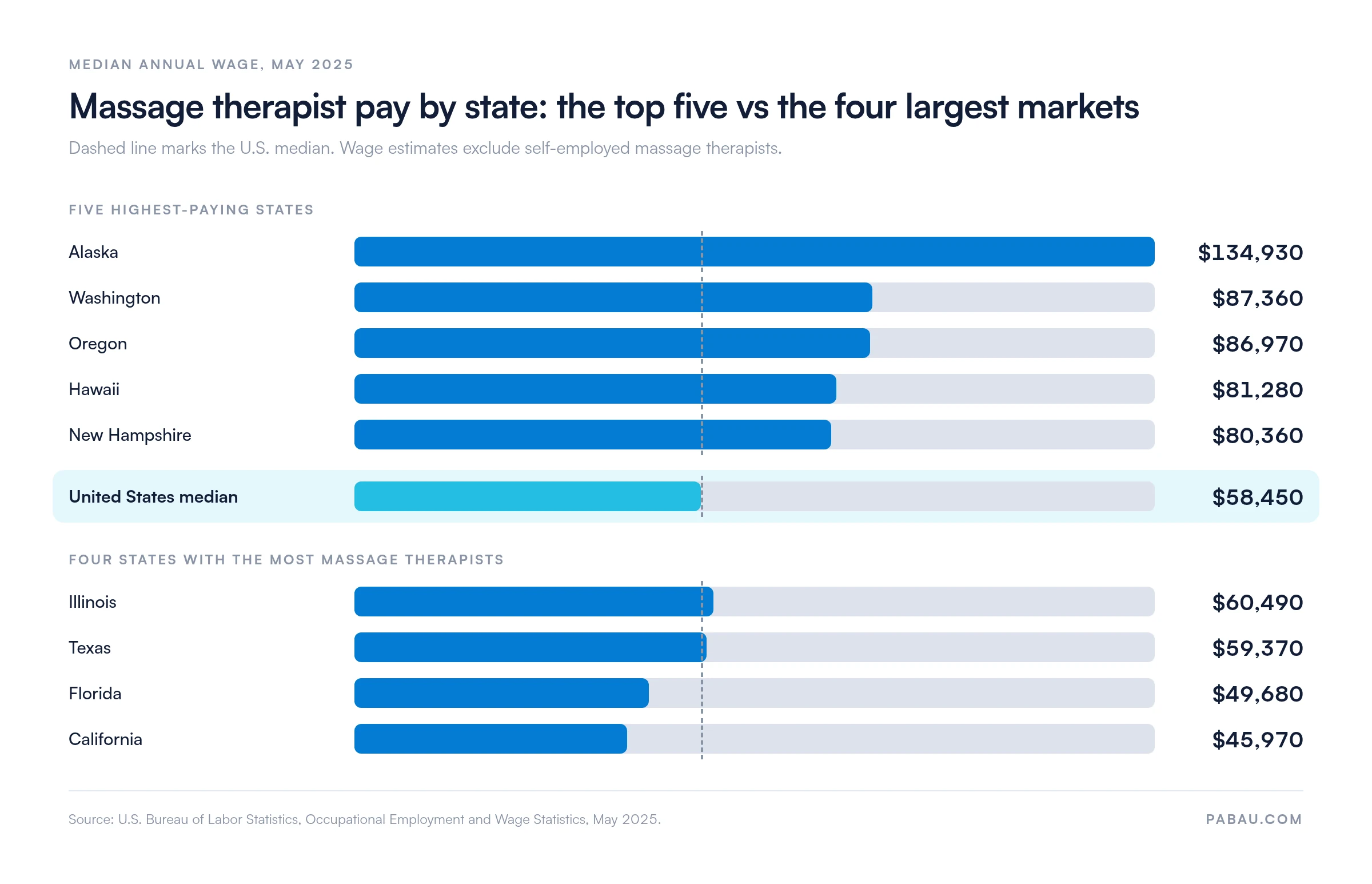
Alaska, Washington, Oregon, Hawaii and New Hampshire paid the highest state medians in May 2025.
Rebooking at checkout, fewer no-shows, packages and memberships raise income without adding hours on the table.
The Bureau of Labor Statistics (BLS) Occupational Outlook Handbook puts the US median annual wage for massage therapists at $58,450 in May 2025. That figure sits in the middle of a wide range. The bottom 10% earned less than $33,640, while the top 10% earned more than $100,200.
The middle half of employed therapists earned between $43,480 and $78,320 a year. BLS projects 15% employment growth from 2025 to 2035, with about 20,400 openings each year. That demand gives skilled therapists room to negotiate.
Employed versus self-employed status changes the picture considerably. A therapist working 35 to 40 hours a week in a hotel spa may earn a steady wage with benefits. A mobile or practice-based therapist charging $100 a session can gross more, but only while the schedule stays full. For spa and wellness operators managing several therapists, this range helps set fair pay benchmarks and keep good staff.
The median massage therapist makes $28.10 an hour, according to BLS data for May 2025. The middle half earned between $20.91 and $37.66 an hour, and hourly medians ranged from $17.54 in Louisiana to $64.87 in Alaska.
Pay structure changes what an hour is worth. Some spas pay a commission on each session instead of an hourly wage. At a 45% commission, a $100 hour-long massage pays the therapist $45 before tips.
Self-employed therapists set their own session rate. That gross figure must cover rent, insurance, supplies, marketing and self-employment tax before it becomes take-home pay.
Track your effective hourly rate as well as your session fee. Divide your weekly take-home income by every hour worked, including admin, travel and documentation. Then find the tasks that eat the most unpaid time and cut or automate them first.
Geography shapes massage therapist earnings more than almost any other single variable. In May 2025, Alaska, Washington, Oregon, Hawaii and New Hampshire paid the highest state medians, all above $80,000. California, the largest market with 14,600 employed therapists, paid a median of $45,970.
The table below uses BLS Occupational Employment and Wage Statistics (OEWS) for May 2025. The figures cover employed therapists only, so self-employed income is not included.
| State | Median annual wage | Median hourly wage | Employed massage therapists |
|---|---|---|---|
| Alaska | $134,930 | $64.87 | 570 |
| Washington | $87,360 | $42.00 | 3,740 |
| Oregon | $86,970 | $41.81 | 2,250 |
| Hawaii | $81,280 | $39.08 | 1,330 |
| New Hampshire | $80,360 | $38.63 | 270 |
| Massachusetts | $63,390 | $30.48 | 2,830 |
| New York | $62,630 | $30.11 | 4,500 |
| Illinois | $60,490 | $29.08 | 4,950 |
| Texas | $59,370 | $28.54 | 8,630 |
| United States (national median) | $58,450 | $28.10 | 98,790 |
| Florida | $49,680 | $23.88 | 9,280 |
| California | $45,970 | $22.10 | 14,600 |
State licensure also affects earning capacity. The Federation of State Massage Therapy Boards (FSMTB) runs the MBLEx licensing exam, and most states require a license or registration to practice. Practices hiring across several states, particularly those using multi-location practice management tools, need to budget for these wage differences.
About 36% of massage therapists are self-employed, according to the BLS, and their income potential per session is higher. A therapist charging $100 per 60-minute session and seeing six clients a day generates $600 in daily revenue. Over a 48-week year at four working days a week, that comes to roughly $115,000 in gross revenue before expenses.
The difference between gross and net income is where self-employment gets complicated. Room rental, liability insurance, supplies, continuing education and marketing all come out of gross revenue. Self-employed therapists in the US also pay a 15.3% self-employment tax on net earnings. Physical fatigue caps how many sessions a therapist can sustain each week.
Employed therapists trade upside for stability. The employer covers rent, supplies and marketing, and some settings add benefits. The setting matters as much as the job title. BLS median annual wages by employer type in May 2025 were:
Commission-based spa roles cap daily earnings at the number of sessions the employer books. Six $100 sessions at a 45% commission pay $270 for a full day before tax.
Self-employed therapists set their own rates, control their schedule and keep the full session fee. A therapist charging $120 a session for five sessions a day, five days a week, grosses $144,000 over 48 weeks. Rent, insurance, supplies, marketing and self-employment tax all come out of that figure.
That figure also assumes a full book. New practices often run below capacity while they build a referral base, so patient retention decides how fast income grows.
The most successful self-employed practitioners tend to combine three income streams: hands-on sessions, retail product sales and service packages sold in advance. A therapist working out of a wellness practice or chiropractic office can sell prepaid packages through online booking. That brings steadier annual income than relying on walk-ins.
Four variables drive the widest income differences among massage therapists: specialization, employment setting, client volume, and how tips and retail sales are tracked.
Not all massage modalities command the same rates. Sports massage therapists working with athletes or in sports medicine practices can charge premium session fees. Medical massage billed to insurance under CPT codes 97124 or 97140 adds a second revenue route alongside private-pay sessions. Lymphatic drainage and prenatal massage also carry premium positioning in private practice settings.
Certifications from the National Certification Board for Therapeutic Massage and Bodywork (NCBTMB) signal advanced competency and can support higher rates. Continuing education in high-demand specialties gives therapists more to charge for than a base license alone.
Where a therapist works matters as much as what they do. Settings tied to physical therapy or chiropractic practices pay more than hotel and resort spas, based on BLS medians. They may offer fewer chances to earn tips, though. Resort spas in tourist markets often top up lower base wages with gratuities.
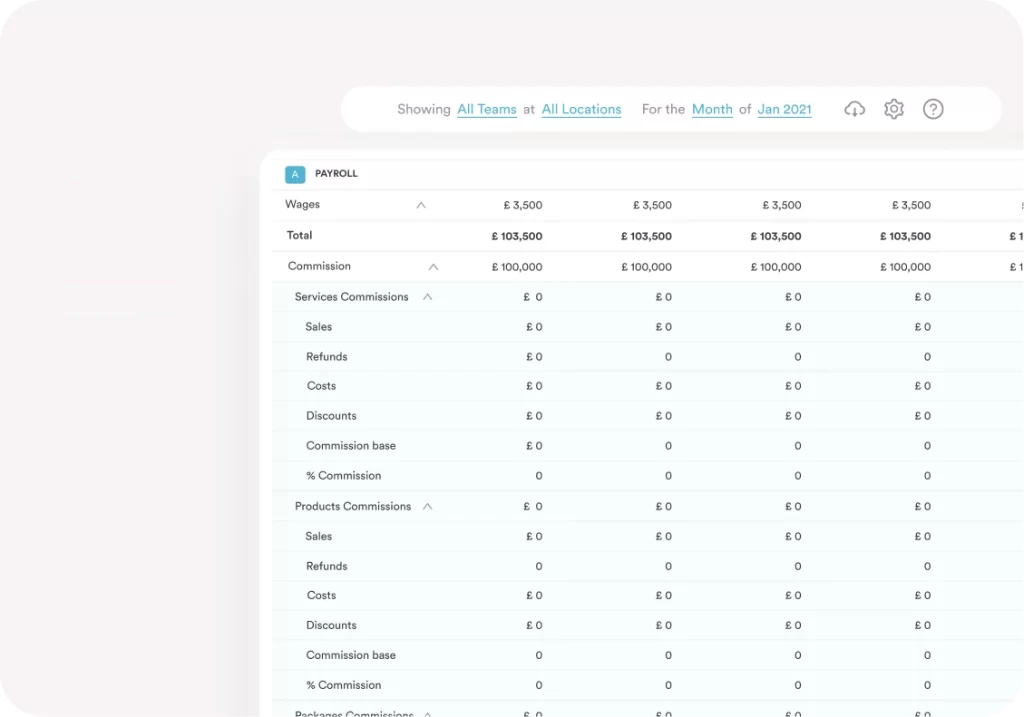
For practice owners, the setting also shapes how commissions, retail bonuses and shift premiums are paid. A tiered commission model for product sales can raise total pay without raising base wages. Commission tracking in Pabau, the practice software we build for spa and wellness businesses, totals these figures for each member of staff.
A therapist booked for six $75 sessions a day, five days a week, earns $2,250 a week. Over 48 working weeks, that is $108,000 gross. Cancellations, no-shows and quiet seasons pull that figure down.

Reducing no-shows directly improves annual earnings, and automated reminders are the most practical lever. Practices using online booking software with automated confirmations and reminders lose fewer sessions, which keeps therapist income steadier without adding volume.
Three operational habits hold income back. Open slots go unnoticed, rebooking is inconsistent, and retail and package revenue goes untracked. Fixing those three areas is where income growth comes from.
A Swedish or deep tissue generalist faces more price competition than a therapist certified in myofascial release, sports rehabilitation or oncology massage. Adding one advanced modality, and marketing it clearly, gives you grounds to raise your rate.
Review local rates every year rather than waiting years between increases. A $10 rise across 20 weekly sessions adds $10,400 a year over 52 weeks.
Rebooking at checkout, before the patient leaves, is one of the most reliable income levers a therapist has. A patient who leaves with the next visit booked no longer depends on remembering to call. Through the Client Portal, patients can book, reschedule or cancel within your policy, so follow-up prompts turn into appointments.

A missed appointment is income you can’t recover. At $100 a session, a 10% no-show rate on 25 weekly bookings costs about $13,000 a year. Deposit policies and automated reminders are the two most practical fixes.
Prepaid session packages and monthly memberships convert unpredictable income into recurring revenue. A patient on a monthly membership commits to regular sessions, which takes the guesswork out of the schedule. For solo practitioners and small practices, membership management features make these plans practical to run without manual tracking.
Run a rebooking audit once per quarter. Pull your rebooking rate for the last 90 days and compare it by therapist and service type. A low rate usually points to an inconsistent checkout conversation, so fix that first with a set script or an automated follow-up prompt.
International pay comparisons need care, because regulation, employment norms and currency all shape take-home pay. The UK and UAE run distinct licensing structures, and both affect who can legally practice and what they can charge.
In the UK, massage therapy is not a statutory regulated profession. Registration with the Complementary and Natural Healthcare Council (CNHC) or the General Council for Massage Therapies (GCMT) is voluntary. Formal qualifications and registration can help therapists win private practice and sports roles that pay more than general spa work.
No official UK pay series covers massage therapists. The National Careers Service massage therapist profile lists pay as variable, with typical hours of 30 to 39 a week and freelance work common. Self-employed therapists pay for room hire and professional indemnity insurance themselves. Once taxable turnover passes £90,000 in 12 months, they must register for VAT.
Therapists offering therapeutic massage in Dubai generally need a Dubai Health Authority (DHA) license, and Abu Dhabi licenses through its Department of Health (DoH). Those licensing rules decide which modalities a therapist can offer, and so their earning ceiling.
No official UAE source publishes a pay range for massage therapists, so treat online salary quotes with caution. When comparing offers, weigh the whole package, including any housing or benefits, alongside base pay.
Pabau puts bookings, reminders and payments on one calendar. Patients book themselves through online booking, and automated reminders go out before each visit. Fewer empty slots means more paid hours from the same week.
Recall workflows send SMS, email or WhatsApp messages and skip patients who already have a booking. Memberships and packages turn one-off visits into recurring revenue, and patients can view or pause a membership in the Client Portal. Commission tracking then shows what each therapist brings in, so owners can reward the people who rebook well.

Pabau brings online booking, automated reminders, memberships and commission tracking into one platform. Therapists get fewer empty slots and steadier income, with less admin.

Treat the national median as a starting point for planning income. What a massage therapist earns depends mostly on choices they control. Pick the employment model that fits your appetite for risk, then specialize in a modality patients will pay more for.
Protect the calendar before chasing a higher rate. Rebooking at checkout and fewer no-shows lift income faster than moving to a higher-paying state. Book a demo to see how Pabau keeps a massage schedule full and turns repeat visits into recurring revenue.

Want more of your patients to come back? Patient retention in physical therapy sets out the rebooking and follow-up habits that keep a hands-on practice’s calendar full.
Planning to go self-employed? Physical therapy business plan walks through costs, pricing and revenue projections for a new practice.
Need more bookings to fill the week? Chiropractic marketing sets out seven ways a hands-on practice wins new patients, from local SEO and reviews to paid ads.
Working alongside physiotherapists and sports rehab specialists? Sports medicine software explores how multi-discipline practices run shared schedules and records.
The median massage therapist in the US makes $28.10 an hour, according to BLS data for May 2025. The middle half of employed therapists earned $20.91 to $37.66 an hour. Self-employed therapists set their own session rate, but rent, insurance and self-employment tax come out of it.
Yes, particularly therapists who combine a specialization, consistent rebooking and recurring revenue from packages or memberships. The top 10% of employed therapists earned more than $100,200 in May 2025. BLS projects 15% employment growth from 2025 to 2035, with about 20,400 openings each year.
Yes, a minority do. The top 10% of massage therapists earned more than $100,200 in May 2025, according to the Bureau of Labor Statistics. With a median of $58,450, reaching six figures takes rates or volume well above average.
It depends on rate and volume. A therapist charging $100 a session for six sessions a day, four days a week, grosses about $115,000 over 48 weeks. Rent, supplies, insurance, marketing and the 15.3% self-employment tax come out of that before take-home pay.
Self-employed therapists have the higher ceiling, while employed therapists have steadier pay. Self-employed therapists keep the full session fee but carry every business cost. Employed pay depends heavily on setting: the BLS median was $72,800 in chiropractic offices and $43,840 in hotels and resorts in May 2025.
Alaska paid the highest median annual wage for massage therapists in May 2025, at $134,930, according to BLS data. Washington ($87,360), Oregon ($86,970), Hawaii ($81,280) and New Hampshire ($80,360) followed. All five sit well above the national median of $58,450.
The worked example in this guide assumes six sessions a day, five days a week. At $75 a session, that schedule earns $2,250 a week, or $108,000 gross over 48 working weeks. Adjust the session count for your own session length and rates.
Medical massage billed through insurance, sports massage with athletes and oncology massage in clinical settings tend to command the highest rates. Lymphatic drainage and myofascial release also carry premium pricing, particularly in post-surgical and rehabilitation settings. NCBTMB certification can help a therapist justify those higher fees.