

Fertility clinic marketing: Strategies that attract & convert patients
Fertility clinic marketing is how a fertility practice attracts, educates, and converts prospective patients through digital channels, clinical credibility, and empathetic communication. The strategies that work best are local SEO, educational content, compliant paid search, email nurture, and physician referrals. Each one pays off only when every inquiry is tracked through to a booked consultation. […]
Anticoagulant medication list
An anticoagulant medication list is a clinical reference that groups blood thinners by class, with generic and brand names, routes, monitoring needs and reversal agents. The core classes are warfarin, the direct oral anticoagulants (DOACs), the heparins and fondaparinux. All of them interrupt the coagulation cascade, which sets them apart from antiplatelets such as aspirin. […]
Cholesterol medication list
A cholesterol medication list organizes all FDA-approved lipid-lowering drugs by class, mechanism, generic and brand names, and typical dosing for quick clinical reference. This guide covers 10 drug classes, from statins through to newer agents like bempedoic acid and inclisiran. Each table gives dosing ranges, indications, and side effect profiles that clinicians and care coordinators […]
Mind over mood worksheet
A mind over mood worksheet is a cognitive behavioral therapy form that takes a client from a triggering situation to a balanced alternative thought. Christine Padesky and Dennis Greenberger wrote the set, and Guilford Press publishes it. The set has four forms, each with a different job. The 7-column thought record does the cognitive work, […]
SCOFF questionnaire: Free template
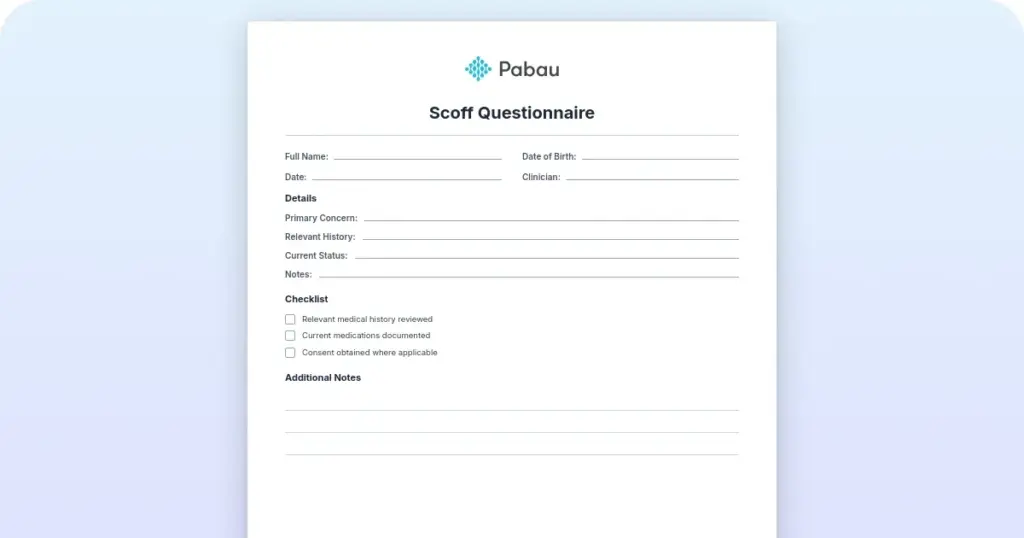
Download your free SCOFF questionnaire A printable five-question screen with fields for patient details and each yes or no response. The scoring rule and the referral threshold sit on the same page, so nobody has to look them up. Download template The SCOFF questionnaire is a five-question screen for probable anorexia nervosa or bulimia nervosa. […]
Operation notes: Free template for minor procedures
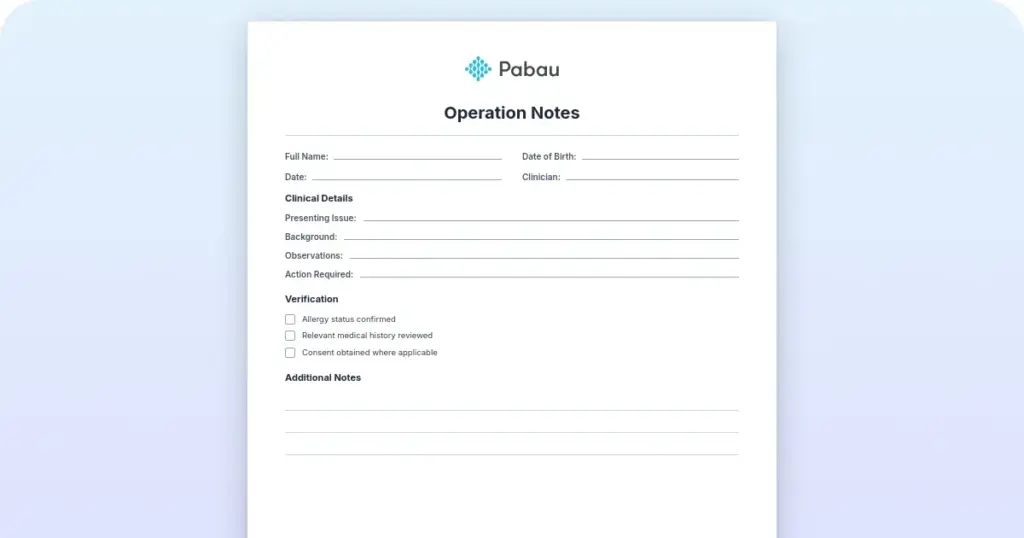
Download your free operation notes template A one-page operation note for minor procedures under local anesthetic. It covers patient details, allergies, a WHO checklist box, and the procedure. The rest of the page is your operative note, the anesthetic, sutures and dressings, post-operative instructions, and your signature. Download template An operation note is the record […]
Initial consultation note: Free sexology form template
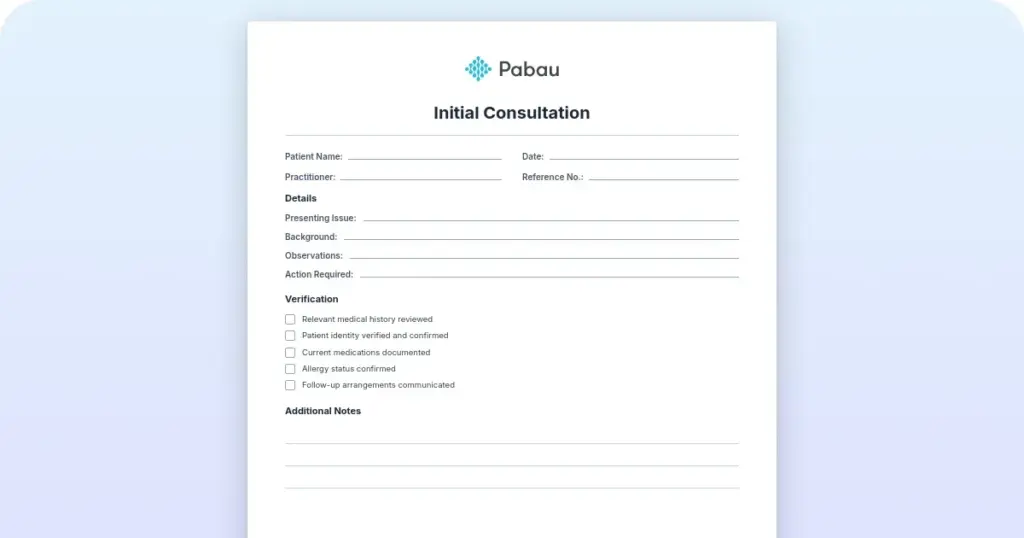
Download your free sexology initial consultation note A one-page clinical note for first sexual health assessments. It covers presenting symptoms, medical and drug history, fertility, sex and relationships, AMS, ESS and IIEF-15 prompts, measurements, impression, and next actions. Download template The initial consultation note you can download above is specialty-specific. It is a sexology consultation […]
Basal body temperature (BBT) ovulation chart
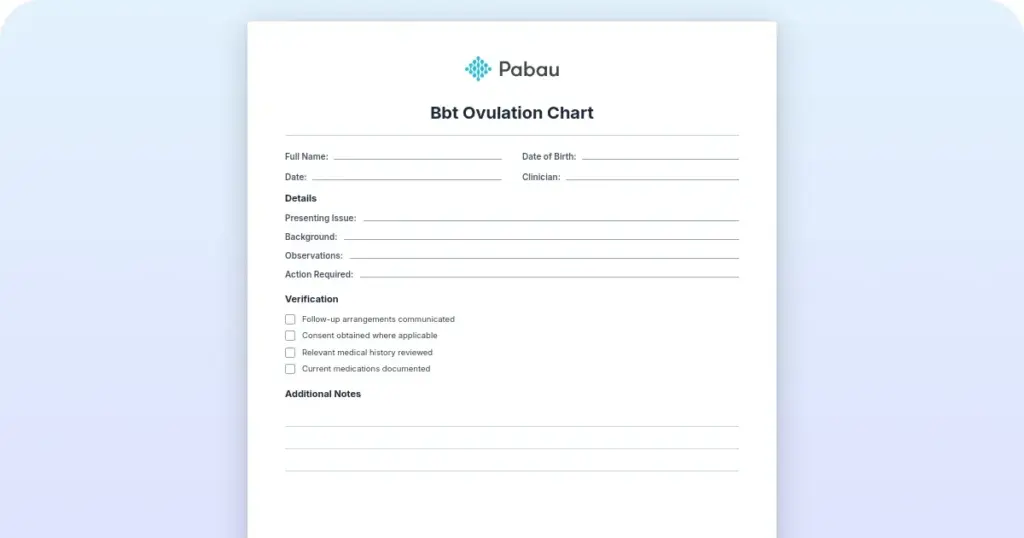
How to take your basal body temperature: Step by step A reliable BBT reading depends on a steady morning routine. Sleeping in, a fever, alcohol the night before or travel across time zones can all push the reading up or down. Follow these five steps every morning: Consistency matters more than perfection. One odd reading […]
17-hydroxyprogesterone test
Download your free 17-hydroxyprogesterone test reference guide 17-Hydroxyprogesterone test A ready-to-use clinical reference covering test indications, reference ranges by age and sex, specimen collection requirements, CPT code 83498, and result interpretation thresholds for CAH, PCOS, and adrenal disorder evaluation. Download template The 17-hydroxyprogesterone test is a cornerstone diagnostic for endocrine conditions affecting reproductive health and […]
AMH Levels Interpretation: What Every Fertility Clinic Should Know
A patient sees her AMH number on the lab printout and googles it before she ever reaches the consultation room. By the time you sit down with her, she has already decided what the result means, and she is usually wrong. According to CDC NCHS data, 13.4% of U.S. women ages 15-49 have impaired fecundity, […]