

HCPCS Code J2010: Lincomycin HCl injection billing guide

HCPCS Code J2010: Definition and code details According to the Centers for Medicare and Medicaid Services (CMS), HCPCS Code J2010 describes the injection of lincomycin hydrochloride (HCl), up to 300 mg. It belongs to the J-code range of HCPCS Level II. That range covers drugs given by injection, infusion, and other non-oral routes outside the […]
HCPCS Code J0895: Injection, deferoxamine mesylate, 500 mg

What HCPCS Code J0895 covers HCPCS Code J0895 sits in the HCPCS Level II code set, which the Centers for Medicare and Medicaid Services (CMS) maintains. J-codes cover drugs given by routes other than oral, including intravenous infusion and subcutaneous injection. One billing unit of J0895 is 500 mg of deferoxamine mesylate. Field Value HCPCS […]
HCPCS code J0713: Injection, ceftazidime, per 500 mg

Attribute Value HCPCS Code J0713 Official descriptor Injection, ceftazidime, per 500 mg Code category HCPCS Level II J-code (drug administration) Billing unit Per 500 mg administered Route of administration Intravenous (IV) or intramuscular (IM) Covered under Medicare Part B (physician-administered drug benefit) Drug class Third-generation cephalosporin antibiotic Ceftazidime: Clinical context and FDA-approved indications Ceftazidime is […]
Hydration Handout: Free Template
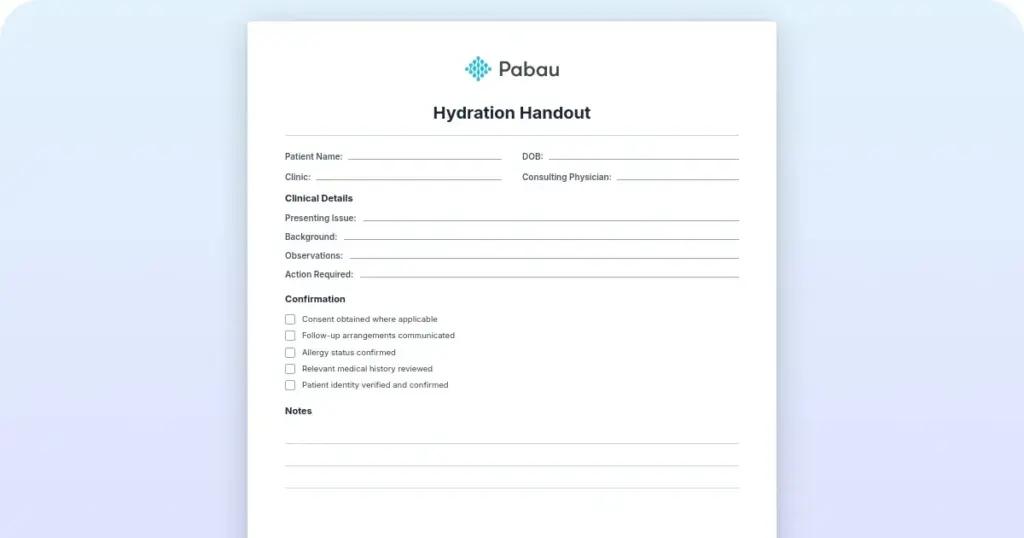
Download your free hydration handout A one-page patient handout with daily fluid intake targets, everyday hydration tips, a short list of hydration facts, and a list of high-water foods. It ends with a blank fluid intake tracker patients fill in by time of day. Download template A hydration handout gives patients a take-home reference for […]
Vitamin deficiency test: What it checks and how to read your results

What is a vitamin deficiency test? Most people assume they are getting enough nutrients from their diet. Research into IV vitamin therapy demand shows that practices increasingly see patients who are surprised by deficiency results, often after years of vague, unexplained symptoms. A vitamin deficiency test is a blood panel that measures circulating levels of […]
HCPCS Code J0610: Calcium gluconate injection, billing, and J0612 crosswalk

What is HCPCS Code J0610? HCPCS Code J0610 was a HCPCS Level II J-code describing an injection of calcium gluconate manufactured by Fresenius Kabi, billed per 10 ml. J-codes are used under Medicare Part B and Medicaid to bill for drugs administered in outpatient, physician office, and ambulatory surgical center (ASC) settings. The code was […]
HCPCS Code B4197: Parenteral nutrition billing guide

B4197 full code description and key parameters The official HCPCS Level II descriptor for B4197 is: Parenteral nutrition solution; compounded amino acid and carbohydrates with electrolytes, trace elements, and vitamins, including preparation, any strength, 74 to 100 grams of protein – premix. Breaking down every element of that descriptor matters for correct coding. The table […]
How to choose the best EMR for IV therapy practices

Key Takeaways A generic EMR won’t keep up. The best EMR for IV therapy is built around infusion work, tracking doses, protocols, and stock that’s consumed automatically as each treatment is logged. Weigh six feature areas: compliance and documentation, patient management, workflow efficiency, reporting, e-prescribing, and lab integration. IV therapy is a regulated medical procedure, […]
How to start an IV therapy business: Requirements and key steps

Prioritizing your health is more than just a trend, and it’s easy to see why IV hydration and wellness centers have surged in popularity in recent years. Opening an IV therapy business rides that same wave, but it carries medical licensing, staffing, and compliance rules a typical startup never has to think about. IV therapy […]
How to start a mobile IV therapy business

Starting a mobile IV therapy business takes four steps: settle ownership and licensing, appoint a medical director, hire licensed clinicians, and set up mobile operations. Which of those comes first depends on your state. California and Texas require a physician to own the practice, while Florida lets a nurse own it outright. The demand side […]