Maja Popovska
Anxiety tracker template: free printable PDF for clinicians
What is an anxiety tracker and how is it different from journaling? An anxiety t...

2
Last Updated: Oct 27, 2026
Free PDF 4 pages, print-ready Clinician-reviewed
A personal health plan template transforms how clinicians and patients partner on health goals. Rather than generic advice, a personal health plan template gives patients a concrete roadmap. It covers where they are today, where they want to be, and the exact steps to get there.
A ready-to-use personal health plan template covering patient details, health history, medical conditions, lifestyle factors, preventive care screening, mental health, and quarterly progress review sections.
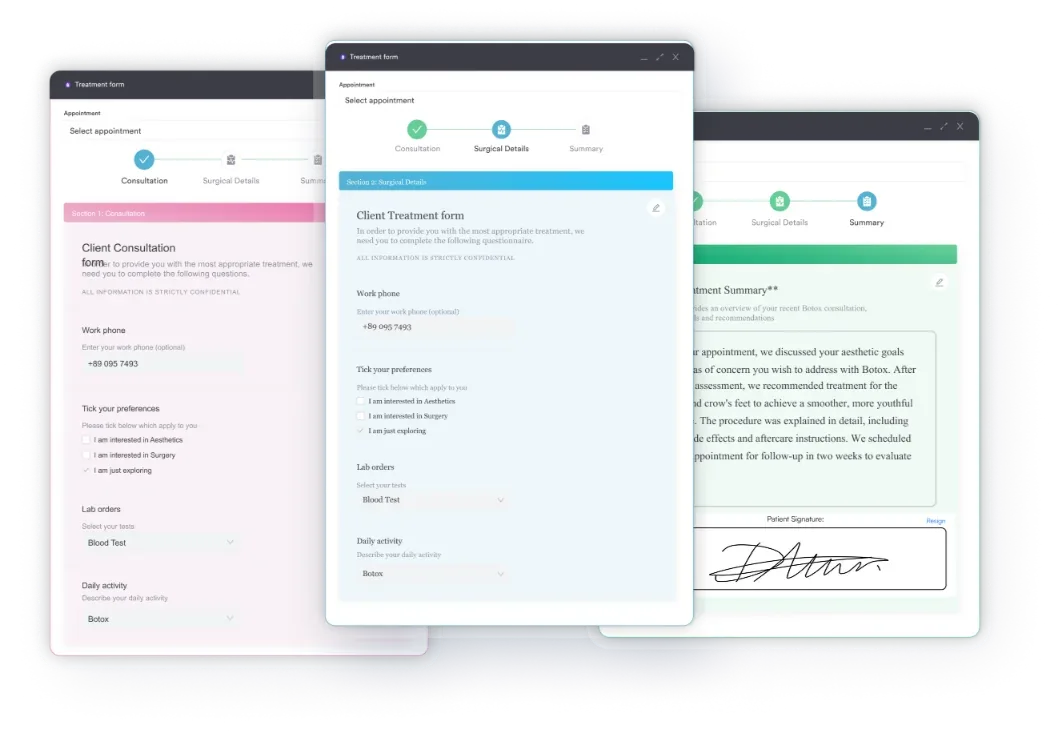
Start from scratch, or upload this PDF or any form you already use, and Pabau's AI Form rebuilds it with tick boxes, text fields and a signature. Attach it to the treatment once, and every patient gets it on time.
AI Form rebuilds the consent, history and aftercare forms you already use. You review each one, then publish.
Patients complete forms on their phone before they arrive, so the front desk stops retyping paper.
Every signed form is versioned and attached to the treatment record, ready when you need it.
Set how long a consent stays valid. Returning patients skip forms they have already signed.
Supports HIPAA and GDPR compliance AES-256 encryption 4.8 on G2 4.7 on Capterra Trusted by 4,000+ practices worldwide

A personal health plan template is a structured document that helps patients and clinicians collaborate on individualized health goals, preventive care strategies, and lifestyle changes.
Effective personal health plans include medical history, current medications, health assessments, SMART goals, preventive care timelines, and progress-tracking mechanisms.
Personal health plans improve patient engagement and adherence to treatment by making health management actionable and measurable rather than abstract.
Pabau helps practices create, share, and track personal health plans digitally through the patient portal, automating workflows that would otherwise need manual document handling.
This guide covers what belongs in an effective personal health plan and how to use the template with patients. It also covers how practice management software like Pabau keeps plans current and patients engaged.
A personal health plan template is a structured document that partners patients with clinicians. Together they map out individualized health goals, current medical status, lifestyle modifications, and preventive care steps. Unlike a generic insurance plan, a personal health plan is outcome-focused. It names specific, measurable objectives a patient will work toward over weeks or months.
The NHS Long Term Plan and CDC chronic disease guidance both recognize personal health plans as essential tools for patient empowerment. A written plan, not just verbal advice, raises adherence rates and improves outcomes.
A comprehensive personal health plan template brings together multiple dimensions of a patient’s wellbeing. Here are the core sections every template should contain:
Medical history and current conditions: Patients list chronic diseases, past surgeries, allergies, and family history. Clinicians use this to spot risk factors and tailor recommendations.
SMART health goals: Instead of “eat healthier,” the plan might specify “increase daily vegetable servings to 5 portions by 12 weeks.” It could instead say “walk 30 minutes, 5 days per week.” Measurable goals make progress visible and motivate follow-through.
Lifestyle action steps: For each goal, the plan names two or three concrete actions the patient can take right away, such as:
Naming the exact action removes the guesswork of where to start. For diet-related goals.
Using a personal health plan template with patients is straightforward when you follow a step-by-step workflow:
GP practices often build forms like this into GP clinic software so records stay complete and auditable.
The SMART framework (Specific, Measurable, Achievable, Relevant, Time-bound) turns vague intentions into actionable plans. A SMART goal includes a number, a deadline, and a concrete behavior change, not a feeling or outcome.
Examples: “Reduce daily sugar intake from 80g to 40g by 12 weeks” or “Attend mental health counseling once a week for 8 weeks, then reassess.” Wellness clinics and functional medicine practitioners use SMART goals because they force clarity. Both the clinician and patient know exactly what success looks like.
Patients with ongoing conditions, such as diabetes, hypertension, asthma, or autoimmune disease, benefit from a specialized variant of the personal health plan template. This version emphasizes medication adherence, symptom tracking, and regular monitoring intervals aligned with clinical guidelines.
Key differences: A chronic condition plan adds three elements on top of the standard template.
This specificity catches problems early.
The WHO chronic disease framework emphasizes the role of structured plans in reducing hospital admissions and improving quality of life. A written plan keeps care consistent across practice visits.
Mental wellbeing is integral to overall health, yet many generic personal health plan templates omit psychological screening or mental health goals entirely. A mental health-inclusive template addresses anxiety, depression, stress management, and emotional resilience.
Sections to add for a mental health-inclusive plan:
An equanimity meditation script gives patients a starting point for a daily meditation goal, rather than a vague instruction to “meditate more.” Mental health clinicians report that naming psychological goals alongside physical ones improves both treatment adherence and patient satisfaction.

Pabau keeps every personal health plan, review date, and progress note on one patient record, with automated reminders ahead of each check-in. Practices that need multiple plan formats can add Care Plus, Pabau’s add-on for additional patient care features, without extra manual setup.

Before completing the personal health plan template, a structured health assessment establishes the baseline. This includes a review of medical history, current symptoms, lifestyle habits, and health risk factors. A baseline assessment prevents you from setting unrealistic goals or missing critical health risks.
Assessment components typically include:
Patients complete a health questionnaire online before the appointment, which saves clinical time and gathers complete data. A family medical history form completed at the same time fills in the background a single appointment often can’t cover.
A preventive care plan turns “get regular checkups” into a specific schedule a patient can actually follow. The frequencies below broadly follow U.S. Preventive Services Task Force (USPSTF) and CDC guidance for average-risk adults. Treat them as a starting framework, and adjust earlier or more often for anyone with existing conditions or a strong family history.
Build this checklist into the personal health plan template as its own section, with a due date next to each item. An overdue screening becomes visible at a glance instead of sitting buried in a chart note from three visits ago. Guidelines are updated periodically, so confirm current recommendations at each annual review rather than relying on what was true when the plan was first written.
In practice, the personal health plan rarely starts as a blank template handed to a patient. Most practices build it into the intake and follow-up workflow they already have, so it doesn’t become a separate piece of administrative work.
A typical flow looks like this: the patient completes a health questionnaire in the patient portal before their first visit. During the appointment, the clinician reviews the answers and agrees on two or three SMART goals with the patient. The plan then saves directly to the patient’s record, with no separate document to print, email, or lose track of. Reminders go out automatically ahead of the review date, so the front desk isn’t the one keeping a spreadsheet of who’s due a check-in.
Pabau supports this by keeping the questionnaire, the goals, and the review schedule attached to the same patient record. That beats having them spread across a portal, an inbox, and a paper file. Practices offering multiple plan variants, such as one for chronic condition management and one for general wellness, don’t have to rebuild the format each time.
The result for the front desk:
Setting goals is the easy part. Tracking whether they’re actually being met is what makes a personal health plan different from advice a patient hears once and forgets.
Match each goal to something measurable, tracked at the same interval every time:
At each review, typically every 8-12 weeks, compare the current numbers against the baseline set in the health assessment, not just against the last visit. A goal that hasn’t moved across two reviews in a row usually needs a different action step, not just more time.
Tracking digitally makes that comparison quicker than paper. Pulling up the last three reviews side by side takes one click. Flipping back through printed notes to check the trend takes much longer.
Most of what makes a personal health plan work happens between visits, not during them. A goal set in April is only useful if someone can check in June whether it moved. Digging through paper notes or a folder of old PDFs defeats the point.
Pabau keeps the plan, the review date, and every past check-in on one patient record. A clinician opens one screen, instead of piecing the history together from a portal, an inbox, and a paper file. Reminders go out automatically ahead of each review, so the front desk isn’t the one tracking who’s due a check-in on a spreadsheet.
The result is a plan that stays useful long after the appointment ends. Patients can check their own goals from the patient portal between visits. Clinicians walk into a review already knowing whether a number moved, instead of starting from scratch.
A template only pays off if someone actually fills it in, reviews it, and adjusts it when a goal stalls. The paperwork is the easy part. The habit of a consistent 8-12 week review is what separates a plan that changes outcomes from one that sits in a drawer.
Start small. Pick two or three goals with the next patient you see, set a review date before they leave, and track the same numbers every time. Book a demo to see how Pabau keeps that habit running automatically, from the first questionnaire to the last check-in.

Documenting a suspected UTI? UTI system disorder template covers risk factors, diagnostic criteria, medications, and urosepsis escalation protocols.
Looking beyond a patient’s symptoms? Wellness review assessment template examines lifestyle, mental health, and social factors alongside a patient’s personal goals.
Checking for vestibular weakness? Caloric testing guide checks each ear alone using the bithermal protocol and the COWS rule.
A personal health plan is a written document a patient and clinician create together. It outlines individualized health goals, current medical status, lifestyle changes, preventive care timelines, and progress-tracking milestones, turning vague health intentions into measurable, actionable steps.
An effective personal health plan includes medical history, current conditions, and a list of medications. It also covers SMART health goals, lifestyle action steps for each goal, and a preventive care checklist aligned with clinical guidelines. Round it out with mental health screening or goals and a review date, typically every 8-12 weeks.
Personal health plans should be reviewed every 8-12 weeks for most patients. Chronic conditions may warrant more frequent reviews (monthly or quarterly) to monitor medication adherence, track symptom changes, and adjust goals based on progress.
Yes. Research and clinical frameworks from the NHS, WHO, and CDC show that written personal health plans improve patient adherence to treatment. They also increase engagement in health-promoting behaviors and lead to better clinical outcomes, particularly for chronic disease management.
A standardized template provides a foundation, but personal health plans should be customized to each patient’s specific conditions, goals, and risk factors. Mental health inclusion, preventive care items, and medication sections may vary by patient. Digital systems like Pabau allow you to build patient-specific variants quickly.
A personal health plan is patient-centered and focuses on the individual’s goals and behaviors. A care plan is clinician-centered and documents the clinical team’s treatment decisions. A comprehensive approach includes both. The clinician writes the care plan, or treatment protocol, and the patient keeps a personal health plan of goals and action steps that lines up with it.