List of vitamins: All 13 with RDAs and deficiency signs
A list of vitamins names the 13 essential vitamins the body needs from food or s...

Last Updated: Oct 8, 2026
A list of keto friendly foods is the reference you use to stay in ketosis without recalculating every meal. Meat, fish, eggs, full-fat dairy, oils, and leafy greens are all near-zero net carbs, so portions are generous. Berries, nuts, and seeds fit in measured amounts. Grains, sugar, legumes, starchy vegetables, and most other fruit do not fit at all.
Most keto protocols cap net carbs at 20 to 50 grams a day, which is what turns a food list into a budget. This guide gives the net carb count per standard serving for every category, so you can spend that budget deliberately. Download the free PDF below and take it to the grocery store.
A categorized reference with net carb counts per serving for proteins, fats, vegetables, fruits, dairy, nuts, condiments, and drinks. It also marks the foods to avoid, so grocery lists and counseling notes stay consistent.
Download template
A standard keto protocol caps net carbs at 20 to 50 grams a day, with 70 to 75 percent of calories from fat.
Meat, fish, eggs, full-fat dairy, oils, and leafy greens carry almost no net carbs, so portions can be generous.
Berries, nuts, seeds, and above-ground vegetables fit keto in measured servings rather than unlimited ones.
Grains, sugar, legumes, starchy vegetables, and most fruit are off the list because one serving can use up the day.
Net carbs are total carbohydrates minus fiber and sugar alcohols, which is why high-fiber foods count for less.
The ketogenic diet is a very low-carbohydrate, high-fat eating pattern that switches your fuel source from glucose to ketones. Most protocols aim for 20 to 50 grams of net carbs per day. That is roughly the carbohydrate in two slices of bread. The macronutrient split runs about 70 to 75 percent fat, 20 to 25 percent protein, and 5 to 10 percent carbs.
That split triggers ketosis, a metabolic state in which your liver converts stored and dietary fat into ketones. Your brain and body then run on those ketones instead of glucose.
Net carbs are total carbohydrates minus fiber and sugar alcohols. They represent the carbohydrate your body digests and metabolizes. A food with 10 grams of total carbs and 7 grams of fiber has only 3 grams of net carbs. That usually fits within a keto plan.
Reading those counts as a daily budget is what makes the list usable. One serving of a food can take a third of a 20 gram day, while another barely registers.
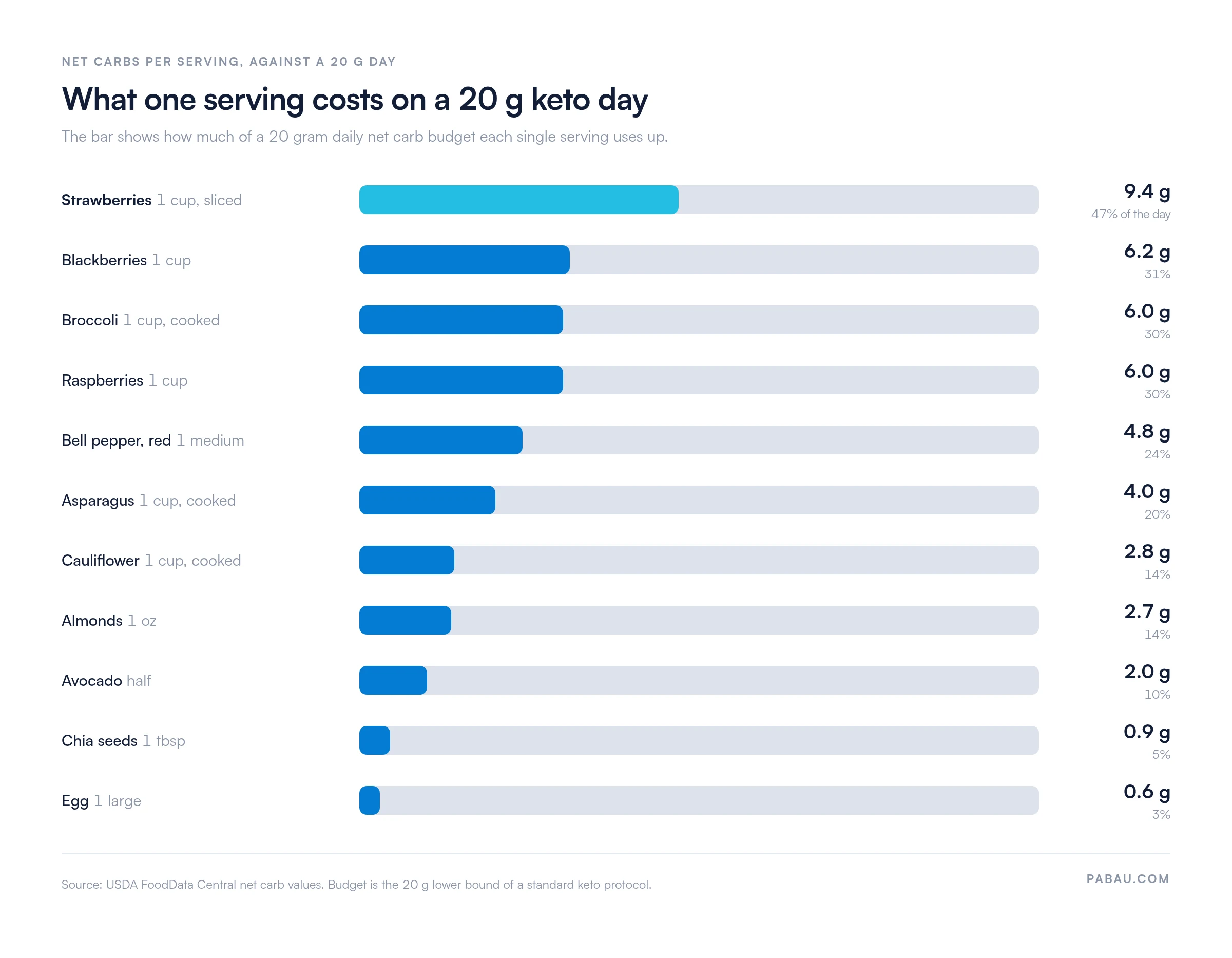
The downloadable list is grouped by category. Proteins, fats, vegetables, fruits, dairy, nuts, condiments, and beverages each have their own block, with net carbs per standard serving beside every entry. Print it or save it to your phone, then check the label on any packaged food before you buy it.
Counts come from USDA FoodData Central rather than from other food lists. That matters more than it sounds, because several widely shared keto lists round broccoli and strawberries down by two to three grams a cup.
Protein is the foundation of a keto plate because it is nutrient-dense, filling, and close to zero carbs. All cuts of beef, pork, lamb, chicken, turkey, and fish are approved. Fattier cuts such as brisket, pork belly, and chicken thighs with skin suit keto macros best. Eggs carry no meaningful carbs and supply choline and lutein.
Fatty fish earns its place twice over. Salmon, mackerel, and sardines deliver omega-3 fatty acids at zero carbs. Shellfish needs more attention to portion size. Shrimp and crab are very low carb, but clams and mussels carry more carbs per ounce and should be tracked.
Prioritize whole cuts over processed meats. Deli meats and sausages can fit keto, but many carry added sugar that pushes the carb count up.
Fat supplies most of your calories on keto, so the oils you choose matter. Olive, avocado, and coconut oil are zero carbs and bring micronutrients and anti-inflammatory compounds. Butter and ghee carry the fat-soluble vitamins A, D, E, and K while staying carb-free. Avocado works as both a fat source and a whole food, and its fiber keeps net carbs low.
Skip seed oils high in omega-6 fat, including canola, soybean, and sunflower. Mayonnaise, cream, and nut butters fit keto as long as they are unsweetened, so check the label for hidden sugar. One tablespoon of olive oil is about 120 calories and zero carbs. Portion awareness matters for weight management, not for carb counting.
Non-starchy vegetables supply most of the micronutrients and fiber on keto, and portions are generous. Leafy greens such as spinach, kale, arugula, and lettuce are close to carb-free and work as the base for salads and sautés. Zucchini and cucumber sit under 2.5 grams of net carbs per cup.
Cruciferous vegetables need a second look. Cauliflower comes in at 2.8 grams of net carbs per cooked cup, but broccoli is roughly double that at 6 grams. Asparagus lands at about 4 grams per cooked cup. None of them break a keto day alone, though two cooked cups of broccoli would take most of a 20 gram budget.
Bell pepper counts depend on color rather than holding steady across the shelf. A medium green pepper has about 2.8 grams of net carbs, while a medium red pepper has closer to 4.8 grams. Red peppers ripen longer and hold more sugar, so reach for green when your budget is tight.
Starchy vegetables such as potatoes, corn, peas, and squash carry too many net carbs for standard keto. Root vegetables like carrots and beets run high as well, so track the portion if you include them. A rough rule holds up well here. Vegetables grown underground tend to be higher carb, and vegetables grown above ground tend to be very low.
Most fruit carries too much fructose for standard keto, and berries are the workable exception. Among berries, raspberries and blackberries are the lowest in net carbs because their fiber is so high. Strawberries run higher than many keto lists suggest, at about 9.4 grams of net carbs per sliced cup.
Avocado is technically a fruit, and it is the strongest keto option in this category. It combines high fat, useful fiber, and very low net carbs. Unsweetened coconut, either shredded or as oil, is the other fruit-based staple.
Avoid watermelon, apples, bananas, oranges, and grapes, because their sugar load exceeds a single meal’s carb budget. Portion the low-sugar fruits carefully too. A full sliced cup of strawberries takes nearly half of a 20 gram daily limit.
Full-fat dairy is a keto staple because it is high in fat and protein and low in net carbs. Cheese of any variety averages under 1 gram of net carbs per ounce, and it is one of the most filling foods on the list. Cream, butter, and ghee have zero carbs and work well for cooking and coffee.
Greek yogurt and cottage cheese are lower carb than standard yogurt, but portion size decides whether they fit. A half-cup of Greek yogurt carries about 2 to 3 grams of net carbs. A full cup of regular yogurt can pass 10 grams.
Avoid flavored yogurts, sweetened cream cheese, and low-fat dairy, since manufacturers add sugar to replace the fat they removed. Milk carries too much lactose for strict keto, whole milk included. Use heavy cream or unsweetened almond milk instead.
Nuts and seeds make good keto snacks, but the carbs add up faster than a handful suggests. Macadamias and pecans are the lowest carb options, with almonds, walnuts, and Brazil nuts close behind. Cashews and peanuts run higher than the rest, so leave them off.
Chia and flaxseed are a different case. Both are so high in fiber that most of their total carbohydrate never counts. A tablespoon of chia seeds carries around 6 grams of total carbs but under 1 gram of net carbs.
Condiments hide carbs in added sugar, which is where a careful day quietly falls apart. Unsweetened mayonnaise is zero carbs and works for binding meats and salads.
Mustard, hot sauce, and vinegar-based dressings also fit at small portions. Ketchup, BBQ sauce, and sweet relish do not, and many store-bought dressings carry more sugar than they appear to.
Stevia, erythritol, and monk fruit let you keep desserts and sweetened drinks without a glucose spike. Sugar alcohols such as sorbitol and xylitol can cause digestive upset at higher doses. Erythritol and monk fruit are usually well tolerated. Check the label on any packaged keto product, because some carry enough carbs to end ketosis.
Water, coffee, and unsweetened tea are the zero-carb base. Heavy cream, unsweetened almond milk, or coconut milk add fat to coffee without carbs. Regular milk contains lactose, so unsweetened almond, coconut, or macadamia alternatives are the better swap at 0 to 1 gram of net carbs per serving.
Diet sodas sweetened with aspartame or sucralose are carb-free, though their effect on insulin and appetite is still debated. Alcohol can fit keto in the form of dry wine, spirits, and light beer. Those carbs still count toward your daily total, and alcohol slows fat burning while your body clears it. Sugary cocktails, regular beer, and sweet wine stay off the list.
Portable snacks are what keep a keto day intact between meals. Hard cheese, pepperoni, unsweetened beef jerky, macadamias, and olives all travel well. Pork rinds are zero carbs and cover a salt craving. Celery with almond butter or guacamole works when you want something fresh.
Pack snack containers at the start of the week so a high-carb choice is never the convenient one. Hunger at work or in transit is the most common reason a keto plan slips. Having a container already packed removes the decision.
Clear elimination is what makes ketosis reliable. Grains are off the list, including bread, pasta, rice, oats, and cereal. One slice of bread carries 12 to 15 grams of net carbs, often more than half a day’s allowance. Sugar and sweets go the same way, from candy and soda to baked goods and desserts.
Legumes are high in carbohydrate as well as protein, so beans, lentils, and chickpeas do not fit despite being plant-based. A vegan keto meal plan builds protein from tofu, tempeh, and seitan. Starchy vegetables such as potatoes, corn, carrots, and beets are out, as are most fruits. Dried fruit and fruit juice are the highest-carb items in the produce aisle.
Processed and low-fat products usually replace the removed fat with sugar, so read those labels closely. A 20 gram ceiling can feel too strict to sustain. A broader low-carb food list gives you more foods at a higher daily limit.
Three steps get a first keto week off the ground. Set your personal carb limit first, and most beginners start at 20 grams of net carbs a day. Clear the pantry second, removing bread, pasta, cereal, sugary condiments, and the snacks you reach for without thinking.
Plan the first week third, building each meal from a protein, a fat, and a low-carb vegetable on this list. A typical plate is 6 ounces of grilled salmon, half an avocado, and spinach sautéed in butter. A structured 7-day keto meal plan saves you the decisions while your palate adjusts.
Do not aim for a perfect first day. The switch to ketone metabolism takes three to seven days, and that adjustment period is what people call the keto flu. Staying hydrated and keeping electrolytes up shortens it. Tracking what you eat during that week shows which foods keep you in ketosis and which stall you.
Review your planned meals before you leave, then work back to quantities from this list. Group the shopping list by store layout rather than by food category, which keeps you out of the aisles stocked with bread and snacks.
Read the nutrition label on packaged items and check the count against the list. Frozen vegetables without sauce are as keto-compliant as fresh and usually cost less. Buying in bulk helps, since a five-pound bag of chicken thighs beats individual portions on price. Keep the PDF open on your phone when a product’s count is unclear.
You may want a shopping template that covers a whole household, not just one protocol. Our healthy grocery list covers the same aisles without the carb ceiling.
Dietitians and weight loss practices hand out a food list at the first consultation. They then wait until the follow-up to find out how the week actually went. Recall is patchy by then, and the notes from session one sit somewhere other than the client’s food diary.
Pabau, practice management software built for weight loss and metabolic practices, closes that loop. Digital intake forms collect food recall and symptom data before the client arrives, so the session starts with the week already documented. Every response lands in the same client record as the consultation note and the weight chart.
Automated follow-ups go out on your schedule rather than on your admin’s memory. A client who downloaded this food list at week one can get a check-in at week two. A re-assessment form can follow at week six, all from one template. Adherence data then builds up per client instead of per appointment.
Every subscription includes every feature, so forms, charting, reporting, and booking come with the platform rather than as upgrades. You can see the full workflow on our weight loss clinic software page.

Pabau’s digital forms and automated follow-ups collect client food recall before each visit and file it in the same record as the consultation note. Your dietitians walk into every session with the week already documented.

The counts in this guide matter more than the categories do. They are what let you spend 20 to 50 grams a day on purpose rather than by accident.
Expect the first two to three weeks to take deliberate effort. After that, the same twenty or so foods will cover most meals and you will check the PDF far less. Keep it for the edge cases, which are usually a new product, a restaurant menu, or a fruit you are unsure about.
Keto asks for precision across a narrow band of foods. Cheese, salmon, and butter are unlimited in any practical sense. A cup of strawberries is the item that needs measuring.
Download the PDF, print it, and keep it with the shopping list for the first month. Book a demo to see how Pabau helps dietitians distribute food lists, collect food recall, and track keto adherence across a caseload.

Ready to turn the food list into a plan? Ketogenic diet plan sets out the macro targets and weekly structure behind these foods.
Wondering how Atkins differs from keto? Atkins diet template walks through the phased carb reintroduction that keto leaves out.
Considering an all-meat approach? Carnivore diet plan template covers what changes when the vegetables come off the list too.
Need protein targets alongside the carb ceiling? High protein low carb diet plan balances both for clients building or holding muscle.
Working with insulin resistance? Insulin resistance diet plan adapts carb restriction for metabolic clients who need a gentler ceiling.
Meat, fish, eggs, full-fat cheese, cream, butter, oils, and non-starchy vegetables come closest to unlimited. Their net carbs are low enough that a realistic portion will not exceed your daily limit. Calories still matter for weight loss, but fat and protein are filling enough that most people stop counting them.
Start each meal with a protein, add a fat, then add a low-carb vegetable. Repeat that pattern across the week and vary the proteins for nutritional range. Add cheese or nuts for between-meal satiety. The downloadable list gives the net carb count for every choice.
Most fruit carries too much natural sugar for standard keto, and berries are the exception. Their fiber pulls net carbs down to a workable level. A half-cup of berries with whipped cream is a realistic keto dessert. Watermelon, apples, bananas, oranges, and grapes stay off the list.
No. Watermelon runs about 7 to 8 grams of net carbs per 100 grams because of its sugar content. One wedge or slice, roughly 286 grams, carries 25 to 30 grams of net carbs. That is more than an entire 20 gram keto day. Berries or avocado are the keto-compliant fruit options.
No. A half-cup of cooked black beans carries about 12.9 grams of net carbs, from 20.4 grams of total carbohydrate minus 7.5 grams of fiber. That is most of a 20 gram keto day in one side dish. Chickpeas, lentils, and pinto beans land in the same range. Non-starchy vegetables give you the fiber without the carb load.
Standard ketogenic protocols cap net carbs at 20 to 50 grams a day. Most people reach ketosis consistently at 20 to 30 grams. Athletic or larger individuals sometimes hold ketosis up to 50 grams. Track intake with a food diary or app, and raise the ceiling only after you reach your goal.