Patient financing: How to offer it and stay compliant
Patient financing lets patients spread the cost of treatment over weeks or month...

Last Updated: Oct 7, 2026

A BMAC injection concentrates stem cells and growth factors from a patient’s own bone marrow to repair damaged joints, tendons, and bones.
The procedure takes 60 to 90 minutes, and most patients return to light activity within a few days.
Evidence is strongest for knee osteoarthritis, rotator cuff tears, and non-union fractures.
Expect $3,000 to $5,000 per session in the US and £2,000 to £5,000 in the UK, rarely covered by insurance.
BMAC carries a higher concentration of mesenchymal stem cells than PRP, which suits more advanced tissue damage.

Download this free BMAC injection patient assessment worksheet. Screen candidates, document the procedure, and track outcomes with structured follow-up fields.
About 33 million US adults live with osteoarthritis, according to the CDC. Most cycle through cortisone shots, hyaluronic acid, and physical therapy long before joint replacement is on the table. BMAC injection has captured patient attention in that stretch of the treatment ladder.
The procedure draws a small bone marrow sample from the iliac crest and spins it down in a centrifuge. That concentrates mesenchymal stem cells, platelets, and growth factors, which go straight into the damaged tissue.
Patient-facing explainers stop at the biology. A practice also has to run the service, which means screening candidates, pricing the session, and tracking outcomes over years rather than weeks. This guide covers that side.
A BMAC injection is concentrated bone marrow, delivered into damaged tissue. The clinician harvests a small marrow sample, spins it in a centrifuge, and injects the concentrate. Bone marrow carries mesenchymal stem cells (MSCs), platelets, cytokines, and growth factors that drive tissue regeneration.
The science rests on the body’s own repair mechanisms. MSCs can differentiate into bone, cartilage, and connective tissue cells. Concentrated and delivered to an injury site, they stimulate a localized healing response.
Research published in Scientific Reports (2024) followed knee osteoarthritis patients for four years after treatment. Pain scores and joint function had both improved significantly at that four-year mark.
BMAC is autologous, so the concentrate comes from the patient’s own body. That removes the risk of immune rejection, which gives you a safer treatment profile and fewer adverse reactions to manage.
Knowing the sequence helps you set accurate patient expectations and block the right amount of chair time.
The clinician reviews the patient’s medical history, current medications, and imaging. Blood disorders, active infections, and certain cancers may disqualify a candidate. Patients typically stop anti-inflammatory medications five to seven days before the procedure.
Under local anesthesia, the practitioner inserts a specialized needle into the posterior iliac crest, at the back of the hip bone. A syringe draws out 30 to 60 milliliters of bone marrow aspirate. That takes roughly 10 to 15 minutes.
The aspirate goes into a centrifuge and spins at high speed for 15 to 20 minutes. This separates the sample into layers and isolates the buffy coat, which is rich in MSCs, platelets, and growth factors. The final concentrate runs five to seven times stronger than the original aspirate.
The concentrate goes directly into the damaged tissue under ultrasound or fluoroscopic guidance. Image guidance keeps placement precise, which improves outcomes and lowers the risk of complications.
Use digital forms to capture pre-procedure assessments and consent. Standardized intake forms reduce clinical errors and keep patient records audit-ready.
BMAC has clinical applications across orthopedics, sports medicine, and emerging aesthetic fields.
Knee osteoarthritis is the most researched application. A 2024 systematic review of randomized controlled trials found clinical improvements in pain and function for knee osteoarthritis patients. The same review found no significant difference between BMAC and hyaluronic acid on function scores at 3, 6, or 12 months. Its authors called for more research on where BMAC sits against other intra-articular options. Hip and ankle osteoarthritis also respond to treatment.
Rotator cuff tears, Achilles tendinopathy, and lateral epicondylitis (tennis elbow) are common targets. The growth factors in BMAC promote collagen synthesis and speed tendon repair. Sports medicine practices usually pair the injection with a phased loading program rather than rest alone.
Non-union fractures and bone defects benefit from the osteogenic potential of MSCs. Orthopedic surgeons sometimes use BMAC during surgical bone grafting to improve fusion rates.
Some practices now offer BMAC for facial rejuvenation and hair restoration. The high concentration of growth factors may stimulate collagen production and hair follicle regeneration. Evidence in aesthetics stays preliminary next to the orthopedic literature, so keep the claims conservative.
Patients with mild to moderate osteoarthritis, Kellgren-Lawrence grades I to III, respond best. Those with severe end-stage arthritis may still benefit, though expectations need adjusting. Younger patients with acute sports injuries also do well, because their baseline stem cell counts are higher.
Contraindications include active bone marrow disorders, blood cancers, uncontrolled infections, and bleeding disorders. Patients on blood thinners may need to pause them under medical supervision before the procedure.
Screening protects the patient and the practice in equal measure. A standardized intake questionnaire is what stops a critical piece of history going unrecorded at the assessment stage.
Document every one of these through a standardized consent process. Keep the signed version in the patient’s record alongside the procedure note, so the file tells the whole story later.
Patients typically leave within an hour of the procedure. Downtime is short, but the therapeutic effect arrives late, and that mismatch is where expectations usually go wrong.
Put the procedure day and the recovery arc on one axis and the shape of the treatment becomes obvious.
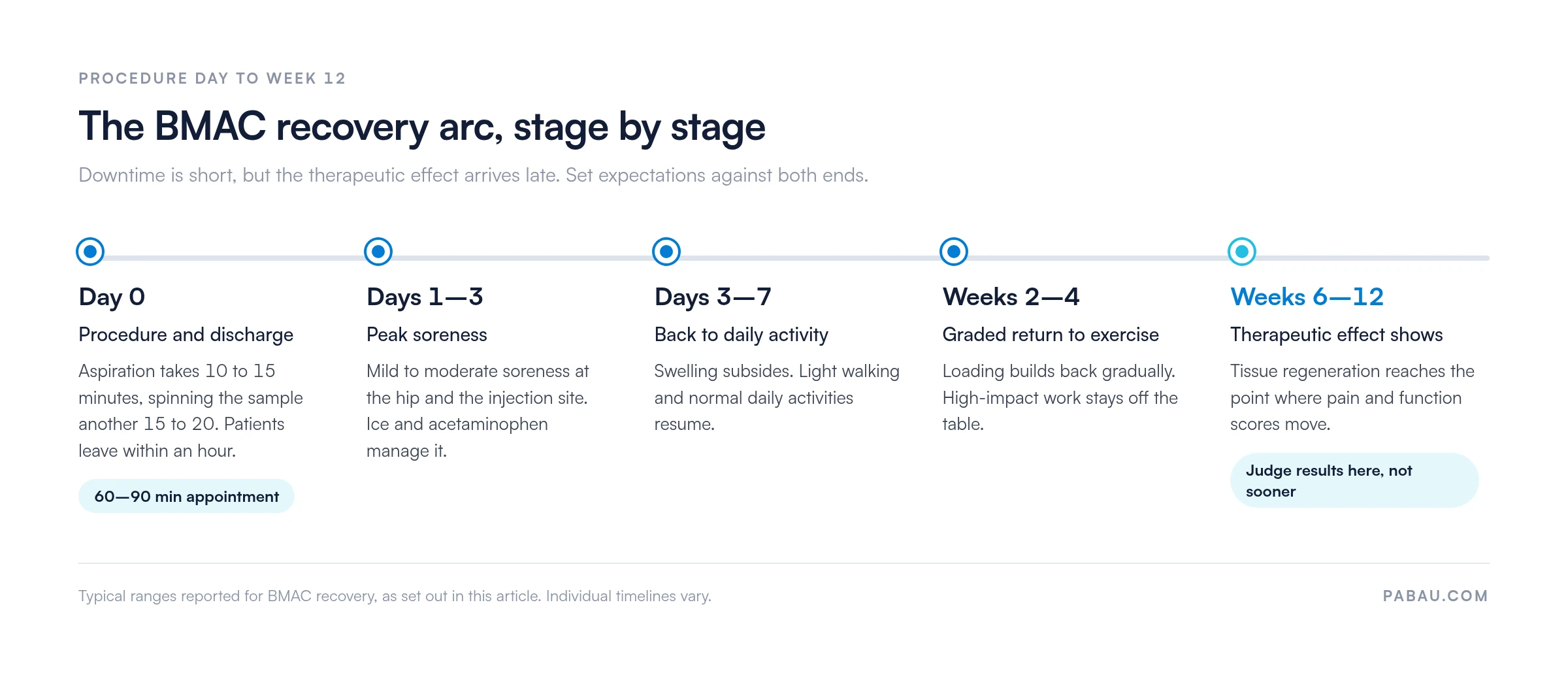
Send the recovery instructions at each of those points rather than all at once on discharge. Patients read them when they apply, which cuts the number of calls your front desk fields at week two.
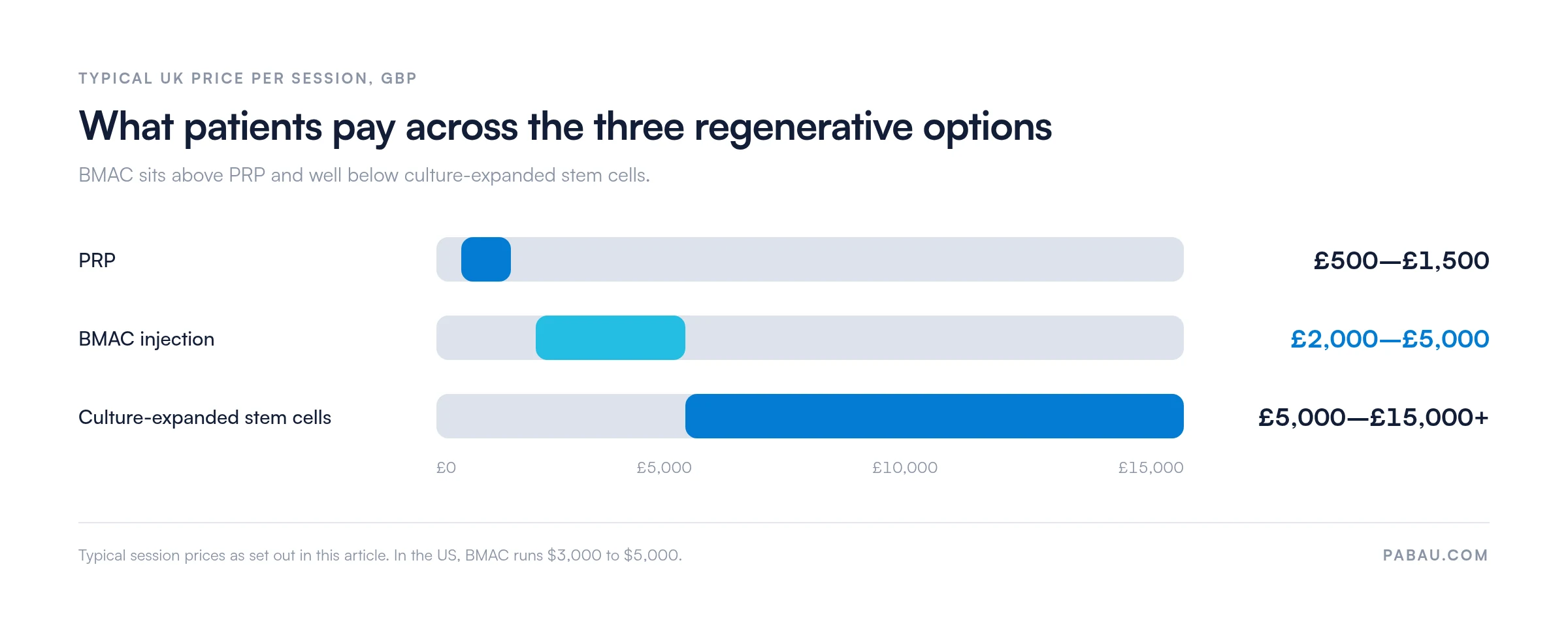
BMAC is a premium regenerative treatment. In the US, a session runs $3,000 to $5,000. In the UK, prices generally sit between £2,000 and £5,000. Several factors move the number:
Most private insurance plans and the NHS do not cover BMAC, because regulators still classify it as investigational for many indications. That makes it a self-pay line, so payment plans and clear pricing at consultation matter more than they would for a covered procedure.
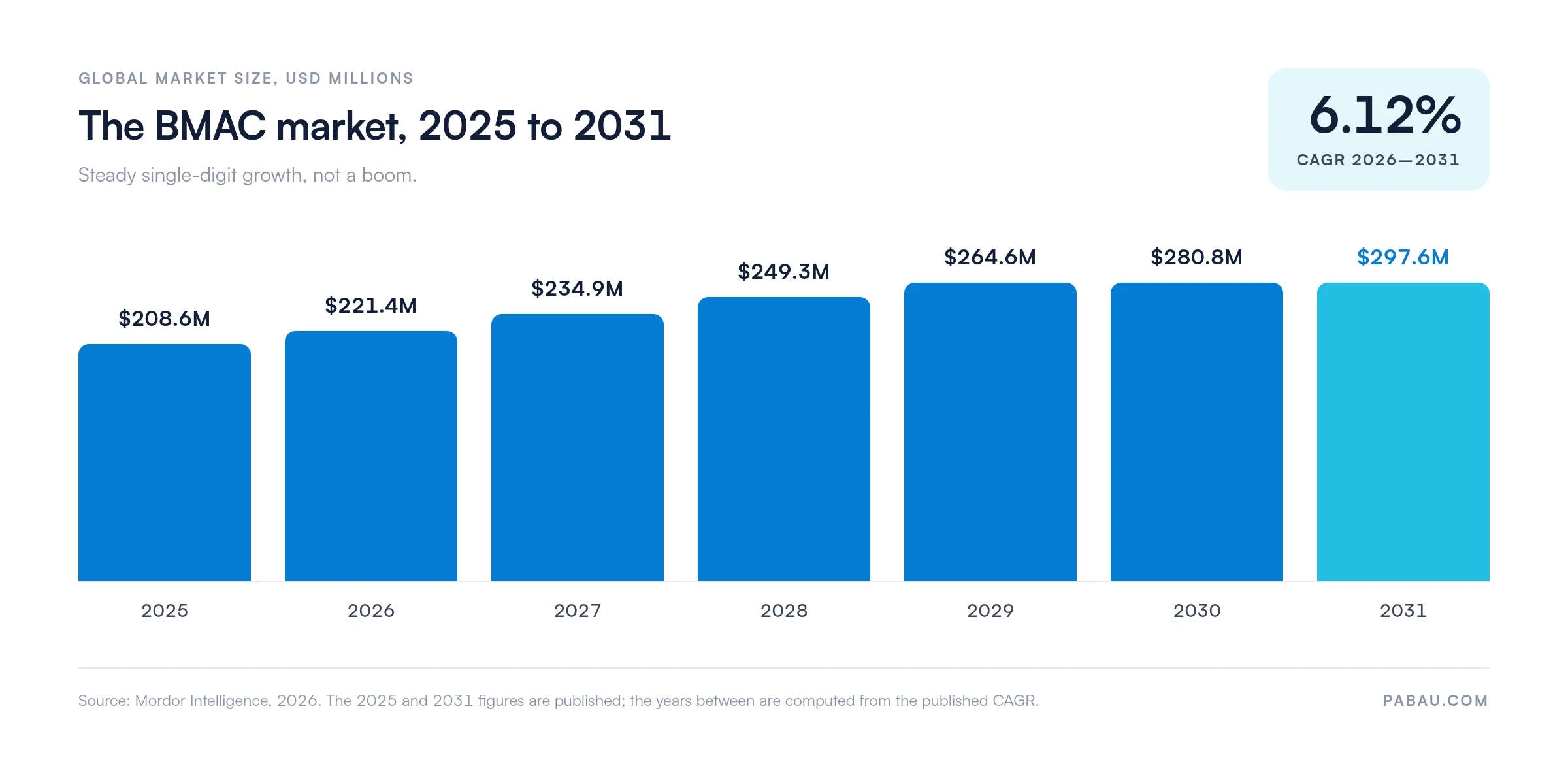
The global BMAC market stood at $208.63 million in 2025 and is projected to reach $297.61 million by 2031, a 6.12% CAGR (Mordor Intelligence). Growth is steady rather than sharp, which matters if you are sizing the investment.
Patients ask how the three compare, usually after reading about all of them in one sitting. Price is the first thing they notice, and the three options are not close.
Cost is only one axis. Here is how the three differ on source, contents, and the cases they suit.
| Factor | BMAC injection | PRP | Culture-expanded stem cells |
|---|---|---|---|
| Source | Bone marrow (hip) | Peripheral blood (arm) | Lab-cultured from bone marrow or fat |
| Key components | MSCs, platelets, growth factors | Platelets, growth factors (no MSCs) | High-concentration MSCs |
| Procedure time | 60-90 minutes | 30-45 minutes | Multiple visits over weeks |
| Best for | Moderate to severe joint or tendon damage | Mild to moderate soft tissue injuries | Advanced cartilage or bone defects |
| Cost (UK) | £2,000-£5,000 | £500-£1,500 | £5,000-£15,000+ |
| Regulatory status | Permitted (minimal manipulation) | Widely accepted | Heavily regulated in UK and EU |
An opinion paper in Frontiers in Medicine (2024) reviewed multiple meta-analyses of the two treatments. It concluded that BMAC outcomes are at least equivalent to PRP at one-year follow-up, with BMAC’s advantage becoming clinically relevant from year two. BMAC showed more promise in severe cases, which its stem cell content would predict.
Many sports medicine practices now run both, matched to the severity in front of them. Some also offer amniotic injection therapy as an off-the-shelf regenerative option that skips the marrow draw.
A BMAC service needs more than a centrifuge. Five things decide whether it runs cleanly:
If you already run PRP, your existing paperwork gets you most of the way there. A PRP consent form covers the same autologous-biologic ground and adapts with a new procedure description and risk list.
Patients arrive having read about stem cells online, and some of what they read overstates the case. Correcting that at consultation is part of the job.
Practices that give clear, evidence-based information convert more inquiries into bookings. Share published outcomes, walk through the timeline visually, and hand over written aftercare the patient can read at home.
Tracking outcomes over time is what lets you make claims you can defend. Log pain scores, functional improvement, and satisfaction across your BMAC cohort with measurements tracking software. Then let the numbers shape the protocol.
Most practices run a BMAC service across three or four disconnected systems. Screening sits in a paper questionnaire, consent in a PDF, pain scores in a spreadsheet, and aftercare with whoever remembers to send it.
Practice management software like Pabau keeps all four in one patient record. Pabau is software for longevity practices, so a BMAC pathway is a supported workflow rather than a workaround. Digital intake forms capture the screening questions and contraindications before the appointment is confirmed. Consent is signed on screen and filed against the procedure note.
Pain and function scores go in as structured fields, so you can chart a cohort instead of digging through notes. Every subscription includes that reporting. Insights Plus, an additional reporting add-on, goes further for practices that want to segment by indication or practitioner.
A practice running BMAC alongside PRP or IV therapy has the same problem several times over. A regenerative medicine EMR puts the protocols, consent versions, and outcome fields for each line in the same place.

Pabau’s digital intake forms capture your BMAC screening questions and contraindications before the appointment is confirmed. Consent files against the procedure note, and pain and function scores go in as structured fields you can chart.

BMAC injection is a credible option at the top of the conservative care ladder. The evidence is strongest where tissue damage is moderate rather than end-stage, and the practices that do well with it say so plainly at consultation.
The trade-off worth remembering is the timing. Downtime ends in a week, but the therapeutic effect does not show until weeks six to twelve. A patient reviewed at week three will call the treatment a failure, so book the review where the data is.
That puts as much weight on the operational side as the clinical one. Screen candidates against written criteria, capture pain and function scores at fixed intervals, and file the consent version with the note. Book a demo to see how a regenerative medicine practice runs BMAC screening, consent, and outcome tracking in one record.

Comparing regenerative options? Amniotic injection therapy covers an off-the-shelf alternative that skips the marrow draw, and where it fits against BMAC.
Need consent paperwork you can adapt? Platelet rich plasma PRP consent gives you a signed-consent structure that transfers cleanly to a BMAC procedure.
Worried about overclaiming results? Interpreting biomarkers without overpromising shows how to talk about outcome data without promising more than the evidence supports.
Building out a regenerative menu? Ozone therapy protocol walks through the operational checks before adding another regenerative line to your treatment list.
Most patients report mild to moderate discomfort during the bone marrow aspiration, similar to a deep pressure sensation. Local anesthesia numbs the area, and the injection itself causes minimal pain. Post-procedure soreness typically resolves within a few days.
Initial improvements often appear within four to six weeks as inflammation decreases. Full therapeutic benefits, including tissue regeneration and pain reduction, typically develop over three to six months. Some patients continue to improve for up to a year after treatment.
Many patients improve significantly after a single session. Depending on the severity of the condition, some benefit from a second injection six to twelve months later. Your clinician will recommend a treatment plan based on individual assessment and response.
Most private insurance plans and the NHS do not currently cover BMAC injection, as it is still considered investigational for many indications. Patients typically pay out of pocket. Some practices offer payment plans to improve accessibility.
BMAC contains mesenchymal stem cells, platelets, and growth factors harvested from bone marrow. PRP contains only platelets and growth factors, drawn from blood. BMAC suits moderate to severe tissue damage because of its stem cell content. PRP works well for milder injuries and is less invasive to obtain.