Pedicure and manicure service menu template
A pedicure manicure treats the nails, cuticles, and skin of both hands and feet ...

1
Last Updated: Oct 13, 2026
HD Brows is a seven-step brow treatment that combines consultation, tinting, waxing, threading, tweezing, finishing touches and aftercare, shaping brows around each client’s face.
Before any of it starts, the salon needs a consultation form that records the client’s brow goals, contraindications, patch test result and signed consent. This guide shows how to complete that form at each step. It also gives you a free, downloadable HD Brows aftercare form for the final sign-off.
The form gets filled in at three moments: the patch test 48 hours ahead, treatment day, and the aftercare sign-off. A standardized template means no question gets skipped on a busy day. It also gives you a dated record for UK GDPR retention. If a client later reports a reaction to the tint, it is your evidence of due diligence.
A one-page sheet with 12 aftercare instructions, from keeping brows clean and dry for 24 hours to avoiding sunbeds for 48 hours. It ends with a declaration the client signs to confirm they read and understood it.
Download template
HD Brows is a seven-step treatment covering consultation, tinting, waxing, threading, tweezing, finishing touches and aftercare.
The consultation form records skin sensitivity, contraindications, brow goals, the patch test result and informed consent before any tint is applied.
Oxidative tint makers require a 48-hour patch test, and UK cosmetics law makes their allergy warning mandatory. Skipping the test leaves the salon exposed if a client reacts.
Clients typically rebook every 4-6 weeks, so the brow mapping notes on the form let any stylist recreate the agreed shape.
Digital forms let clients complete the consultation before they arrive, with patch test, aftercare and rebooking reminders sent automatically.
An HD Brows consultation form is a structured intake document that captures client and treatment information before the seven-step treatment begins. It does four jobs:
The form is both a treatment record and a legal document. Under UK GDPR, health information disclosed during the consultation needs a lawful basis for processing, typically the client’s consent. Records are usually kept for 3-6 years after treatment to support dispute resolution or insurance claims. The salon must also hold proof of the patch test if the client later reports a reaction.
Offering facials and other skin services too? The esthetician consultation form covers the same intake ground for those appointments.
These steps are for beauty therapists, brow stylists and salon managers running their own consultation form. The downloadable aftercare form covers the last one. Work through the form in five steps:
Those records don’t all happen on one day. The patch test entry comes two days before treatment, and the rebook interval closes the file weeks later.
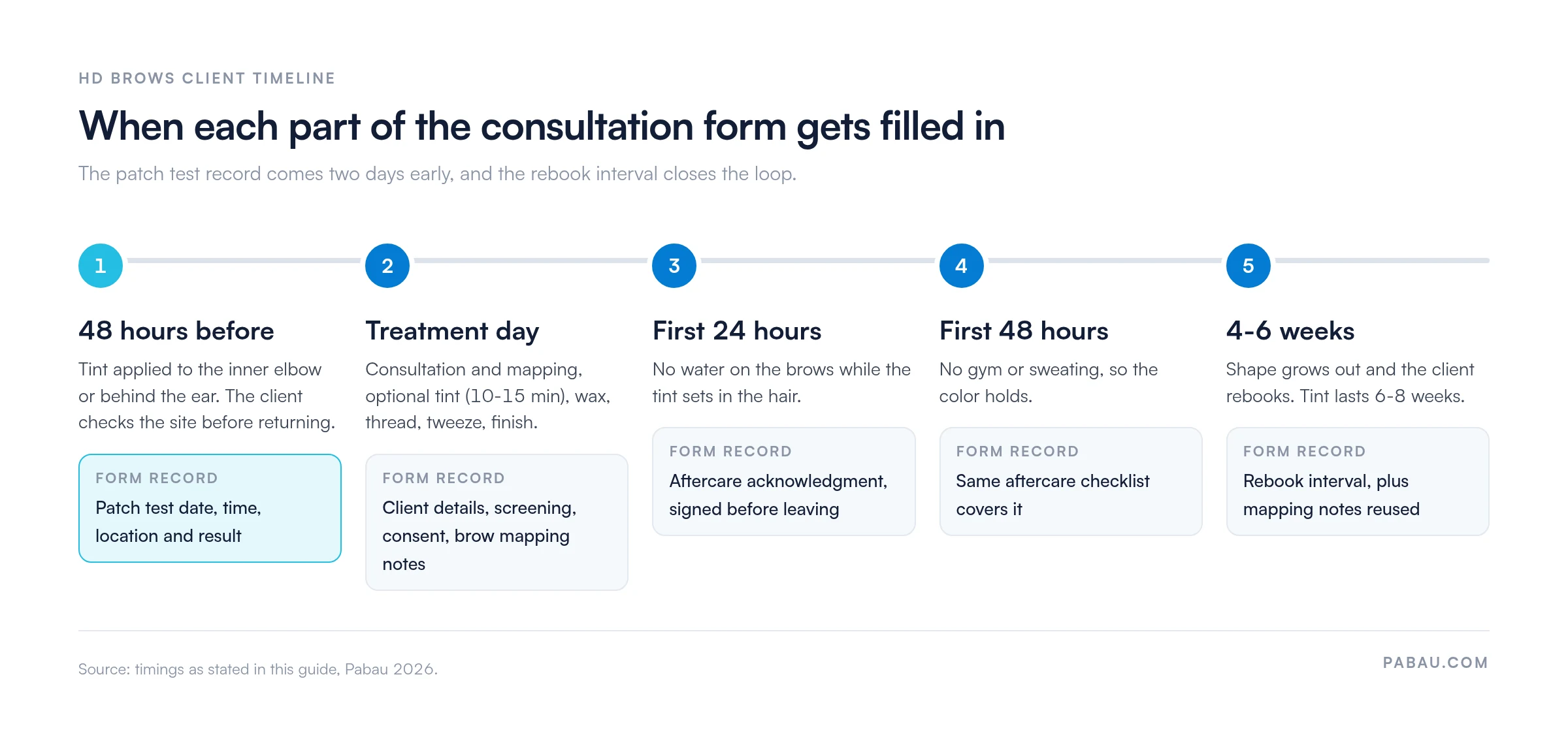
A professional HD Brows consultation form needs these seven sections:
Knowing the seven steps shows you what the form has to capture at each stage. Consultation comes first, and tinting is optional. The three removal techniques follow in order, then finishing touches and aftercare.
The stylist assesses the client’s face shape (oval, round, square or heart), natural brow bone, hair growth direction and skin tone. Using bespoke eyebrow mapping, they design a shape that flatters the client’s features and matches their goals. Document the agreed design on the form. The client then knows what to expect, and future stylists can repeat it.
If the client opts for tinting, a custom-blended tint darkens the brows to match their hair or desired tone. These tints are typically oxide-based. A 48-hour patch test must come first, as the tint manufacturer’s instructions require.
Record the shade used and any reaction seen at the patch test. Tinting takes 10-15 minutes, and results last 6-8 weeks depending on skin type and sun exposure.
Three removal techniques give HD Brows its precision. Waxing removes hair in bulk along the upper and lower line. Threading refines stray hairs with a thread held taut by the stylist, and offers the most control. Tweezing picks off individual hairs and fine-tunes the final shape.
Layering all three is what separates HD Brows from a standard tint-and-shape service. Note whether the client has sensitive skin or a history of ingrown hairs, because either one changes the removal sequence.
A light makeup finish, typically a brow gel or powder, sets the shape, fills sparse areas and completes the look. The client sees the result immediately and can ask for minor adjustments before leaving. For home use, recommend HD Brows Brow Glue, HD Brows Brow Colourfix or a tint lock serum to hold shape and color between appointments.
The stylist hands over the written aftercare form. Its main rules are:
The form also asks clients to report any side effects quickly and attend follow-up appointments, even when healing looks fine. Between visits, ask them not to pluck or wax at home, so the shape grows out evenly within 4-6 weeks.
If you recommend an aftercare serum, such as HD Brows Brow Miracle Daily Conditioner, note how often to use it. The signed declaration proves aftercare was given and understood, which protects you if a dispute comes up later. If a client books a wax-only tidy between full treatments, the eyebrow waxing aftercare template covers that visit.
HD Brows tinting uses oxidative dyes containing hydrogen peroxide and para-phenylenediamine or similar compounds. UK Cosmetics Regulation 1223/2009 limits these eyelash and brow tints to professional use and requires an allergy warning on the label. The tint maker’s instructions call for a 48-hour patch test, so document it on the consultation form.
Absolute contraindications include active dermatitis, open wounds, a chemical peel in the last two weeks, or a documented allergic reaction to cosmetic products. Relative contraindications need informed consent and careful assessment before you proceed.
They include mild eczema away from the brow area, very sensitive skin and pregnancy. Always ask whether the client takes Accutane or other medications that thin the skin or slow healing.
HD Brows and brow lamination both give defined, fuller-looking brows. They suit different clients, though, and wear off on different timelines.
Both treatments can be combined in one appointment. Lamination lifts and straightens the hair, then HD Brows tinting and shaping add definition. Ask on the form whether the client wants a combined treatment, and record their preference. If they book lamination too, send them home with the brow lamination aftercare sheet as well.
Run on paper, this process leans on memory. The client completes the form at reception, the stylist phones to check the patch test, and rebooking depends on someone remembering at checkout.
Pabau, the spa software we build, moves that loop online. With its digital forms software, clients complete the consultation form on a tablet or by email before they arrive. Their answers save straight to the client record. Pabau then sends three automated messages:
Your stylists stop chasing paperwork, and clients arrive with the form already done. Every consent and patch test also sits on file if a reaction is ever reported.
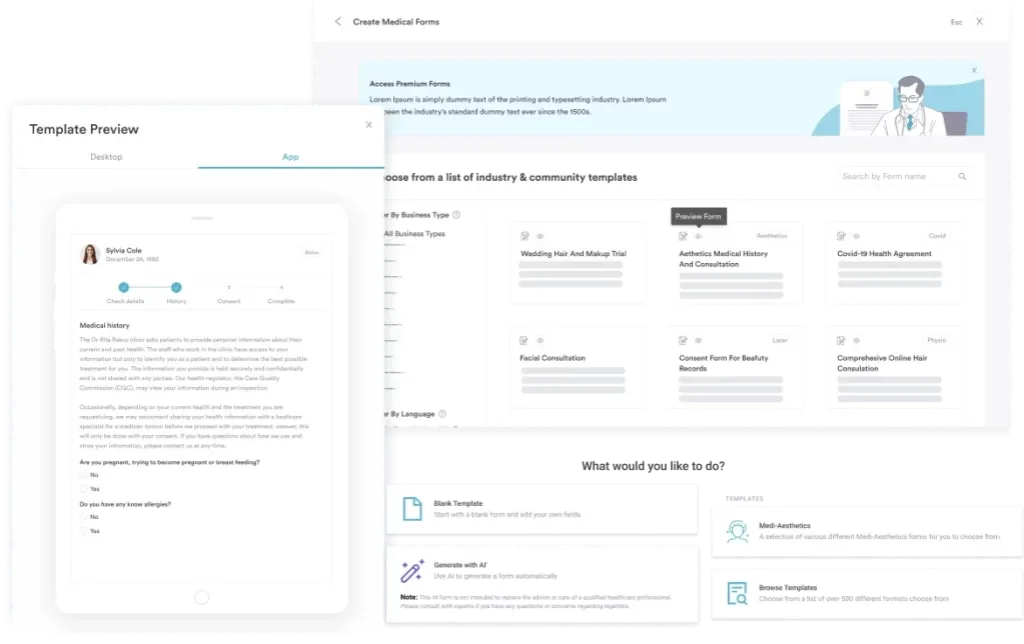

Pabau’s digital forms capture consent, screening and patch test results ahead of the appointment. Automated reminders then handle aftercare and the 4-6 week rebook.

If your salon still keeps HD Brows consultations on loose paper, start with the patch test record. It is the one part completed days before treatment, and the one you need most if a client reports a reaction.
Use the consultation form for every client, including regulars, and keep the brow mapping notes current. Close each visit with the signed aftercare form. The payoff is consistent shapes across stylists and a defensible file. The cost is a few extra minutes at the first visit.
Book a demo to see how Pabau collects consultation forms, chases patch tests and fills your rebooking slots without the paperwork.

Aftercare for lash clients too? Lash lift aftercare template covers what clients should avoid after a lash lift.
Offering eyelash extensions? Eyelash extensions aftercare explains how clients keep extensions in place between fills.
Running skin treatments alongside brows? Esthetician consultation form captures skin history and goals before facials and peels.
Need consent for facials? Facial consent form template records informed consent before any facial treatment.
Choosing a booking system? Best beauty salon booking software compares tools that handle reminders, deposits and rebooking.
HD Brows is a seven-step professional brow treatment. It combines a personal consultation, bespoke eyebrow mapping, optional color tinting, precision removal (waxing, threading and tweezing), finishing makeup and aftercare guidance. The result is high-definition brows tailored to each client’s face shape and preferences.
Yes. Tint manufacturers’ instructions call for a 48-hour patch test before oxidative tinting. UK Cosmetics Regulation 1223/2009 makes the allergy warning on these tints mandatory. The result must be documented on the consultation form and confirmed clear before the full treatment proceeds.
Ask about brow goals, shape preferences, and any allergies to cosmetics or hair-removal products. Check for dermatitis or skin sensitivity, recent laser or chemical peel treatments, medications such as Accutane or blood thinners, and pregnancy. Document contraindications and get informed consent before proceeding.
The tint lasts 6-8 weeks depending on skin type and sun exposure, and the shape regrows in 4-6 weeks. Clients typically rebook every 4-6 weeks for maintenance. Some return every 8 weeks for a tint only.
Yes. Lamination lifts and straightens the hair, then HD Brows tinting and shape design add definition. The two use different techniques and can be performed one after the other in the same appointment.
Clients should keep brows clean and dry for 24 hours, with no makeup, creams or oils on the area. They should avoid swimming or strenuous exercise for 24-48 hours, and sunbeds for 48 hours. They shouldn’t pluck or wax at home between appointments. Give them a written aftercare form, and have them sign it to confirm they understood it.