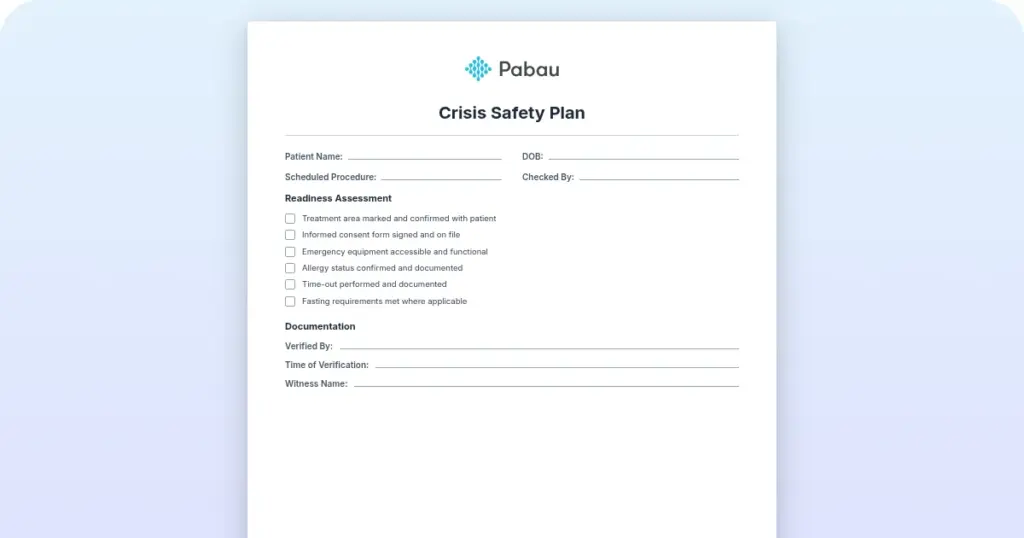
Crisis safety plan template
A crisis safety plan is a short, personalized written plan that a patient and cl...

1
Last Updated: Oct 19, 2026

A gum lift (also called gum contouring or gingivectomy) removes excess gum tissue to reshape the smile. Initial healing usually takes one to two weeks, and the gums settle into their final shape over one to three months.
Stick to soft, cool foods for the first two to three days, and leave the surgical site alone. Don’t brush, floss, or use a water flosser directly over it until your dentist clears the area, often around two to three weeks.
Minor bleeding, mild swelling, and a thin whitish film over the site are normal. A fever, spreading swelling after day three, pus, or pain that worsens despite medication means you should call your dentist that day.
Practice management software like Pabau automates aftercare delivery and follow-up reminders, so patients get the right instructions at discharge and on key recovery days without extra front-desk work.
A ready-to-use aftercare instruction sheet for patients following gum lift (gingivectomy) or gum contouring procedures. Covers pain management, diet, oral hygiene rules, activity restrictions, the healing timeline, and warning signs that need a call to your practice.
Download templateGum contouring recovery is usually quick. A gum lift, also called gum contouring or gingivectomy, removes excess gum tissue to expose more of the tooth and even out the smile. Most people feel back to normal within one to two weeks, and the gums settle into their final shape over the following one to three months.
The first few days matter most. Soft food, gentle oral hygiene, and leaving the surgical site alone are what keep healing on track and infection away. This guide covers the recovery timeline day by day, what to eat, how to manage discomfort, and the warning signs worth a call to your dentist. Practices can download the free aftercare template above to hand or send to patients after every gum lift.
Recovery follows a predictable pattern. Knowing what each stage should look like helps you tell normal healing from a problem that needs attention.
Pain after gum contouring is usually mild to moderate and peaks in the first 24 to 48 hours. Most people manage with over-the-counter ibuprofen (400 to 600 mg) or acetaminophen, taken on a regular schedule for the first few days rather than waiting for pain to spike. Some dentists add a topical numbing rinse for localized relief, and low-dose prescription pain relief is reserved for the rare patient with high sensitivity. Always follow the dose your dentist gives you.
Diet matters most in the first week. A soft diet for days 1 to 3 reduces trauma and stops food lodging in the healing tissue. Chew away from the surgical site, and skip straws, which can disturb the site.
Most people are back to a normal diet by days 4 to 7. Avoid smoking and vaping throughout recovery, as both slow healing and raise the risk of infection.
Clean, gentle oral hygiene is the single biggest factor in avoiding infection, but the surgical site needs to be left alone while it heals.
Running this form inside a GP practice system keeps clinical documentation in one place.
Some bleeding, swelling, and soreness are expected. A thin white or yellowish film over the treated gum is also normal, and it is new healing tissue rather than pus. What isn’t normal is anything that gets worse instead of better after the first few days.
Contact your dentist the same day, or seek emergency care after hours, if you notice any of the following:
Both techniques reshape the gumline, and the core aftercare is the same. The difference is in the first few days. A laser seals tissue as it works, which usually means less bleeding, less swelling, and a slightly quicker, more comfortable recovery. A scalpel gingivectomy can involve a little more bleeding and swelling early on. Either way, the healing milestones above still apply.
For practices, a standardized aftercare sheet keeps patient communication consistent and creates a record that instructions were given. It’s used by cosmetic and aesthetic dentists, periodontists, and oral surgeons, and by the front-desk teams and hygienists who handle handover and recall. Follow these five steps to put the template to work.
Many practices customize the sheet with their logo, hours, and emergency number. Adding patient portal access lets you deliver it digitally, so patients get the instructions by email and can reopen them whenever they need to.

Keep the signed instructions and the patient’s acknowledgment in their record, whether on paper or in digital patient records. In the US, HIPAA requires related documentation to be kept for at least six years, and state dental-record laws often require longer, so check your state board’s rules. Good documentation supports patient safety and protects the practice if questions come up later.
Printing, signing, filing, and following up on aftercare by hand eats into front-desk time. With Pabau.
You can schedule follow-up messages on the days that matter, such as a check-in at day seven and a reminder around week three that flossing can resume. Digital forms, messaging, and patient records all sit in one place, so recovery monitoring happens without extra admin.

If you’d like to see how automated aftercare and recovery follow-ups work for gum contouring patients, book a demo of Pabau.


Need consent forms for adult patients? medical consent form for adults covers patient and emergency contact details plus nine numbered acknowledgments with signature and witness lines.
Need consent forms for a minor? medical consent form for minors covers the child’s and guardian’s details, five acknowledgments, and signature lines for both parties.
Need a form for coding diagnoses? medical diagnosis form template shows what belongs in each field and how to match the ICD-10 code to your notes.
Initial healing usually takes one to two weeks, with most soreness easing after the first three to four days. The gum tissue then matures to its final color and contour over the next one to three months.
Stick to soft, cool foods such as eggs, yogurt, mashed potatoes, cottage cheese, and soft fruits for the first two to three days. Avoid hot, spicy, acidic, hard, or crunchy foods, and skip straws. Most people return to a normal diet within four to seven days.
Don’t floss the surgical sites or use a water flosser until your dentist clears the area, often around two to three weeks. You can gently floss and brush your other teeth from the day after surgery.
Call the same day if you have a fever above 101°F (38.3°C), bleeding that won’t stop after 20 to 30 minutes of gentle pressure, pus or a foul odor, swelling that spreads or worsens after day three, or pain that isn’t controlled by medication.
The procedure is done under local anesthetic, so you shouldn’t feel pain during it. Afterward, expect mild to moderate soreness that peaks in the first 24 to 48 hours and is usually managed with over-the-counter ibuprofen or acetaminophen.
In most cases, the gum tissue removed during contouring does not grow back, so the reshaped gumline is usually permanent. Your dentist can advise on the long-term result for your specific case.