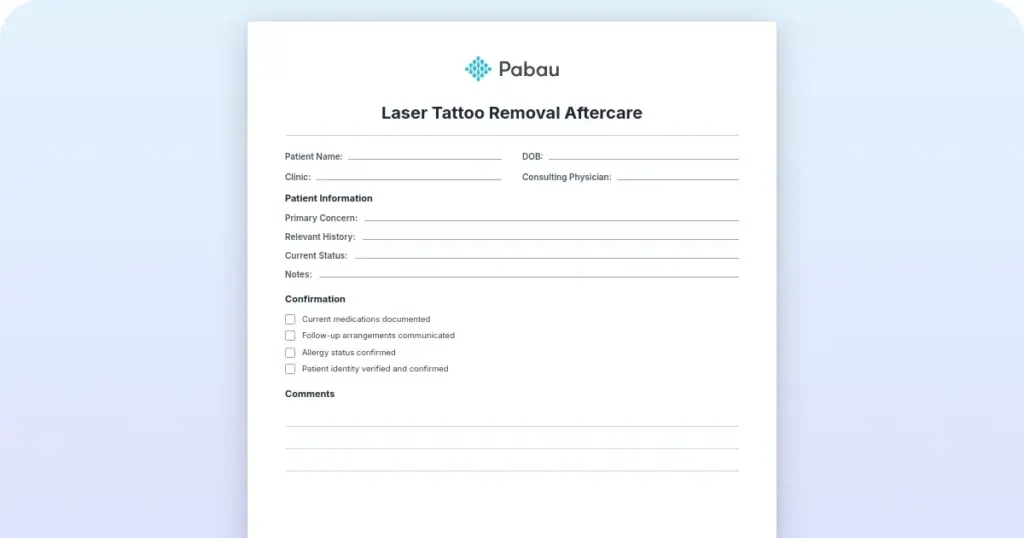
Laser tattoo removal aftercare instructions template
Download your free laser tattoo removal aftercare instructions template A ready-...

24
Last Updated: Sep 4, 2026

Electrolysis permanently destroys hair follicles using electrical current, requiring careful post-treatment healing to prevent complications and optimize results.
The first 24 hours are critical: cold compress, gentle antiseptic, no makeup, and no touching the treated area are non-negotiable to reduce infection risk and inflammation.
Redness, swelling, and minor scabbing are normal side effects that fade over 7 days with proper care. Picking or scratching delays healing and risks scarring.
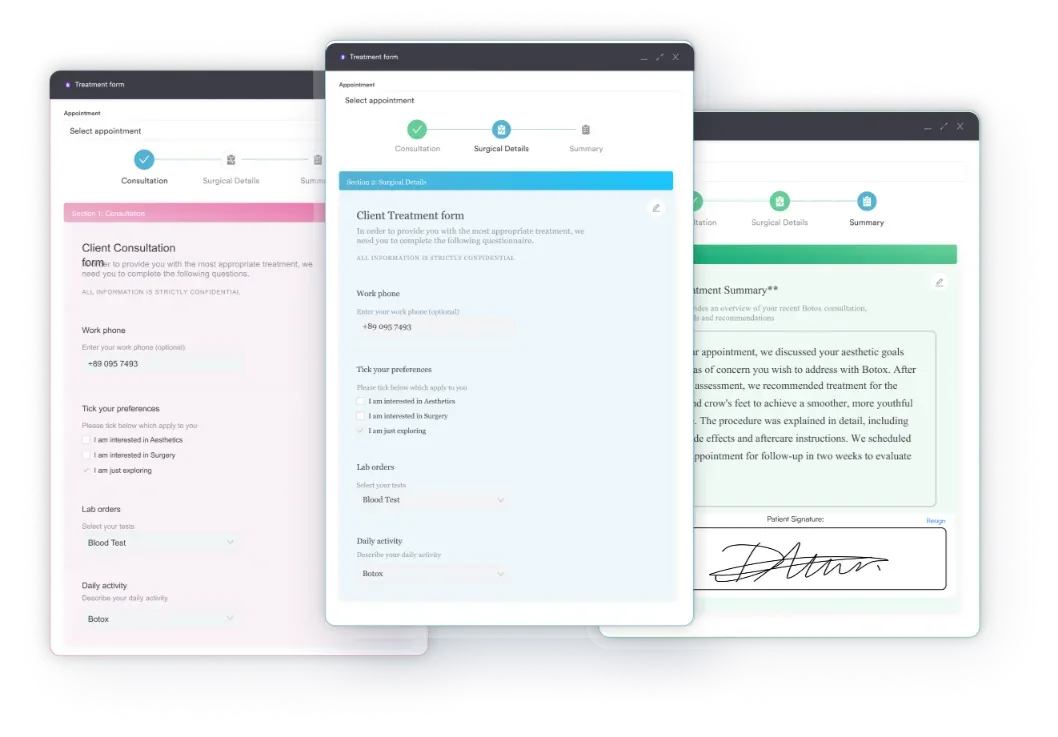
Practice management software like Pabau, plus digital forms and client portal features, helps practices deliver consistent aftercare instructions and track patient compliance with follow-up care guidance.
A ready-to-use template covering immediate post-treatment care, recovery timeline, product recommendations, do’s and don’ts, and staff talking points for delivering electrolysis aftercare instructions to clients.
Download templateElectrolysis is the only FDA-approved method of permanent hair removal, and proper aftercare directly determines healing speed, infection prevention, and treatment success. Most clients experience redness, swelling, and minor scabbing after treatment. These are normal responses that resolve within 7 days when managed correctly. Compare scheduling, charting and payments across eight platforms in our ranking of med spa management software if you offer electrolysis among other services.
This guide walks you through every stage of electrolysis aftercare, from the critical first 24 hours through the week-long recovery, plus practitioner tips for delivering instructions consistently to your client base.
Electrolysis uses a fine needle and electrical current to destroy the hair follicle at the root, permanently preventing regrowth. Unlike laser hair removal.
The electrical energy creates controlled inflammation in the follicle, which the body then heals and replaces with scar tissue, permanently sealing the follicle.
Because this process involves a deliberate micro-injury to the follicle, practices need proper aftercare protocols to prevent complications, the kind that skin clinic software helps standardize across a team. Poor aftercare leads to extended healing, infection risk, post-inflammatory hyperpigmentation (especially in darker skin tones), and client dissatisfaction.
Proper aftercare covers cleaning, sun avoidance, product selection, and timeline awareness. Together, these steps ensure smooth healing, reduce infection, and set the foundation for successful multi-session treatment plans.
This guide serves both practitioners and their clients: use it as a staff resource for understanding electrolysis healing, as a client handout template for printed instructions, and as a reference for training new team members on aftercare delivery.
The first 24 hours determine inflammation control and infection prevention. Immediate actions include:
These steps take 5 minutes but significantly reduce the healing timeline and client comfort issues.
What to expect: Redness and slight swelling are completely normal and peak within 2-6 hours post-treatment. Minor scabbing (a thin, light crust) may appear on days 3-5 and typically sheds naturally over 5-7 days without intervention.
How to manage it: Cold compresses reduce swelling during the first 24 hours. Beyond that, warm (not hot) water and fragrance-free moisturizer support gentle healing. Do NOT apply makeup, tight clothing, or occlusive products that trap heat. Clients should avoid touching or picking scabs, even if itchy. Picking prolongs healing and risks permanent scarring.
Redness typically fades within 3-5 days; swelling within 2-3 days. If redness persists beyond 10 days or swelling worsens after day 2, advise clients to contact their electrologist to rule out infection.
Practices using software for managing patients retrieve past forms in seconds during consultations.
Strict avoidance during the first week is essential. Clients should:
Clear, simple language helps clients retain these rules. Printing a visual do’s/don’ts checklist (included in the downloadable template) reinforces compliance.
Product selection matters. Recommend only gentle, fragrance-free products to avoid irritation.
Many practices sell or recommend a curated aftercare kit with SPF, antiseptic, and moisturizer bundled together. This simplifies client decisions and supports revenue.
Clients heal at individual rates, but this timeline sets realistic expectations and guides daily care decisions:
Emphasize that supporting patient compliance during this timeline keeps clients engaged with care instructions. Many practices send daily text reminders (e.g., “Day 2: Still avoiding sun and heat? Great!”) to reinforce compliance.
Aftercare principles are the same, but facial and body areas have specific considerations due to skin sensitivity and visibility:
Use personalized aftercare plans within your practice management system to account for these area-specific differences. A client treating their upper lip needs different guidance than one treating the bikini line.
After the initial 7-day healing window, clients move into long-term care that spans weeks and months. Multi-session electrolysis (typically 6-12+ appointments over months) requires ongoing protection to prevent irritation and hyperpigmentation between sessions.
Daily SPF is non-negotiable. Once scabbing resolves, clients should apply mineral SPF 30+ daily to the treated area, even if fully healed. UV exposure increases hyperpigmentation risk for up to 6 months post-treatment. Recommend a daily sunscreen as part of their regular skincare routine.
Avoid irritants between sessions. Do not use retinol, AHA/BHA, or other exfoliants on the treated area for at least 4 weeks between appointments. These increase skin sensitivity and can trigger irritation or post-inflammatory hyperpigmentation.
Stay hydrated. A gentle moisturizer twice daily supports skin barrier function and reduces irritation. Dehydrated skin is more prone to inflammation and delayed healing between sessions.
Use patient portal reminders to send clients pre-appointment care instructions (e.g., “Apply SPF daily this week before your next appointment”) and post-appointment summaries. This improves compliance and reduces between-session complications. Practices that standardize this kind of communication see fewer missed follow-ups and stronger long-term client retention. Our Skin With Bea Esthetics case study features one example. An aesthetic practice repeating a treatment needs the last settings recorded, not remembered.
Most clients heal without incident, but some complications require professional attention. Advise clients to message you through a secure client communication portal or call their practice immediately if they notice:
Frame this positively: “These complications are rare with proper aftercare, but we’re here if you need us.”
Timing and setting: Deliver aftercare instructions immediately after the client’s treatment while they are still seated and before they leave. Clients retain information better in this moment than via email or text sent later. Allocate 2-3 minutes at the end of each appointment.
Script Framework: Open with normalization: “You’ll see some redness and swelling. This is completely normal and means the treatment worked. Here’s what you’ll do for the next week to keep your skin healthy.” Pause for questions. Then walk through the immediate actions (cold compress, antiseptic, no makeup) verbally, then hand them a printed aftercare card or template.
Use the Downloadable Template: Print the included checklist as a take-home card. Clients are more likely to follow written instructions than verbal guidance alone. The visual do’s/don’ts format helps them remember rules when home and tired.
Automation and follow-up: Send a follow-up text or email within 24 hours: “Hi [Client Name], reminder: keep the treated area cool and clean today, avoid makeup, and check back with us if redness worsens.” This reinforces the instructions and signals care.
Use automated clinical notes to log the treatment date and aftercare delivery in the client’s record. This way every staff member can reference what was discussed.
Tailor by Area: Use the facial vs. body comparison table earlier in this guide to highlight area-specific points. A client treating their upper lip doesn’t need the same emphasis on tight clothing as one treating the bikini line.
Identify High-Risk Clients: Clients with darker skin tones, a history of keloids, or sensitivity to products need extra emphasis on sun protection and gentle product use. Spend an extra minute discussing these points and consider scheduling their follow-up appointment sooner (e.g., 4 weeks instead of 6) to monitor healing closely.

Pabau’s digital forms and client portal tools help practices deliver consistent, written aftercare instructions and track patient follow-up, reducing calls and improving outcomes.

Electrolysis aftercare is straightforward but non-negotiable. The first 24 hours set the tone for smooth healing: cold compress, gentle antiseptic, no makeup, no touching. Support your clients through the 7-day recovery window with clear instructions, accessible reminders, and a printed template they can reference at home. Train your team to deliver consistent messaging and follow up with clients post-appointment.
Proper aftercare reduces complications, improves client satisfaction, and supports your practice’s reputation for excellence. Use this guide to standardize your aftercare delivery.

Want to streamline consent and aftercare documentation? Facial consultation form templates help practices standardize pre-treatment questions and set expectations before the electrologist begins.
Looking for best practices on patient follow-up? Improving patient engagement during post-treatment recovery strengthens retention and reduces no-shows on follow-up appointments.
Want to bring in more laser hair removal patients? laser hair removal marketing strategies shares seven strategies for standing out as laser treatment demand and competition both keep growing.
Apply a cold compress for 2 minutes, use a gentle antiseptic (Neosporin or aloe vera), avoid touching the area with unwashed hands, and do not apply makeup for at least 24 hours.
Yes, minor scabbing is normal and typically appears on days 3-5. Do not pick or scratch. Scabs shed naturally over 5-7 days when left alone. Picking risks infection and permanent scarring.
Scabs are a natural part of healing and cannot be prevented, but you can minimize irritation by keeping the area clean and moisturized, avoiding sun exposure, and not picking. Following the full aftercare protocol reduces secondary complications.
No makeup for the first 24 hours. After 24 hours, light makeup applied gently is OK, but avoid heavy coverage and remove before bed. Makeup traps bacteria and heat, which slows healing.
Initial healing takes 7 days; redness and swelling fade within 3-5 days, and scabs shed by day 7. Full skin maturation takes 2-4 weeks, during which sun protection remains important.
Avoid direct sun exposure for at least one week post-treatment. If sun exposure is unavoidable, apply mineral SPF 30+ (fragrance-free) to the treated area. Continue daily SPF for up to 6 months to prevent hyperpigmentation.