Anja Dodevska
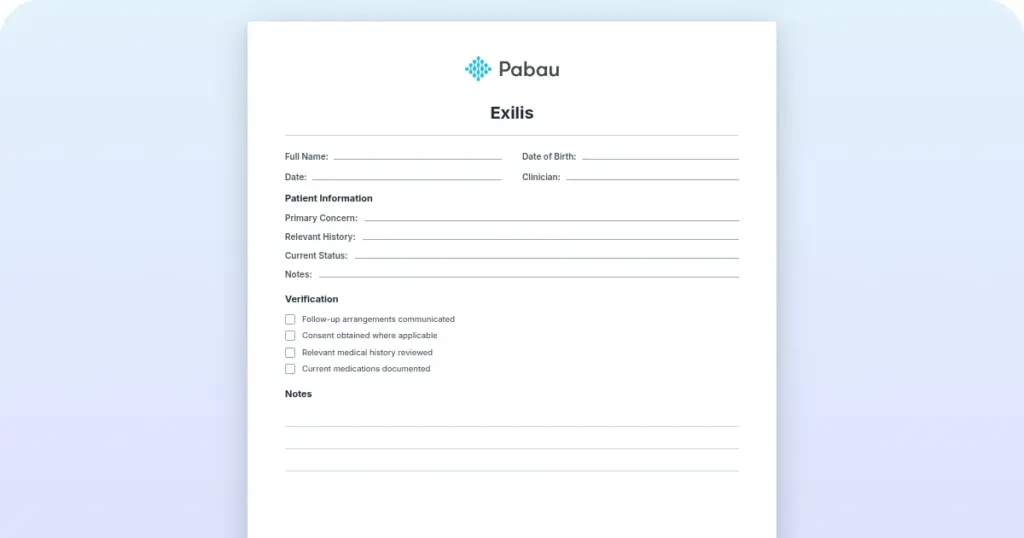
Exilis patient treatment record: Free PDF for RF sessions
An Exilis patient treatment record is the session log for BTL’s radiofrequ...

3
Last Updated: Oct 23, 2026
Free PDF 1 page, print-ready Clinician-reviewed
Cellulaze aftercare instructions guide patients through recovery after laser cellulite reduction, covering the compression schedule, activity limits, incision care, and warning signs that keep healing on track. Clear written guidance at discharge lifts patient satisfaction, cuts avoidable complications, and protects the longevity of your clinical results.
This guide covers what good cellulaze aftercare looks like and how to set it up in your practice. It also shows how patient compliance protocols help every patient follow their recovery plan.
A ready-to-use post-treatment care guide covering compression garment schedules, activity restrictions, incision site healing protocols, recovery milestones, and red-flag symptoms requiring immediate clinician contact.
Upload this PDF, or any form you already use, and Pabau's AI Form rebuilds it with tick boxes, text fields and a signature. Attach it to the treatment once, and every patient gets it on time.
AI Form rebuilds the consent, history and aftercare forms you already use. You review each one, then publish.
Patients complete forms on their phone before they arrive, so the front desk stops retyping paper.
Every signed form is versioned and attached to the treatment record, ready when you need it.
Set how long a consent stays valid. Returning patients skip forms they have already signed.
Supports HIPAA and GDPR compliance AES-256 encryption 4.8 on G2 4.7 on Capterra Trusted by 4,000+ practices worldwide

Cellulaze is a minimally invasive procedure that uses laser energy under the skin to break down fibrous bands and boost collagen.
Compression garment wear — 2 weeks full-time, then 4 more weeks during activity — is a common way to manage swelling and improve results.
Most patients resume light daily activities within 1-2 days but must avoid strenuous exercise for 1-2 weeks to allow proper healing.
Pabau’s pre- and post-care management system helps practices deliver personalized aftercare instructions and track patient compliance throughout recovery.
A cellulaze aftercare instructions template is a structured, practice-branded document. It sets out the post-treatment care steps for patients who have had Cellulaze laser cellulite reduction therapy.
Cellulaze is a minimally invasive laser treatment for cellulite. It works beneath the skin rather than on the surface. That is why aftercare focuses on managing swelling and protecting the small incision sites.
Cellulaze uses a side-firing laser delivered through a cannula. The laser disrupts fibrous septal bands beneath the skin and stimulates collagen remodeling. The procedure is done under local anesthetic.
Laser-assisted body contouring has its own recovery profile, so post-treatment guidance should cover:
Detailed aftercare instructions also support informed consent records. They show compliance with professional standards, such as ASPS guidelines from the American Society of Plastic Surgeons.
They also give you a written record of patient education. That supports clinical governance and demonstrates duty of care if a complaint or dispute arises.
Implementing cellulaze aftercare instructions requires five operational steps centered on delivery, personalization, and tracking.
This template suits aesthetic practices, dermatology practices, cosmetic surgery centers, and medical spas that offer Cellulaze. It serves three professional audiences:
Practice owners and medical directors use it to standardize patient education across the team. That keeps recovery advice consistent and lowers liability exposure. A written, signed aftercare protocol shows duty of care and supports compliance with professional bodies and regulators.
Aesthetic practitioners and clinicians (nurses, nurse practitioners, physician assistants, medical directors) rely on the template in three ways. It backs up verbal aftercare instructions and gives patients a take-home reference. It also records that specific guidance was delivered, which supports their indemnity insurance and clinical governance.
Patient coordinators and practice administrators use it as a scheduling and tracking reference. It helps them line up follow-up appointments with recovery milestones. It also flags patients who may need extra support or clearer activity rules.
With digital medical records, forms like this stay attached to the patient’s full history.
Compliance and legal protection. A detailed, signed aftercare document shows informed consent and duty of care. That protects the practice from complaints and regulatory findings. Patients who get clear written instructions are less likely to stray from safe recovery practices.
Better clinical outcomes. Sticking to compression schedules, activity limits, and incision care improves healing quality. It also extends how long Cellulaze results last. Patients with structured guidance have fewer problems and are happier with their outcome sooner.
Fewer post-operative complications. Clear warning signs help patients sort minor side effects from genuine complications. Minor effects include mild bruising and redness. Genuine complications include infection or heavy swelling. Spotting real complications early lets the clinician step in fast.
Efficient practice workflow. Printed instructions cut the time spent repeating advice at discharge. They free up clinician time for other patients. They also create an audit trail of what was said and when.
Personalize the template at the point of discharge: handwrite or print the specific compression garment schedule, treatment area, and any modifications based on the individual patient’s healing response. A generic printed sheet followed by verbal clarification is more effective than a completely standardized one-size-fits-all form.
Compression garment management is the cornerstone of cellulaze aftercare instructions. A common protocol is 2 weeks of full-time wear. Patients then wear the garment during sitting and walking for 4 more weeks, a 6-week commitment in total.
Redness, bruising, and tenderness around the treatment site are typical for the first 1-2 days post-procedure. Mild swelling may persist for several days but usually resolves within 1-2 weeks with consistent compression.
Swelling tends to peak in the first 48 hours. Elevating the legs and using a cool compress in that window helps keep it down. The garment adds support, reduces fluid buildup, and helps the skin tighten as collagen remodels.
Include these compression details in your template:
Also note when to contact the practice if the garment causes pain, numbness, or skin irritation.
A day-by-day or week-by-week timeline helps patients know what is “normal” at each stage. It also shows them when to raise concerns. Here is a typical framework:
Most patients return to normal daily routines within 1-2 days. Still, they should avoid strenuous exercise for at least 1-2 weeks. Cellulaze results keep improving for 2-3 months as collagen remodels. Patience and compliance during this window improve the final outcome.
Cellulaze needs small incisions for the cannula. There are usually one or two puncture sites per treatment area, each 2-3 mm across. They heal quickly but need specific aftercare to minimize visible scarring.
Your cellulaze aftercare instructions should tell patients to:
If the practice recommends them, patients can apply prescribed scar-minimizing creams from day 3 onwards. Options include silicone-based or vitamin E products. Add a note that clinicians may offer topical scar treatments to speed up healing.
With proper care, incision scars usually fade within 4-6 weeks and become barely visible within 3-6 months. Tell patients to keep healing sites out of direct sun. Once the skin has closed, they should apply sunscreen, since UV light can darken fresh scars.
Practices can then supply recommended products at discharge. This lifts patient compliance and revenue.
Cellulaze side effects are usually mild and short-lived, which is why patients often ask whether Cellulaze is safe. For suitable candidates it is, and clear guidance on what to watch for keeps recovery on track.
Educating patients about red-flag symptoms reduces anxiety over normal healing and ensures genuine complications receive swift attention. Cellulaze aftercare instructions must clearly delineate “normal expected side effects” from “contact your clinician immediately” symptoms:
Normal post-procedure effects (no action needed):
Contact your clinician if you notice:
Include emergency contact details, such as the practice phone, after-hours number, and emergency services, and set out response times. Clear steps calm patient worry and cut needless emergency department visits.
Cellulaze aftercare instructions should set out a follow-up schedule to monitor healing, assess results, and plan any combination treatments. A typical schedule includes:
Set expectations on longevity too. Cellulaze results typically last around one to three years or more, depending on lifestyle and skin elasticity. A stable weight, good hydration, and sun protection help preserve the smoother skin between touch-up sessions.
Some practices offer complementary treatments 6-8 weeks after Cellulaze. Examples include Morpheus8, a radiofrequency microneedling treatment for skin tightening, and Endolift, a laser-assisted lipolysis treatment for further contouring. These are optional and need a clinician’s assessment.
Note that any extra procedures need a separate consultation and clearance from the treating clinician. A patient booking form that captures contact details makes milestone reminders easy to automate. That way, no patient misses a follow-up.
Cellulaze aftercare instructions are a key tool for guiding safe, effective recovery after laser cellulite reduction. Clear, personalized guidance works best when you give it in writing at discharge and back it up with follow-up contact. It improves patient outcomes, reduces complications, and supports compliance.
Book a demo to see how Pabau, our practice management software, automates aftercare delivery. It also tracks patient compliance across the whole recovery window.

Comparing medical spa CRM options? Best medical spa CRMs compares 9 platforms on booking, records, payments, and marketing features for 2026.
Managing aftercare for other cosmetic procedures too? Our cheek implants aftercare template follows the same structured, practice-branded format you can adapt across your treatment menu.
It is a structured, practice-branded document that sets out post-treatment care for Cellulaze laser cellulite reduction. It covers compression schedules, activity limits, incision care, and warning signs.
A common protocol is 2 weeks of full-time wear. Patients then wear the garment during sitting and walking for 4 more weeks, 6 weeks in total. Some clinicians adjust this to the treatment area.
Most patients resume light daily activities within 1-2 days. Light gym work, like gentle cardio and stretching, can start from day 10. Full strenuous exercise can resume from week 3.
Mild redness, bruising, and tenderness for 1-2 days are typical. Swelling may last several days but usually clears within 1-2 weeks with consistent compression. Acetaminophen (Tylenol) eases discomfort. Avoid NSAIDs such as ibuprofen unless your clinician advises otherwise.
Yes, several signs warrant a call. Contact the practice if swelling worsens after day 3. Watch for signs of infection, like spreading redness or fever. Also call for severe unrelieved pain, lasting numbness, or an allergic reaction.
Treatments such as Morpheus8 or Endolift may be considered 6-8 weeks after Cellulaze. This is only after a clinician assessment and clearance. Any extra procedure needs a separate consultation.
Cellulaze results typically last around one to three years or more, depending on lifestyle and skin elasticity. Because the laser stimulates collagen, skin firmness keeps improving for two to three months before the final results settle.