Journal prompts for mental health
Journal prompts for mental health are guided questions that help people process ...

2
Last Updated: Oct 13, 2026

A body acceptance worksheet is a therapeutic tool that helps clients explore their relationship with their body, challenge negative thoughts, and build self-compassion using evidence-based CBT techniques.
Body acceptance focuses on neutrally coexisting with your body rather than actively celebrating it-a distinction that shapes how worksheets are structured and facilitated in clinical settings.
An effective body acceptance worksheet includes body image reflection, thought-challenging exercises, self-compassion practices, body gratitude reflection, and body-positive goal-setting sections that guide clients through a structured therapeutic process.
Pabau, practice management software for mental health practices, offers digital forms and a client record system that let therapists embed worksheets directly into client files, track progress over sessions, and integrate body image work with comprehensive clinical documentation.
A ready-to-use therapeutic worksheet covering body image reflection, thought-challenging exercises, self-compassion practices, body gratitude, and body-positive goal-setting. It helps clients develop a healthier relationship with their body image.
Download templateBody image concerns affect a substantial proportion of mental health caseloads. They range from adolescents navigating peer comparison pressures to adults with body dysmorphic disorder (BDD) or eating disorder recovery. A mental health practice management system that organizes client records effectively is foundational-but so is the therapeutic resource itself.
A body acceptance worksheet is a practical, evidence-based tool that helps clients move from self-criticism toward neutrality and self-compassion. This guide explains what makes these worksheets effective, how to facilitate them in session, and how Pabau integrates them into your clinical workflow.
A body acceptance worksheet is a therapeutic document that guides clients through a structured exploration of their relationship with their body. Unlike generic self-help worksheets, a clinical-grade body acceptance worksheet combines Cognitive Behavioral Therapy (CBT) principles with mindfulness and self-compassion practices. Together, these create a comprehensive, multi-layered intervention.
The core purpose is to help clients recognize negative automatic thoughts about appearance. Clients then examine the evidence for and against those thoughts. Gradually, they shift toward body neutrality-accepting their body as it is rather than constantly judging or criticizing it.
These worksheets serve as a cornerstone intervention across many settings. Therapists use them in private practice, community mental health centers, eating disorder treatment programs, and integrated health clinics.
A critical distinction exists between body acceptance and body positivity-and this difference fundamentally shapes how you facilitate a body acceptance worksheet. The two terms are often conflated, but they lead to different therapeutic outcomes.
For clients with moderate to severe body image disturbance (including BDD or eating disorder history). For these clients, jumping to “body positivity” can feel invalidating or unrealistic. Body acceptance is often more therapeutically accessible: the goal is to stop fighting the body and start functioning despite discomfort. Worksheets designed for body acceptance anchor this realistic framing.
That said, body acceptance and body positivity aren’t mutually exclusive within a single worksheet. The downloadable worksheet below leans on acceptance-based work throughout-reflection, thought-challenging, and self-compassion. It then closes with a lighter, forward-looking step: writing three body-positive affirmations and setting one body-positive goal.
That brief affirmation exercise works best after the acceptance-based sections, not in place of them. Used that way, it gives clients a constructive note to end on. It does not undercut the more clinically grounded reflection that comes first.
An evidence-based body acceptance worksheet typically contains five integrated sections, each serving a specific therapeutic function.
A digital intake forms system allows you to deliver and collect these worksheets electronically, with automatic progress tracking built into client records.
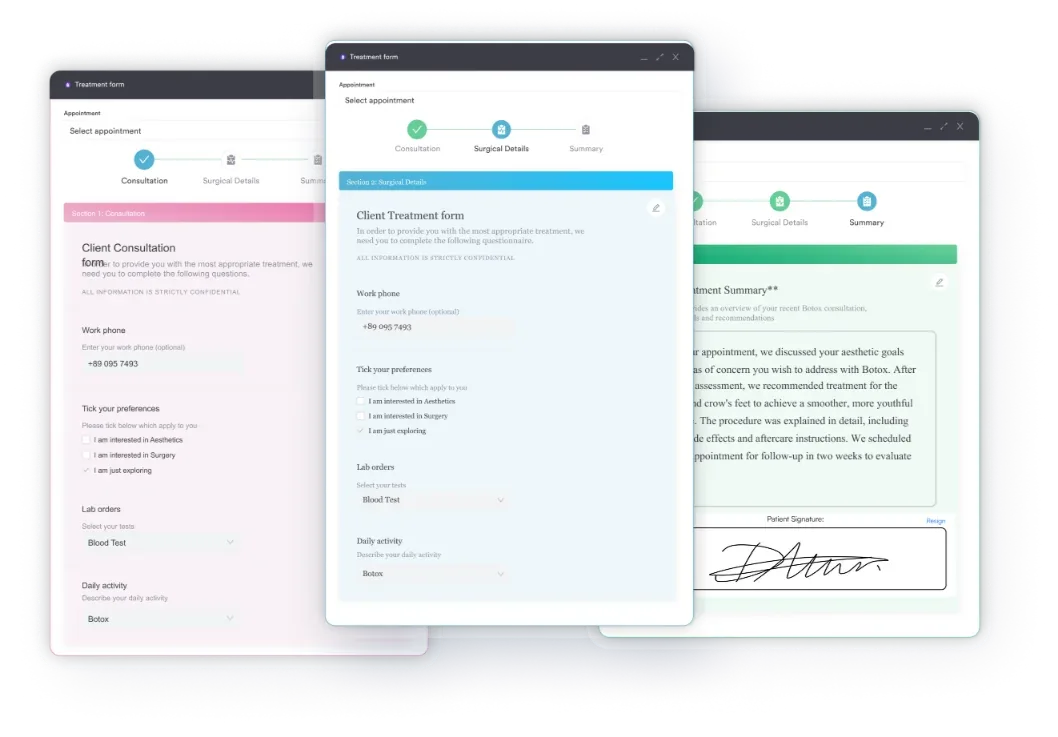
Running this form inside a GP practice system keeps clinical documentation in one place.
The cognitive techniques embedded in body acceptance worksheets draw directly from NICE-endorsed protocols. These protocols target body dysmorphic disorder and eating disorder treatment. The primary techniques include:
Research increasingly supports mindfulness and self-compassion as complementary modalities within body acceptance work. Unlike CBT’s focus on thought content, mindfulness teaches clients to observe thoughts and bodily sensations without attempting to change them-building what therapists call “psychological flexibility.”
Many clinicians complement a body acceptance worksheet with mindfulness exercises in session. Body scan prompts help (“Notice any sensations in your shoulders without labeling them as good or bad”). So do self-compassion prompts (“What would a compassionate friend say to you right now?”).
These practices reduce the harsh inner dialogue that fuels body dissatisfaction. They also create psychological space between a thought (“I’m fat”) and the client’s reaction to it.
The downloadable worksheet below focuses on reflection, thought-challenging, self-compassion, and goal-setting. A guided body scan works well as a separate in-session add-on rather than a worksheet section.
Adolescents face developmentally unique body image pressures: pubertal changes, peer comparison amplified by social media, and evolving identity formation. While the core structure of a body acceptance worksheet remains consistent, clinical adaptation is essential.
Adolescent-specific versions use simpler language, shorter reflection prompts, and less text-heavy layouts. They draw on relatable scenarios such as social media comparison, school changing rooms, and athletic contexts. This matches the cognitive load and engagement patterns of younger clients.
Some clients struggle to name feelings in words. For them. A behavior rewards chart can reinforce each completed step between sessions.
Research supports body acceptance interventions as part of eating disorder prevention and early intervention in school and community youth settings.
Body dysmorphic disorder (BDD) and body image disturbance in eating disorders represent the clinical high-end of body acceptance work. NICE guidance CG31 (OCD and BDD) explicitly recommends CBT including thought challenging and behavioral experiments-the exact techniques a body acceptance worksheet operationalizes.
In clinical practice, these worksheets are not standalone tools. They’re integrated into a broader treatment plan that may include exposure and response prevention, cognitive restructuring, and activity scheduling.
When body image concerns are accompanied by acute distress, self-harm risk, or suicidal ideation, worksheets serve as one element of a safety-focused treatment plan.
Effective facilitation transforms a worksheet from a paper exercise into a therapeutic intervention. The session-based approach below works in five steps.
Mental health practice workflows-especially caseloads involving body image disturbance-demand seamless integration of assessment, intervention, and documentation. Pabau’s therapy practice management software embeds worksheets directly into the clinical workflow.
Therapists can deliver the worksheet as a digital form before the session. Clients complete it in the waiting room or at home. The form attaches automatically to the client record. Therapists can then track responses across multiple sessions to visualize progress. This integration does three things:
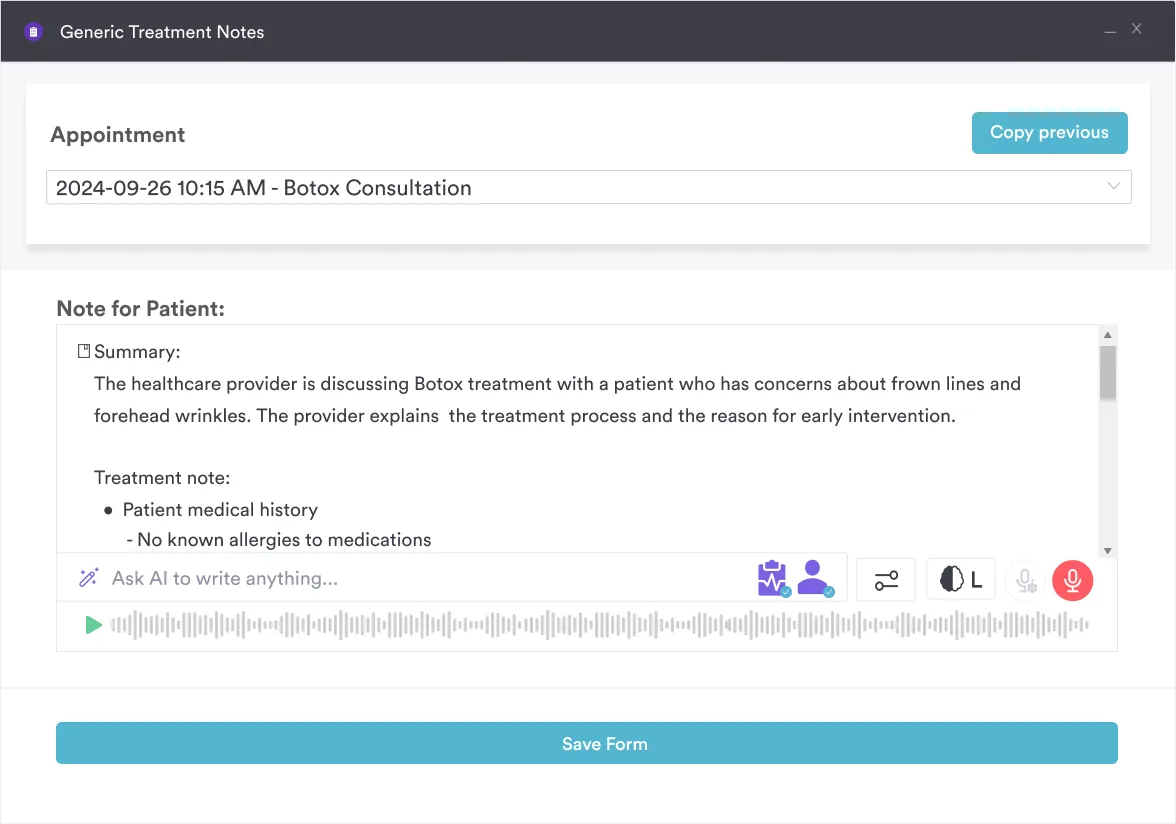
Pabau’s AI-powered clinical note-taking feature, Pabau Scribe, further supports documentation quality. After a session involving body image work, you can dictate or transcribe a note. The system automatically structures it into assessment, intervention, and progress sections.
This reduces the documentation burden that can delay clinical charting and supports compliance with HIPAA and GDPR standards. Additionally. That culture is essential when managing sensitive mental health content like body image work.

Discover how Pabau’s clinical forms, client records, and AI documentation help mental health professionals deliver evidence-based body image interventions while maintaining secure, compliant workflows.

A well-designed body acceptance worksheet is far more than a PDF checklist. It’s a structured intervention grounded in evidence-based CBT, mindfulness, and self-compassion practices.
You might work with adolescents navigating peer pressures, adults in eating disorder recovery, or clients with body dysmorphic disorder. In each case, the worksheet connects clinical theory to practical therapeutic work.
Embed it into your workflow with a system like Pabau. You then ensure consistent delivery, robust documentation, and continuity of care. Clients experience that care as professional, attentive, and safe.

Want to dig beneath a client’s visible emotions? iceberg chart template helps clients visualize the gap between visible emotions and the drivers underneath.
Working with an LGBTQ+ client on internalized stigma? internalized homophobia scale template gives clinicians a structured, evidence-based way to assess and quantify internal conflict.
Need to screen for internet addiction too? Internet Addiction Test screens internet use patterns, functional impairment, and addiction severity with a scored questionnaire.
A body acceptance worksheet is a therapeutic tool that guides clients through evidence-based exercises to explore their relationship with their body, challenge negative thoughts, and develop self-compassion and body neutrality.
Introduce the worksheet’s purpose in session, work through the thought-challenging section together to model the process, guide the self-compassion exercise aloud, and then collect the completed worksheet to review and reinforce learning in follow-up sessions.
Body acceptance aims for neutrality and coexistence with the body without constant judgment, while body positivity actively celebrates the body as is. For clients with moderate to severe body image disturbance, body acceptance is often more clinically accessible and realistic.
Yes. NICE guidelines recommend CBT including thought challenging and behavioral experiments for body dysmorphic disorder-the core techniques embedded in body acceptance worksheets. They are most effective as part of a comprehensive treatment plan.
Yes, though adolescent-specific versions use simpler language, shorter prompts, relatable scenarios (social media comparison, peer contexts), and less text-heavy layouts to match developmental stage and engagement patterns.