

HCPCS code E0198: Water pressure pad billing guide
HCPCS code E0198 is a water pad for a standard mattress HCPCS code E0198 is the ...

Last Updated: Oct 13, 2026
J0270 is the HCPCS Level II code for injection, alprostadil, 1.25 mcg (code may be used for medicare when drug administered under the direct supervision of a physician, not for use when drug is self administered).
According to the Centers for Medicare and Medicaid Services (CMS) HCPCS Level II system, J-codes make up the largest sub-section of HCPCS Level II and are maintained by CMS on an annual schedule. HCPCS Code J0270 sits within this J-series and carries active status for the current fiscal year. Always verify the current year's CMS HCPCS Level II file before submitting claims, as code status and descriptors can change with each annual update.
Let Pabau's smart automation suggest the right codes, reduce claim denials, and keep your practice compliant—effortlessly.
Automate repetitive tasks and focus on what matters most—your patients.
Reduce coding errors and ensure compliance with the latest regulations.
Clean claims, fewer denials, and faster reimbursements.
Powerful insights and reporting to help your practice thrive.
HIPAA compliant SOC 2 certified GDPR-compliant Trusted by 4,000+ clinics worldwide

HCPCS code J0270 describes alprazolam injection, up to 2 mg per billing unit, classified as a HCPCS Level II J-code for injectable drugs administered in a clinical setting.
Each unit billed corresponds to up to 2 mg of alprazolam administered; coders must divide the total dose by 2 mg to calculate the correct number of billable units.
Medicare Part B reimburses J0270 at ASP plus 6% for non-340B providers; rates update quarterly and NDC reporting is required on every Part B claim.
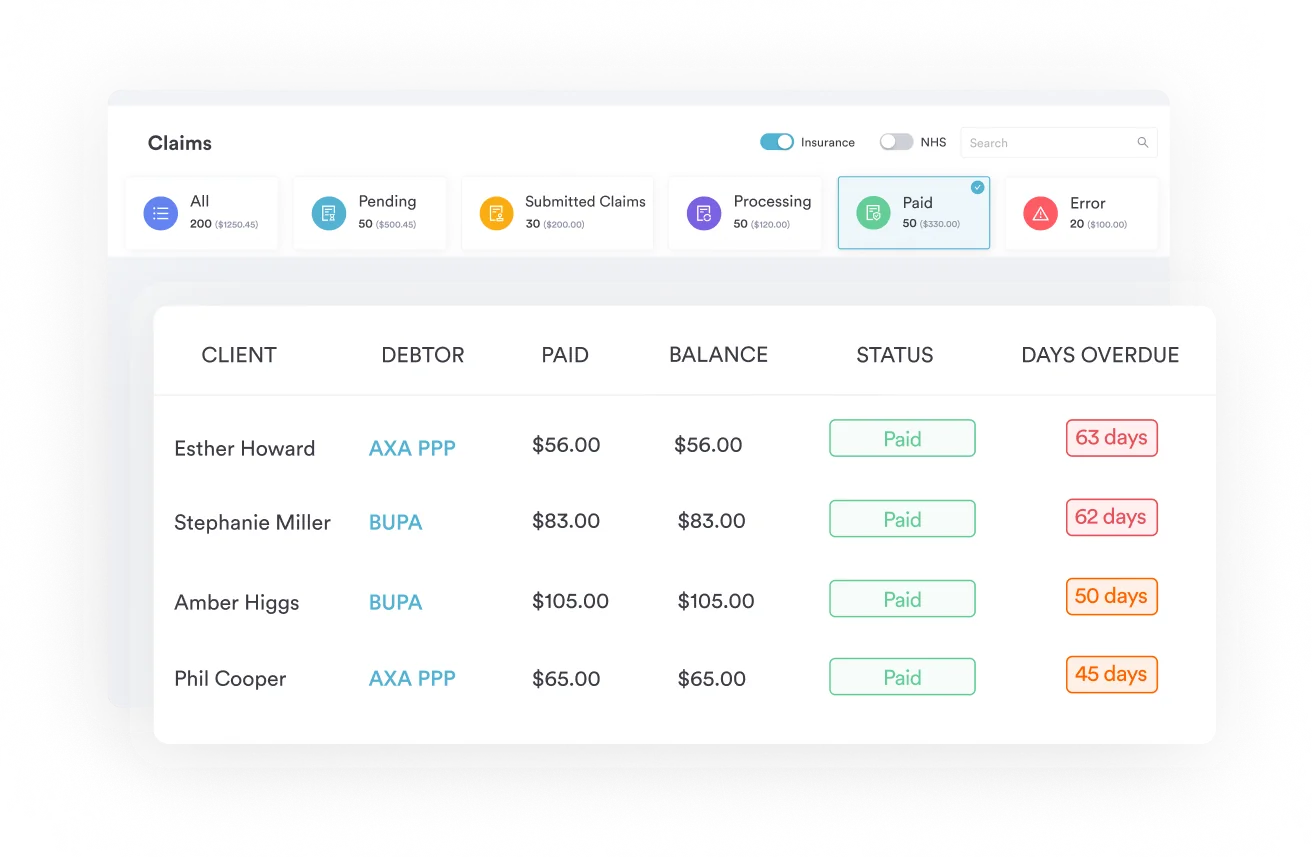
Pabau’s claims management software supports accurate unit entry, modifier attachment, and NDC line documentation to reduce J0270 denial rates.
The descriptor for J0270 covers “up to 2 mg” per unit. That means each billing unit represents a maximum dose of 2 mg of alprazolam. To determine the correct number of units, divide the total dose administered by 2 mg and round up to the nearest whole unit. Billing fewer units than administered causes underpayment; billing more is an overpayment error that can trigger audits.
Always document the exact dose administered in the clinical record before billing. For HIPAA-compliant documentation practices, the administered dose, lot number, and route of administration should appear in the patient’s clinical notes before a claim is submitted. Pabau’s claims management software lets billing staff enter units directly from the clinical encounter record, reducing transcription errors between the chart and the claim.
Medicare Part B covers physician-administered injectable drugs, including J-codes, when administered in a physician’s office, outpatient hospital, or other Part B setting. Coverage for J0270 is subject to medical necessity: the treating clinician must document a diagnosis that supports alprazolam administration. Prior authorization requirements vary by Medicare Advantage plan and commercial payer; do not assume prior authorization is not needed without checking the specific plan’s policy. Patients who claim reimbursement themselves need an itemized receipt, which is what a superbill template sets out.
CMS reimburses J-codes at the Average Sales Price (ASP) plus 6% for non-340B providers. For 340B covered entities, the rate is ASP minus 22.5%. ASP-based rates change every quarter when CMS publishes updated payment allowables. The table below shows the rate structure; verify the current quarter’s figure through the CMS Physician Fee Schedule lookup before billing.
Alprazolam is a DEA Schedule IV controlled substance, which means dispensing, storage, and documentation must comply with DEA regulations in addition to standard Medicare billing requirements. Practices should confirm their state’s controlled-substance regulations before administering and billing alprazolam injections. Good security requirements for protected health information also apply to controlled-substance records.
Modifiers clarify the circumstances of drug administration and affect both reimbursement and claim routing. The wrong modifier, or a missing required modifier, is a common denial trigger for J0270 claims. The table below covers the modifiers most frequently appended to injectable drug codes under Medicare.
Modifier rules differ by payer. The descriptions above reflect standard Medicare policy. Always verify modifier requirements in the specific payer’s billing manual before claim submission. Using practice management software with built-in modifier logic reduces the risk of appending an incorrect or missing modifier at claim time.
Build a modifier checklist into your billing workflow for all J-code claims. For J0270, confirm the route of administration (JA vs. JB) is documented in the chart before the claim leaves the practice. A one-minute check at claim entry prevents a denial that takes 30 minutes to appeal.
With integrated stock control, each administered dose is deducted automatically, keeping billed units aligned with used units.
CMS requires the National Drug Code (NDC) on all Medicare Part B drug claims. The NDC links the specific manufacturer’s product to the HCPCS code billed. Because multiple alprazolam formulations are manufactured, several NDCs can map to J0270. The exact NDC depends on which manufacturer’s product the practice purchased.
NDC codes follow an 11-digit format (labeler-product-package). On the CMS-1500, enter the NDC in the qualifier field as N4 followed by the 11-digit code, the unit of measure qualifier (ML for milliliters, UN for units), and the quantity. The prescription management software your practice uses should store the NDC from the dispensed vial and auto-populate the claim line.

NDC codes for alprazolam vary by manufacturer and package configuration. Always verify the NDC on the actual product label received from your pharmacy or wholesaler. Cross-reference against the medical documentation and form workflows your practice uses to capture dispensed lot numbers at the point of administration.
Every J0270 claim must be supported by an ICD-10-CM diagnosis code that documents medical necessity. Payers review the diagnosis code to determine whether alprazolam administration is appropriate. The most common diagnoses billed alongside J0270 include anxiety disorders and procedural sedation indications.
Payers determine coverage based on their own medical necessity criteria. Listing an ICD-10 code does not guarantee reimbursement. The situational anxiety diagnosis code (F41.8) applies when anxiety is context-specific and has been documented by the treating clinician. For claims involving autism spectrum diagnoses.
Accurate claim submission for J0270 involves five steps. Each step corresponds to a field on the CMS-1500 or 837P transaction.
For practices managing multiple injectable drug codes. Keeping structured clinical notes that reference the dose, route.

Pabau’s claims management tools let your billing team enter units, attach modifiers, and document NDC lines directly from the clinical encounter record. Fewer manual steps means fewer errors on Part B drug claims.

J0270 claims are denied for a predictable set of reasons. Most denials are preventable with a pre-submission checklist.
Controlled-substance billing adds an extra layer of documentation. DEA Schedule IV drugs require a valid prescription, correct storage logs, and accurate dispensing records. Any discrepancy between the dispensing record and the billed units creates an audit risk that extends beyond payer denial into DEA compliance territory. Review your HIPAA compliance for medical offices policies alongside DEA dispensing requirements to keep both frameworks aligned.
Alprazolam is rarely the only anxiolytic or sedative a practice stocks. Coders sometimes confuse J0270 with related benzodiazepine and sedative J-codes when the drug name is not clearly documented in the chart. The table below covers the most commonly confused codes.
J3490 (unclassified drug) is a common fallback code, but it should never be used when a specific J-code exists. Using J3490 for alprazolam instead of J0270 delays reimbursement because unclassified codes require manual review by the payer. For broader HCPCS code references and cross-code lookups. Practices running integrated billing workflows may also benefit from reviewing how medical practice management software handles drug code templates across multiple injectable agents.
Flag J3490 submissions in your monthly billing audit. Any claim where J3490 was used should be reviewed to confirm no specific J-code applies. For alprazolam, J0270 is always the correct code. Reducing J3490 usage sharpens your billing accuracy scores and speeds up payer adjudication.
Accurate J-code billing starts with the chart. Every J0270 claim depends on a documented dose, a recorded route of administration, an NDC from the dispensed vial, and a diagnosis that supports medical necessity. When any of those four elements is missing, the denial is almost always preventable.
Pabau’s claims management software connects the clinical encounter directly to the claim, so units, modifiers, and NDC lines are pulled from the record rather than re-entered manually. If your practice handles multiple J-codes or injectable drug programs, book a demo to see how Pabau reduces denial rates for physician-administered drugs.

Coding an unspecified age-related cataract? ICD-10 code H25.9 covers its billable status for the 2026 code year and when it applies to adult patients.
Managing injectable drugs across multiple locations? Inventory management software helps practices track drug stock, lot numbers, and expiry dates to support accurate NDC documentation.
Coding a cataract type without its own subcategory? ICD-10 code H26.8 covers cataract presentations, such as adherent or total cataract, that don’t map to a named H26 subcategory.
HCPCS code J0270 is a Level II injectable drug code that describes alprazolam injection, up to 2 mg per billing unit. It is used to bill Medicare Part B and other payers when alprazolam is administered by a clinician in an office or outpatient setting.
Divide the total dose administered by 2 mg and round up to the nearest whole number. A 2 mg dose = 1 unit. A 3 mg dose = 2 units. A 4 mg dose = 2 units.
Yes, Medicare Part B covers physician-administered injectable drugs including J0270 when administered in a covered setting and supported by a documented medical necessity diagnosis. Prior authorization requirements vary by Medicare Advantage plan.
Medicare reimburses J0270 at ASP plus 6% for non-340B providers. Rates update quarterly; verify the current allowable through the CMS Physician Fee Schedule lookup tool before billing.
Multiple NDCs map to J0270 because alprazolam is produced by several manufacturers. The correct NDC comes from the vial label of the specific product dispensed. Verify against the FDA NDC Directory; never use a generic placeholder NDC on a claim.
CPT codes (maintained by the AMA) describe medical procedures and services. HCPCS Level II codes (maintained by CMS) cover drugs, supplies, and equipment not captured by CPT. J-codes like J0270 are HCPCS Level II codes specifically used for injectable drug billing.
As of the current publication date, J0270 carries active status. HCPCS codes are updated annually; confirm the code’s current status in the CMS HCPCS Level II file each January before submitting claims for the new year.



