

HCPCS code E0198: Water pressure pad billing guide
HCPCS code E0198 is a water pad for a standard mattress HCPCS code E0198 is the ...

Last Updated: Oct 13, 2026
E0486 is the HCPCS Level II code for oral device/appliance used to reduce upper airway collapsibility, adjustable or non-adjustable, custom fabricated, includes fitting and adjustment.
Most E0486 denials come from incomplete claim files, not coverage problems: the fabrication proof or sleep study documentation exists at the point of care, but it never makes it into the submission. According to the Centers for Medicare and Medicaid Services (CMS), HCPCS Level II codes require a specific set of supporting documents before Medicare will process DME reimbursement.
Let Pabau's smart automation suggest the right codes, reduce claim denials, and keep your practice compliant—effortlessly.
Automate repetitive tasks and focus on what matters most—your patients.
Reduce coding errors and ensure compliance with the latest regulations.
Clean claims, fewer denials, and faster reimbursements.
Powerful insights and reporting to help your practice thrive.
HIPAA compliant SOC 2 certified GDPR-compliant Trusted by 4,000+ clinics worldwide

HCPCS Code E0486 covers a custom fabricated oral appliance for obstructive sleep apnea (OSA), classified as durable medical equipment (DME) under Medicare Part B
Medicare requires a qualifying sleep study, a documented OSA diagnosis (ICD-10 G47.33), and a written physician order before E0486 can be billed
E0486 and K1027 are not interchangeable: K1027 (introduced 2021) applies to oral sleep appliances meeting specific CMS criteria, while E0486 remains valid for qualifying custom devices under existing Medicare coverage
Pabau’s claims management software links clinical documentation directly to billing records, reducing the manual reconciliation that causes E0486 claim denials
HCPCS Code E0486 is the billing code for a custom fabricated oral appliance used in the treatment of obstructive sleep apnea. Unlike prefabricated devices, an E0486 appliance is individually designed and fitted to a specific patient by a qualified provider, typically a dentist or physician trained in dental sleep medicine.
The device category covered is a mandibular advancement device (MAD) or mandibular repositioning device (MRD). These appliances work by repositioning the lower jaw during sleep to keep the airway open, reducing apnea events in patients with moderate to severe OSA who cannot tolerate continuous positive airway pressure (CPAP) therapy or for whom CPAP is clinically inappropriate.
The word “custom fabricated” is the critical qualifier. CMS distinguishes sharply between prefabricated and custom devices. A prefabricated appliance that ships in standard sizes and is not individually made for a patient maps to E0485, not E0486.
Billing E0486 for a prefabricated device is a coding error that will trigger a denial on audit. This fabrication distinction is the single most important thing to get right in dental sleep medicine billing, and it applies just as strictly to other specialty codes.
Medicare covers E0486 under its DME benefit (Part B), but coverage is conditional. Claims submitted without all qualifying criteria documented are denied regardless of medical necessity. CMS publishes a Local Coverage Determination (LCD) for oral appliances for OSA that sets out exactly what is required.
The four coverage criteria are:
The same enrollment check applies to other specialist billing.
Most E0486 denials are documentation failures, not coverage failures. The patient qualifies, the device was delivered correctly, but the claim file is incomplete. CMS audits DME claims aggressively, and missing documentation triggers both denial and potential recoupment for amounts already paid.
The required documentation set for an E0486 claim includes:
Capturing all six documentation elements at the point of care is where digital intake forms and structured clinical note workflows prevent the most expensive billing errors. When documentation is collected digitally and linked directly to the patient record, the billing team can pull the complete file without chasing paper records after the fact.
Consistent HIPAA-compliant clinical documentation practices reduce audit exposure across all DME billing, not just E0486. Practices standardizing their intake process should also review medical forms workflows guidance for implementation.
That same documentation needs to map cleanly onto the claim itself. The CMS-1500 form fields for date of service, HCPCS code, and diagnosis pointer are where missing documentation first becomes visible to a payer.
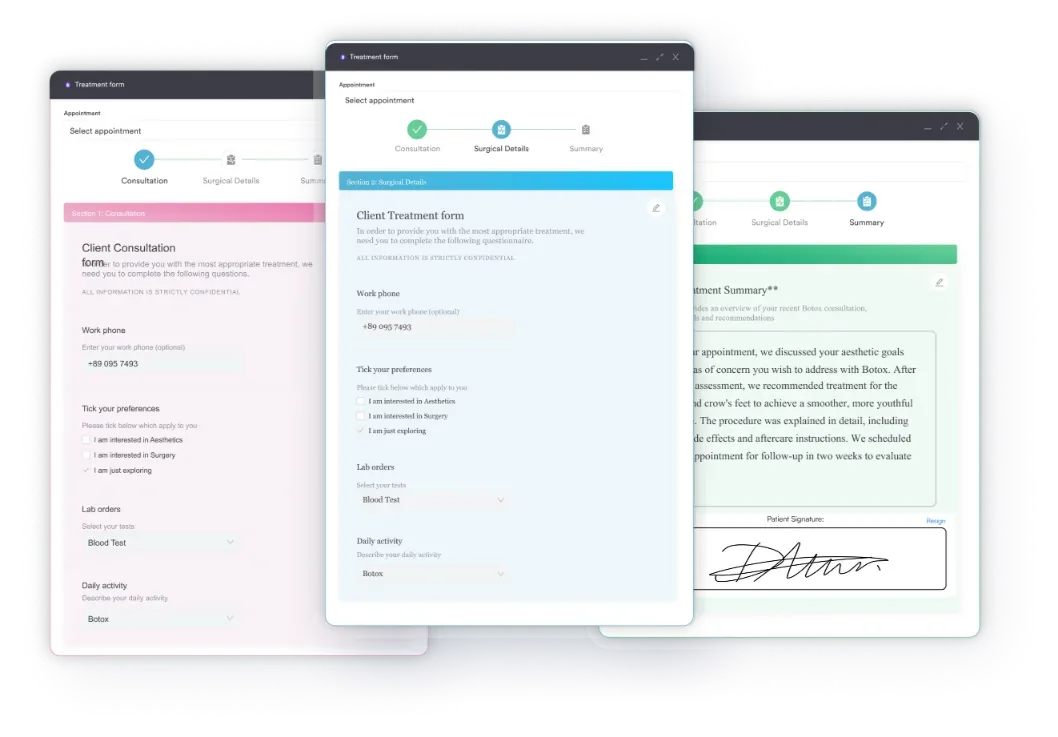
A patient management system reminds you when issued equipment is due for review, replacement, or return.
Medicare reimbursement for E0486 is set through the annual DMEPOS fee schedule, which CMS publishes each year. Rates vary by locality (payment area), so a practice in rural Alabama will see different reimbursement than one in metropolitan New York. The 2026 rates are available through the CMS fee schedule lookup tool.
Two practical points matter for the fee schedule. First, never use a prior-year rate for patient cost estimates — DMEPOS rates change with each annual update. Second, if your practice is in a competitive bidding area, you must be a contract supplier to bill Medicare for E0486 there.
Billing outside a competitive bidding contract when one applies to your jurisdiction results in claim rejection rather than denial, meaning the claim is returned without processing. Reviewing Bupa fee schedule guidance alongside Medicare rates helps practices set consistent patient cost communication across payers.
In 2021, CMS introduced HCPCS Code K1027 specifically for oral sleep appliances. The addition of K1027 created significant confusion among dental sleep medicine billers about which code to use going forward. The short answer: both codes remain active, but they apply to different situations.
The decision starts with PDAC classification, not practitioner preference. Check the PDAC product classification list for the specific device you are delivering. If the device has an active E0486 product code, bill E0486. If it has a K1027 product code, bill K1027. If it has both, verify your payer’s current policy on code preference before submitting.
Every E0486 claim requires at least one ICD-10 diagnosis code establishing the clinical basis for the device. CMS cross-references the diagnosis codes on the claim against the coverage criteria in the LCD for oral appliances for OSA.
G47.33 is the primary diagnosis code for obstructive sleep apnea in adults and is the code listed in the CMS LCD crosswalk for oral appliance coverage. Using a less specific code (G47.30) when the confirmed diagnosis is obstructive sleep apnea may not be sufficient to support coverage under the LCD.
Because OSA is a chronic, ongoing condition, G47.33 continues to be the code used at follow-up visits — there is no dedicated ICD-10 personal-history code for sleep apnea. Verify the current ICD-10-CM code list against the applicable LCD before billing via the AAPC HCPCS code reference.
Understanding where HCPCS Code E0486 sits among related codes prevents upcoding and downcoding errors. Dental sleep medicine practices should be familiar with all three active codes in this category.
The same crosswalk logic applies elsewhere in DME billing: HCPCS Code A4368 and HCPCS Code A4259 both follow the same PDAC-verification pattern before a claim can go out.
For practices also working with UK private healthcare billing. The underlying documentation logic (device classification, fabrication proof, qualifying diagnosis) maps closely to the Medicare DME framework.
Prior authorization (PA) requirements for HCPCS Code E0486 vary by payer and are subject to change with relatively little notice. Always verify PA requirements before the device is fabricated, not after.
The risk of fabricating before PA approval is that you deliver a device, the PA is denied, and you cannot recoup the cost from Medicare or the insurer. Build a PA workflow into your front-end process for every E0486 case with a commercial or Medicare Advantage payer. A payer audit samples claims and extrapolates, so one repeated error becomes a large repayment.
This PA volatility isn’t unique to dental sleep medicine. Practices running physical therapy software face the same Medicare Advantage authorization churn for DME items like braces and orthotics.
E0486 denials cluster around a predictable set of errors. Practices that audit their denial patterns find the same triggers appearing repeatedly. Fixing them structurally, rather than appealing case by case, is the more efficient path. Common claim denial codes repeat by specialty, so the pattern is worth reading before reworking.
Of these seven denial types, missing documentation and wrong-code errors are the most addressable through workflow changes rather than individual claim appeals. Building a pre-submission documentation checklist into your billing process catches the majority of preventable denials before they reach the payer. The same principle holds for other DME-heavy specialties.
Before fabricating any E0486 appliance, run a three-point pre-authorization check: (1) confirm the device has a current PDAC product classification for E0486 or K1027, (2) verify whether the payer requires prior authorization (especially Medicare Advantage and Ambetter effective July 1, 2026), and (3) confirm the written physician order is on file and predates the planned delivery date. Catching these issues before fabrication saves the lab cost, the delivery time, and the appeals process.
The most common E0486 denials are not payer errors; they are documentation and workflow failures that happen inside the practice before the claim is ever submitted. Software that bridges clinical documentation and billing in one system removes the manual reconciliation step where things go wrong.
Pabau’s claims management software links treatment documentation directly to billing records, so the billing team works from the same structured clinical record that was captured at the point of care. Three specific workflows apply to E0486 billing:
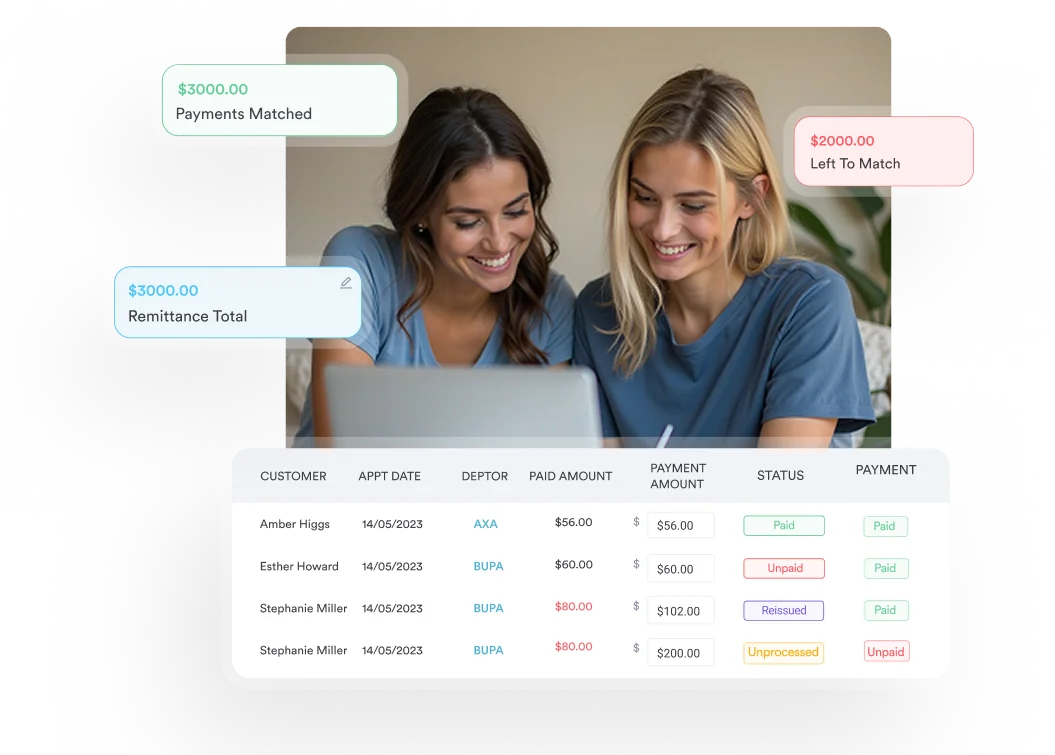
For practices scaling their billing operations across multiple code sets, the broader practice management software framework that connects scheduling, documentation, and billing in one place reduces the coordination overhead that leads to claim errors. Practices operating across multiple locations face compounded documentation risk with DME codes; see how multi-location management tools address consistency challenges.
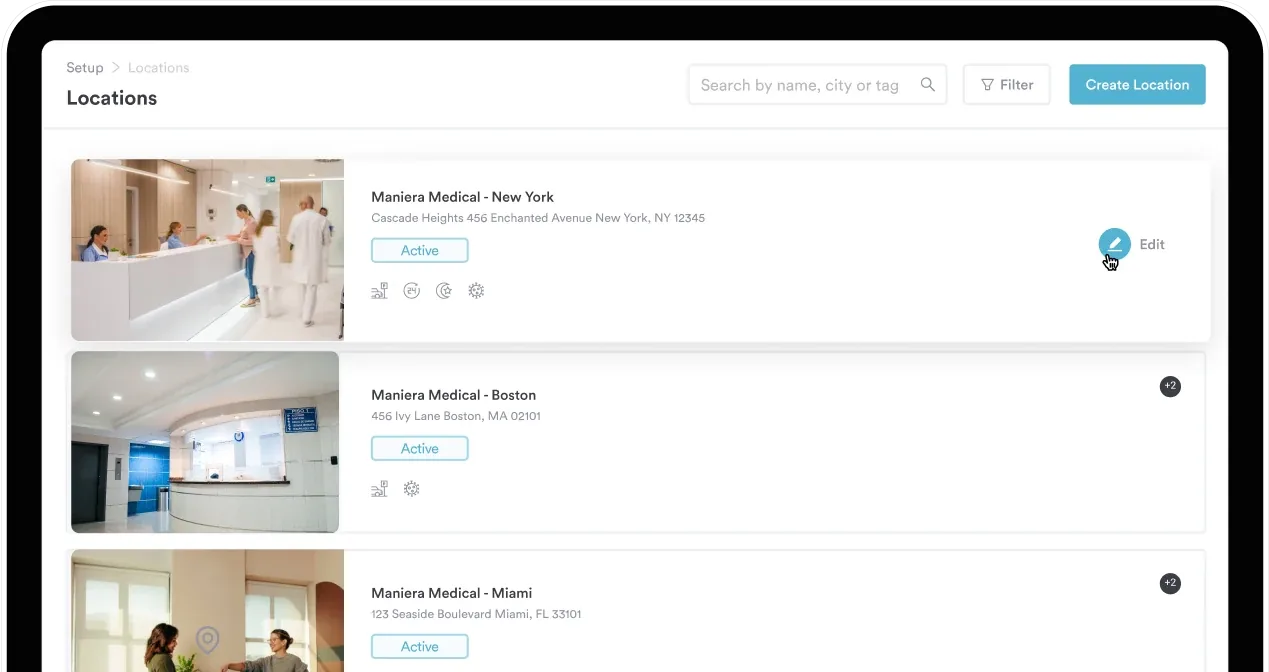

Pabau connects clinical documentation to billing records in one system, so the documentation your billing team needs for E0486 is captured at the point of care, not assembled after a denial. See how it works for dental sleep medicine and DME billing.

HCPCS Code E0486 is straightforward when the documentation is right. The code covers a custom fabricated oral appliance for obstructive sleep apnea, and Medicare will pay when the qualifying criteria are met: confirmed OSA diagnosis (G47.33), documented sleep study, written physician order predating delivery, and PDAC-verified device classification. The billing errors that generate denials are preventable, but only if the documentation workflow is built around the claim requirements, not patched together after a rejection.
For practices looking to tighten their E0486 billing process, Pabau’s claims management software and structured documentation templates remove the manual reconciliation step that causes most denials.

Coding a hand injury follow-up visit? Thumb extensor injury coding guide explains how to code a follow-up thumb extensor tendon injury at wrist and hand level.
Coding a femur fracture that healed poorly? Femur fracture malunion coding guide covers the 7th character for a closed femur shaft fracture that healed in poor alignment.
Coding a femur fracture healing slowly instead? Femur fracture delayed healing guide covers billing an unspecified right femur fracture at a follow-up visit with delayed healing.
HCPCS Code E0486 is used to bill for a custom fabricated oral appliance (typically a mandibular advancement device) prescribed for the treatment of obstructive sleep apnea. It is classified as durable medical equipment (DME) and billed under Medicare Part B when a patient meets the coverage criteria, including a qualifying sleep study and physician order.
E0486 is the legacy HCPCS code for custom fabricated oral appliances for OSA; K1027 was introduced by CMS in 2021 for oral sleep appliances meeting a new classification criteria. The correct code depends on which PDAC product classification applies to the specific device delivered. Both codes remain active, but a device classified under K1027 must be billed as K1027, not E0486.
The required documentation includes: the full sleep study report with AHI/RDI results, a written physician order predating device delivery, a detailed product description confirming custom fabrication, proof of fabrication (lab records or dental impressions), PDAC product verification for the specific device, and a CMN if required by your MAC. All items must be in the claim file before submission.
It depends on the payer. Traditional Medicare does not require PA for E0486 as a standard rule, but Medicare Advantage plans may. Ambetter Health requires prior authorization for E0486 effective July 1, 2026. Most commercial plans require PA. Always verify per payer before fabricating the device, as PA denials after fabrication are not recoverable from the insurer.
In most cases, dentists cannot bill E0486 directly to Medicare. The billing entity must be enrolled as a Medicare-enrolled DME supplier. Dentists who are not enrolled as DME suppliers typically bill through a participating DME supplier arrangement. Verify enrollment requirements with your Medicare Administrative Contractor (MAC) before submitting any E0486 claim.
G47.33 (obstructive sleep apnea, adult/pediatric) is the primary ICD-10 diagnosis code used with E0486. G47.30 (sleep apnea, unspecified) may be used when the type is not yet confirmed, but G47.33 is the preferred code once the OSA diagnosis is established. Using a non-specific diagnosis code when a more specific one is available may not satisfy the LCD coverage criteria.



