CPT code 93503: Swan-Ganz catheter billing and modifiers
CPT code 93503: Official descriptor and procedure overview In the AMA CPT code s...

Last Updated: Oct 23, 2026
A4721 is the HCPCS Level II code for dialysate solution, any concentration of dextrose, fluid volume greater than 999 cc but less than or equal to 1999 cc, for peritoneal dialysis.
Let Pabau's smart automation suggest the right codes, reduce claim denials, and keep your practice compliant—effortlessly.
Automate repetitive tasks and focus on what matters most—your patients.
Reduce coding errors and ensure compliance with the latest regulations.
Clean claims, fewer denials, and faster reimbursements.
Powerful insights and reporting to help your practice thrive.
HIPAA compliant SOC 2 certified GDPR-compliant Trusted by 4,000+ clinics worldwide

HCPCS code A4721 covers dialysate solution for peritoneal dialysis, at any concentration of dextrose. The bag’s fluid volume must be greater than 999 cc and no more than 1999 cc.
One unit of service is one bag, not one 10 ml increment. The 10 ml unit belongs to A4216, the sterile water and saline diluent code.
A4720 covers 250 cc to 999 cc bags and A4722 covers 2000 cc to 2999 cc bags. Volume alone drives code choice, never dextrose strength.
A4721 sits on CMS’s ESRD PPS consolidated billing list. For maintenance dialysis the supply is bundled into the ESRD facility’s per-treatment payment, so a separate DME MAC claim needs modifier AY.
Medicare no longer requires a Certificate of Medical Necessity. For dates of service from January 1, 2023, a Standard Written Order plus medical-necessity documentation applies.
HCPCS code A4721 covers dialysate solution for peritoneal dialysis, at any concentration of dextrose. The bag’s fluid volume must be greater than 999 cc and no more than 1999 cc. A 1500 cc bag is the classic A4721 line item. A 2000 cc bag is not, and that one step up the ladder takes you to A4722.
A4721 is a HCPCS Level II supply code, part of the A-series for medical and surgical supplies. The Centers for Medicare and Medicaid Services (CMS) maintains it. The descriptor names the solution itself, so it does not cover the transfer set, the tubing, or the cycler.
Two things about this code trip up billers more than anything else. The volume bands are easy to read one tier low. The supply is also bundled into the ESRD facility’s payment far more often than it is billed to a DME MAC.
The table below captures the core attributes billing staff need before submitting any claim under HCPCS code A4721. Verify the status annually, because CMS updates the HCPCS Level II code set each year.
The phrase “any concentration of dextrose” in the descriptor is deliberate. A4721 does not separate 1.5%, 2.5%, and 4.25% solutions, because bag volume drives code selection rather than dextrose strength. That keeps the series short for suppliers who ship several concentrations to the same patient. The order and the delivery record still have to state which concentration went out. Australian practices bill the equivalent service through MBS item numbers, which carry their own descriptors and eligibility rules. Common claim denial codes repeat by specialty, so the pattern is worth reading before reworking.
For a patient on maintenance dialysis, A4721 is almost never a separately paid line. CMS lists the code on the ESRD PPS consolidated billing list, so payment sits inside the ESRD facility’s per-treatment rate. Work out which payment route applies before you calculate anything else, because it decides whether you have a billable claim at all.
Important note on rates: do not price this code from the Physician Fee Schedule lookup. Dialysis supplies are priced on the DMEPOS fee schedule, and the bundled ESRD route bypasses that file altogether. Pulling a figure from the wrong file, or from a prior-year file, is a common audit trigger.
Billing supply codes accurately starts with inventory management software that knows what actually left the shelf.
A4720 through A4728 all appear on Attachment B, the CMS list of items subject to ESRD PPS consolidated billing. When those supplies are furnished for the treatment of ESRD, Medicare treats them as renal dialysis services. Payment is already inside the facility’s per-treatment rate, so a second claim for the same item hits the consolidated billing edits and denies.
Treated water for peritoneal dialysis is a separate supply from the dialysate in those bags. A4714 covers that water per gallon, and CMS bundles it into the dialysis facility’s payment under ESRD PPS, as it does with A4721.
Which route applies changes how you read every fee schedule figure attached to this code. Three situations cover almost every claim you will see.
Modifier AY is the only route to separate payment inside the bundle’s reach. The Medicare Claims Processing Manual and the DME MAC guidance both frame it as an assertion about the reason for the item. Appending AY to clear a consolidated billing denial, without a documented non-ESRD indication behind it, is how a denial becomes an overpayment finding.
Coverage runs through the Part B benefit for home dialysis supplies. The patient needs a physician-established home peritoneal dialysis plan, and the billing entity has to be enrolled for what it submits. Four conditions decide whether the documentation survives review.
Medicaid coverage for A4721 varies by state. Most state programs follow the Medicare DMEPOS framework, but reimbursement rates and prior authorization rules differ. Check your state’s Medicaid fee schedule before billing dialysate supplies under a state plan.
Retention matters as much as the paperwork itself. The Standard Written Order, the delivery records, and the patient usage logs all support the claim on review. Hold them for at least seven years.
Report one unit for each bag whose fill volume falls inside the code’s range. The descriptor sets a range, not a divisor. Twelve 1500 cc bags delivered in a month are twelve units of A4721. Billing them as 1,800 units overstates the quantity by a factor of 150.
The per-10-ml habit comes from neighboring codes.
None of those units transfer to A4721, which is always counted per bag.
A 2000 cc bag falls outside A4721 and belongs to A4722, which starts above 1999 cc. Confirm the fill volume from the manufacturer’s label or the delivery manifest before you touch the quantity field. Nominal figures on a purchase order are not reliable enough for a code that turns on a single cubic centimeter.
Only a short list of modifiers belongs on a consumable dialysate line. The table covers the ones a dialysate claim actually uses, and the note underneath covers the ones billers add by mistake.
KH, KI, and KJ do not belong on this code. They mark the first, the second and third, and the fourth through fifteenth months of a capped-rental equipment episode.
NU and RR are purchase and rental modifiers for equipment, and a consumable bag is neither rented nor purchased. Any of those modifiers on an A4721 line signals that the supply has been confused with the machine.
Pull ten recent dialysate claims and check the fill volume on each delivery manifest against the code billed. Bags of 1500 cc and 2000 cc sit on opposite sides of the A4721 boundary. They often ship on the same monthly order.
A4721 is the second rung of a seven-code volume ladder, not the middle of a three-code set. Each rung above A4720 spans a 1000 cc band, and only A4726 is open-ended at the top. Two more codes sit alongside the ladder and account for most of the unit confusion around it.
The choice between A4720, A4721, and A4722 is purely volume-driven, and the boundaries are unforgiving. Suppliers shipping mixed bag sizes to one patient hit this every month. Follow the same five steps against each delivery record.
A4728 does not mean “not otherwise specified”. It describes non-dextrose dialysate in 500 ml units, so it covers a different product. It is not a fallback for a volume you could not pin down. Reaching for it because a volume code looked wrong turns a fixable coding question into an audit finding.
Teams running high-volume dialysis supply accounts often use structured medical forms to capture bag size at delivery confirmation. That value then feeds straight into the billing record, which removes the manual lookup step and cuts miscoding between adjacent rungs.
Flag any delivery record where the fill volume lands within 50 cc of a boundary, such as 990 cc or 1990 cc. Check those against the manufacturer label before you assign a code. A single-digit transcription error in the manifest moves the claim to the wrong rung.
Home dialysis supply billing runs through DMEPOS suppliers, DME MACs, and the ESRD PPS bundle.
What does carry across specialties is the layer underneath the claim. Every denial described on this page starts as a documentation problem, and three failures account for most of them:
Pabau keeps that layer on one patient record for the practices it does serve. That list covers aesthetics, wellness.
Orders, consent forms, treatment notes, and coded charges live on that record instead of in four systems.
The payoff is fewer claims stalled by a missing document, so your team spends its time with patients instead of reassembling paperwork after a denial.
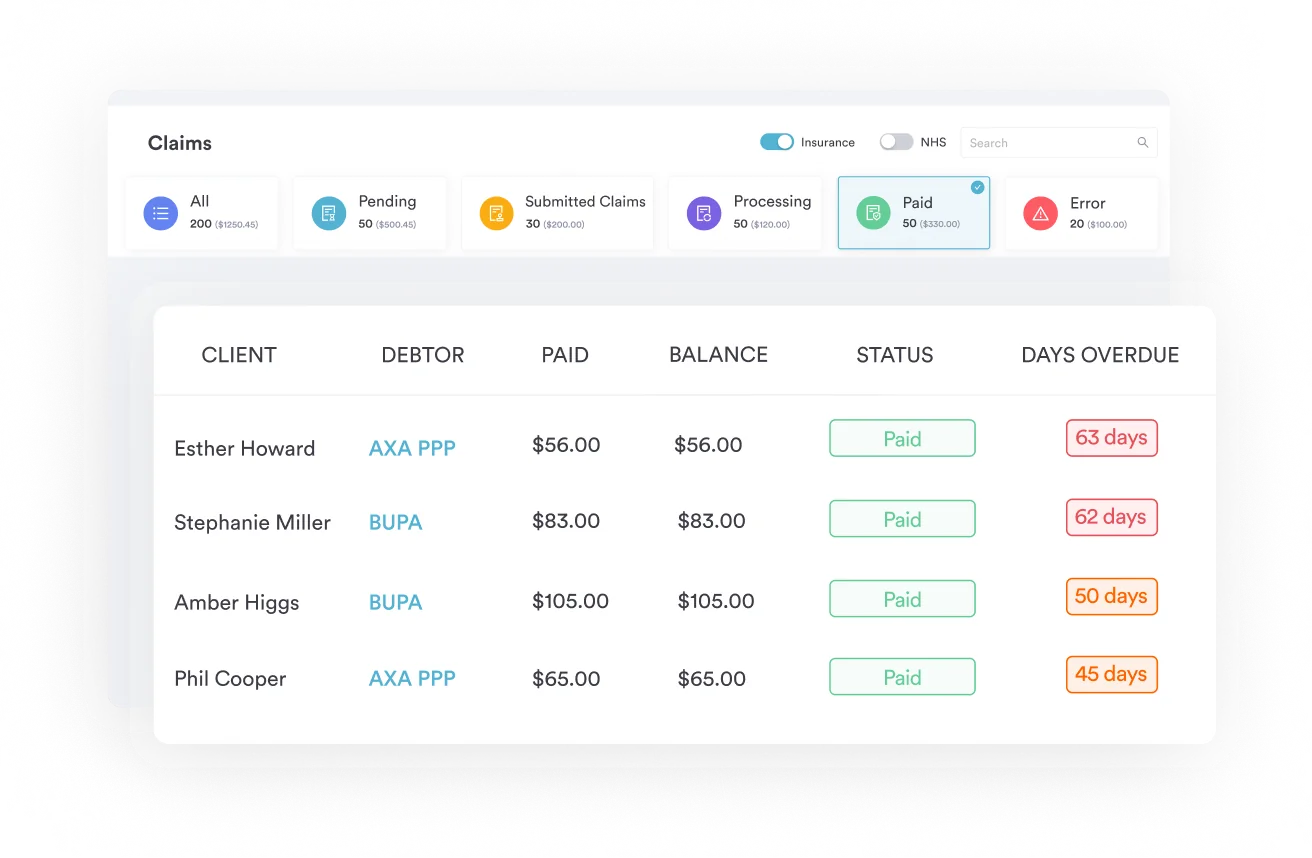

Pabau brings orders, notes, coded charges, and claim status onto a single patient record. See how practices in aesthetics, wellness, physical therapy, mental health, and fertility cut documentation-driven denials.

A4721 denials usually trace to one of three things. The descriptor gets read one tier low, or the quantity gets billed per 10 ml instead of per bag. The third is a DME MAC claim on an item the ESRD bundle had already paid for. All three are catchable before the claim leaves the building.
Read the fill volume off the label, confirm which payment route applies, and keep the Standard Written Order filed with the delivery record. If your practice works in one of the specialties Pabau supports, book a demo to see how that documentation layer holds together in one system.

Billing the non-dextrose dialysate code? HCPCS code A4728 explains the 500 ml unit of service and the consolidated billing rules it shares with A4721.
Tracing where the 10 ml unit comes from? HCPCS code A4216 covers the sterile water, saline, and dextrose diluent code that the per-10-ml habit belongs to.
Coding another Medicare supply item? HCPCS code A4310 shows how a tray descriptor decides what the code includes and what it leaves out.
Counting units on another consumable? HCPCS code B4149 works through enteral formula units, the same per-unit trap this page describes.
Billing a catheter flush injection? Heparin lock flush billing guide explains J1642 unit counts and why the code covers catheter patency, not anticoagulation.
HCPCS code A4721 describes dialysate solution for peritoneal dialysis, at any concentration of dextrose. The fluid volume must be greater than 999 cc and no more than 1999 cc. It is a HCPCS Level II supply code, and one unit of service is one bag inside that range.
One unit. A4721 is reported per bag, and a 1500 cc bag sits inside the code’s range of 1000 cc to 1999 cc. There is no per-milliliter division, so twelve such bags in a month are twelve units.
Modifier AY is the one that matters. It marks a supply furnished to an ESRD beneficiary for a reason unrelated to ESRD treatment, which is the only route to separate payment. EY, GA, GY, and GZ cover order and liability situations. KH, KI, KJ, NU, and RR are equipment modifiers and do not belong on a consumable dialysate line.
Usually not as a separate DME claim. A4721 appears on CMS’s ESRD PPS consolidated billing list. For a patient on maintenance dialysis, the supply is paid inside the ESRD facility’s per-treatment rate. A separate DME MAC claim applies only when the item is furnished for a reason unrelated to ESRD treatment, billed with modifier AY. Documentation rests on a Standard Written Order, since CMNs ended for dates of service from January 1, 2023.