CPT code 93503: Swan-Ganz catheter billing and modifiers
CPT code 93503: Official descriptor and procedure overview In the AMA CPT code s...

Last Updated: Oct 23, 2026
A4566 is the HCPCS Level II code for shoulder sling or vest design, abduction restrainer, with or without swathe control, prefabricated, includes fitting and adjustment.
Let Pabau's smart automation suggest the right codes, reduce claim denials, and keep your practice compliant—effortlessly.
Automate repetitive tasks and focus on what matters most—your patients.
Reduce coding errors and ensure compliance with the latest regulations.
Clean claims, fewer denials, and faster reimbursements.
Powerful insights and reporting to help your practice thrive.
HIPAA compliant SOC 2 certified GDPR-compliant Trusted by 4,000+ clinics worldwide

HCPCS Code A4566 describes a prefabricated shoulder sling or vest-design abduction restrainer, with or without swathe control, including fitting and adjustment
A4566 falls under HCPCS Level II A-codes for medical and surgical supplies, and Medicare Part B may cover it when medical necessity is documented
Coverage under Medicare Part B depends on a valid physician order, a supporting ICD-10 diagnosis, and compliance with the applicable Local Coverage Determination (LCD)
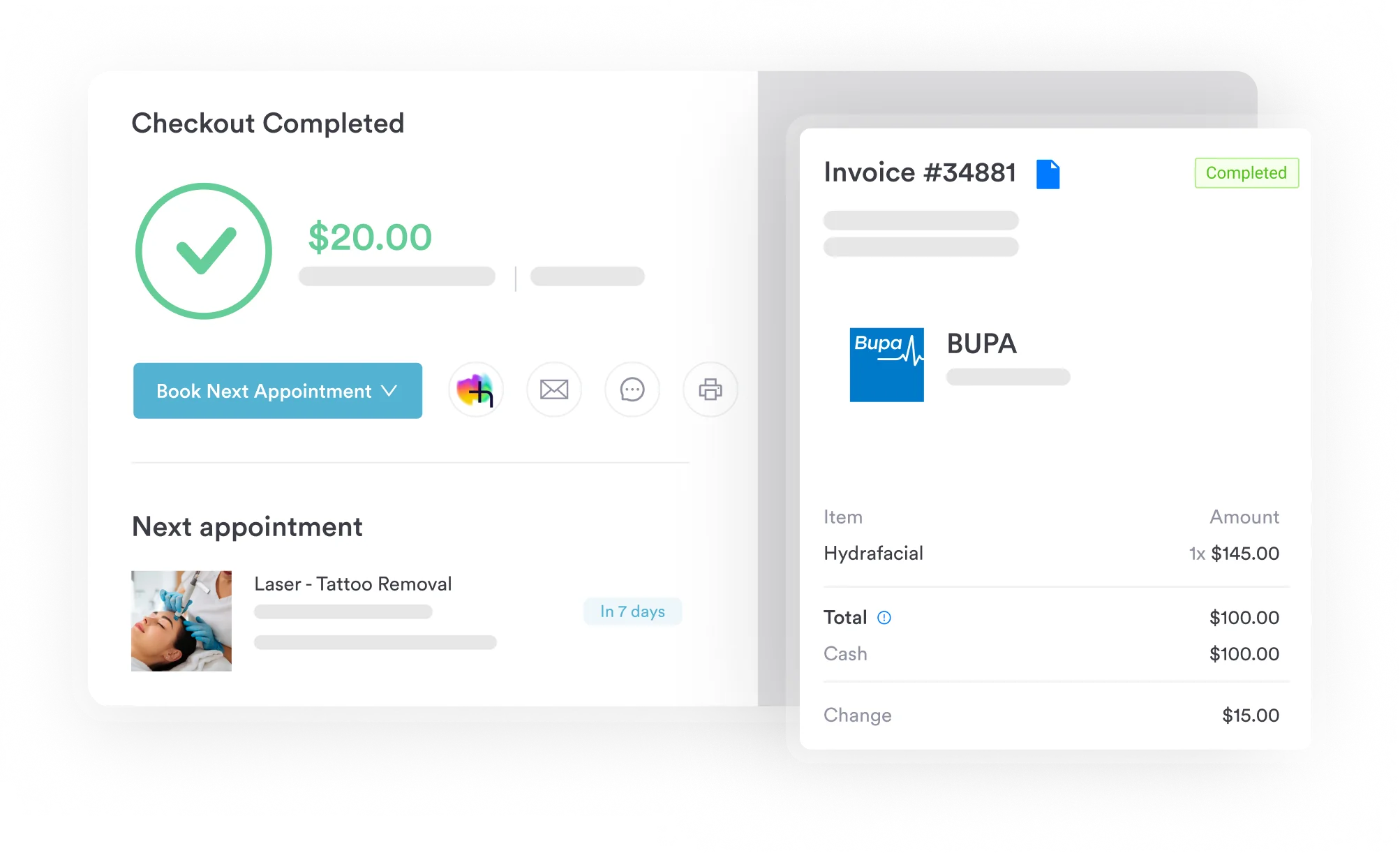
Pabau’s claims management software pulls patient, treatment, and insurer details already on the record into a pre-filled A4566 claim, then submits and tracks it
HCPCS Code A4566 covers a prefabricated shoulder sling or vest-design abduction restrainer, with or without swathe control. The code pays for a device that holds the arm away from the body, and it includes fitting and adjustment. Coders reach for it most often after proximal humerus fractures, glenohumeral dislocations, and rotator cuff repairs.
A4566 is frequently confused with A4565 and A4570, and each of the three covers a different device. The official long description reads: Shoulder sling or vest design, abduction restrainer, with or without swathe control, prefabricated, includes fitting and adjustment. Three parts of that description decide whether the code applies.
Practices billing orthopedic supplies alongside clinical care can keep the order, the note, and the coded charge on one patient record. Practice management software like Pabau then pulls those details into a pre-filled claim, so billers never re-key them.
A4566 sits within the HCPCS Level II A-code series, which covers transport services and medical and surgical supplies. That series spans single-use items such as A4310 as well as reusable devices like the abduction restrainer. According to the Centers for Medicare and Medicaid Services (CMS), HCPCS Level II codes are maintained annually and published in the CMS HCPCS code files.
Physical therapy and orthopedic practices billing A4566 should confirm the code’s status each January, when CMS publishes its updated HCPCS Level II file. Practices running physical therapy EMR software with integrated billing can automate that check instead of running it by hand.
Reimbursement for A4566 follows the CMS DMEPOS fee schedule, which covers durable medical equipment, prosthetics, orthotics, and supplies. The Medicare Physician Fee Schedule does not apply. Rates vary by region through an adjustment factor applied to the national base amount.
Source the exact 2026 payment rate directly from the CMS DMEPOS fee schedule. CMS updates that pricing annually, and amounts differ by Medicare Administrative Contractor (MAC) jurisdiction. Carrying a prior-year figure forward is a common cause of underpayments.
Check the CMS DMEPOS fee schedule file each October, when CMS releases preliminary rates for the following year. Lock your billing system’s reimbursement benchmarks in before January 1. Your team then flags underpayments from day one instead of finding them at quarter-end.
Two payment indicators affect what A4566 actually pays. The first is competitive bidding, which CMS has implemented for DMEPOS in certain markets and which replaces fee schedule rates with contract amounts. The second is the payment limit. Medicare pays the lower of the submitted charge or the applicable fee schedule amount, so suppliers who routinely bill under the schedule leave money behind. Common claim denial codes repeat by specialty, so the pattern is worth reading before reworking.
Supply billing leaks revenue quietly, and medical practice management software catches unbilled items before they’re written off.
A4566 is billable under Medicare Part B as a DMEPOS item, subject to Local Coverage Determination (LCD) requirements. Coverage is not automatic. The supplier has to establish medical necessity before dispensing the device.
Practices that dispense DME alongside clinical care need the physician order connected to the claim. They need a clean trail from the clinical note to the HCPCS claim.
Billing A4566 correctly takes more than picking the right code. Documentation standards, modifier usage, and frequency rules all decide whether the claim adjudicates cleanly on the first pass.
HCPCS A-codes for supplies generally need no condition modifier unless a replacement scenario applies. The two replacement modifiers that apply to DME are RA, for a replacement item, and RB, for a replacement part of a repaired item. If you bill a replacement because of loss, irreparable damage, or wear, attach the right one and document the reason in the patient record.
Two other modifiers show up on most A4566 claims. KX signals that the LCD requirements are met and the documentation is on file. GA signals that an ABN was issued and signed.
Bill one unit of A4566 per device dispensed. Replacement frequency follows the applicable LCD. Most MACs allow a replacement once the item reaches the end of its useful lifetime or is damaged beyond repair. Billing multiple units for the same dispensing date without documenting separate devices is a frequent audit trigger.
For multi-location orthopedic and rehabilitation practices. Practices in states with heavy Medicare DME audit activity should also review their HIPAA compliance software, so records stay secured and audit-accessible.
An A4566 claim without a matching ICD-10 diagnosis is the fastest route to a denial. The diagnosis has to describe a condition that clinically justifies an abduction restrainer, rather than a general shoulder complaint. The codes below commonly appear on A4566 claims, though coverage still depends on the patient’s MAC and the applicable LCD.
Always verify the codes the applicable MAC LCD accepts before billing. The crosswalk above is a reference and does not guarantee coverage. Laterality and encounter type both change the code. Cross-reference the detail through the AAPC ICD-10 code lookup or the NLM Clinical Tables HCPCS API for programmatic integrations.
A4565, A4566, and A4570 are the three shoulder codes billers mix up most often, and each describes a distinct device configuration. The wrong choice changes the reimbursement rate and raises audit exposure.
Use a simple decision rule at the point of dispensing. A4566 is correct when the device holds the arm away from the body at an angle. When it supports the arm in a neutral cradle position instead, A4565 applies. A rigid device, meanwhile, calls for A4570.
Accurate documentation is what separates a clean first-pass claim from a denial that needs an appeal. The checklist below covers the minimum a defensible A4566 submission has to carry.
Pair this checklist with standardized note templates so every dispensing captures the same fields. Practices billing a mix of supply codes can reuse the structure on A4259 and E0274 claims, which sit under the same DMEPOS documentation rules.
Run a monthly audit of your A4566 claims by filtering for denials with reason code CO-50 or CO-4. Both point to documentation problems rather than coding errors. Fixing the upstream documentation template fixes the whole denial pattern.
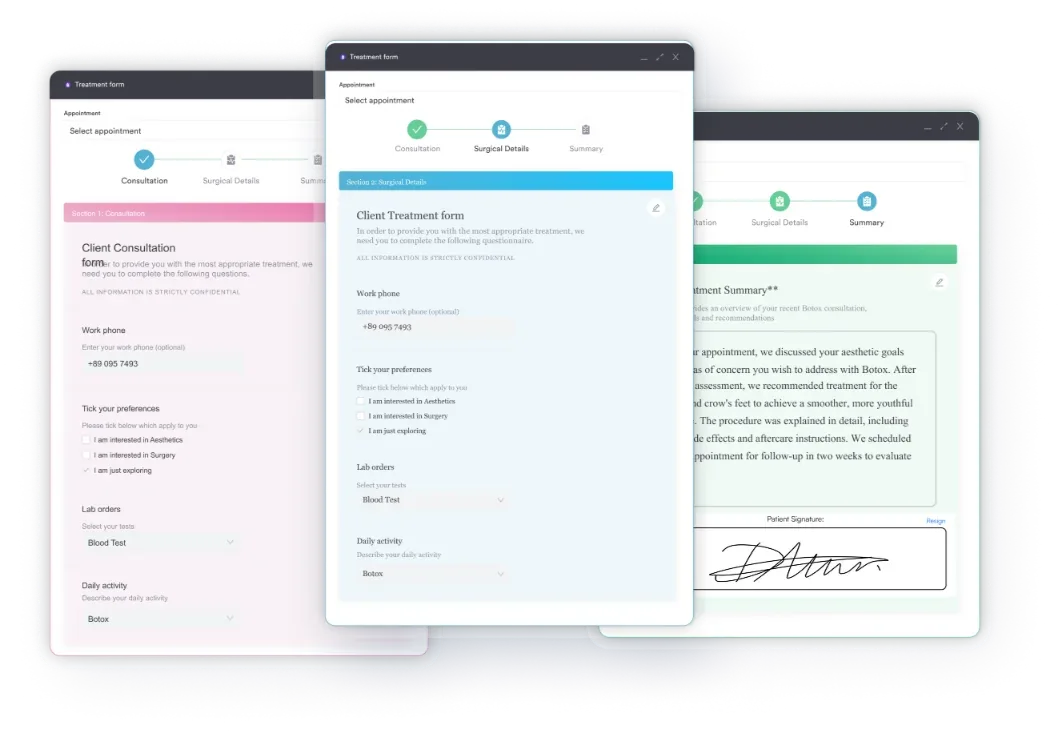
In most practices that dispense DME, the order and the clinical note live in one system while the claim is built in another. A biller re-keys the patient, the device, and the diagnosis, then hunts for the signed order before submitting. Every rekeyed field is a chance to introduce the mismatch that triggers a denial.
Pabau keeps all of it on one patient record. The clinician writes the note and files the signed order at dispensing, and the coded charge is added to the invoice in the same place. When the invoice is ready, Pabau pulls the patient, treatment, insurer, and code details into a pre-filled claim for the biller to review.
US practices submit that claim through Claim.MD without leaving Pabau. From the same dashboard your team runs real-time eligibility checks, tracks claim status, and posts ERA remittances. Nobody re-enters an A4566 claim, and a denial surfaces the day it lands rather than at month-end reconciliation.

Pabau keeps physician orders, clinical notes, and coded charges on one patient record, then pulls them into a pre-filled claim. Your team submits and tracks it from the same dashboard.

The decision that drives an A4566 claim is made at the point of care, when a clinician takes a device off the shelf. The billing consequences of that choice get reviewed days later, by someone who was not in the room. That distance is what makes shoulder sling claims fail more often than the rest of a DMEPOS book.
So fix it upstream. Capture the device description, the signed order, and the diagnosis in the clinical note at the moment of dispensing. The biller then has everything the claim needs on the first pass, and the most common reason these claims come back disappears.
Book a demo to see how Pabau keeps physician orders, clinical notes, and DME charges on one record from dispensing through to payment.

Dispensing prefabricated orthotic footwear too? L3215 covers the billing and documentation rules for that supply category.
Coding the diagnosis behind the sling? M75.121 sets out what a complete rotator cuff tear claim has to document.
Treating a shoulder injury at a follow-up visit? S43.491S explains how a sequela encounter changes the seventh character and the claim.
Billing other A-code supplies? A4310 shows how disposable supply items are documented and priced under DMEPOS.
Coding a surgical shoulder procedure? 23030 breaks down the operative documentation and modifier rules involved.
HCPCS Code A4566 is a prefabricated shoulder sling or vest-design abduction restrainer, with or without swathe control, that holds the arm in abduction. The code includes fitting and adjustment, so no separate fitting fee may be billed alongside it.
A4565 covers standard slings that cradle the arm against the body in a neutral position. A4566 covers vest-style abduction restrainers that hold the arm away from the body at an abduction angle. Using A4565 for an abduction device may trigger a denial or an audit.
Yes. A written physician order naming the patient, the specific device, the treating diagnosis, and the ordering provider’s NPI is required before billing A4566 under Medicare. The order must be on file at the time of claim submission, not obtained after the fact.
You need a written physician order and a clinical note establishing medical necessity for an abduction restrainer. Add a supporting ICD-10 diagnosis consistent with the applicable LCD, and a signed ABN where coverage is uncertain. Retain all of it for at least seven years.
Use RA when you supply a replacement item and RB when you replace a part of a repaired item. RC is not a DME replacement modifier and does not belong on an A4566 claim. Document the reason for the replacement in the patient record either way.