CPT code 48152: Whipple procedure without pancreatojejunostomy
CPT code 48152: Official description and procedure overview CPT code 48152 descr...

Last Updated: Nov 13, 2026
67924 is the CPT code for repair of entropion; extensive (eg, tarsal strip or capsulopalpebral fascia repairs operation). It covers entropion repairs that tighten the lid or reattach its retractors, beyond suture, cautery or tarsal wedge excision.
It is the top code in the 67921-67924 entropion family. The operative report must name the extensive technique, and the claim pairs it with an H02.0- entropion diagnosis and an eyelid modifier.
Let Pabau's smart automation suggest the right codes, reduce claim denials, and keep your practice compliant—effortlessly.
Automate repetitive tasks and focus on what matters most—your patients.
Reduce coding errors and ensure compliance with the latest regulations.
Clean claims, fewer denials, and faster reimbursements.
Powerful insights and reporting to help your practice thrive.
HIPAA compliant SOC 2 certified GDPR-compliant Trusted by 4,000+ clinics worldwide

CPT code 67924 covers extensive entropion repair, such as a tarsal strip or capsulopalpebral fascia repair, and sits at the top of the 67921-67924 family.
Suture repair (67921), thermocauterization (67922) and tarsal wedge excision (67923) have their own codes, so the operative report must name the extensive technique.
Every claim needs a specific H02.0- entropion code that names the eye and the lid. Unspecified codes invite manual review or denial.
The 90-day global period applies, and the eyelid modifiers E1-E4 identify the lid treated. Confirm -RT, -LT and bilateral -50 rules with each payer.
Pabau, the practice software we build, submits US claims through Claim.MD and tracks prior authorizations on each case. Practices can set up workflow checks for eyelid modifiers and ICD-10 pairing.
CPT code 67924 is the code for repair of entropion; extensive (eg, tarsal strip or capsulopalpebral fascia repairs operation).
UnitedHealthcare’s 2026 Medicare Advantage eyelid policy lists 67924 with that descriptor, beside 67921-67923 for the suture, cautery and tarsal wedge repairs. The code set itself is maintained by the American Medical Association’s CPT Editorial Panel.
Entropion is an eyelid malposition in which the lid margin rotates inward, so the lashes rub against the cornea. Left untreated, it leads to corneal erosion, chronic epiphora, recurrent conjunctivitis and, in severe cases, corneal scarring.
The “extensive” qualifier separates 67924 from the simpler repairs in the same family. It applies when the surgeon tightens or reattaches the lid’s supporting structures, as in a lateral tarsal strip or a lower lid retractor repair. Oculoplastic surgeons and ophthalmologists usually perform it under local anesthesia, in an office, an ambulatory surgery center or a hospital outpatient department.
CPT code 67924 covers extensive entropion repair, where the surgeon corrects the lid position by tightening or reattaching its supporting structures. The descriptor names tarsal strip and capsulopalpebral fascia repair as examples.
Included under 67924: Lateral tarsal strip procedures, capsulopalpebral fascia (lower lid retractor) repair, and comparable extensive reconstruction that repositions the lid margin.
Not included: Suture repair (67921), thermocauterization (67922) and excision of a tarsal wedge (67923) each have their own code. Blepharoplasty codes (15820-15823) are billed separately only for a distinct anatomical site with its own medical necessity documentation. Billing 67924 with blepharoplasty on the same lid in the same session, without documented separate indications, triggers National Correct Coding Initiative (NCCI) edit denials.
Ptosis repair codes in the 67900-67908 range, such as 67904, are not routinely bundled with 67924. If both conditions are repaired on the same eye in one session, document a distinct surgical goal for each repair.
The 67921-67924 family is a complexity ladder, and each code maps to one technique. Upcoding to 67924 without operative documentation of an extensive technique is an audit risk. The ladder below matches the wording in the operative note to the code it supports.
Entropion repair, CPT 67921-67924
The technique in the operative note picks the code
Match the repair the note describes to one rung. Tap a rung for the wording to look for.
The note describes everting or lid-rotating sutures and no excision, cautery or tightening of the lid.
The note describes cautery applied to the lid to turn the margin out, with no tissue excised.
The note describes excising a wedge of tarsal plate to rotate the lid margin outward.
The note names a lateral tarsal strip, a capsulopalpebral fascia (lower lid retractor) repair, or a comparable extensive reconstruction.
Pair with
An H02.0- entropion code, 6 charactersAdd
Eyelid modifier E1-E4 for the lid treatedTrack
A 90-day global period from surgeryDescriptors as listed in UnitedHealthcare Medicare Advantage policy MMP007.10, effective Sept 1, 2026. CPT is a registered trademark of the American Medical Association.
The table adds the relative complexity and a typical use case for each code in the family.
The operative report is the deciding document. If it describes sutures, cautery or a tarsal wedge excision without a tarsal strip or retractor repair, 67924 is not supportable, whatever the surgeon intended.
Before selecting 67924, re-read the operative report. Confirm it names the technique, describes the tarsal strip or retractor repair, and identifies which lid was treated. If it describes only sutures, code 67921; if it describes a tarsal wedge excision, code 67923. Ask the surgeon for an addendum when the note is unclear, before you submit.
Entropion is classified under ICD-10-CM category H02.0, with subcategories for type, eye and eyelid. Pair CPT code 67924 with the most specific code available. Most payers, including Medicare, require full 6-character specificity to process the claim without extra review. Billing H02.009 (unspecified entropion of unspecified eye, unspecified eyelid) when the operative report names the eye and type triggers manual review and often denial.
Verify current-year ICD-10-CM specificity requirements using the CDC/NCHS ICD-10-CM web tool. Code descriptions and subcategory structures are updated annually each October.
Medicare pays CPT code 67924 through the Medicare Physician Fee Schedule (MPFS), and the amount varies by setting and location. The figures below are 2026 national values from CMS’s relative value file, as listed in FastRVU’s 67924 entry. Your Medicare Administrative Contractor (MAC) adjusts them with geographic practice cost indices (GPCIs).
Confirm the current-year figures in the CMS Physician Fee Schedule lookup tool before you quote or post them. The non-facility rate is higher because the practice carries the equipment and staff cost. In an ASC or hospital, the facility bills its own fee and the surgeon is paid at the lower facility rate.
A cosmetic-versus-functional determination drives many CPT code 67924 denials. Medicare has no national coverage determination for entropion repair, so each MAC’s Local Coverage Determination (LCD) sets the criteria. Medicare and most commercial payers cover the repair only when the record shows the inward lid causing corneal or conjunctival pathology.
Documentation that supports medical necessity typically includes all of the following, subject to individual MAC billing compliance requirements and LCDs:
Some MACs publish specific LCDs for eyelid surgery. Check the relevant MAC website for your practice’s jurisdiction before submitting claims involving CPT code 67924.
Modifier selection decides whether a 67924 claim pays in full, pays at a reduced rate or stops for manual review. A wrong or missing modifier is a frequent cause of denial in this code family.
Where the payer allows bilateral payment, modifier -50 pays 150% of the single-side rate rather than two full payments. Each eye must meet medical necessity criteria on its own, so document the symptoms and findings for both.
Confirm each payer’s bilateral billing format before surgery. Some Medicare Advantage plans want two line items, such as 67924-E2 and 67924-E4, rather than one line with -50. Others ask for -RT and -LT. Check the format during pre-authorization to avoid an automatic rejection.
CPT code 67924 carries a 90-day global surgery period under CMS policy. Routine post-operative visits related to the entropion repair are bundled into the surgical fee and cannot be billed separately during that window.
For a 90-day global code, Medicare’s package runs from the day before surgery through 90 days after it. It covers the surgeon’s professional services, while an ASC or hospital bills its facility fee separately. Document the reason for any separately billed service in this window, and append the right modifier to every claim line that falls outside the package.
Denials on CPT code 67924 claims tend to repeat the same few causes, and most can be caught before submission with structured denial management workflows. When one does come back, the remittance names the reason with a code, and our list of medical billing denial codes explains each one. The table below maps the frequent reasons to their root causes and prevention actions.
The operative report is the primary audit document for CPT code 67924 claims. Payer post-payment audits for eyelid surgery frequently request the op report along with pre-operative clinical notes and photographs. A well-structured report makes the difference between a clean approval and a full repayment demand.
The operative report must address each of these elements to support 67924 and satisfy a clean claim submission:
A standard operative note template for the entropion repair family puts each of these elements in front of the surgeon before the chart is closed. It also gives coders the same layout to check on every 67924 claim.

Traditional Medicare does not routinely require prior authorization for CPT code 67924, but authorization requirements vary significantly across Medicare Advantage plans and commercial payers. Skipping the authorization check is the most avoidable denial in this family.
Find your practice’s MAC and its published LCD for eyelid surgery in the CMS Medicare Coverage Database. MACs including Noridian, Novitas, and CGS publish specific coverage criteria that define what constitutes sufficient medical necessity for functional eyelid procedures.
A practice billing CPT code 67924 has five details to get right on every claim. They are the code within the family, the eyelid modifier, a specific H02.0- diagnosis, any prior authorization and the 90-day global period. Pabau, the practice management platform we build, includes claims management software that keeps the claim, the case and the authorization in one record.
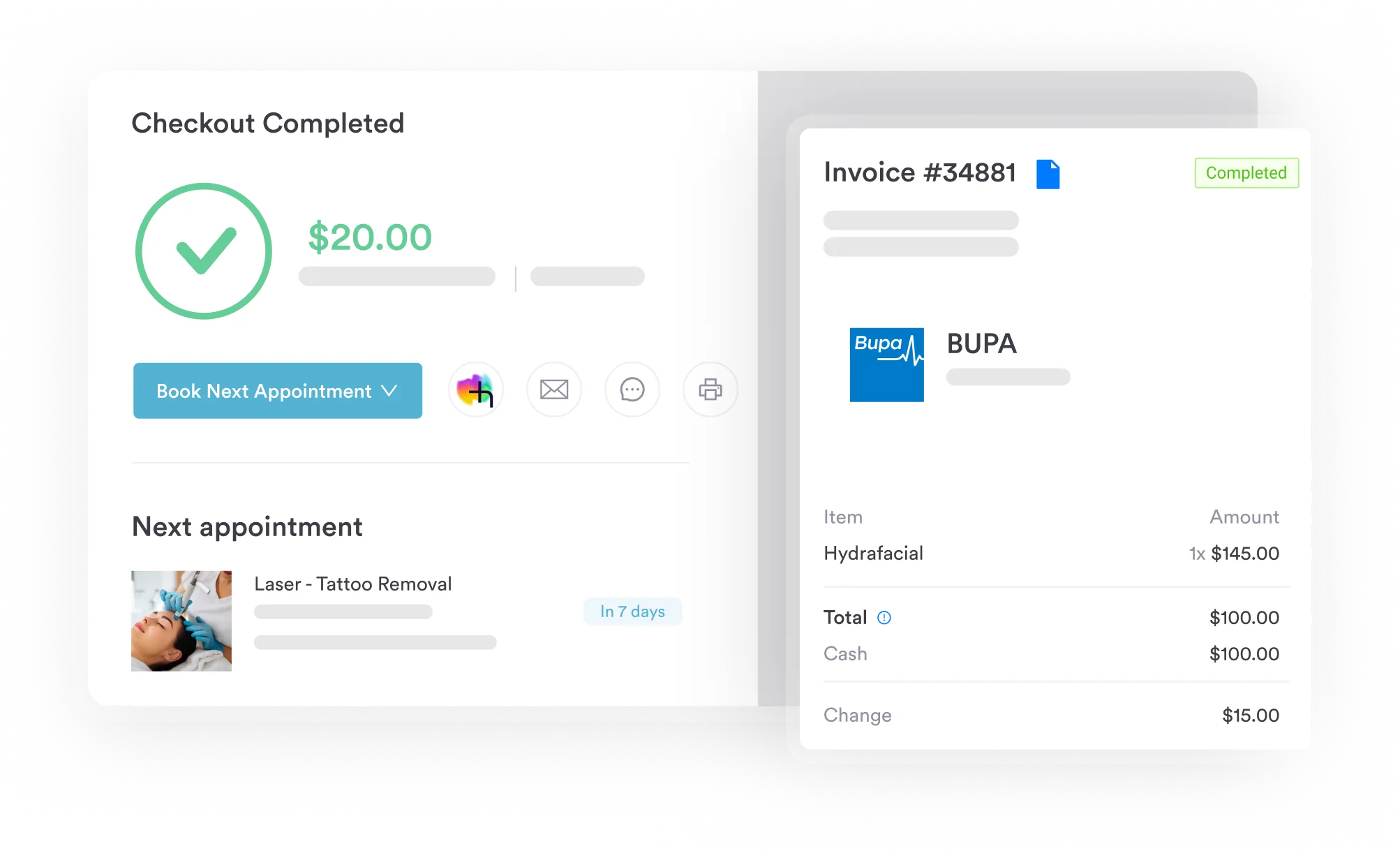
In the US, Pabau submits CMS-1500/837P claims through the Claim.MD clearinghouse, with eligibility checks, ERA remittances and secondary claims. Prior authorization codes, dates and sessions are tracked on the case, with a warning when one is missing. For a Medicare Advantage patient booked for 67924, the front desk sees that warning before surgery rather than after a denial.
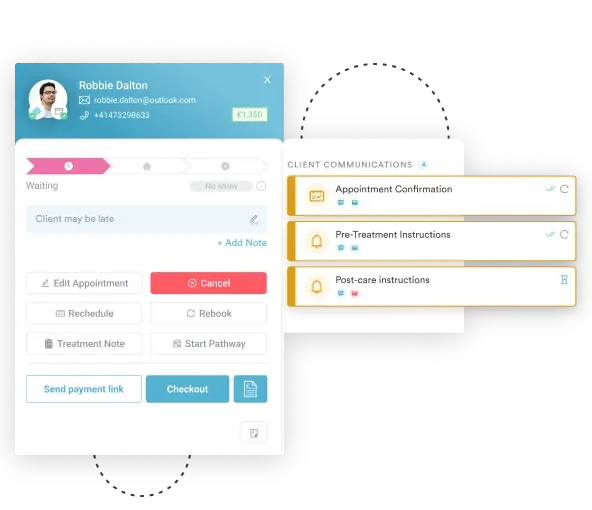
Practices can also set up workflow checks for 67924 claims that lack a paired H02.0- diagnosis or an eyelid modifier. The same checks can cover the other eyelid and ophthalmology codes the practice bills.

Pabau submits US claims through Claim.MD and tracks prior authorizations on each case. Practices can set up workflow checks for eyelid modifiers and diagnosis pairing before submission.

Most 67924 denials trace back to the paperwork rather than the surgery. Payers cover functional entropion repair. Claims get denied when the operative report doesn’t name an extensive technique or the diagnosis lacks the eye and lid. A missing eyelid modifier does the same.
Before you assign 67924, read the op note for tarsal strip or retractor repair language. If it describes a tarsal wedge, sutures or cautery, the claim belongs on 67923, 67921 or 67922 instead. That single check protects the practice in a post-payment audit as well as at submission.
Practices can build these checks into their billing workflow in Pabau, so 67924 claims go out with the technique, diagnosis and modifier in place. For the wider revenue cycle, start with how medical billing works. Book a demo to see how Pabau handles claims and prior authorizations for surgical eye codes.

Billing a ptosis repair in the same session? CPT code 67904 covers external levator advancement and how it is documented alongside other lid repairs.
Adding a blepharoplasty to the claim? CPT code 15823 explains the upper lid blepharoplasty code and its functional documentation.
Want to understand how claim denials are managed? Denial management in healthcare covers the full workflow from initial denial through appeal and resubmission.
Looking for a complete overview of medical billing? What is medical billing breaks down the revenue cycle from patient registration through payment posting.
CPT code 67924 covers extensive entropion repair, such as a lateral tarsal strip or a capsulopalpebral fascia (lower lid retractor) repair. Simpler repairs have their own codes, so suture (67921), thermocauterization (67922) and tarsal wedge excision (67923) are reported with those codes instead.
CPT 67923 is entropion repair by excision of a tarsal wedge. CPT 67924 is extensive repair, such as a tarsal strip or capsulopalpebral fascia repair. The operative report must name the technique, because a tarsal wedge excision billed as 67924 is an audit risk.
ICD-10-CM codes from the H02.0- family are the correct pairings. They cover unspecified, cicatricial, mechanical, senile and spastic entropion, specified to the eye and the lid. Using H02.009 (unspecified) when the operative report identifies the type and eye commonly triggers manual review or denial.
Yes, Medicare covers entropion repair under CPT 67924 when the record documents a functional indication and failed conservative treatment. Typical indications are corneal erosion, epiphora or recurrent conjunctivitis. Cosmetic correction without documented corneal or conjunctival pathology does not qualify for Medicare coverage.
The eyelid modifiers E1-E4 identify the lid treated. E1 is the upper left lid, E2 the lower left, E3 the upper right and E4 the lower right. Some payers want -RT or -LT, and -50 for a bilateral repair, so confirm the format with each payer. Modifier -78 covers a related return to the OR in the global period, and -24 an unrelated E/M visit.
The global surgery period for CPT 67924 is 90 days. Medicare’s package covers the day before surgery, the day of surgery and the 90 days after it. Routine post-operative visits, suture removal and healing checks in that window are bundled into the surgical fee.
Common triggers are a cosmetic determination and a missing eyelid or laterality modifier (E1-E4, -RT/-LT or -50). Others are the wrong code within the 67921-67924 family, and NCCI bundling conflicts when blepharoplasty is billed on the same claim without documented distinct sites.