CPT Code 27425: Lateral retinacular release billing guide
CPT Code 27425: Official descriptor and procedure overview CPT code 27425 is def...

Last Updated: Nov 16, 2026
27216 is the CPT code for percutaneous fixation of a ring-disrupting posterior pelvic fracture or dislocation on one side. It covers the ilium, sacroiliac joint and/or sacrum. Commercial and other non-Medicare payers accept it.
Medicare does not pay 27216. CMS lists it with status indicator I, and Medicare claims carry HCPCS G0413, which covers unilateral or bilateral fixation. Coders also confuse 27216 with CPT 27218, the open treatment of the same posterior ring.
Let Pabau's smart automation suggest the right codes, reduce claim denials, and keep your practice compliant—effortlessly.
Automate repetitive tasks and focus on what matters most—your patients.
Reduce coding errors and ensure compliance with the latest regulations.
Clean claims, fewer denials, and faster reimbursements.
Powerful insights and reporting to help your practice thrive.
HIPAA compliant SOC 2 certified GDPR-compliant Trusted by 4,000+ clinics worldwide

CPT Code 27216 reports percutaneous fixation of a posterior pelvic ring fracture or dislocation, unilateral, covering the ilium, sacroiliac joint and/or sacrum.
Medicare does not pay 27216. CMS lists it with status indicator I, so Medicare claims carry HCPCS G0413, which covers unilateral or bilateral fixation.
Commercial and other non-Medicare payers still accept 27216. Its RVUs (15.34 work, 23.86 facility total) appear in the CMS file for reference only.
G0413 carries a 90-day global period, and most commercial payers apply the same 90 days to 27216.
Pabau’s claims management software keeps the operative note, the claim, and the remittance on one patient record.
CPT Code 27216 covers percutaneous fixation of a posterior pelvic ring fracture or dislocation on one side. Commercial payers accept it, but Medicare does not. The CMS 2026 relative value file gives 27216 status indicator I, and Medicare claims carry HCPCS G0413 instead.
The official AMA descriptor reads:
Percutaneous skeletal fixation of posterior pelvic bone fracture and/or dislocation, for fracture patterns which disrupt the pelvic ring, unilateral (includes ilium, sacroiliac joint and/or sacrum).
The American Medical Association maintains the CPT code set. Check the descriptor against the CPT manual for the year of the operative date, since descriptors change with annual updates.
The code applies when a surgeon stabilizes a disrupted posterior pelvic ring through small stab incisions, without open exposure of the fracture. It covers three structures: the ilium, the sacroiliac joint, and the sacrum. The descriptor is unilateral, so each side treated is a separate unit for payers that accept 27216.
Four clinical facts in the record support the code:
Medicare pays percutaneous posterior pelvic ring fixation under HCPCS G0413, not CPT 27216. The CMS 2026 Physician Fee Schedule file (RVU26D, updated August 26, 2026) gives 27216 status indicator I, which is not valid for Medicare purposes. Medicare uses another code for the service.
The CMS descriptor for G0413 reads:
Percutaneous skeletal fixation of posterior pelvic bone fracture and/or dislocation, for fracture patterns which disrupt the pelvic ring, unilateral or bilateral, (includes ilium, sacroiliac joint and/or sacrum).
G0413 carries status indicator A, so Medicare pays it under the fee schedule. The descriptors match except for one detail: G0413 covers one or both sides in a single code.
The same split applies to the rest of the pelvic ring family. Medicare claims for 27215, 27217 and 27218 go out as G0412, G0414 and G0415.
Medicare Advantage plans and Medicaid programs set their own code rules. Confirm with each plan whether it follows the Medicare G-code or accepts 27216 before the claim goes out.
Percutaneous posterior pelvic ring fixation follows a set sequence, and the operative note should reflect each step. A note that skips one of these elements is a common reason for an audit or a medical necessity denial.
Name the imaging modality in the operative report. “Fluoroscopy” or “CT guidance” is stronger support than a bare “image guidance”. When both sides are fixed, document each side separately, since 27216 is billed per side and G0413 is billed once.
Two questions decide the code in the 27215 to 27218 family. Was the ring disrupted, and if so, which part? Was the fixation open or percutaneous?
If the surgeon opens the posterior ring for direct visualization, the code is 27218, not 27216. Billing 27216 for that case underreports the service. Billing 27218 for a percutaneous case is upcoding.
When the anterior and posterior rings are both treated in one session, each region gets its own code. An open anterior repair with percutaneous posterior screws is 27217 plus 27216 for commercial payers. The Medicare version of the same claim is G0414 plus G0413.
Several services are part of 27216 and are not billed separately on the same date. Reporting them alongside the fixation code triggers a payer edit and a denial.
The right modifier keeps a correct claim from being denied as bundled. The table shows the modifiers most often used with 27216 and with G0413 on Medicare claims.
Confirm how each payer defines major surgery before applying modifier 57. Medicare uses the 90-day global rule, and most commercial plans follow it, but some differ. Record the decision to operate in the encounter note, not only in the operative report.
Medicare assigns G0413 a 90-day global period, and most commercial payers apply the same 90 days to 27216. The global period covers the day before surgery, the day of surgery, and the 90 days that follow. The same surgeon does not bill separately for these services in that window:
Services billed separately during the global period include an E&M for an unrelated condition (modifier 24). The other cases are covered by modifiers 58, 78 and 79 in the table above.
When care moves to another physician, the surgeon bills the surgical care only with modifier 54. The receiving physician bills post-operative management with modifier 55.
The CMS 2026 relative value file still prints RVUs for 27216, but only for reference. Status indicator I means Medicare never pays from them. Some commercial contracts price 27216 as a percentage of Medicare, so check how each contract handles an I-status code.
Medicare payment comes from the G0413 line. The national facility total is 29.28 RVUs, which comes to about $978 at the 2026 non-QPP conversion factor. Locality adjustments through the Geographic Practice Cost Index (GPCI) move the final figure up or down.
To see your locality rate, search G0413 in the CMS Physician Fee Schedule lookup tool. A search for 27216 returns no Medicare payment, because Medicare does not price that code. Commercial rates for 27216 come from your payer contracts and fee schedules.
Every 27216 or G0413 claim needs an ICD-10-CM code that shows why fixation was necessary. Sacral and iliac fracture codes sit in category S32, and sacroiliac dislocation in S33. Each code takes a 7th character for the episode of care:
The operative claim uses 7th character A, or B for an open fracture. A D on the operative claim signals a follow-up visit, and the claim is likely to be denied.
Displacement and side must match the operative report. A right-sided fixation billed with a left-ilium code is denied as a diagnosis-procedure mismatch.
Prior authorization rules vary by payer and plan year. Traditional Medicare has no national prior authorization rule for G0413, but some Medicare Advantage plans require it.
Commercial payers often require authorization for inpatient orthopedic trauma surgery. Treat each commercial plan as requiring it until you have written confirmation otherwise. Revenue cycle management workflows with eligibility checks up front prevent most authorization disputes after the fact.
A strong authorization request includes three pieces of evidence:
Most 27216 denials trace back to one of six causes. Each needs a different fix in the billing or documentation workflow.
Reviewing denial management best practices and the common denial codes in medical billing helps billing staff answer each denial with a set process.
Run a quarterly audit of denied 27216 and G0413 claims, sorted by denial reason. Note whether each error started in the operative note, the code selection, or the submission. One or two documentation fixes usually account for most pelvic fracture denials.
Pelvic fracture billing asks the team to carry three facts from the operative note to the claim. These are the approach, the side or sides treated, and whether the payer is Medicare. A wrong answer on any one of them sends the claim back.
Pabau, the practice management platform we build, keeps the clinical record and the claim in one system. Its claims management software handles submission, eligibility checks, claim status, and remittance posting there too. The biller works from the signed operative note, so the approach and the side come from the source.
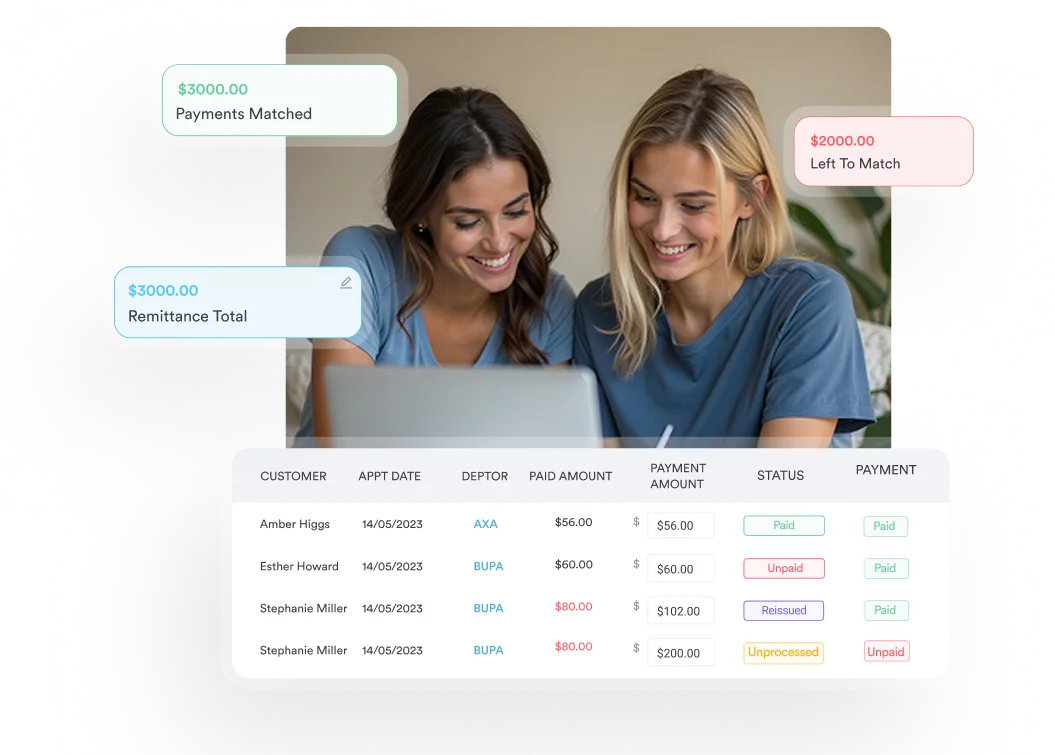
Claims route through the Claim.MD clearinghouse integration, which reaches thousands of US payers. Eligibility responses, claim status, and electronic remittance advice come back against the same patient record. A rejection shows up the day it happens, which is how you keep a clean claim rate on high-value surgical codes.

Pabau’s claims management software submits claims through the Claim.MD clearinghouse, checks patient eligibility, and posts remittances against the patient record. See how it handles surgical procedure billing.

CPT 27216 is two billing decisions dressed as one code. The first is clinical: a percutaneous fix of a disrupted posterior ring, side by side, written plainly in the operative note. The second is the payer: commercial plans take 27216, and traditional Medicare takes G0413.
A practice that settles the payer question before coding avoids the most avoidable denial on this page. It also stops quoting reference RVUs as Medicare revenue. Book a demo to see how Pabau keeps operative documentation and claim submission in one workflow.

Need a clearinghouse integration built for US orthopedic billing? Claim.MD clearinghouse integration covers eligibility checks, claim status, and ERA/835 remittance processing for surgical codes.
Want a walkthrough of how claims management software works in practice? Claim.MD clearinghouse guide explains the end-to-end submission workflow for US practices.
Trying to reduce your overall medical billing error rate? Medical billing fundamentals guide covers claim lifecycle management and documentation best practices from submission to payment posting.
CPT Code 27216 covers percutaneous fixation of a posterior pelvic ring fracture or dislocation, unilateral, including the ilium, sacroiliac joint and/or sacrum. It applies when the fracture pattern disrupts the pelvic ring. The surgeon places the hardware through small skin punctures under imaging, without open exposure of the fracture.
No. The CMS 2026 fee schedule file lists 27216 with status indicator I, meaning Medicare uses another code. Medicare claims carry HCPCS G0413, which covers unilateral or bilateral fixation. Its 2026 national facility total is 29.28 RVUs, about $978 before locality adjustment.
CPT 27215 covers open treatment of an iliac spine, tuberosity avulsion, or iliac wing fracture that does not disrupt the pelvic ring. CPT 27216 covers percutaneous fixation of a posterior ring injury that does disrupt the ring. The open counterpart of 27216 is 27218, not 27215.
RT and LT show the side on commercial claims, and each payer sets its own rule for a bilateral case. Modifier 57 marks a same-day E&M where the decision to operate was made. Modifiers 58, 78 and 79 report staged, complication, and unrelated procedures in the global period.
Yes. Medicare assigns its equivalent, G0413, a 90-day global period, and most commercial payers apply the same 90 days to 27216. Routine post-operative visits, wound checks, and minor office-managed complications fall inside it. Modifiers 24, 58, 78 and 79 report separate services within the window.
The top cause is sending 27216 to traditional Medicare, which needs G0413. Other causes are billing 27216 for an open repair that should be 27218, and thin medical necessity documentation. Bundled image guidance codes, a missing modifier 57, and a wrong 7th character complete the list.
Yes, when the anterior ring is repaired open and the posterior ring is fixed percutaneously in the same session. Each code covers a distinct region and approach. Document both procedures separately in the operative note. For Medicare, the same pairing is billed as G0414 with G0413.