



HCPCS code E0198: Water pressure pad billing guide
HCPCS code E0198 is a water pad for a standard mattress HCPCS code E0198 is the ...

Last Updated: Oct 13, 2026

CPT code 01932 describes anesthesia for therapeutic interventional radiological procedures involving the jugular vein or intrathoracic veins
01932 sits inside a four-code family that all share the same parent exclusion — none include access to the central circulation — and differ only by the named site: 01930 (not otherwise specified) → 01931 (intrahepatic or portal circulation, e.g., TIPS) → 01932 (jugular vein or intrathoracic veins) → 01933 (intracranial venous/lymphatic system)
Anesthesia billing uses a base units plus time units formula (B + T); verify the current base unit value for 01932 against the ASA Relative Value Guide before submitting any claim
Modifiers AA, AD, QK, QX, QY, and QZ determine the provider role and supervision level; selecting the wrong modifier is the single most common denial trigger for this code
Pabau’s claims management software helps anesthesia and interventional radiology practices document procedure times, attach modifiers, and submit accurate claims without manual data re-entry
Most anesthesia claim denials for interventional radiology procedures come down to one of three mistakes:
CPT code 01932 covers a specific site within that family — the jugular vein and intrathoracic veins — and it is easy to confuse with the not-otherwise-specified code (01930) or the intracranial code (01933) that sit next to it in the same series.
This reference covers the official description, base units, modifiers, Medicare reimbursement, ICD-10 crosswalks, and the denial patterns that generate the most rework.
The AMA’s CPT code set places 01932 within the anesthesia section for radiological procedures, inside the venous/lymphatic subfamily. The vascular territory named in the operative note — not the pre-procedure plan — is what determines which of the four related codes applies, and getting that wrong is where most coding errors in this family originate.
This guide also covers the adjacent codes in the 01920-01933 series so you can confirm you have selected the right one before the claim goes out.
CPT code 01932 has one official description, and the exact wording matters for coverage determinations. Any paraphrase on a claim or in documentation can create a mismatch during adjudication.
Where 01932 sits in the code hierarchy is the most important thing to get right. CPT 01930, 01931, 01932, and 01933 all share the same parent-level exclusion: none of them include access to the central circulation, meaning the arterial and cardiac territory covered separately by cardiac catheterization (CPT 01920) and the arterial-system codes (CPT 01924-01926).
That exclusion applies equally across the whole family, so it never distinguishes one of these four codes from another.
What distinguishes them is the site named in the operative note:
If the operative note doesn’t name the jugular vein or an intrathoracic vein, the correct code is whichever of 01930, 01931, or 01933 matches the site it does name.
The clinical territory covered by 01932 includes the jugular vein and the intrathoracic veins, plus the intrathoracic lymphatic system (the thoracic duct). Common IR procedures in scope include central venous catheter placement, exchange, or removal via the internal jugular vein, SVC or brachiocephalic vein venoplasty and stenting, SVC thrombolysis or mechanical thrombectomy, and thoracic duct embolization for chylothorax.
Confirm the operative report names this specific site — not the intrahepatic/portal circulation (CPT 01931), intracranial structures (CPT 01933), or no specific site at all (CPT 01930) — before assigning the code.
Anesthesia billing does not use standard RVU-based reimbursement. Instead, payers calculate payment using a formula that combines base units assigned to the CPT code with time units reflecting actual anesthesia duration.
Base unit value for CPT 01932: The ASA Relative Value Guide (ASA RVG) assigns base units to each anesthesia code. Verify the current base unit value for 01932 directly against the current AAPC CPT reference or the ASA RVG before billing, as values can be updated in annual revisions. Do not rely on cached lookup tools without confirming the edition year.
The standard formula is: Total Units = Base Units (B) + Time Units (T) + Qualifying Circumstance Units (M). This applies to CPT 01932 and every other anesthesia code in the 01920-01933 series.
Worked example: If CPT 01932 carries a base unit value of approximately 6 (verify the current figure before billing) and the procedure runs 45 minutes (3 time units at 15 min/unit), the total is 6 + 3 = 9 units before any qualifying circumstances.
At a Medicare ACF of approximately $23 per unit (verify against the CMS Physician Fee Schedule for the current year), the estimated payment would be around $207. ACF values change annually and vary by geography, so always use the current CMS MPFS look-up tool when submitting a claim.
Document anesthesia start and stop times to the minute in the operative record. Even a 1-minute missing entry in the time log can prompt a payer audit. For CPT 01932 procedures in an IR suite, the anesthesia record should note the moment the patient is placed under and the moment anesthesia is discontinued, not when the IR procedure begins or ends.
Anesthesia modifiers identify who provided the anesthesia and at what level of supervision. Every claim for CPT code 01932 requires at least one anesthesia modifier. Missing a modifier is an automatic clean-claim failure with most payers.
Modifier selection depends on the service configuration on the date of service, not on what the practice typically does. An anesthesiologist who personally performs the procedure for one patient but supervises a CRNA for another must use AA for the first claim and QK (paired with QX on the CRNA claim) for the second.
Applying AA to a supervised case is one of the most audited patterns in anesthesia billing. Use accurate HIPAA-compliant documentation practices to support the modifier you select.
The best medical practice management tools capture start and stop times at the point of care, which anesthesia billing depends on.
Reimbursement for CPT 01932 under Medicare follows the anesthesia conversion factor (ACF) model rather than the standard RBRVS schedule used for most other CPT codes. The ACF is set annually by CMS and multiplied by the total anesthesia units (base plus time) to produce the payment amount.
Because the ACF changes each year and varies by geographic practice cost index, citing a fixed dollar figure here would be misleading. The CMS look-up tool referenced above lets you search by procedure code and locality, so you can verify the exact payment rate before submitting.
Commercial payers follow their own ACFs and may use different time-unit increments. Some use 10-minute increments rather than the Medicare standard of 15 minutes. Review each payer’s anesthesia policy annually, as these are not always published in the main fee schedule.

Pabau helps interventional radiology and anesthesia practices document procedure times, apply the correct modifiers, and submit claims without the manual re-entry that causes billing mistakes. See how it works for your team.

Every claim for CPT 01932 requires at least one ICD-10-CM diagnosis code that establishes medical necessity for the interventional radiological procedure involving the jugular vein or intrathoracic veins. The diagnosis code reflects the patient’s condition, not the anesthesia service itself. Use codes that directly support the central IR procedure being performed.
Verify that the ICD-10-CM codes you use reflect the current code year. The CDC publishes annual ICD-10-CM crosswalks and code updates effective October 1 each fiscal year. Submitting a retired or superseded diagnosis code is a common clean-claim failure that delays payment.
CPT 01932 sits within a series of codes covering anesthesia for radiological and related interventional procedures. Selecting the wrong code in this series is one of the most common upcoding and downcoding errors in IR billing. The key differentiator is the vascular territory accessed and, within the venous/lymphatic family specifically, which named anatomic site the operative note documents.
The 01930 vs. 01932 distinction is the most common coding error in this series. If the IR team plans a procedure with no specific site anticipated, but the operative note shows the access point reached the jugular vein or an intrathoracic vein, the correct code is 01932, not 01930 — and vice versa.
A secondary distinction worth flagging is 01932 vs. 01933: 01932 covers the jugular vein and intrathoracic veins, while 01933 is reserved for a different named site, the intracranial venous/lymphatic system.
The operative report controls the code, not the initial procedure plan — the same principle applies to related anesthesia codes such as 01772 and 01522, where the site named in the note likewise decides which code applies.
Because 01932 sits between two codes it is frequently confused with, clean documentation matters more here than for most anesthesia codes in the series. Four elements need to be locked down before a claim goes out.
The operative note must state explicitly which site was accessed, since that single fact determines the code: no specific site named (01930), intrahepatic or portal circulation such as a TIPS (01931), the jugular vein or an intrathoracic vein (01932), or intracranial venous/lymphatic structures (01933).
None of the four codes include access to the central circulation — the arterial and cardiac territory covered separately by CPT 01920 and 01924-01926 — so that exclusion never distinguishes between them; only the named site does.
Coders should not assign 01932, or any code in this family, based on the pre-procedure plan. If the note does not clearly name the site reached, query the proceduralist before the claim is coded.
Claims using modifier QK (medical direction of two to four concurrent CRNA or resident cases) or QY (medical direction of a single CRNA) require documentation supporting all seven TEFRA steps. The anesthesiologist must:
Missing any one of the seven steps in the record can reclassify a QK/QY claim as non-medically-directed, which changes reimbursement and can trigger a payer audit on the claim.
Confirm the diagnosis code submitted reflects the fiscal year in effect on the date of service. ICD-10-CM updates take effect every October 1, and a retired code is one of the most common causes of clean-claim rejection for 01932 claims alongside vascular territory mismatches. Build a fiscal-year checkpoint into the billing workflow rather than relying on a cached code list.
Denials for CPT 01932 cluster around five patterns. Most are preventable with better documentation review before submission.
Review the CMS-1500 claim documentation your team submits to catch these issues before submission rather than during denial management. The clinical documentation workflow that feeds your billing system is where most of these errors originate.
Run a modifier audit on anesthesia claims monthly. Filter your billing system for all CPT 01932 claims submitted over the prior 30 days and confirm each one carries a valid modifier and the operative note names the jugular vein or an intrathoracic vein rather than a different site covered by 01930, 01931, or 01933. Any claim that went out without a modifier, with the wrong vascular-territory code, or with modifier AD on a case that should have been AA should be corrected and resubmitted before the timely filing window closes.
Manual data re-entry between the anesthesia record and the billing system is where most CPT 01932 errors are introduced. A practice management platform that connects documentation directly to claim generation eliminates that manual step.
Pabau’s claims management software allows anesthesia and IR teams to record procedure times, attach the correct modifier at the point of documentation, and push verified data directly to the claim without re-keying.
Structured note templates through digital forms capture anesthesia start and stop times, provider role, and the vascular territory accessed, making code selection defensible at the point of documentation rather than during retrospective review.
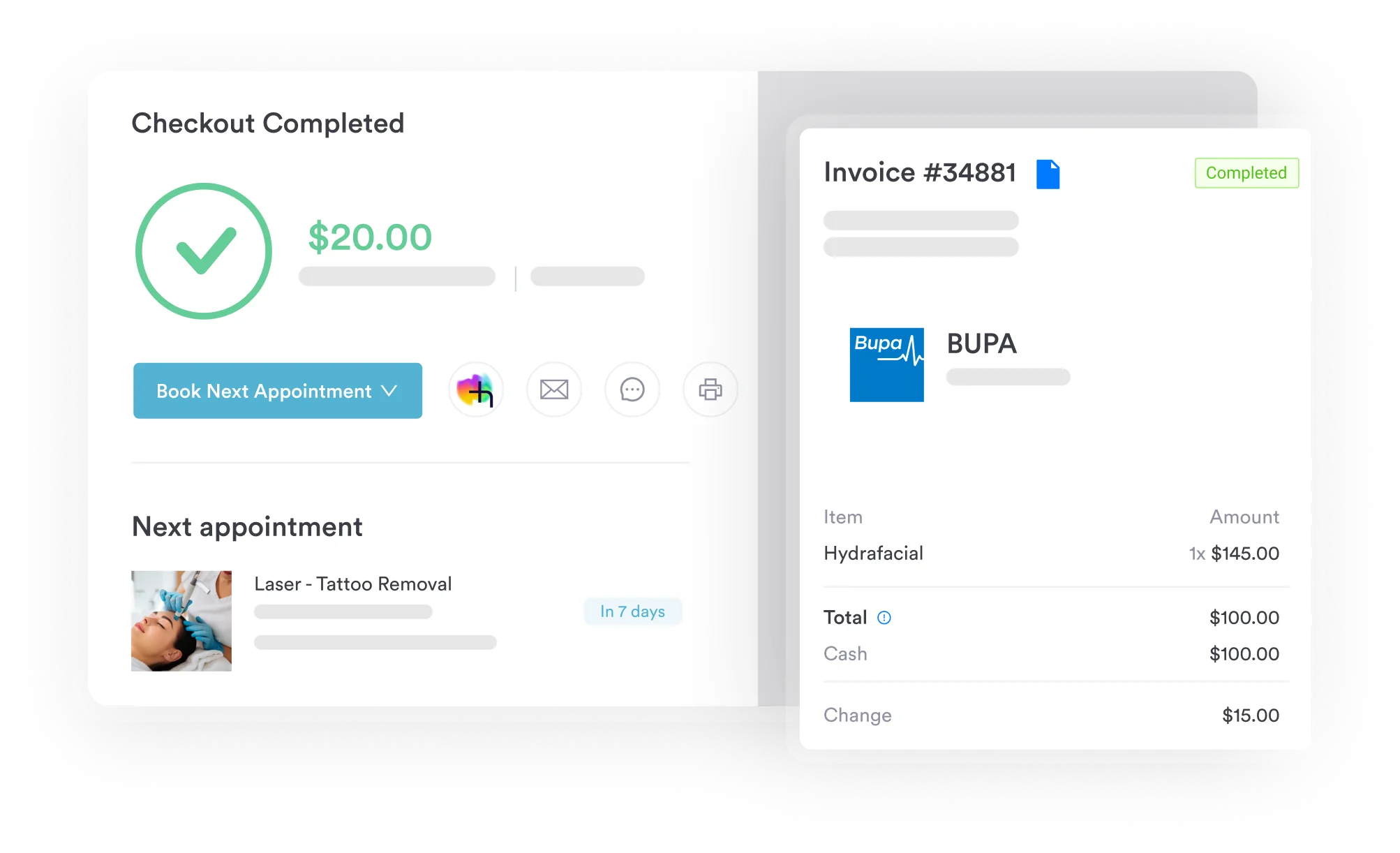
Practices using integrated documentation and billing tools through a practice management platform report fewer modifier mismatches and faster claim resolution compared to teams relying on disconnected anesthesia records and separate billing software. For practices that also use the FastRVU look-up tool for RVU verification, Pabau’s claim workflow can complement that process by ensuring the underlying documentation supports the unit calculation before submission. A payer reviewing this code looks for the reasoning in the note, not only the conclusion, so the documentation level matters. Revenue cycle management reporting separates claims that were denied from claims nobody submitted.
The same documentation-to-claim discipline applies beyond anesthesia and IR. IV therapy practices and regenerative medicine practices bill their own share of procedure-heavy CPT codes, and the same direct-to-claim workflow keeps their documentation just as defensible.
CPT code 01932 is straightforward once the site is confirmed, but its position between the not-otherwise-specified code (01930) and the intracranial code (01933) creates significant exposure for practices without a verification step between the operative note and the claim. Confirm the site, apply the correct modifier, and verify your ICD-10 codes against the current fiscal year before submission.
Pabau’s claims management tools help anesthesia and IR billing teams document procedure times and modifier status at the point of care, reducing the manual steps where errors enter the workflow. To see how it fits your team’s billing process, book a demo.

List Item #1
List Item #2
CPT code 01932 is an anesthesia code for therapeutic interventional radiological procedures involving the venous and lymphatic system — specifically the jugular vein or intrathoracic veins, such as the superior vena cava, brachiocephalic veins, and the thoracic duct. It is used when an anesthesiologist or CRNA provides anesthesia services during central IR procedures like jugular central line placement, SVC venoplasty or stenting, or thoracic duct embolization for chylothorax. It is distinct from 01930 (used when no specific site is named) and 01933 (intracranial venous/lymphatic system) — all four codes in this family, including 01931, share the same central-circulation exclusion and differ only by the named site.
The base unit value for CPT code 01932 is assigned by the ASA Relative Value Guide and should be verified against the current edition before billing. Base unit values can be updated in annual ASA RVG revisions, so relying on a cached or multi-year-old reference risks billing with an outdated figure. Confirm the current value through the ASA RVG or a current CPT reference before submitting.
The applicable modifiers are AA (physician performs anesthesia personally), AD (supervises more than four concurrent cases), QK (medical direction of two to four concurrent CRNA or resident cases), QX (CRNA under physician direction), QY (medical direction of a single CRNA), and QZ (CRNA without physician direction). Every claim for CPT 01932 requires at least one of these modifiers; a claim submitted without one will be returned as unclean by most payers.
Yes, CPT code 01932 is covered by Medicare when medical necessity is established through a supporting ICD-10-CM diagnosis code. Payment is calculated using the anesthesia conversion factor multiplied by total anesthesia units (base plus time). The Medicare ACF changes annually and varies by geographic locality; verify the current rate through the CMS Physician Fee Schedule look-up tool for your MAC jurisdiction.
The difference is vascular territory within the central venous/lymphatic family. CPT 01932 covers the jugular vein and intrathoracic veins (for example, the superior vena cava or the thoracic duct). CPT 01933 is reserved for the intracranial venous/lymphatic system. If the operative report shows the procedure accessed intracranial venous or lymphatic structures, the correct code is 01933, not 01932. Always base code selection on the operative note, not the original procedure plan.
Anesthesia time for CPT code 01932 uses the standard B + T formula: base units plus time units. Under Medicare, one time unit equals 15 minutes of anesthesia service from induction to the point the patient can safely be left. Multiply total units by the applicable anesthesia conversion factor to reach the billed amount. Some commercial payers use 10- or 12-minute time unit increments, so verify each payer’s anesthesia billing policy separately.



