CCSD Code V0980: Open reduction of zygomatic fractures
What is CCSD code V0980? CCSD code V0980 is the UK private-healthcare procedure ...

Last Updated: Nov 24, 2026
T7480 is the CCSD code for extracorporeal shockwave therapy of calcific tendonitis of the shoulder. It covers shockwave treatment aimed through the skin at a calcium deposit in a rotator cuff tendon.
The code sits in chapter 16 of the CCSD schedule, under Shoulder - Repair / Reconstruction. Bupa places it in fee band MINOR 2. NICE recommends the procedure only in research, so check the patient's cover at pre-authorisation.
Let Pabau's smart automation suggest the right codes, reduce claim denials, and keep your practice compliant—effortlessly.
Automate repetitive tasks and focus on what matters most—your patients.
Reduce coding errors and ensure compliance with the latest regulations.
Clean claims, fewer denials, and faster reimbursements.
Powerful insights and reporting to help your practice thrive.
HIPAA compliant SOC 2 certified GDPR-compliant Trusted by 4,000+ clinics worldwide

CCSD code T7480 covers extracorporeal shockwave therapy of calcific tendonitis of the shoulder on UK private medical insurance claims.
The code sits in chapter 16 of the CCSD schedule, under Shoulder – Repair / Reconstruction, and Bupa places it in fee band MINOR 2.
NICE says shockwave therapy for calcific shoulder tendinopathy should only be used in research, so confirm the patient’s cover before the first session.
Pair T7480 with WHO ICD-10 code M75.3 and record the treated side in the notes, because the UK code has no laterality character.
Pabau, a practice management platform for private practices, keeps the authorisation, the clinical notes and the Healthcode invoice on one patient record.
T7480 is the CCSD code for extracorporeal shockwave therapy of calcific tendonitis of the shoulder. Shockwaves are aimed through the skin at a calcium deposit in a rotator cuff tendon. NICE shockwave therapy guidance rates the evidence behind it.
The Clinical Coding and Schedule Development Group maintains the schedule, and our CCSD reference for practices collects the codes it covers. UK private medical insurers such as Bupa use it to identify procedures on specialist invoices, and other insurers recognise CCSD codes in varying ways.
Each insurer publishes its own fees and funding rules against the code. Check the current schedule for the patient’s insurer before you quote, because bands and eligibility change between editions.
Shockwave therapy breaks up or softens calcific material in the tendon, most often the supraspinatus. The energy is generated outside the body and passed through a gel-coupled applicator.
NICE describes two forms. Focused shockwave therapy concentrates energy at a chosen depth in the tissue. Radial shockwave therapy spreads energy from the skin surface outwards. Ask the insurer whether its funding rules name either device type.
A typical T7480 session runs as follows:
A course often runs over several sessions. Confirm how many sessions the authorisation covers before you book the series.
NICE first published this guidance in November 2022 as IPG742, now HealthTech guidance 645. It found no major short-term safety concerns but called the efficacy evidence inadequate. NICE recommends the procedure only in the context of research.
That status shapes insurer cover. Bupa lists T7480 in its schedule, but a listed code is not a promise of funding. Insurer funding for shockwave therapy varies, so confirm cover for each patient.
Ask the insurer at pre-authorisation whether it funds shockwave therapy for calcific tendinopathy, given the NICE research-only status. If it does not, give the patient a written self-pay estimate before the first session.
UK insurers use WHO ICD-10, not the US ICD-10-CM edition. The primary diagnosis for T7480 is M75.3, calcific tendinitis of shoulder. Confirm it against the imaging report before you invoice.
WHO ICD-10 gives M75.3 no laterality character. Codes such as M75.31 and M75.32 belong to the US ICD-10-CM edition and are not valid on a UK claim. Record the treated side in the clinical notes instead.
The CCSD schedule gives shockwave therapy a separate code for each site. Billing T7480 for a heel or elbow is a wrong-code error. Bands below come from Bupa’s February 2026 schedule, and the Bupa CCSD codes overview covers how Bupa applies it.
Needle barbotage and surgical removal of a calcium deposit are different procedures with their own codes. If the shoulder needs arthroscopic repair of a large cuff tear instead, the claim moves to T7915. Check the current schedule for the code that matches the operation note.
Incomplete records cause many shockwave claim queries. Keep each item below in the patient record before you invoice. Structured records capture them the same way at every session.
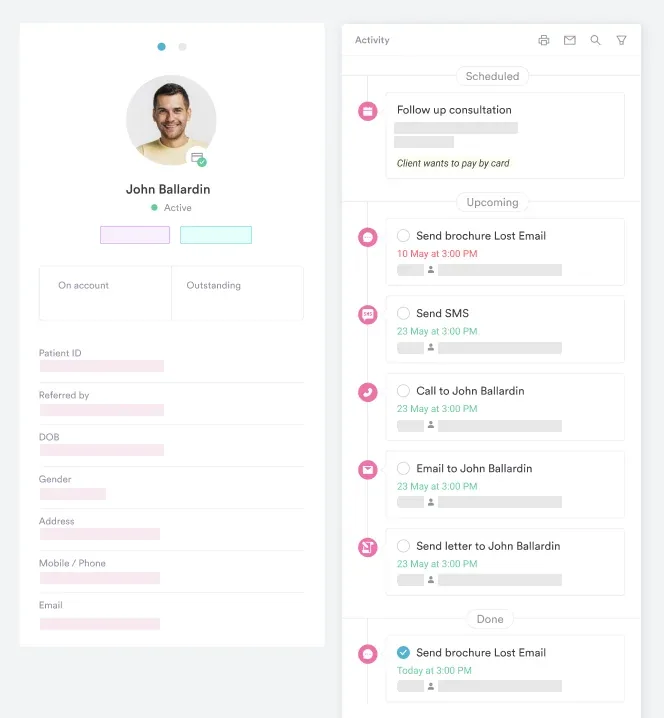
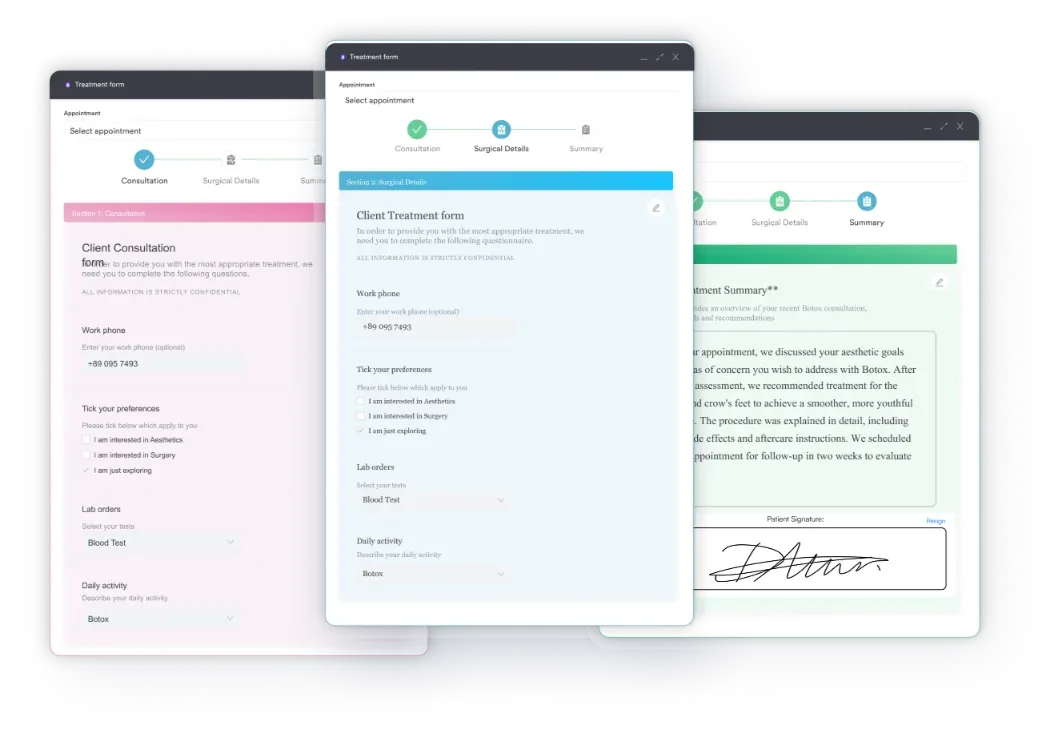
Digital consent and intake forms collect these fields at the point of care, so the record is complete before the patient leaves.
Most T7480 rejections come from six avoidable errors. Five checks, run in the order a course of treatment runs, stop each one before the invoice goes out.
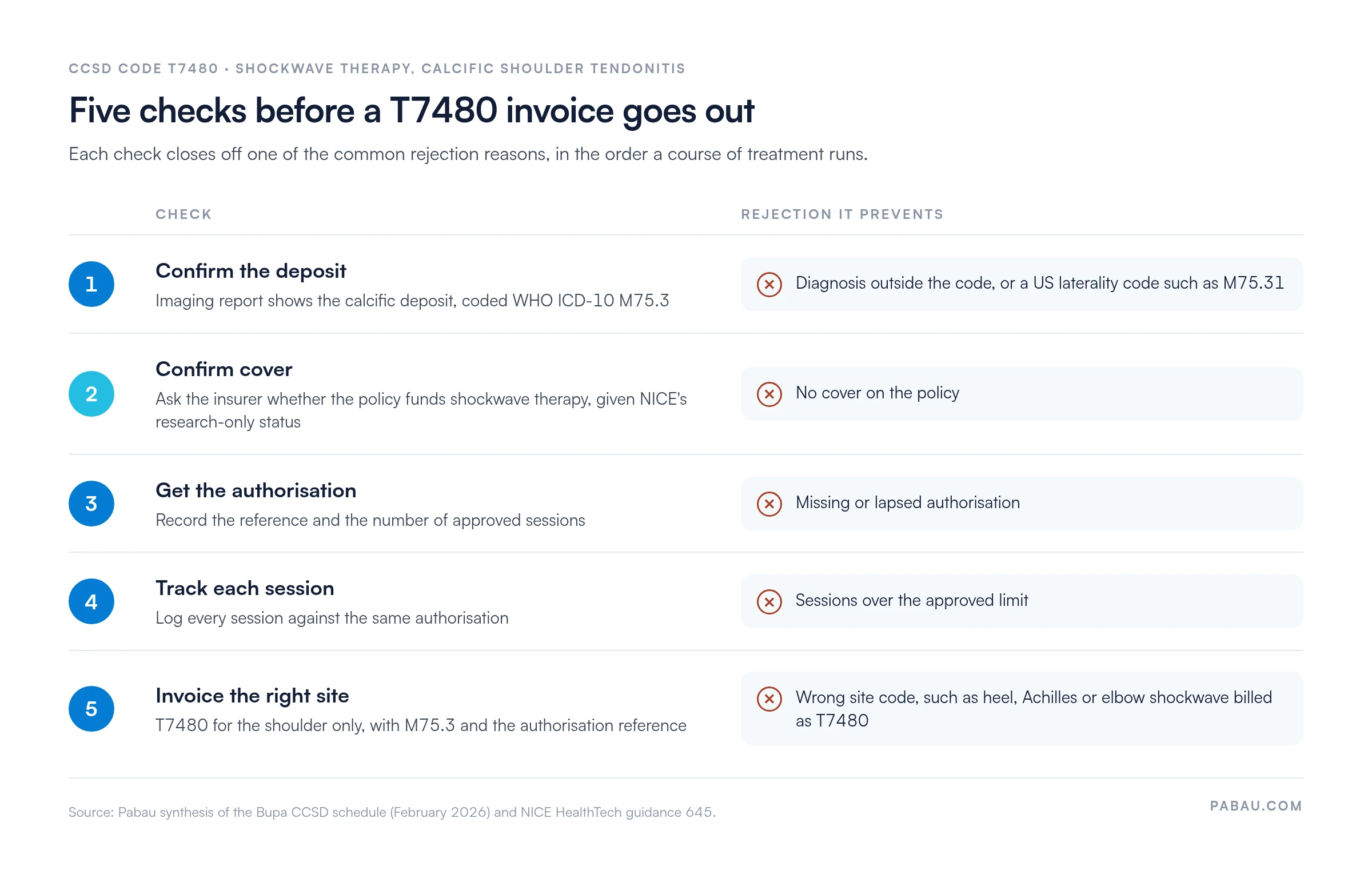
Run a short checklist before each T7480 invoice. Confirm cover, an in-date authorisation and a session count within the limit. Then check M75.3 is on the claim and imaging is on file.
Shockwave billing errors usually start before the invoice. The authorisation sits in an inbox, the session count lives in a diary, and the imaging report is in a separate file.
Pabau keeps all three on the patient record. Its claims software for private practices holds the CCSD code, the ICD-10 diagnosis and the authorisation reference against the booking.
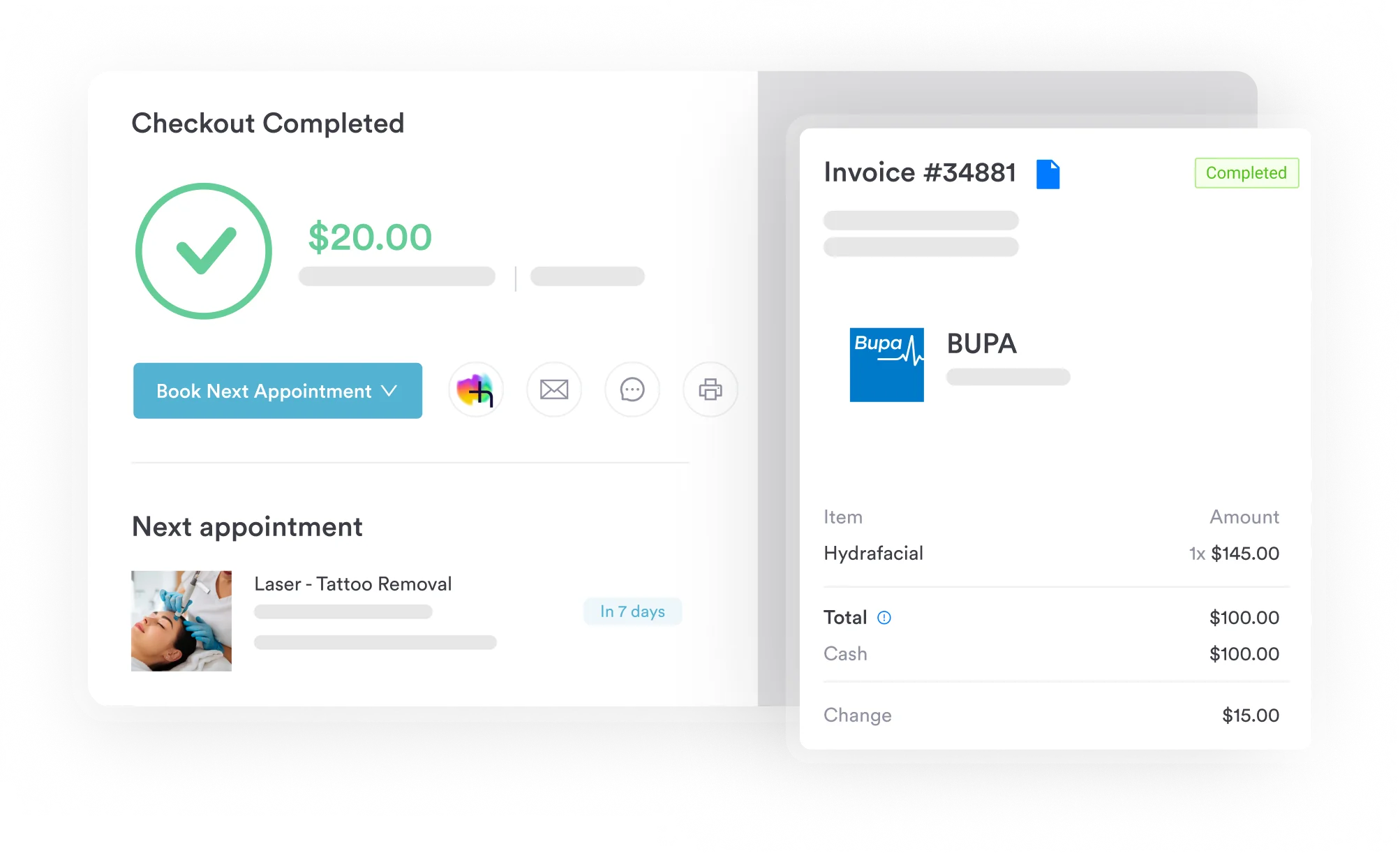
Invoices go to UK insurers electronically through Healthcode. Each session in a course is booked against the same authorisation, so the team can see how many approved sessions remain.

Pabau lets musculoskeletal practices keep CCSD codes, ICD-10 diagnoses, authorisation references and session notes on one patient record. Every insurer invoice is complete before it goes out.

T7480 is a narrow code with an unusual funding position. The schedule lists it, but NICE limits the procedure to research, so cover is never automatic.
Practices that confirm cover, pair M75.3 correctly and track the approved sessions avoid most rejected invoices. To see how Pabau keeps clinical records and insurer billing in one workflow, book a demo.

Need a broader CCSD billing reference? Bupa CCSD codes overview explains how the CCSD schedule works and how codes match insurer fee schedules.
Moving from shockwave therapy to surgery? CCSD code T7915 covers arthroscopic rotator cuff repair greater than 2cm.
Looking up other Bupa codes and bands? Bupa procedure codes and fee schedule lists codes alongside the fee schedule they bill against.
Comparing billing platforms for a UK private practice? The best medical billing software in the UK reviews the leading options for insurer invoicing.
CCSD code T7480 covers extracorporeal shockwave therapy of calcific tendonitis of the shoulder. UK private medical insurers use it for shockwave treatment aimed at a calcium deposit in a rotator cuff tendon. Other sites, such as the heel or elbow, have their own CCSD codes.
Not automatically. Bupa lists T7480 in fee band MINOR 2, but NICE recommends the procedure only in research. Insurer funding for shockwave therapy varies, so confirm cover for each patient before the first session.
Check with the patient’s insurer before the first session. Pre-authorisation is common for private shockwave therapy, and each insurer sets its own rule. Obtain a reference, note the approved sessions and quote the reference on every invoice.
UK insurers use WHO ICD-10, and the usual pairing is M75.3, calcific tendinitis of shoulder. WHO ICD-10 has no laterality character for M75.3, so record the treated side in the notes. M75.31 and M75.32 are US ICD-10-CM codes.
T7480 is for the shoulder only. Bupa lists T5780 for plantar fasciitis, T7250 for Achilles tendonitis and T8052 for lateral epicondylitis. Billing T7480 for another site is a wrong-code error.
Session limits are set by each insurer’s authorisation, not shown in the Bupa schedule entry. Check the approval before you book a course. Seek further authorisation before billing extra sessions.