CCSD Code S4740: Phacoemulsification billing guide for South Africa
What is CCSD Code S4740? CCSD Code S4740 is the Codes for Collection of Statisti...

Last Updated: Nov 20, 2026
S5535 is the CCSD code for dressing of burn of skin or subcutaneous tissue - greater than 25%.
Let Pabau's smart automation suggest the right codes, reduce claim denials, and keep your practice compliant—effortlessly.
Automate repetitive tasks and focus on what matters most—your patients.
Reduce coding errors and ensure compliance with the latest regulations.
Clean claims, fewer denials, and faster reimbursements.
Powerful insights and reporting to help your practice thrive.
HIPAA compliant SOC 2 certified GDPR-compliant Trusted by 4,000+ clinics worldwide

CCSD Code S5535 sits in the S-series of CCSD codes covering skin and subcutaneous tissue procedures billed under South African private healthcare.
Every S5535 claim requires a paired ICD-10 diagnosis code – the claim will be rejected without it.
Many medical aids apply cosmetic exclusions to S-series codes; whether S5535 is funded depends on scheme, plan, and whether medical necessity can be demonstrated in the clinical notes.
Pabau’s claims management software helps South African practitioners track pre-auth status, pair ICD-10 codes, and reduce rejection rates on CCSD claims.
CCSD Code S5535 is a billable South African procedure code within the Coding Committee for Surgical Disciplines (CCSD) S-series, which groups procedures involving the skin and subcutaneous tissue. The S-series captures a range of interventions from excisions and biopsies to injectable and energy-based treatments, depending on the specific code and clinical context.
Because the CCSD schedule is maintained and updated periodically, practitioners must verify the current official descriptor for CCSD Code S5535 against the most recent CCSD publication issued for the applicable billing year. The descriptor, unit value, and any associated notes may change between annual updates.
Key definitional elements practitioners should confirm in the current schedule include:
Verifying these details before billing prevents the most common coding error on S-series claims: Applying a code to a procedure that falls outside its documented scope. When scope is unclear, obtain written confirmation from the scheme’s clinical advisor before submitting.
Understanding the bundled scope of CCSD Code S5535 is as important as knowing its descriptor. CCSD codes use a bundling convention: Certain consumables, preparation steps, and immediately related services are considered part of the procedure and cannot be billed separately on the same claim line. Billing them separately triggers an unbundling rejection.
What is typically included within S-series procedure codes of this type:
What must be billed separately or is not covered:
When in doubt about bundling, consult the CCSD technical guide and the specific scheme’s billing rules. Discovery Health, Bonitas, and Momentum each publish their own adjudication criteria that may be more restrictive than the CCSD baseline.
Documentation failures cause a significant proportion of CCSD S5535 claim rejections. Under HPCSA guidelines and CMS adjudication standards, the clinical record must support the specific code billed, not simply confirm that a procedure took place.
Before submitting an S5535 claim, confirm the following are in the clinical record:
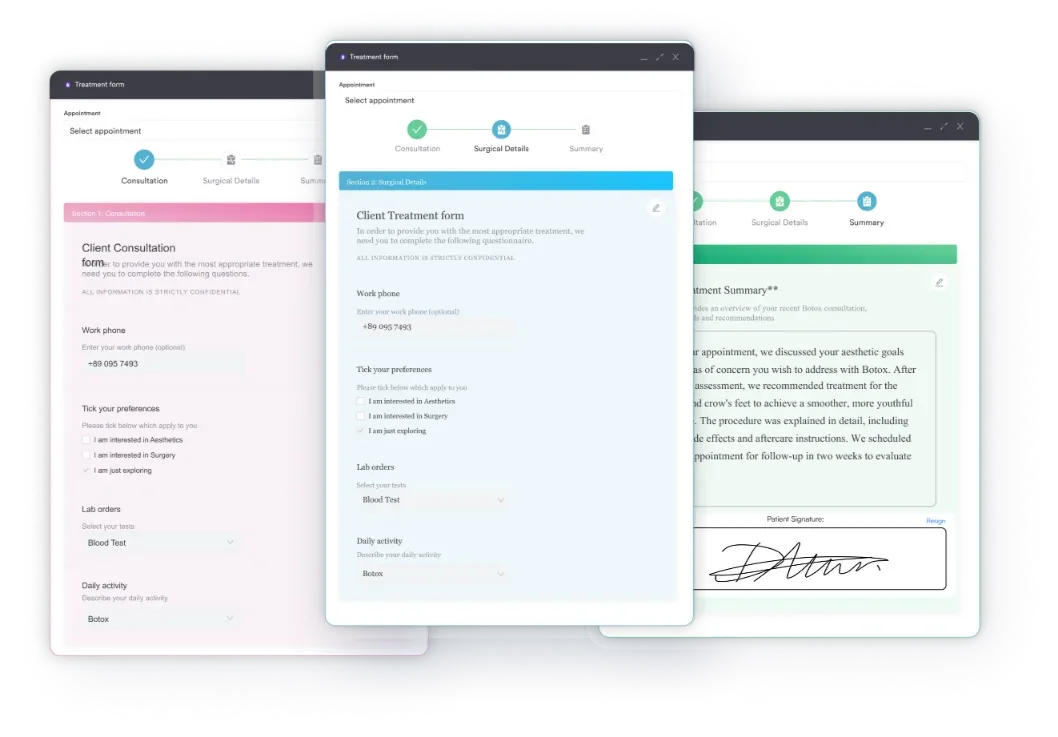
Schemes may request supporting clinical motivation or photographs at adjudication. Aesthetic practices using digital consent and intake forms can retrieve these records instantly rather than hunting through paper files when a query lands.
The National Health Reference Price List (NHRPL), published annually by the South African Department of Health under the Medical Schemes Act 131 of 1998, provides the tariff baseline for CCSD procedure codes. Schemes are not legally required to reimburse at NHRPL rates, and most open schemes apply their own fee schedules – often at a percentage of NHRPL or at negotiated rates.
Practitioners billing at above-NHRPL rates must ensure their patients are aware of potential balance-billing liability before proceeding. Many schemes require a gap cover arrangement to bridge the difference.
Medical aid funding for CCSD Code S5535 varies by scheme and plan. South African medical schemes apply the Medical Schemes Act 131 of 1998, which mandates coverage for Prescribed Minimum Benefits (PMBs) but excludes cosmetic procedures from PMB scope. Because S-series codes often straddle the aesthetic and medical boundary, scheme adjudicators exercise discretion based on clinical motivation.
The figures above reflect general market patterns and may not reflect current benefit-year positions. Always verify funding status directly with the scheme before the procedure date, and document that verification in the patient’s file.
When pre-auth is required, the process typically follows these steps:
Schemes typically respond to pre-auth requests within 1 to 5 business days. Urgent requests submitted with clinical motivation may be escalated. Never proceed on the assumption that pre-auth will be granted – if the scheme declines, you must inform the patient before proceeding, as costs become the patient’s liability.

Pabau helps South African aesthetic and skin clinics track pre-auth status, pair ICD-10 codes correctly, and store the clinical documentation needed to defend every claim.

The CCSD S-series contains several adjacent codes that describe similar but distinct skin interventions. Applying the wrong code is a leading cause of claim rejection and, if patterns of miscoding are identified on audit, can result in scheme sanctions.
When comparing codes, the CCSD schedule’s own notes and the scheme’s clinical coding guides are authoritative. The CCSD Bupa code reference on Pabau provides additional context on how CCSD codes are structured and differentiated across the schedule.
CCSD S5535 claim rejections follow predictable patterns. Identifying them before submission is far more efficient than navigating appeals after the fact. South African billing practitioners and practice managers consistently report the following as the most frequent causes:
A well-structured appeal resolves a meaningful proportion of rejected CCSD claims, particularly where cosmetic exclusion or insufficient documentation is cited. The process:
Track every CCSD S5535 claim’s status from submission through payment in a single system. When a rejection arrives, you need the original claim data, the pre-auth number, and the clinical notes instantly – not buried in email threads. Clinics using Pabau’s claims management software retrieve this information in seconds rather than hours.
Same-day billing is a frequent source of CCSD claim complexity. Schemes apply unbundling edits that flag combinations where one code is considered to include the services described by another. For S5535 and other S-series codes billed on the same encounter, the following principles apply:
Before billing S5535 alongside any other code, check the scheme’s current billing rules document. Discovery Health, Bonitas, and Momentum publish these annually. Where the rules are ambiguous, a pre-submission query to the scheme’s billing desk will prevent a rejection that takes weeks to resolve.
Manual CCSD billing workflows create multiple points where errors enter the claim. A practitioner relying on memory, spreadsheets, or disconnected systems to track pre-auth status, ICD-10 pairing, and document storage will inevitably miss something that triggers a rejection.
Pabau’s claims management software addresses these friction points directly for South African aesthetic and skin clinics. The platform supports structured clinical record-keeping so that every CCSD Code S5535 claim has the documentation required at adjudication – consultation notes, consent forms, ICD-10 code selection, and pre-auth reference numbers all stored against the patient record. When a rejection arrives, the entire claim history is available immediately.
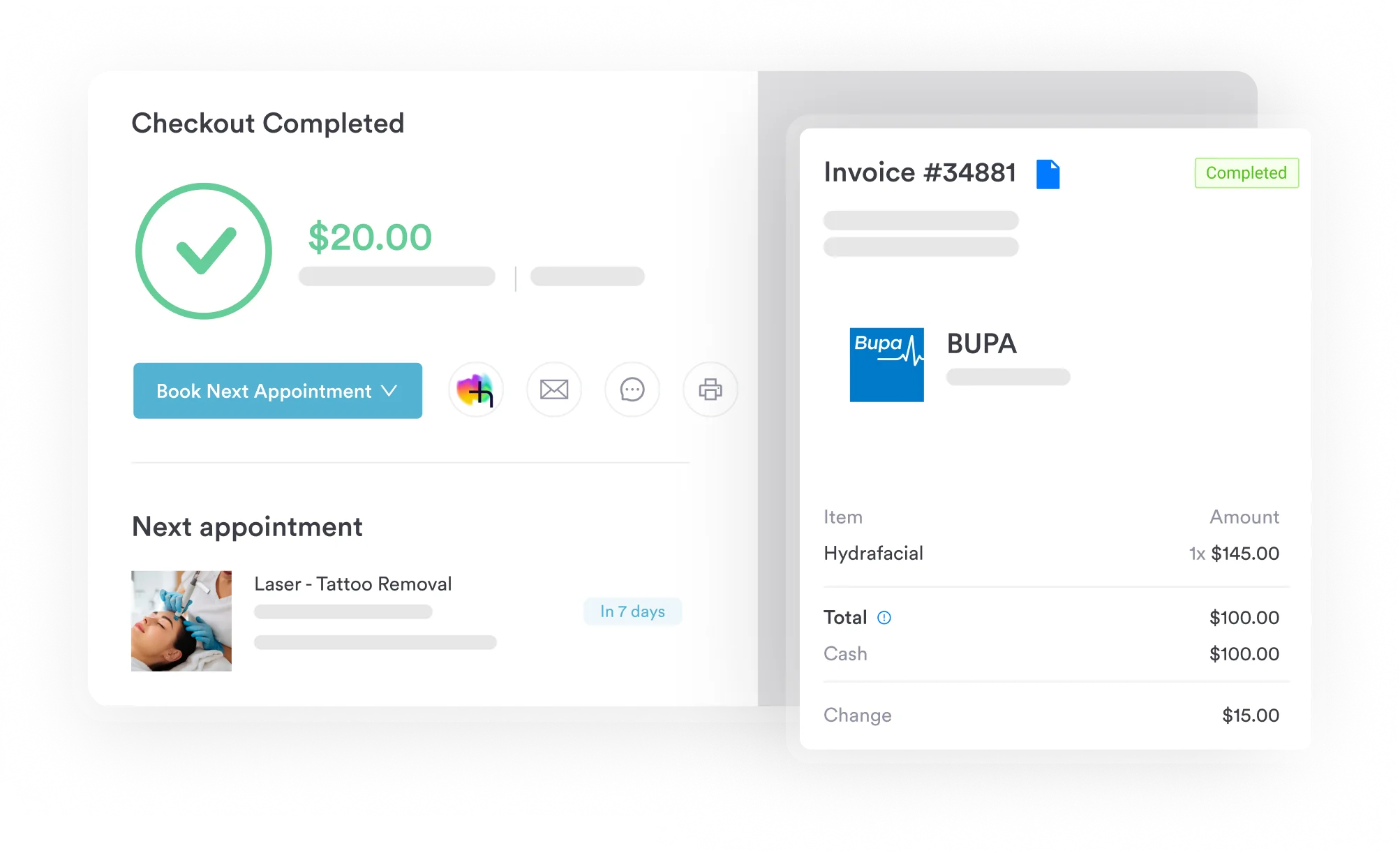
For skin clinics and dermatology practices in South Africa billing multiple CCSD codes per session, the ability to surface clinical notes, before-and-after documentation, and consent records from one system significantly reduces the administrative cost of handling scheme queries. Pabau also integrates automated workflows that flag incomplete claim records before submission, catching missing ICD-10 pairings or absent pre-auth numbers at the point of billing rather than at the point of rejection.
Practices managing higher claim volumes can explore Pabau’s reporting capabilities through Insights+, which tracks rejection rates by code, scheme, and practitioner – giving practice managers the data to identify whether a pattern of S5535 rejections points to a documentation issue, a coding error, or a scheme-specific policy that needs a targeted response. For a broader comparison of clinic management solutions used in South Africa, see Pabau’s South Africa clinic software guide.
CCSD Code S5535 is not difficult to bill correctly, but the margin for error is small: A missing pre-auth number, a mismatched ICD-10 code, or a clinical note that does not substantiate the procedure will each produce a rejection that takes weeks to resolve. The core disciplines are consistent documentation, scheme-specific benefit verification before the procedure date, and a structured appeal process when rejections do occur.
Pabau’s claims management and clinical record features give South African skin and aesthetic clinics the infrastructure to meet those disciplines without manual effort. To see how Pabau handles CCSD billing workflows in practice, book a demo.

Need a broader CCSD billing reference for UK and international insurers? Bupa CCSD code guide covers how the CCSD schedule works across major insurer fee schedules.
Looking for a clinical record system built for skin clinics? Pabau’s skin clinic software covers the documentation, consent, and billing workflows used by aesthetic and dermatology practices.
Want to reduce claim rejection rates across your whole billing operation? Pabau vs Healthbridge compares how the two platforms handle South African medical billing workflows.
CCSD Code S5535 is a South African procedure code in the CCSD S-series covering skin and subcutaneous tissue interventions billed under private medical scheme arrangements. The precise procedure scope is defined in the current annual CCSD publication – always verify the descriptor against the most recent CCSD schedule before billing, as descriptors and tariff values are updated periodically.
The NHRPL tariff for S5535 is set annually by the South African Department of Health and varies by procedure category. Actual reimbursement from medical schemes may differ from NHRPL, as schemes apply their own fee schedules – often at a fixed percentage of NHRPL or a negotiated rate. Verify the current tariff value directly against the applicable NHRPL schedule for the billing year.
Discovery Health, Bonitas, Momentum, GEMS, and Medshield may fund S5535 for medically indicated procedures, but funding status depends on the patient’s specific plan, the clinical indication, and whether a cosmetic exclusion applies. Schemes exercise scheme discretion on S-series codes – always verify funding before the procedure and obtain written confirmation where possible.
Pre-authorisation requirements vary by scheme and plan. Most major South African medical aids require pre-auth for aesthetic or skin procedures in the S-series, particularly where the procedure may be classified as cosmetic. Contact the scheme’s authorisation department before the procedure date and document the response – submitting without an authorisation number when one is required results in automatic rejection.
The most common rejection reasons are: Cosmetic exclusion applied where clinical motivation is missing, an absent or expired pre-authorisation number, an incorrect ICD-10 diagnosis code paired with the claim, an unbundling violation, or insufficient clinical notes to support the code billed. Review the scheme’s remittance advice for the specific rejection reason code and address that exact issue before resubmitting or filing an appeal.
Yes, in certain circumstances. Procedures performed on distinct anatomical sites on the same day may be billed separately, provided the clinical record documents each site and procedure individually. Some schemes require a multiple-site modifier. Procedures that fall within S5535’s bundled scope cannot be billed as additional lines. Verify same-day billing rules in the specific scheme’s current billing guidelines before submitting.