HCPCS Code Q4135: Billing Guide for Biovance Amniotic Membrane
HCPCS Code Q4135: Official Descriptor and Product Details HCPCS Code Q4135 is a ...

Last Updated: Nov 16, 2026
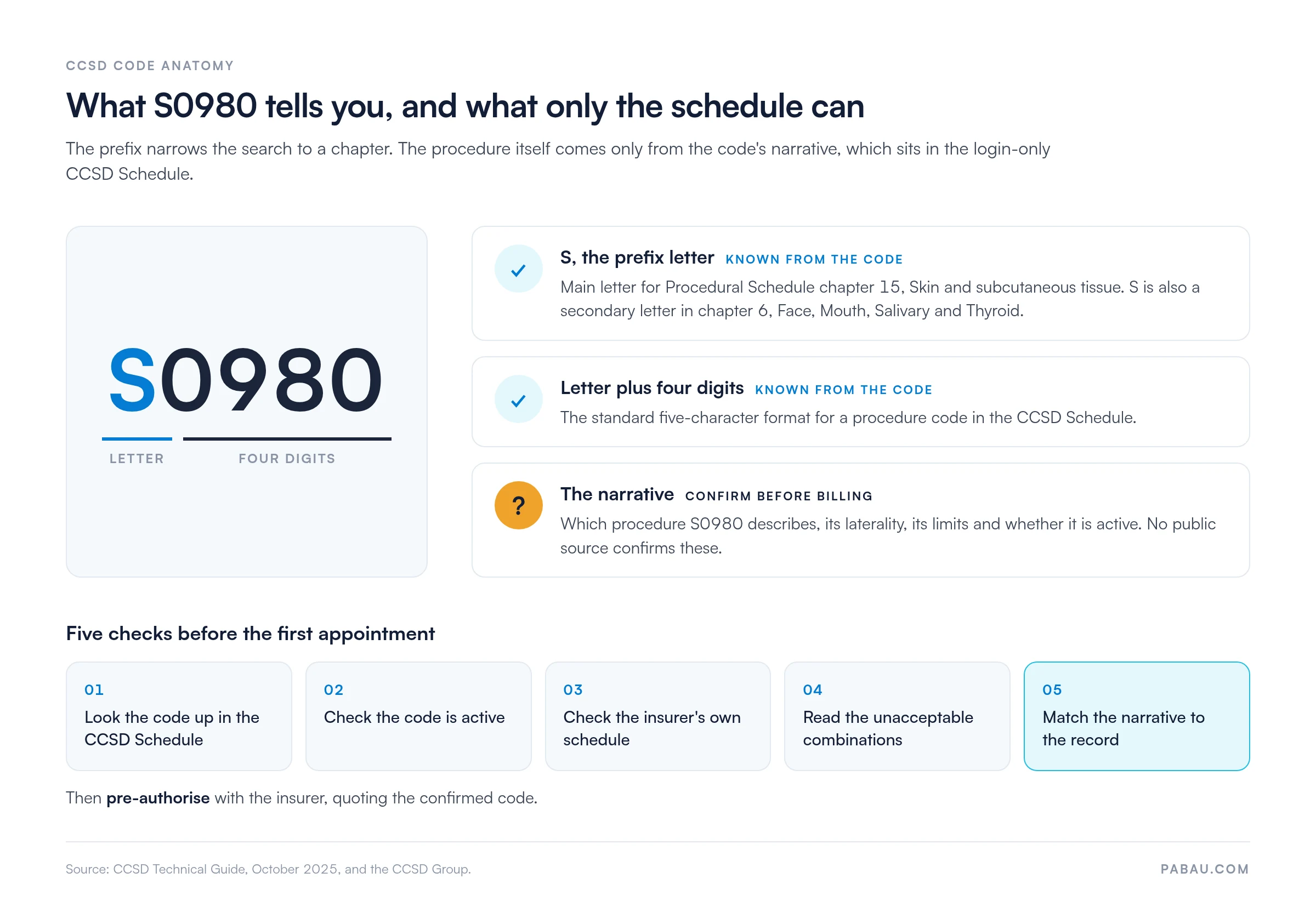
S0980 is a code reference in the format of the CCSD Schedule, the coding standard for UK private healthcare. Its official narrative sits in the login-only CCSD Schedule, and no public source we checked confirms which procedure it describes.
Before you bill S0980, confirm the narrative in the CCSD Schedule or the insurer's code search. Then check it matches the clinical record and get pre-authorisation from the insurer.
Let Pabau's smart automation suggest the right codes, reduce claim denials, and keep your practice compliant—effortlessly.
Automate repetitive tasks and focus on what matters most—your patients.
Reduce coding errors and ensure compliance with the latest regulations.
Clean claims, fewer denials, and faster reimbursements.
Powerful insights and reporting to help your practice thrive.
HIPAA compliant SOC 2 certified GDPR-compliant Trusted by 4,000+ clinics worldwide

S0980 follows the CCSD code format used by UK private medical insurers, including Bupa, AXA Health, Aviva and Vitality.
The official narrative for S0980 sits in the login-only CCSD Schedule, so confirm it there or with the insurer before you bill.
In the Procedural Schedule, S is the main letter for chapter 15, Skin and subcutaneous tissue, but the letter alone does not identify the procedure.
CCSD uses no billing modifiers. Laterality and scope are written into each code’s narrative instead.
Each insurer sets its own fee and eligibility for a CCSD code, so get pre-authorisation and check the benefit before treatment.
CCSD code S0980 is a code reference in the format of the CCSD Schedule, the coding standard for UK private healthcare. The Clinical Coding & Schedule Development (CCSD) Group maintains it, and its members are Bupa, AXA Health, Aviva and Vitality.
The schedule’s code narratives sit behind a CCSD login. We found no public source that confirms which procedure S0980 describes, or that it is currently active. Treat any narrative you see quoted for S0980 elsewhere as unverified until you check it yourself.
This page explains how to confirm S0980 before you use it. It then follows a CCSD claim with a UK insurer once the narrative matches your record.
The CCSD Technical Guide sets out how the schedule is built. Four rules explain most of what a code like S0980 can and cannot tell you.
So the prefix of S0980 points to skin or subcutaneous tissue work, most likely in chapter 15. The specific procedure, its laterality and any limits come only from the code’s own narrative. The diagram sets what the code tells you against what you still have to confirm.
For codes in other chapters, our library of CCSD codes collects the ones we cover. S4183 carries the same S prefix in chapter 15.
Confirm the code before the first appointment, not after a claim comes back. These checks take a few minutes, and they head off the coding queries an insurer would otherwise raise after the claim.
Save the narrative you confirmed, the date you checked it, and the source next to your price list. When an insurer queries the claim, you can show which version of the code you relied on.
CCSD does not use the two-character modifiers found in US CPT and HCPCS billing. There is no code suffix for a bilateral procedure, a repeat procedure or a distinct session.
Instead, the detail lives in the narrative. Where laterality matters, the schedule carries separate unilateral and bilateral codes, or a bilateral code only. Pick the code whose wording matches what was done.
Bundling works through unacceptable combinations. These are code pairs that must not appear on the same claim, and the CCSD website shows them against each code. The lists cover pairs commonly coded together, so they are not complete. Apply the same logic to any pair the list does not mention.
CCSD describes the procedure, while the insurer decides what it pays for it. The CCSD Group leaves eligibility, complexity bands and fees to each funder and provider to agree.
Where an insurer asks for a diagnosis code, use the WHO edition of ICD-10 used in the UK. Check codes in the WHO ICD-10 browser. Do not use US ICD-10-CM codes, because some codes differ between the two editions.
Many CCSD claim queries trace back to a code nobody checked against the record or the insurer’s schedule. The table lists the common ones.
Insurers can ask for the clinical record behind any claim. The notes should let a reviewer confirm the code without asking you a question.
A CCSD claim depends on three records agreeing: the authorisation, the clinical note and the invoice. When they live in separate systems, a mismatch only shows up when the insurer queries the claim.
Pabau, the practice management software we build, keeps those records on one patient file. Your team records the confirmed CCSD code on the invoice. Pabau’s claims management software then sends the claim through Healthcode to insurers such as Bupa, AXA Health and Vitality.
Each pre-authorisation is stored as a case, so the authorisation code follows the appointment through to the claim. Clinicians write their notes in the patient record, and digital forms capture consent before the visit.
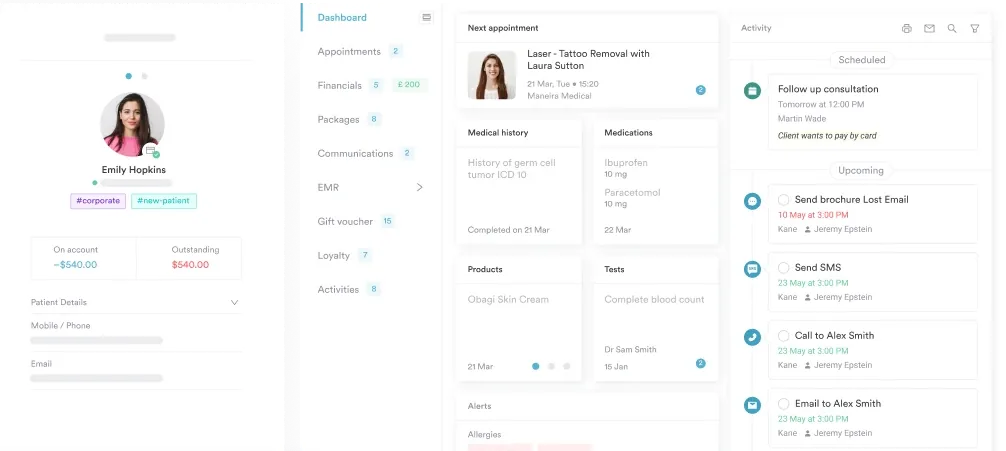

Pabau keeps the authorisation, the clinical note and the invoice on one patient file, then sends the claim through Healthcode. Book a demo to see it.

A CCSD code is only as reliable as the narrative you checked it against. For S0980, that narrative is not public, so the order of work stays fixed. Confirm the code, match it to the record, then pre-authorise.
Do that once and save the result, and every later claim for the procedure starts from a checked code. To see how Pabau carries the authorisation through to the Healthcode claim, book a demo.

Need the wider CCSD picture? Bupa CCSD codes explains how CCSD codes work with Bupa claims.
Billing another chapter 15 skin code? CCSD code S4183 covers wound debridement and primary suture.
Want fewer insurer claim queries? Pabau’s claims management software sends UK claims through Healthcode with the authorisation attached.
S0980 is a code reference in the CCSD format, used for UK private healthcare billing. Its official narrative sits in the login-only CCSD Schedule. No public source we checked confirms which procedure it describes, so confirm it before you bill.
CCSD stands for Clinical Coding and Schedule Development. The CCSD Group maintains the coding schedule for UK private healthcare, and its members are Bupa, AXA Health, Aviva and Vitality.
Log in to the CCSD website and search the CCSD Schedule for S0980. You can also check the insurer’s own code search or schedule of procedures, such as Bupa’s code search.
No. CCSD does not use billing modifiers. Laterality and scope are written into each code’s narrative, and codes that must not be billed together are listed as unacceptable combinations.
Each insurer sets its own fee and eligibility for a CCSD code. CCSD describes the procedure only. Check the insurer’s schedule and get pre-authorisation before treatment.
No. CCSD is the UK private healthcare coding schedule. South African medical schemes use their own numeric tariff codes, which are a separate system.