CPT Code 89290: Embryo biopsy for preimplantation genetic testing
CPT Code 89290: Official descriptor and code details CPT Code 89290 describes &#...

Last Updated: Oct 21, 2026
CCSD code H1542 is the schedule entry for closure of colostomy, the operation that rejoins the bowel and retires the stoma bag. It sits in Chapter 11, Abdomen (excluding urinary and reproductive organs), under sub-chapter 11.5.0 Large intestine.
The code is simple, but the claims around it trip up billing teams. A Hartmann's reversal takes its own code, H3390. H1581 and H1590, the colostomy formation codes, are unacceptable combinations with H1542. An abandoned closure is generally coded to the stage reached, unless it had reached its final stages.
Let Pabau's smart automation suggest the right codes, reduce claim denials, and keep your practice compliant—effortlessly.
Automate repetitive tasks and focus on what matters most—your patients.
Reduce coding errors and ensure compliance with the latest regulations.
Clean claims, fewer denials, and faster reimbursements.
Powerful insights and reporting to help your practice thrive.
HIPAA compliant SOC 2 certified GDPR-compliant Trusted by 4,000+ clinics worldwide

CCSD code H1542 is the code for closure of colostomy, listed in Chapter 11 under sub-chapter 11.5.0 Large intestine.
CCSD lists H1581 and H1590, the two colostomy formation codes, as unacceptable combinations with H1542.
A reversal of Hartmann’s procedure has its own CCSD code, H3390, so read the operation note before choosing H1542.
An abandoned closure is generally coded to the stage reached (not the intended operation), unless the closure was in its final stages. The result may not match the code the insurer authorized.
The pre-authorization, the operation note and the claim should all point to the same code before submission.
CCSD code H1542 is the schedule entry for closure of colostomy. Surgeons use it when they take down a colostomy and rejoin the bowel. After that, stool passes through the anus again and the stoma bag is no longer needed.
Many colostomies are planned as temporary from the start. A loop colostomy, for example, diverts the bowel contents while the bowel below recovers. Healthdirect notes that closing one is done under general anesthetic and usually takes about an hour.
Among the CCSD procedure codes, H1542 sits in Chapter 11, Abdomen (excluding urinary and reproductive organs). Its sub-chapter is 11.5.0 Large intestine, which also holds H1300 for bypass of colon.
For billing teams, the code itself is simple. Claims come back when the operation note and the code describe different operations.
CCSD lists two unacceptable combinations against H1542. Both codes describe making a colostomy, the opposite of closing one. The block runs both ways, since the H1581 and H1590 entries also list H1542.
Unacceptable combinations are guidelines, and each insurer decides how strictly it applies them. Still, a claim carrying both codes for one session invites a query. If the operation note genuinely describes both, ask the insurer how it wants the session coded first.
The logic comes from CCSD’s coding principles. One code should describe the whole operation, from preoperative assessment through to postoperative care. A second code is the exception, never the routine.
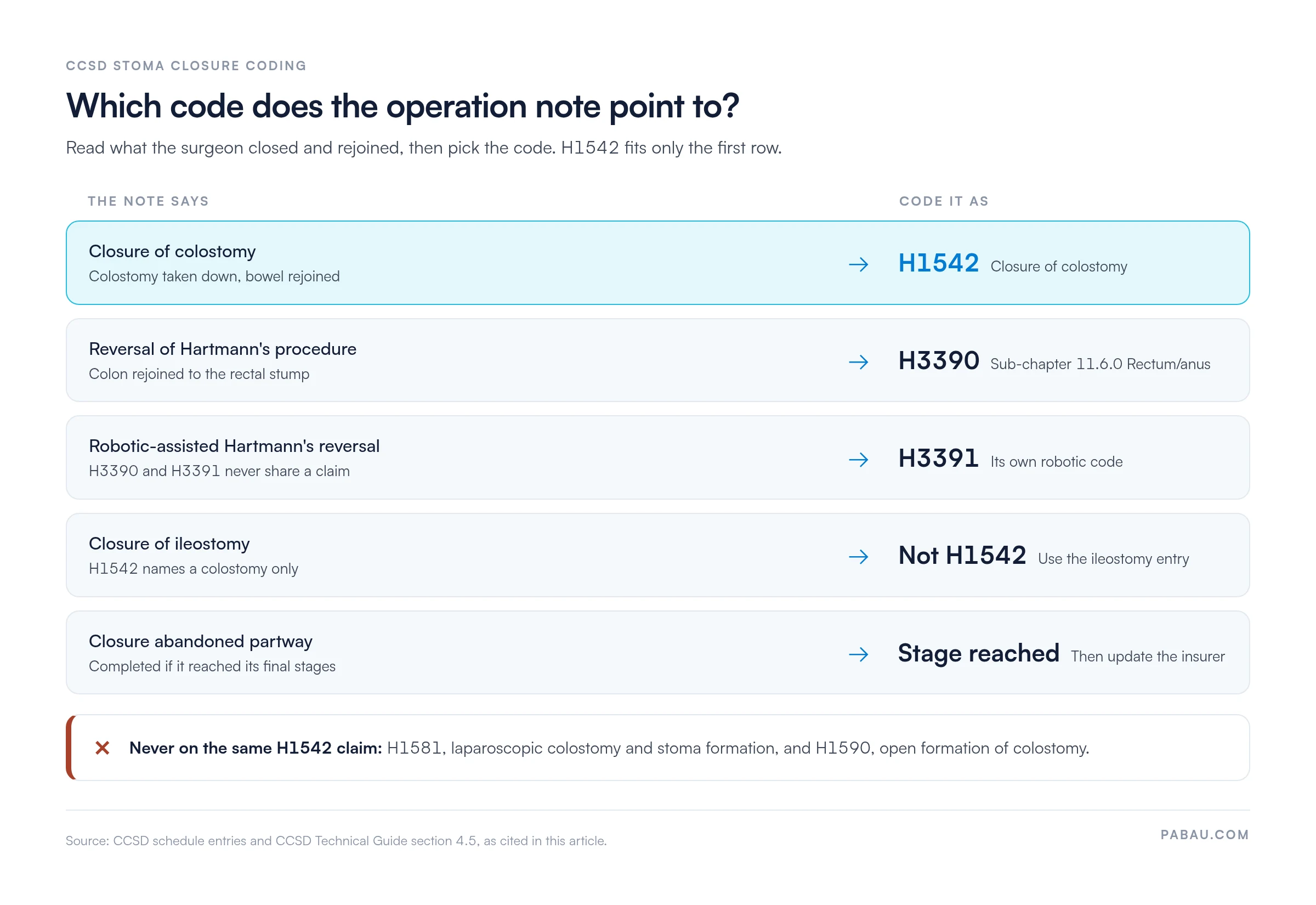
Not every stoma closure belongs under H1542. Reversing a Hartmann’s procedure also takes down a colostomy, but it rejoins the colon to the rectal stump. CCSD lists that operation separately as H3390, in sub-chapter 11.6.0 Rectum/anus.
A robotic-assisted reversal has a code of its own, H3391. CCSD lists H3390 and H3391 as an unacceptable combination, so only one goes on the claim.
This is why the operation note decides the code. It should name the type of stoma and what the surgeon rejoined. When the note reads “reversal of Hartmann’s”, H1542 is the wrong choice, because a more specific code exists.
The panel below matches each common note wording to its code.
Most H1542 claims follow the same route through a private surgical practice. Every handoff is a chance for the code to drift.
Plans change in the operating room, too. CCSD’s Technical Guide (section 4.5) says to code an abandoned closure to the stage reached, not the intended operation. That holds unless the procedure had reached its final stages, in which case code it as completed.
Either way, the billed code can differ from the authorized one, so tell the insurer before you submit.
These checks take a minute per claim. Each one heads off a query that could hold payment for weeks.
Most H1542 problems start when someone picks the code before reading the note. Each one below has a quick fix.
The weak point in an H1542 claim is the handoff between the operating room and billing. The note lives in one place, the authorization in an email and the claim in a portal.
Pabau, the practice management platform we build, keeps those pieces on one patient record. Its claims management software sends insurer claims through Healthcode and tracks each one until it is settled.
So the person submitting can read the operation note and the authorization side by side. A mismatch gets caught at the desk, not in a rejection letter weeks later.
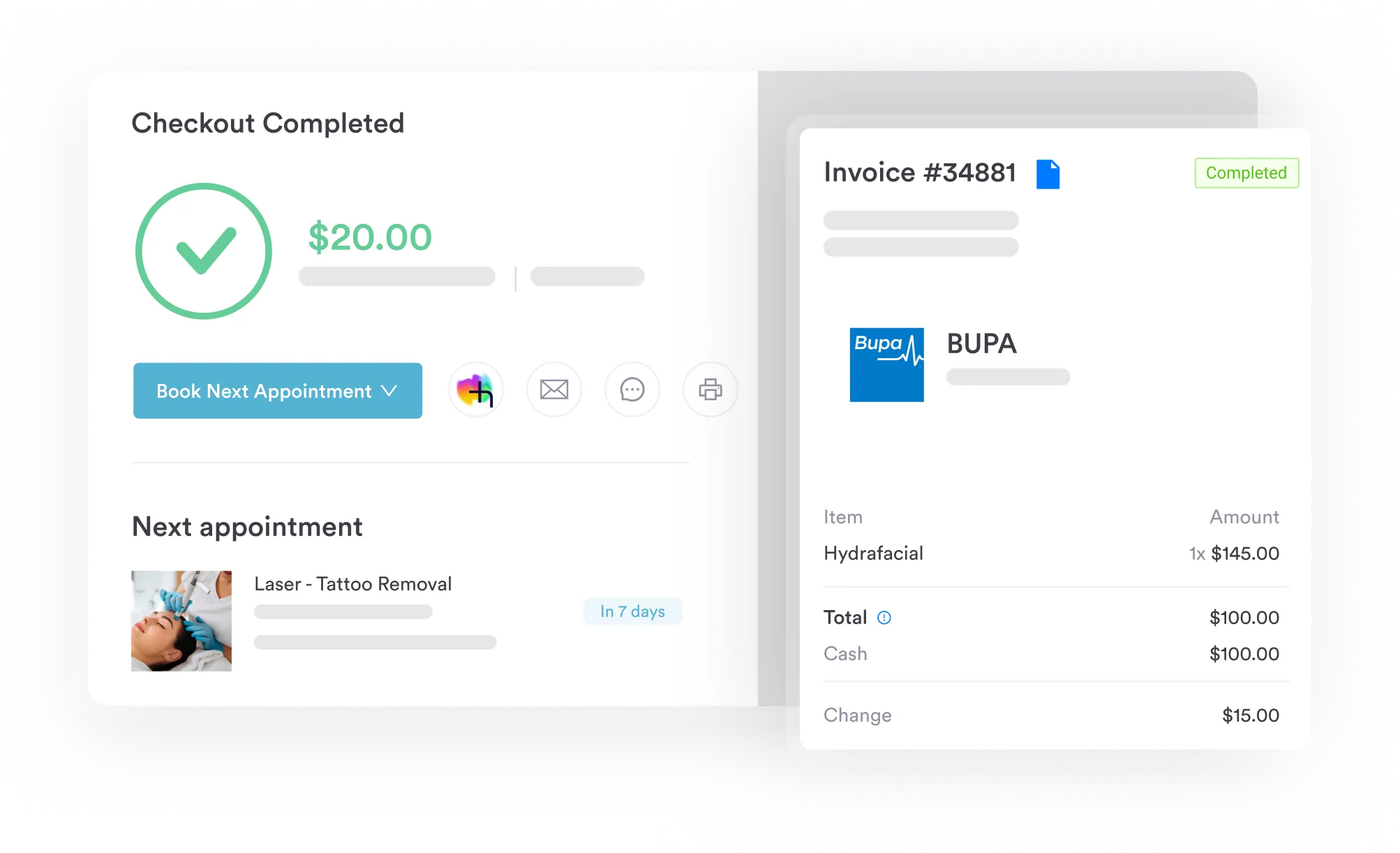

Pabau keeps operation notes, insurer details and claims on one patient record. Your team submits through Healthcode and tracks every claim to payment.

H1542 has a short narrative and a clear job. Use it when a colostomy is closed, and keep it off every other stoma operation.
The claims that come back usually fail at the edges. A Hartmann’s reversal billed as H1542 draws a query, and so does a formation code riding along. Read the note first, and the right code usually follows.
If your practice bills colorectal surgery to UK insurers, keep the note, the authorization and the claim in one place. Book a demo to see how Pabau carries surgical claims from booking to payment.

Coding a Hartmann’s reversal instead? CCSD code H3390: Reversal of Hartmann’s procedure explains the code that replaces H1542 for that operation.
Working on another large-bowel claim? CCSD code H1300: Bypass of colon covers a neighbor in sub-chapter 11.5.0.
Billing a colon lesion excision? CCSD code H1200: Colon lesion excision walks through the transabdominal excision code.
Draining an intra-abdominal abscess? CCSD code H0310: Drainage of appendix or intra-abdominal abscess sets out how that drainage code is billed.
Need the wider Bupa picture? Bupa CCSD codes explains how Bupa uses the CCSD schedule for claims.
No. The CCSD Group maintains the codes, narratives and coding rules, but it does not set reimbursement or fees. Each insurer applies its own fee to H1542, so check the patient’s insurer schedule or your contract.
CCSD stands for Clinical Coding & Schedule Development. The group maintains a common set of codes and narratives for the UK private healthcare sector, so insurers and providers describe procedures the same way.
CCSD publishes schedule changes through the year and recommends that users adopt them within two months. Narratives and unacceptable combinations can both change, so code from the live schedule rather than a saved list.
You’ll find it on the CCSD website, after logging in to the schedule search. It shows each code’s narrative, chapter and unacceptable combinations. Insurers such as Bupa also offer code lookups for recognized providers.