CPT Code 25210: Excision of a single carpal bone
CPT Code 25210: Official descriptor and quick-reference data CPT Code 25210 is a...

Last Updated: Nov 26, 2026
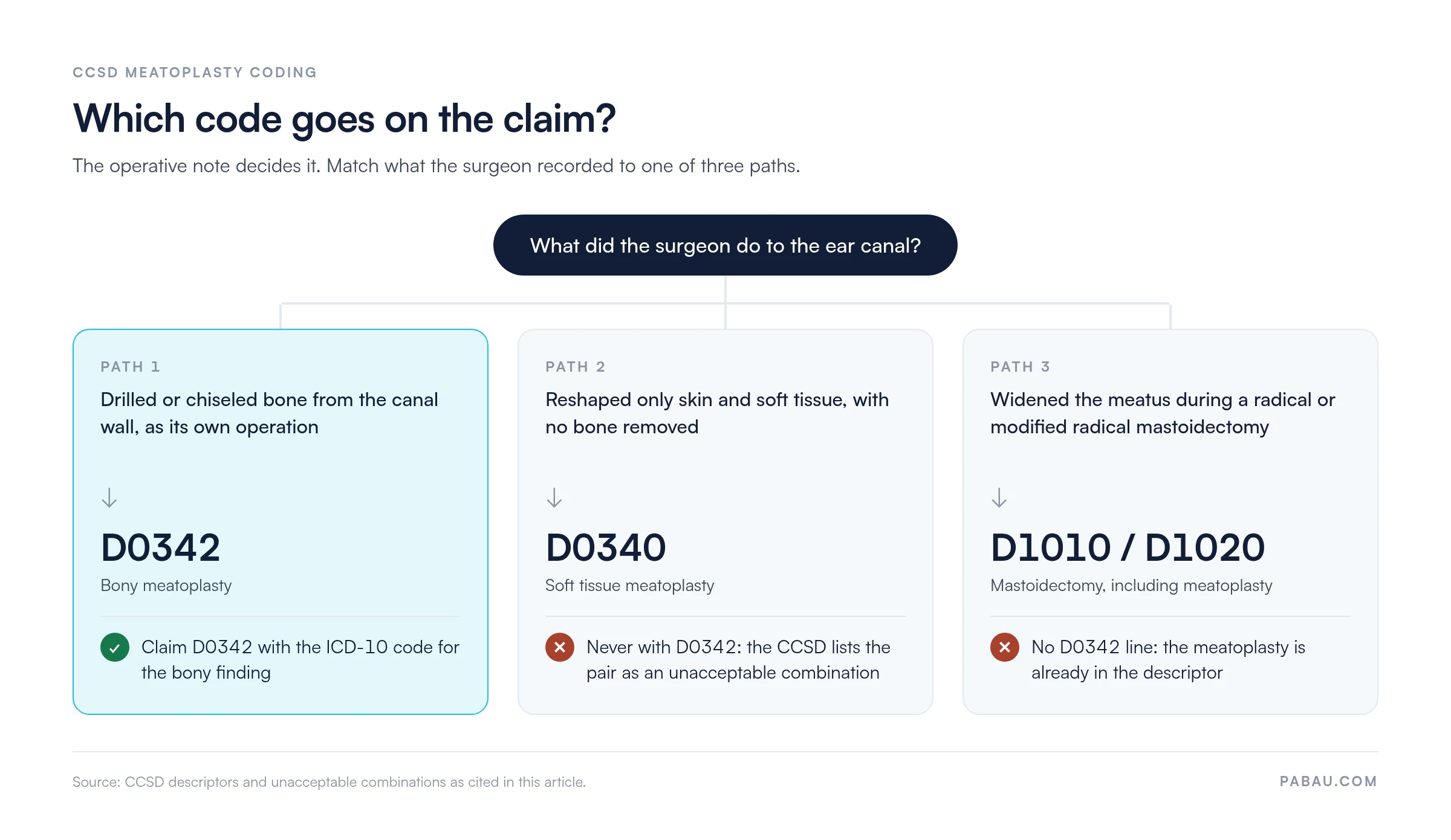
D0342 is the CCSD code for bony meatoplasty. The surgeon drills or chisels bone from the wall of the external auditory canal to widen it, most often for exostoses or acquired bony stenosis.
D0342 sits in chapter 5 of the CCSD schedule, ear, nose and throat, under the external ear. The CCSD lists D0340, soft tissue meatoplasty of the external auditory canal, as an unacceptable combination with D0342.
Let Pabau's smart automation suggest the right codes, reduce claim denials, and keep your practice compliant—effortlessly.
Automate repetitive tasks and focus on what matters most—your patients.
Reduce coding errors and ensure compliance with the latest regulations.
Clean claims, fewer denials, and faster reimbursements.
Powerful insights and reporting to help your practice thrive.
HIPAA compliant SOC 2 certified GDPR-compliant Trusted by 4,000+ clinics worldwide

CCSD Code D0342 covers bony meatoplasty, where the surgeon drills or chisels bone from the external auditory canal wall to widen it.
Pair D0342 with the most specific ICD-10 code, such as H61.3 for acquired stenosis or H61.8 for exostoses of the ear canal.
The CCSD lists D0340, soft tissue meatoplasty, as an unacceptable combination with D0342, so claim only the code that matches the operation.
Radical and modified radical mastoidectomy codes D1010 and D1020 already include meatoplasty, so D0342 does not go on the claim with them.
UK private insurers such as Bupa, AXA Health, Aviva and Vitality set their own authorization and claim rules, and claims are commonly sent through Healthcode.
CCSD Code D0342 describes a bony meatoplasty: the surgical removal of bone from the external auditory canal (EAC) to widen it. The code sits in chapter 5 of the CCSD schedule, ear, nose and throat, under the external ear. The schedule is maintained by the Clinical Coding and Schedule Development (CCSD) Group, and UK private medical insurers use it to identify procedures.
The key scope limiter is the word “bony.” The code covers only operations that remove bone from the canal wall. Soft tissue meatoplasty, where only skin and soft tissue are reshaped, is coded as D0340 instead.
Like the other CCSD codes for specialists, D0342 names a procedure but sets no fee. Each insurer, including Bupa, AXA Health, Aviva and Vitality, applies its own fee schedule and benefit rules to D0342. The claim pairs D0342 with an ICD-10 diagnosis code and the insurer’s authorization number, and is commonly sent electronically through Healthcode.
In a bony meatoplasty, an ENT surgeon uses a drill or chisel to remove bony overhangs or narrowings from the external auditory canal. Widening the canal improves access, ventilation and drainage. The surgery is performed under general or local anesthesia. The surgeon enlarges the meatus, working medially along the bony canal, taking care to preserve the tympanic membrane and the skin lining the canal.
The operative report records the extent of bone removed and the instruments used, such as a powered drill or an osteotome. It also notes the hemostasis technique and the final canal diameter. This operative note is the primary document an insurer reviews when it queries a D0342 claim.
UK insurers expect a clinically valid indication, backed by an ICD-10 code, before they authorize or pay a D0342 claim. The conditions that commonly justify bony meatoplasty include the following.
Each indication should be supported by pre-operative otoscopy findings in the clinical record. Add a CT scan of the temporal bone where the insurer asks for objective evidence of the bony abnormality.
Knowing the scope of D0342 prevents coding errors that lead to rejections or audits. The table summarizes what the code includes and what must be coded differently.
Several CCSD codes sit close to D0342 and are either confused with it or claimed in the same session. The table maps the most common neighbors.
The most common D0342 billing question is how it relates to mastoidectomy. Meatoplasty is a standard step in canal wall down surgery, because the surgeon widens the meatus so the cavity can be cleaned and inspected.
The CCSD builds that step into two codes. D1010 is radical mastoidectomy (including meatoplasty), and D1020 is modified radical mastoidectomy (including meatoplasty). D0342 is not added to either, and the CCSD lists it as an unacceptable combination with D1020. The diagram below maps each operative finding to the one meatoplasty code it supports.
For other ear operations in the same session, check the CCSD’s unacceptable combinations and the insurer’s own rules before you claim D0342. The CCSD schedule doesn’t use CPT-style modifiers, so the operative note has to make the case for a separate line.
When D0342 is claimed alongside another ear procedure, follow these steps to reduce the risk of a rejection.
The CCSD updates its schedule and combinations over time, and insurers update their own rules. Check the current versions before you submit, and keep a record of the version you relied on.
UK insurers expect an ICD-10 diagnosis code on every CCSD claim. The code must name the condition that made the bony meatoplasty necessary, not a generic ear code. The table lists ICD-10 codes that commonly support D0342; check acceptance with each insurer. Code descriptions come from the WHO ICD-10 browser.
Always use the most specific ICD-10 code for the documented finding. Coding H60.8 when the operative note describes exostoses as the main pathology, without linking them to canal narrowing, invites an insurer query.
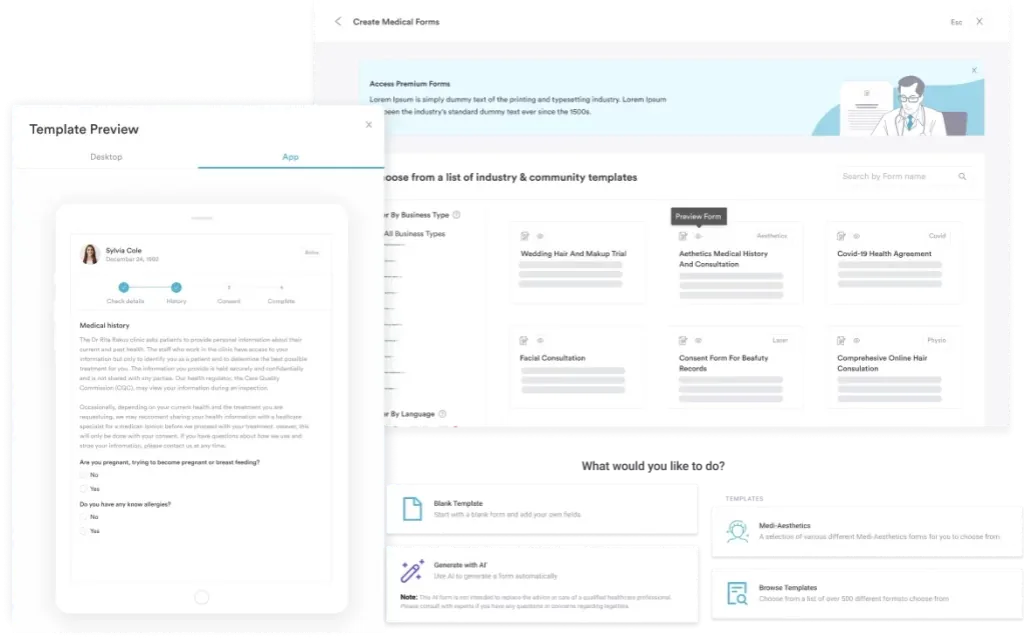
An operative note that never mentions bone removal is a frequent reason for D0342 claim queries. The note must show the bony nature of the operation and why it was needed. A structured operative note template keeps it complete before the claim leaves the practice.
The following elements belong in a complete D0342 claim file.
Storing these records in one place means your team can retrieve them at submission and during any later query or appeal.
Before you submit a D0342 claim, check the operative note: it should state that bone was removed and match the ICD-10 code. Insurers may ask for the operative report, so keep it structured and easy to retrieve.
UK private medical insurers such as Bupa, AXA Health, Aviva and Vitality generally expect elective surgery to be authorized before it takes place. The patient usually contacts the insurer with the CCSD code and the diagnosis, and the insurer issues an authorization number.
The insurer may ask for the following details before it authorizes D0342.
Requirements and timings differ by insurer and policy, so check each insurer’s rules well before the planned date. A claim without a valid authorization number is likely to be rejected.
Knowing why D0342 claims are rejected is the fastest way to prevent it. The reasons below are common to CCSD surgical claims, and each insurer applies its own rules on top.
When a D0342 claim is rejected, the rejection reason and the operative note together decide the appeal strategy. Work through the following steps.
Keep a log of each rejection, its reason, the appeal date and the outcome. That record shows patterns by insurer and keeps your billing consistent with the Bupa CCSD codes guidance.
A D0342 claim depends on several pieces arriving together: the authorization number, the operative note, the imaging and the right ICD-10 code. When those sit in email threads and insurer portals, one missing piece holds up payment.
In Pabau, claims management software records the patient’s insurance policy, the case and the authorization code on the patient record. UK claims go out through Healthcode and Bupa.
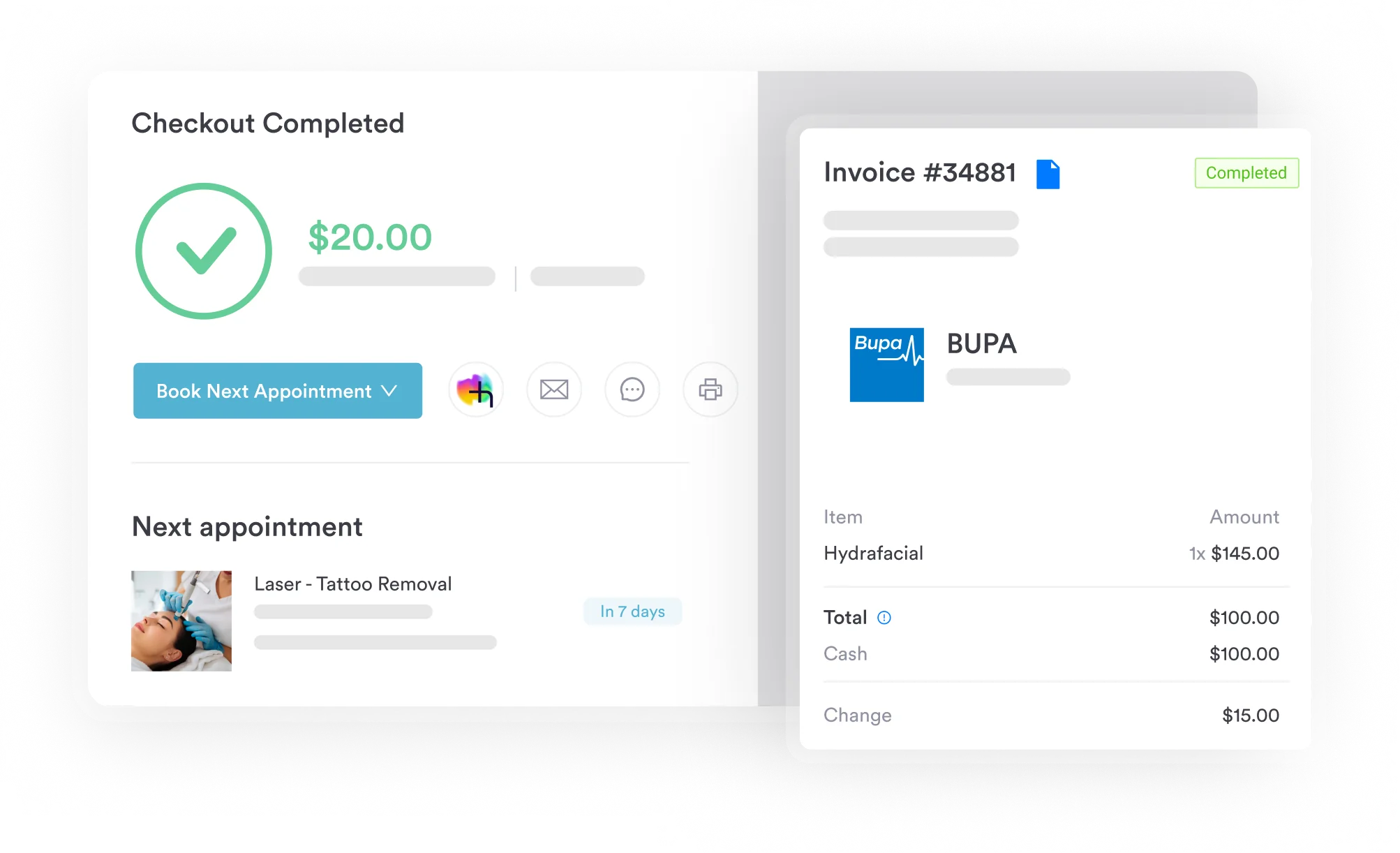
Your billing team can see which D0342 claims are paid and which need a resubmission, without chasing each insurer by email.

Pabau records insurance policies, cases and authorization codes, with UK claims sent through Healthcode and Bupa. See how ENT practices track every claim from authorization to payment.

CCSD Code D0342 has a clear descriptor with two traps: the bony scope limiter and the mastoidectomy codes that already include meatoplasty. Every claim needs an operative note that confirms bone removal, not just a wider canal.
Secure the insurer’s authorization before surgery, and keep D0342 off claims with D0340, D1010 or D1020. Pair it with the ICD-10 code that matches the documented pathology, and most query risk is handled before submission.
Pabau sends UK insurance claims through Healthcode and Bupa and keeps each claim’s authorization code on the case. Book a demo to see how it fits your billing workflow for ENT surgery.

Need a broader CCSD billing reference for UK private healthcare? Bupa CCSD codes guide covers the structure and submission rules for the UK CCSD coding schedule, including Bupa-specific billing requirements.
Billing a meatoplasty as part of a mastoidectomy? CCSD Code D1010 guide covers radical mastoidectomy including meatoplasty, and why the meatoplasty isn’t claimed separately.
Looking to reduce claim rejections across your ENT practice? Pabau claims management software keeps insurance policies, cases and authorization codes on the patient record.
Not sure whether the operation removed bone? CCSD Code D0340 guide covers soft tissue meatoplasty, the code to claim when only skin and soft tissue are reshaped.
CCSD Code D0342 is the UK private healthcare code for bony meatoplasty, the surgical widening of the bony part of the external auditory canal. ENT surgeons submit it with an ICD-10 code and the insurer’s authorization number when claiming from insurers such as Bupa or AXA Health.
Common ICD-10 pairings include H61.3 (acquired stenosis of external ear canal) and H60.8 (other otitis externa). Exostoses are coded H61.8, other specified disorders of external ear. The code must match the finding in the operative report. Check acceptance with the insurer before submission.
Not with radical or modified radical mastoidectomy. D1010 and D1020 already include meatoplasty, and the CCSD lists D0342 as an unacceptable combination with D1020. For other ear procedures, check the CCSD combinations and the insurer’s rules first.
D0342 covers bony meatoplasty, which removes bone from the external auditory canal wall. D0340 covers soft tissue meatoplasty, which reshapes only skin and soft tissue. The CCSD lists the two as an unacceptable combination, so claim the code that matches the operation.
UK private insurers such as Bupa, AXA Health, Aviva and Vitality generally expect elective surgery like bony meatoplasty to be authorized first. Requirements vary by insurer and policy. A claim without a valid authorization number is likely to be rejected.
Common reasons are a missing authorization number, an ICD-10 code that doesn’t support bony canal surgery, and an operative note that doesn’t confirm bone removal. Claiming D0342 with D0340, D1010 or D1020 is another trigger. Fixing these before submission is faster than appealing afterward.