CPT code 63081: Vertebral corpectomy, cervical spine
CPT code 63081: official descriptor and procedure overview CPT code 63081 descri...

Last Updated: Oct 6, 2026
D0280 is the CCSD code for removal of multiple bony exostoses of the external auditory canal. Surgeons use it when they clear two or more benign bony growths from the ear canal, most often surfer's ear caused by cold-water exposure.
UK private insurers such as Bupa, AXA Health and Aviva use it for surgeon claims, which need pre-authorization first. It sits in chapter 5 (Ear, nose and throat), in the external ear section. A single osteoma is coded separately, and each ear is billed as its own line item.
Let Pabau's smart automation suggest the right codes, reduce claim denials, and keep your practice compliant—effortlessly.
Automate repetitive tasks and focus on what matters most—your patients.
Reduce coding errors and ensure compliance with the latest regulations.
Clean claims, fewer denials, and faster reimbursements.
Powerful insights and reporting to help your practice thrive.
HIPAA compliant SOC 2 certified GDPR-compliant Trusted by 4,000+ clinics worldwide

CCSD Code D0280 covers removal of multiple bony exostoses of the external auditory canal. A single exostosis or osteoma maps to a different code.
Cold-water exposure, known as surfer’s ear, is the leading cause. All major UK private insurers require pre-authorization before the procedure.
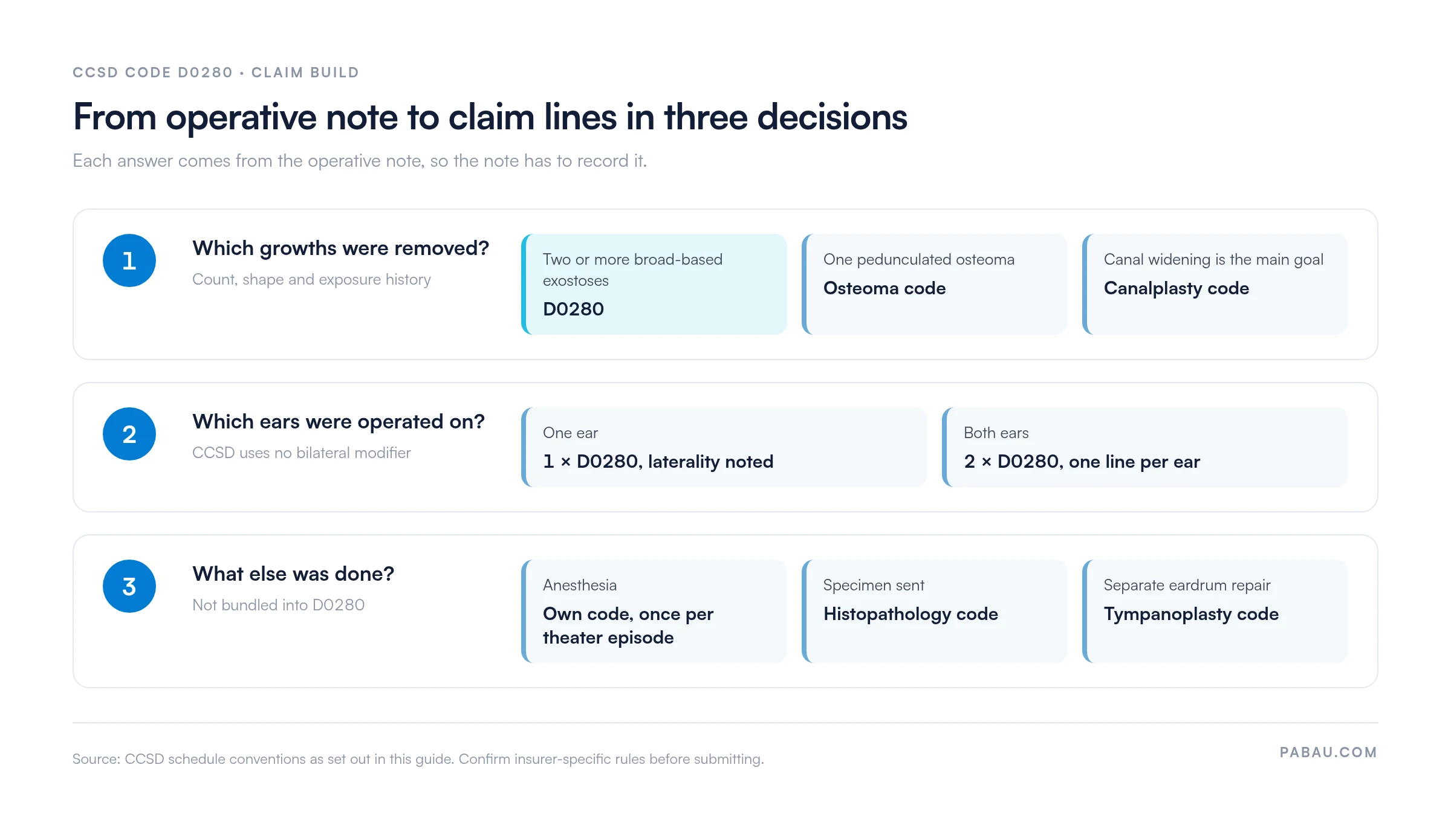
Bilateral cases go on the claim as two separate line items, one per ear, rather than with a modifier.
Pabau’s claims management software supports CCSD code libraries and insurer-specific billing workflows for UK private ENT practices.
CCSD Code D0280 is the code for surgical removal of multiple bony exostoses of the external auditory canal (EAC). Exostoses are benign bony outgrowths of the canal wall that form after repeated cold-water exposure. When two or more are removed, D0280 is the code to bill.
The code is published by the Clinical Coding and Schedule Development (CCSD) Group, which maintains the procedure schedule UK private insurers use. D0280 sits in the external ear section of chapter 5, alongside procedures such as D0140 for preauricular sinus excision.
The table below captures the key code facts coders need before submitting a claim.
The surgeon removes the bony outgrowths blocking the external auditory canal with a drill or chisel, under general anesthetic. Knowing the steps helps billing staff check that the operative note holds what insurers ask for.
Insurers rely on the operative note above all else when they adjudicate a D0280 claim, so each of these steps belongs in it.
D0280 is appropriate when multiple bony outgrowths in the canal cause clinically significant symptoms that conservative treatment hasn’t resolved. Private insurers generally accept these indications:
Surfer’s ear, or EAC exostosis from cold-water exposure, accounts for most D0280 cases in UK private practice. Repeated exposure to cold water and wind stimulates new bone growth in the canal, producing multiple exostoses. Surfers, open-water swimmers, divers and kayakers are affected most often.
In a pre-authorization request, note the patient’s water-sport history and how long the exposure has lasted. Both strengthen the clinical case for surgery.
Knowing what D0280 bundles, and what needs its own code, prevents both underclaiming and unbundling rejections. The CCSD Technical Guide (October 2025) sets out the bundling principles across the schedule. Check you’re working from the current edition before submitting.
Coders often weigh D0280 against a few nearby ENT codes. Mixing up exostosis removal with single osteoma removal or canalplasty is a common cause of rejected claims. Our index of CCSD codes covers the wider schedule, and the Bupa CCSD procedure codes reference shows which ones Bupa accepts.
The comparison below separates D0280 from its closest neighbors.
Osteoma vs exostosis: The coding distinction that matters. Exostoses are broad-based, multiple, reactive bony outgrowths linked to cold-water exposure. An osteoma is usually solitary, pedunculated and a benign bony tumor. D0280 applies to exostoses. If the note describes one pedunculated growth with no cold-water history, the osteoma code fits better, and insurers may query a D0280 claim.
UK private insurers require an ICD-10 diagnosis code alongside the CCSD procedure code on every claim. The codes below are clinically appropriate for EAC exostosis, but payer requirements vary. Treat them as guidance and confirm with the insurer’s billing portal before submitting.
Check the Bupa code search portal and your other insurer portals to confirm their preferred ICD-10 mapping. A diagnosis code that doesn’t match the procedure is a common reason D0280 claims are denied.
Bilateral EAC exostosis is common in surfer’s ear, and CCSD bills it differently from US-style coding. Each ear goes on the claim as its own D0280 line item, with no bilateral modifier. That’s a consistent CCSD convention, but payer rules can vary, so confirm with each insurer’s billing team.
The flow below takes one operative note through the three decisions that set the claim lines.
Elective ENT surgery under UK private insurance requires pre-authorization before the procedure. For D0280, that means sending the insurer clinical evidence of need for approval. Requirements vary by insurer, so check each provider portal first. The steps below reflect the general approach of major UK payers, including Aviva and Vitality Health.
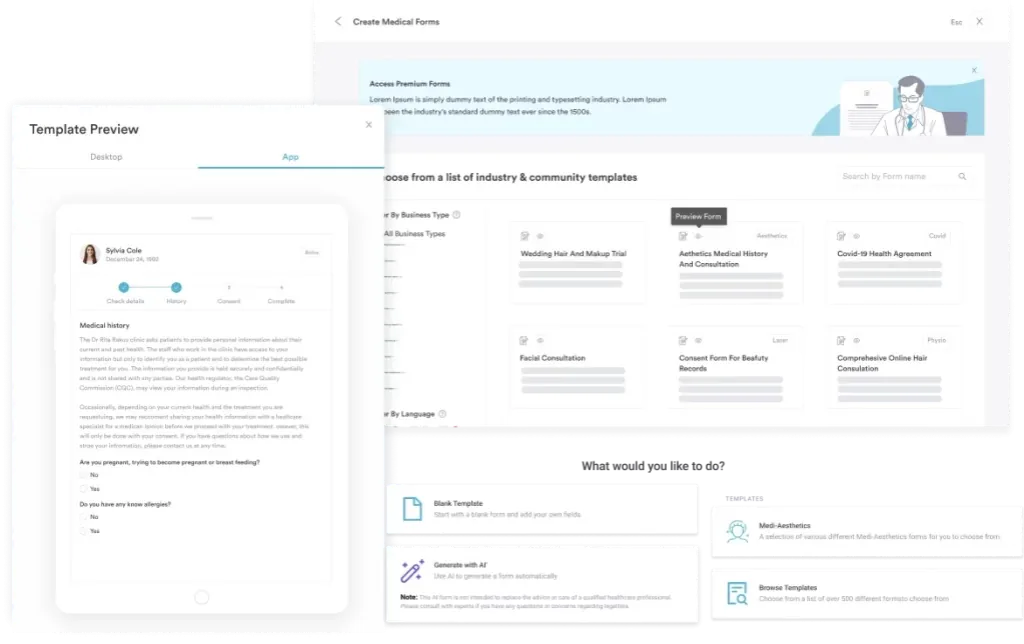
Operative note minimum requirements. Beyond pre-authorization, the ENT surgeon’s operative note must contain specific elements for a D0280 claim to be adjudicated correctly. Digital operative note templates that prompt for each required field cut omission-driven denials. The note should record:
Build a D0280 operative note checklist into your theater documentation. Asking the surgeon to confirm each field before the note is finalized takes under 60 seconds and removes the most common documentation-driven denial reasons. Review notes for completeness before the patient leaves the day-case unit.
D0280 claims are denied for a predictable set of reasons. Checking each one before submission cuts rework and speeds up payment. The table below lists the most frequent triggers and the fix for each.
Billing D0280 usually means juggling insurer portals, a pre-authorization log and operative notes that arrive incomplete. Each handoff is a chance for a missing reference or an unrecorded ear to slip through.
Pabau, the practice management platform we build, brings that work into one place. Its claims management software holds CCSD code libraries and insurer-specific submission workflows for UK private practices.
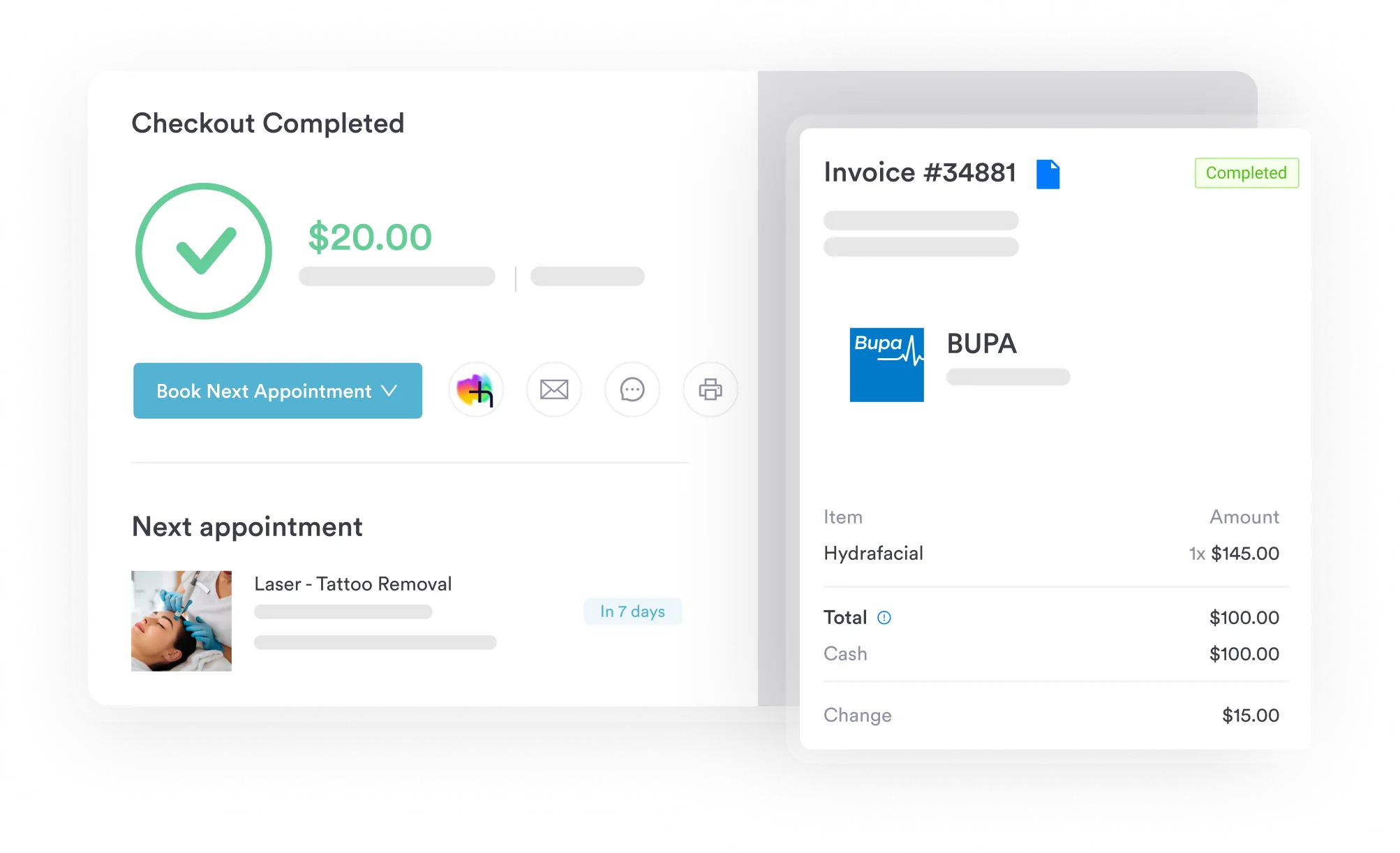
The result is a D0280 claim that leaves the practice complete the first time, and a billing team that spends less time chasing insurers.

Pabau tracks pre-authorization references, prompts for every operative note field and formats claims for each UK insurer. Fewer D0280 claims come back for rework.

D0280 claims are won or lost before anyone opens the claim form. If the operative note counts the exostoses, records each ear and lists what was coded separately, the claim follows from it.
So start with the note, not the claim. Build the required fields into your theater template, and confirm pre-authorization for each ear before surgery. The trade-off is a minute of the surgeon’s time at sign-off, against a rejected claim and a resubmission later.
Book a demo to see how Pabau tracks pre-authorizations and catches incomplete D0280 claims before they reach the insurer.

Need the fees behind the codes? Bupa procedure codes fee schedule explains how Bupa’s CCSD-based fees work and what its billing requires.
Billing other external ear procedures? CCSD code D0610 covers biopsy of a lesion of the pinna and the notes it needs.
Treating pinna injuries too? CCSD code D0410 explains billing for a pinna hematoma or abscess.
Adding ear reshaping to your list? CCSD code D0330 walks through pinnaplasty billing.
CCSD Code D0280 covers the surgical removal of multiple bony exostoses from the external auditory canal. It applies when two or more bony growths are removed from the ear canal in one procedure, usually under general anesthetic. Anesthesia and any histopathology are coded and billed separately.
Yes. When surgery covers both ears, D0280 goes on the claim as two separate line items, one per ear, with laterality documented on each. CCSD doesn’t use a bilateral modifier the way US coding does. Confirm the approach with each insurer before submitting a bilateral claim.
D0280 applies to multiple bony exostoses, which are reactive growths linked to cold-water exposure. An osteoma is a single benign bony tumor, usually pedunculated, and histology tells the two apart. If the operative note and histopathology describe a solitary osteoma, the osteoma code fits better. Otherwise the insurer may query a D0280 claim.
The operative note must record the number and approximate size of the exostoses removed, the laterality and the surgical approach. It also needs the instruments used, the tympanic membrane status at closure and specimen details if histopathology was requested. The claim must carry a valid pre-authorization reference issued before the procedure.
It depends on the patient’s policy, and the insurer decides at the pre-authorization stage rather than at billing. Most major UK private insurers will consider a D0280 claim when the clinical case is clearly documented. That case rests on conductive hearing loss, canal occlusion of at least two-thirds, cold-water exposure history and failed conservative treatment. Check the policy and get pre-authorization before going ahead.
Anesthesia isn’t bundled into D0280, so it’s submitted separately under the CCSD anesthesia code that matches the anesthetic given. The consultant anesthetist usually claims directly from the insurer. Check the current CCSD technical guide and the insurer’s own guidance for the codes and timing records they expect.