CCSD code F4810: Facial surgery billing guide for UK private practice
CCSD code F4810: definition and chapter context CCSD code F4810 is a billable pr...

Last Updated: Oct 5, 2026
C6920 is the CCSD code for paracentesis of the eye.
Let Pabau's smart automation suggest the right codes, reduce claim denials, and keep your practice compliant—effortlessly.
Automate repetitive tasks and focus on what matters most—your patients.
Reduce coding errors and ensure compliance with the latest regulations.
Clean claims, fewer denials, and faster reimbursements.
Powerful insights and reporting to help your practice thrive.
HIPAA compliant SOC 2 certified GDPR-compliant Trusted by 4,000+ clinics worldwide

CCSD code C6920 covers anterior chamber paracentesis (aqueous humour aspiration), not vitreous tap or intravitreal injection
Required ICD-10 pairings include H40.x (glaucoma) and H34.1 (central retinal artery occlusion) as primary indications
Laterality modifier (right or left eye) and documented pre- and post-procedure IOP readings are mandatory for most medical aids
Pabau’s claims management software helps South African ophthalmology practices track pre-auth status and flag incomplete procedure notes before submission
CCSD code C6920 is defined in the Coding Concepts and Services Directory with the official descriptor “Paracentesis of the eye.” The procedure involves inserting a fine-gauge needle or lancet at the corneal limbus to aspirate aqueous humour from the anterior chamber. This is a distinct anterior-segment procedure performed under topical or local anaesthesia, typically as a day procedure or in-office intervention.
The code sits within the ophthalmology surgical section of the CCSD schedule. It applies when an ophthalmologist deliberately samples or decompresses the anterior chamber. It does not cover the posterior segment (vitreous) and does not bundle with routine cataract surgery unless the paracentesis is separately documented as a distinct service with its own clinical justification.
Four clinical scenarios justify billing C6920. Each requires a matching ICD-10 diagnosis code on the claim.
The Health Professions Council of South Africa (HPCSA) limits the scope of practice for performing anterior chamber procedures to registered ophthalmologists. Claims submitted by practitioners outside this scope are rejected regardless of documentation quality.
Understanding the procedural steps helps billing staff verify that the operative note justifies C6920 before submission.
The operative note must document each of these steps. Missing the post-procedure IOP reading is the single most-cited documentation gap in medical aid audits of C6920 claims.
Medical aids interpret the scope of C6920 strictly. Mischaracterising bundled services as separately billable is a fraud-and-abuse risk under the Medical Schemes Act 131 of 1998.
Substitution errors between C6920 and the codes below account for a significant share of ophthalmology claim rejections. Review the Bupa CCSD codes overview for insurer-specific descriptor differences.
Every C6920 claim requires a primary ICD-10 diagnosis code that justifies the paracentesis. The table below lists the accepted pairings, with flags for diagnoses that commonly trigger pre-authorisation requirements.
Always code to the highest level of specificity available. H40.20 (primary angle-closure glaucoma, unspecified eye) will be queried by some schemes; H40.201 (right eye) with a matching laterality modifier on C6920 is cleaner.
The procedure note is the single document medical aid auditors examine first. Missing any of the following elements risks outright rejection or a request for additional information that delays payment.
Practices using digital clinical forms can build a structured procedure-note template that prompts for each mandatory field before the consultation is finalised, reducing documentation gaps at source. Clinic software used in South Africa increasingly includes CCSD-aware billing workflows that flag incomplete notes before claim submission.
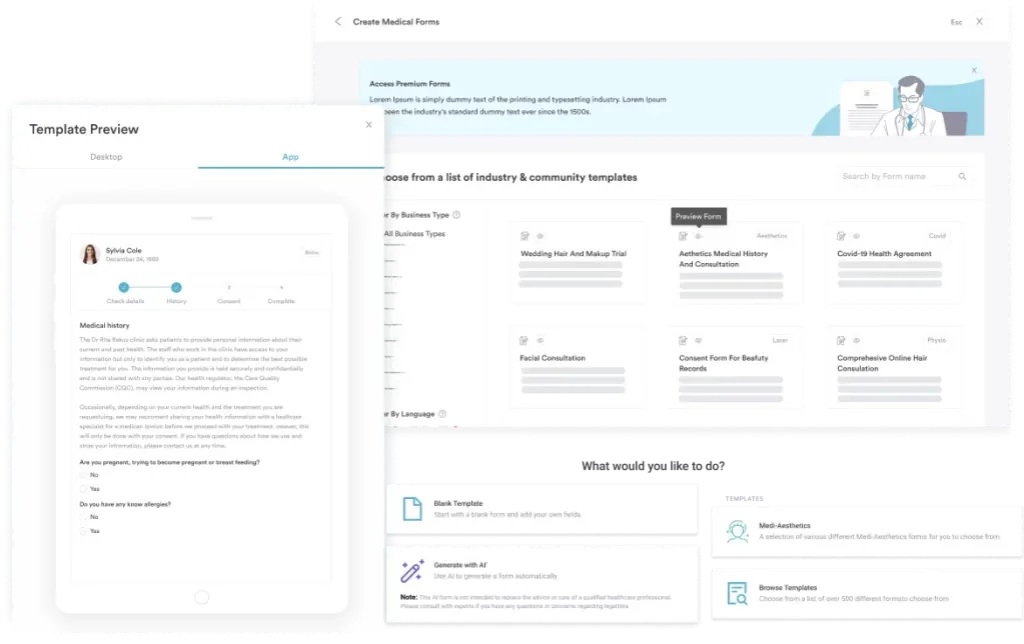
Flag the IOP readings as a mandatory field in your procedure template. Auditors from Discovery Health and Bonitas cite missing pre- and post-procedure IOP readings as the leading documentation deficiency on C6920 claims. A two-line addition to your note eliminates this risk entirely.
Pre-authorisation requirements for C6920 depend on whether the paracentesis is performed as an emergency or elective procedure. Rules vary by scheme and change annually, so confirm the current position with each medical aid directly before submitting.
Claiming an emergency bypass of pre-authorisation for a procedure that was not genuinely emergent is a scheme rule violation under the Medical Schemes Act 131 of 1998. The emergency classification must be supported by contemporaneous clinical notes, not reconstructed after a rejection. The Council for Medical Schemes regulates all scheme reimbursement decisions and handles formal disputes.
Most South African medical aids require a laterality modifier on ophthalmic surgical codes. Without it, the claim processes as “unspecified eye” and is returned for correction, adding weeks to the payment cycle.
Co-billing rules to note: a consultation code on the same day as C6920 is generally not allowed by most schemes unless a separate consultation occurred at a distinct encounter. Specimen laboratory codes may be co-billed when aqueous sampling is the indication. Anaesthesia codes are separately billable when general or sedation anaesthesia is used.
The most common denial reasons for C6920 claims, and the corrective action for each, are listed below. Practices that systematically track denial reasons resolve most of these within one billing cycle once the root cause is identified. Denial management in healthcare follows a consistent pattern: categorise by reason code, identify the upstream documentation or process gap, fix it at source.
Pabau’s claims management software lets South African ophthalmology practices tag denial reason codes against individual claims, identify recurring patterns, and track appeal status from the same dashboard used for scheduling and patient records.
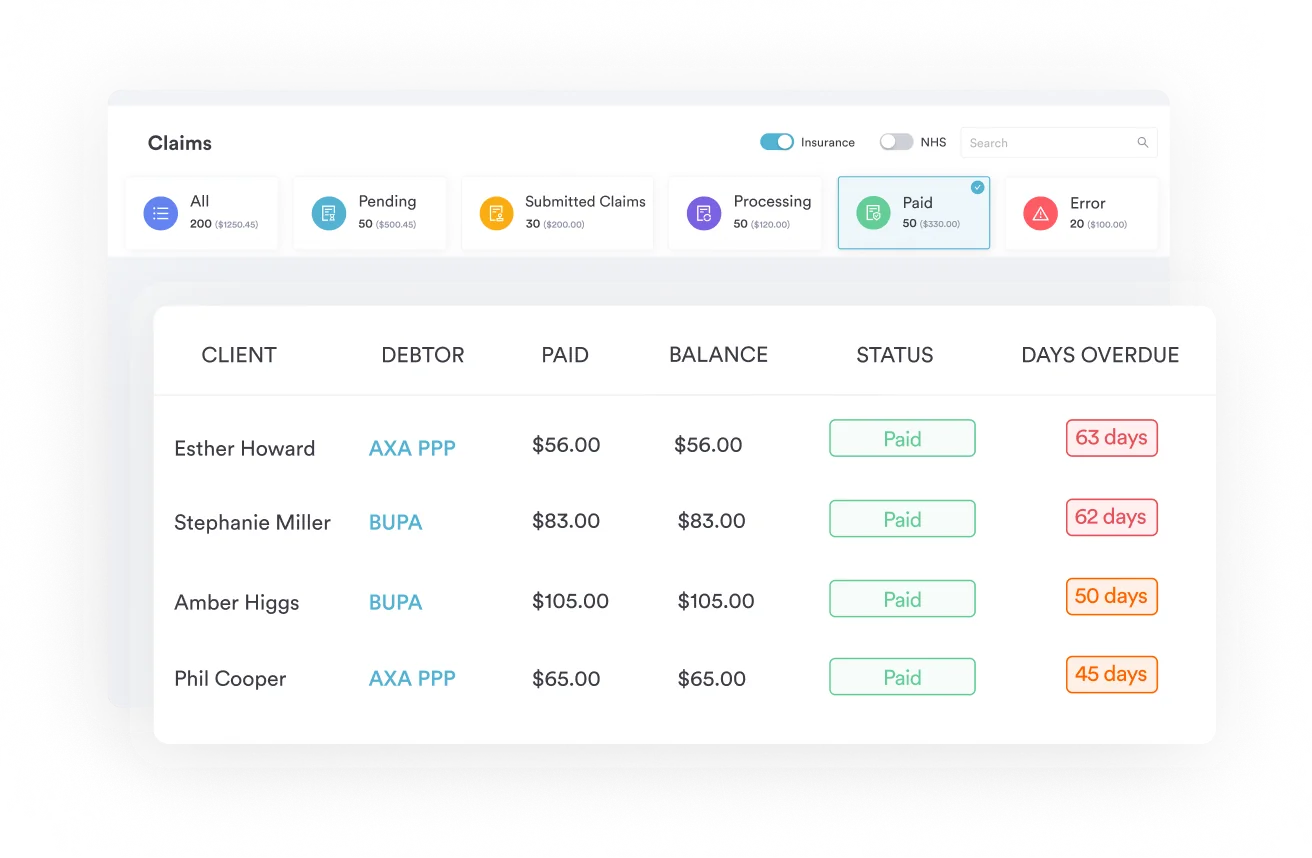

Pabau helps South African ophthalmology practices manage CCSD claims, track pre-auth status, and flag incomplete procedure notes before submission. See how it works in your practice.

Practices with international patients, or billing staff who cross-reference CCSD against CPT documentation, often need to locate the US equivalent for paracentesis of the eye. No competitor CCSD reference page maps C6920 to its CPT counterpart; this comparison is provided for reference only and must not be used for US Medicare or insurance billing.
The CPT system uses two codes where CCSD uses one. CPT 65800 is the closest functional equivalent to C6920 for simple aqueous aspiration. CPT 65810 adds components (vitreous release or adjunct treatment) that under CCSD would require separate codes or clinical justification to bill alongside C6920.
CCSD code C6920 is straightforward in principle but consistently generates claim rejections because of two preventable documentation gaps: missing laterality modifiers and absent IOP readings. Both are fixed at the template level, not the billing level.
Pabau’s claims management and digital forms features allow South African ophthalmology practices to build C6920-specific procedure-note templates, track pre-auth status by scheme, and manage denial appeals from a single system. Book a demo to see how Pabau handles CCSD claim workflows.

Need a structured approach to CCSD claim submissions? Bupa CCSD codes overview covers the code structure and submission requirements for UK and South African private health insurers.
Struggling with recurring claim denials? Denial management in healthcare explains how to categorise denial reason codes, identify root causes, and build a systematic appeal workflow.
Want to reduce documentation errors before claims are submitted? Digital clinical forms let you build procedure-note templates with mandatory fields that prompt for laterality, IOP readings, and technique details before a note is finalised.
CCSD code C6920 covers paracentesis of the eye, meaning the aspiration of aqueous humour from the anterior chamber of the eye by a registered ophthalmologist. It includes the procedure itself and associated topical anaesthesia but excludes specimen laboratory analysis, vitreous tap, and any major co-procedure performed in the same sitting without separate clinical justification.
The procedure note must document the clinical indication (with matching ICD-10 code), the eye operated on (right or left), needle gauge and approach, volume of aqueous aspirated, pre-procedure and post-procedure IOP readings, anaesthesia type, and the clinical outcome. Missing the laterality statement or IOP readings are the two most common reasons medical aids flag C6920 claims for additional information.
Accepted supporting diagnoses include H40.x (glaucoma, particularly acute angle-closure), H34.1 (central retinal artery occlusion), H44.x (endophthalmitis requiring aqueous sampling), B00.5x (herpetic ocular disease with PCR sampling), and C69.x (suspected intraocular malignancy). Code to the highest available level of specificity, including the laterality sub-code where available.
For emergency procedures (acute CRAO, acute glaucoma), most schemes waive pre-authorisation and require only retrospective notification within 24-48 hours. Elective paracentesis (diagnostic aqueous sampling, for example) typically requires pre-authorisation from major schemes including Discovery Health and Bonitas. Confirm the current position with each scheme directly, as rules change annually.
C6920 may be co-billed with a vitreous tap or laboratory specimen code when those procedures are separately performed and documented. Billing alongside a same-day consultation is generally not accepted by most schemes. Billing C6920 alongside trabeculectomy or cataract surgery requires a separate operative note clearly establishing that the paracentesis was a distinct service with an independent clinical indication.
CPT 65800 (paracentesis of anterior chamber of eye with removal of aqueous) is the closest US equivalent to CCSD code C6920 for simple aqueous aspiration. CPT 65810 applies when additional intraocular work is performed alongside the paracentesis. This mapping is for reference only; do not use CCSD codes for US Medicare or private insurance billing.