CPT code 63081: Vertebral corpectomy, cervical spine
CPT code 63081: official descriptor and procedure overview CPT code 63081 descri...

Last Updated: Oct 6, 2026
C4620 is the CCSD code for lamellar graft (keratoplasty) to cornea. It covers a partial-thickness corneal transplant, most often deep anterior lamellar keratoplasty (DALK), in which the patient keeps their own endothelium.
The code sits in Chapter 4, Eye and orbital contents, under the cornea section (4.6.0). A full-thickness perforating graft is billed as C4630, and Descemet's stripping endothelial keratoplasty (DSEK) as C4640.
Let Pabau's smart automation suggest the right codes, reduce claim denials, and keep your practice compliant—effortlessly.
Automate repetitive tasks and focus on what matters most—your patients.
Reduce coding errors and ensure compliance with the latest regulations.
Clean claims, fewer denials, and faster reimbursements.
Powerful insights and reporting to help your practice thrive.
HIPAA compliant SOC 2 certified GDPR-compliant Trusted by 4,000+ clinics worldwide

CCSD Code C4620 covers a lamellar (partial-thickness) corneal graft, such as deep anterior lamellar keratoplasty (DALK), in which the patient keeps their own endothelium.
A full-thickness perforating graft is C4630, and Descemet’s stripping endothelial keratoplasty (DSEK) is C4640. Endothelial grafts such as DSAEK and DMEK never go under C4620.
C4620 cannot be billed with C4630, C4640, C4650 or C4710 for the same operation, so pick the one code that matches the operative note.
UK private medical insurers expect pre-authorisation before surgery, a WHO ICD-10 diagnosis on the claim and an operative note that names the technique.
Pabau stores CCSD codes, authorisation numbers and operative records together and submits claims to insurers through Healthcode.
CCSD Code C4620 is the code for a lamellar graft (keratoplasty) to cornea in the CCSD schedule. CCSD stands for Clinical Coding and Schedule Development. The CCSD Group maintains the schedule for the UK independent healthcare sector. Private medical insurers such as Bupa, AXA Health, Aviva and Vitality use it to pay consultants.
The official descriptor is Lamellar graft (keratoplasty) to cornea. The code sits in Chapter 4 (Eye and orbital contents), in sub-chapter 4.6.0, Cornea. It covers a corneal transplant in which only part of the corneal thickness is replaced with donor tissue.
In practice, C4620 is the code for anterior lamellar work, most often DALK. The surgeon removes the diseased stroma and keeps the patient’s own Descemet’s membrane and endothelium. Endothelial grafts have their own code, C4640, and a full-thickness graft is C4630.
The cornea has five layers: epithelium, Bowman’s layer, stroma, Descemet’s membrane and endothelium. A lamellar graft replaces the front layers and leaves the inner layers in place. Because the patient’s endothelium stays, the risk of endothelial rejection is lower than after a full-thickness graft.
Techniques you may see named in an operative note for C4620 include:
Typical reasons for surgery are keratoconus, stromal scarring after infection or injury, and stromal dystrophies. Disease that sits in the endothelium, such as Fuchs endothelial dystrophy, needs an endothelial graft instead, which you bill under C4640.
Four neighbouring codes in the cornea section describe other grafts or corneal repairs. The CCSD schedule lists all four as unacceptable combinations with C4620, so only one of them goes on the claim for a single operation. The table below shows how to tell them apart.
The CCSD schedule is the authoritative source for descriptors and combination rules. You can check how an individual insurer lists the code with the Bupa code search. For a wider view of the schedule, see our guide to CCSD procedure codes for Bupa claims.
Many people call DSAEK and DMEK posterior lamellar grafts, so teams often mix them up with C4620. In the CCSD schedule they belong to the endothelial keratoplasty code, C4640. Billing an endothelial graft as C4620 puts the wrong procedure on the claim, and the insurer is likely to query or refuse it.
The most common coding error on corneal grafts is a mismatch between the code and the graft thickness. If the patient keeps any of their own posterior layers, the graft is lamellar and the code is C4620. If the surgeon replaces the full thickness of the cornea, the code is C4630.
A planned DALK can become a perforating graft if Descemet’s membrane ruptures during dissection. When that happens, the claim must carry C4630, not C4620. Code from what the operative note says the surgeon did, not from the theatre schedule.
UK insurers expect a diagnosis code on the claim alongside the CCSD code. UK private claims use the WHO ICD-10 classification, not the US ICD-10-CM edition. The codes below are the ones most often paired with an anterior lamellar graft.
Pick the code that matches the indication written in the consultant’s notes. Where you code a stromal dystrophy under H18.5, make sure the operative note names the stromal type. Otherwise the insurer may read the diagnosis as an endothelial condition that fits C4640.
Read the clinical indication in the operative note before you choose the ICD-10 code. If the note records keratoconus (H18.6) but the claim carries a corneal scar code, the mismatch with the authorisation is likely to trigger a query.
UK private medical insurers expect you to get authorisation for corneal graft surgery before it goes ahead. The patient usually contacts their insurer to get an authorisation number once the consultant has recommended surgery. Requirements differ by insurer and by policy, so check the insurer’s provider guidance before you list the patient.
Information an insurer may ask for includes:
Confirm the authorisation number before the day of surgery and record it against the booking. If the plan changes, for example from a lamellar to a perforating graft, tell the insurer and ask them to amend the authorisation.
An insurer can ask for the clinical records behind any claim, and an incomplete record is a common reason for a refused corneal graft claim. Structured digital forms and clinical record management make it easier to capture each item at the point of care.

Keep the following on file for each C4620 operation:
Most UK consultants send insurer claims electronically through Healthcode, the clearing house used across the UK private sector. Getting each field right the first time avoids a cycle of queries and resubmissions that delays payment.
C4620 covers the surgeon’s fee. The anaesthetist bills separately for the anaesthetic, and the hospital invoices the insurer for theatre time, the bed and other hospital charges. Do not fold any of these into the consultant’s C4620 claim.
In the UK, donor corneas come from licensed tissue banks such as NHS Blood and Transplant Tissue and Eye Services. The hospital normally orders the cornea, so the tissue charge sits with the hospital, outside the consultant’s fee. Check how the hospital and the insurer handle tissue costs before you assume the policy pays for them.
Insurers refuse corneal graft claims more often than routine ophthalmology claims. They involve several documents and three codes that are easy to confuse. Most refusals trace back to one of the causes below.
Billing does not end with the operation. Follow-up appointments, rejection episodes and further surgery each raise their own coding questions.
Insurers set their own rules on which post-operative appointments the surgical fee includes. Check the insurer’s terms before you bill follow-up visits separately. Where a rejection episode needs treatment, code the visit with the matching consultation code. Use the WHO ICD-10 code T86.8, failure and rejection of other transplanted organs and tissues, as the diagnosis.
If the graft needs surgical revision, the code is C4650. If the surgeon replaces a failed graft with new donor tissue, code the graft performed and get a fresh authorisation first. Insurers publish their own fee schedules, such as the Aviva fee schedule and the Vitality fee finder.
A private corneal service juggles several jobs for each graft. Staff chase authorisation, check that the code matches the operative note and keep records ready for an insurer query. Practice management software like Pabau keeps those jobs in one system.
In Pabau, you store CCSD codes against your services, so billing staff pick C4620 or C4630 from a set list instead of typing them. You record authorisation numbers against each booking, and operative notes and forms sit on the patient record. You then submit and track claims through Healthcode claims management to insurers such as Bupa, AXA Health and Aviva.
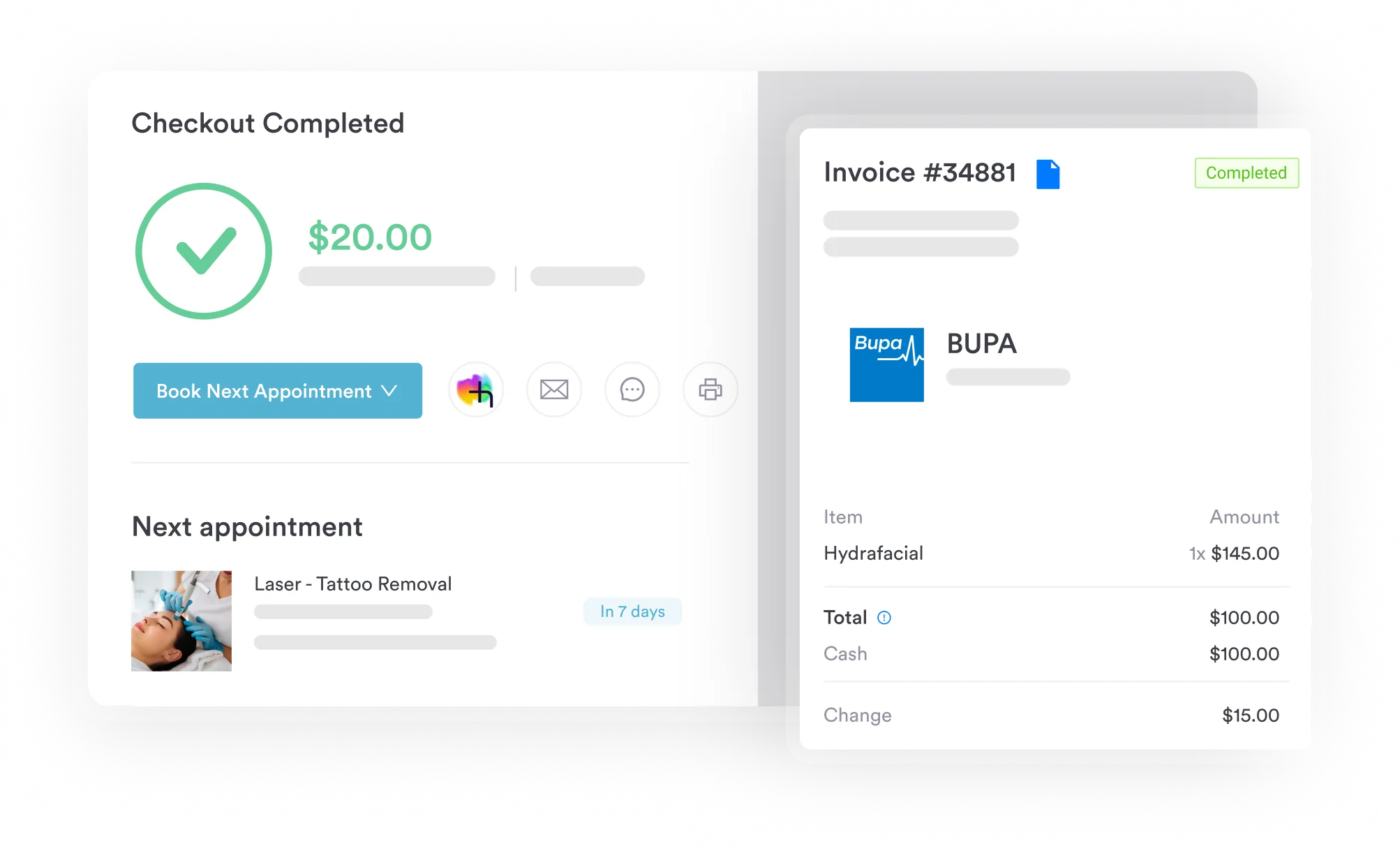
The result is fewer queried claims and faster payment. Consultants working across several hospitals keep their billing, records and theatre lists in one place, instead of in separate spreadsheets.

Pabau helps UK private ophthalmology practices store CCSD codes, track pre-authorisation and submit claims through Healthcode. See how it works for your practice.

An insurer pays C4620 when the record shows a partial-thickness graft that left the patient’s endothelium in place. Most of the work that protects the claim happens in theatre and in the operative note, not at the invoice stage.
Name the technique, record any conversion to a perforating graft and keep endothelial grafts on C4640. Do that, and the most common grounds for refusal disappear. To see how Pabau keeps CCSD coding, authorisation and Healthcode claims in one workflow, book a demo.

Need the wider CCSD reference for Bupa? CCSD procedure codes for Bupa claims covers code structure and submission guidance for Bupa-recognised consultants.
Checking how fees vary by code? Bupa procedure codes fee schedule explains how CCSD fees and reimbursement work across specialties.
Billing a corneal wound repair? CCSD Code C4710 covers repair of a corneal wound and how it differs from a graft.
Coding other Chapter 4 eye surgery? CCSD Code C6150 explains how revision of previous glaucoma surgery is billed.
CCSD Code C4620 is used to bill a lamellar graft (keratoplasty) to cornea. It covers partial-thickness corneal grafts, such as DALK, in which the patient keeps their own endothelium.
C4620 is a lamellar graft that replaces only part of the corneal thickness. C4630 is a perforating graft that replaces the full thickness. If a planned lamellar graft is converted to full thickness in theatre, bill C4630.
No. DSAEK and DMEK are endothelial grafts, and the CCSD schedule codes endothelial keratoplasty as C4640, Descemet’s stripping endothelial keratoplasty (DSEK). C4620 is for anterior lamellar grafts such as DALK.
Not for the same operation. The CCSD schedule lists C4630, C4640, C4650 and C4710 as unacceptable combinations with C4620, so bill the one code that describes the graft performed.
UK private medical insurers expect corneal graft surgery to be authorised before it goes ahead. The patient usually gets an authorisation number from their insurer, and requirements vary by insurer and policy.
UK claims use WHO ICD-10. Common pairings are H18.6 keratoconus, H17.1 or H17.8 corneal scars and opacities, H18.5 stromal dystrophies and H18.7 other corneal deformities.