CPT code 63081: Vertebral corpectomy, cervical spine
CPT code 63081: official descriptor and procedure overview CPT code 63081 descri...

Last Updated: Oct 6, 2026
C6150 is the CCSD code for revision of previous glaucoma surgery (including topical local anaesthetic). It applies when a consultant surgically revises an earlier glaucoma operation, such as a failed trabeculectomy or a malfunctioning tube shunt.
The code sits in section 4.8 (iris and anterior chamber) of Chapter 4 and carries a Major complexity rating. A first trabeculectomy is billed as C6010 and a first tube shunt as C6051 or C6052. Bleb needling has its own code, C6180.
Let Pabau's smart automation suggest the right codes, reduce claim denials, and keep your practice compliant—effortlessly.
Automate repetitive tasks and focus on what matters most—your patients.
Reduce coding errors and ensure compliance with the latest regulations.
Clean claims, fewer denials, and faster reimbursements.
Powerful insights and reporting to help your practice thrive.
HIPAA compliant SOC 2 certified GDPR-compliant Trusted by 4,000+ clinics worldwide

CCSD Code C6150 covers surgical revision of a previous glaucoma operation, not a first-time procedure.
First-time surgery has its own codes: C6010 for trabeculectomy, and C6051 or C6052 for aqueous shunt tube surgery.
Bleb needling is billed under its own code, C6180, and cyclodiode laser treatment under C6720.
The surgeon’s fee includes topical or local anaesthetic, so it is never charged as a separate line.
Practice management software like Pabau supports CCSD code selection, authorisation tracking and claim submission through Healthcode.
CCSD Code C6150 is the procedure code for revision of previous glaucoma surgery (including topical local anaesthetic) under the UK private medical insurance coding framework. It sits in section 4.8 (iris and anterior chamber) of Chapter 4 and carries a Major complexity rating.
The Clinical Coding and Schedule Development (CCSD) Group publishes and maintains the code. The major UK private medical insurers (PMI) use its schedule. It applies only to private care. Hospitals record NHS-funded glaucoma surgery with OPCS-4 procedure codes instead.
The “revision” element is the defining characteristic. C6150 applies only when an earlier incisional glaucoma operation exists and now needs surgical correction. A consultant billing C6150 must be able to document the original operation and the clinical reason for revising it. Billing this code for a first-time glaucoma operation is a coding error and a denial trigger.
C6150 is one of several glaucoma codes in section 4.8, and the neighbouring codes section below shows how to choose between them. The wider schedule of CCSD codes for consultants covers the rest of Chapter 4.
C6150 captures the surgical revision of a previously performed glaucoma operation. The main clinical scenarios are trabeculectomy revision, surgical bleb revision and glaucoma drainage device revision.
Bleb needling is not on this list because it has its own code, C6180. The section on bleb needling below explains where the line falls.
The common thread is that C6150 requires a documented prior operation. A history that shows only laser treatment, such as trabeculoplasty or cyclodiode, may not meet that threshold. Insurers generally read “surgery” as an incisional or implant-based procedure.
The official descriptor for C6150 reads “including topical local anaesthetic”. The surgeon’s fee therefore already covers topical or local anaesthetic given by the operating surgeon. Charging it as a separate line alongside C6150 is an unbundling error, and the insurer will refuse that line.
An anaesthetist’s fee is a different matter. Insurer schedules list an anaesthetist fee against C6150. Freedom Health Insurance’s schedule for 2026 lists £550 for the surgeon and £285 for the anaesthetist. That fee applies only when an anaesthetist attends, for example to give sedation or a general anaesthetic.
The operative note should record the anaesthetic method and who gave it. Where an anaesthetist bills, they claim under the same procedure code through their own insurer registration. Confirm each insurer’s current fee and rules on its provider portal, as schedules change.
A typical C6150 revision follows a structured sequence. Understanding the clinical steps helps practitioners write operative notes that satisfy insurer documentation requirements and survive pre-authorisation review.
Each of these steps belongs in the operative note. Recording them in the same order every time gives the insurer a consistent record to review, and gives the next surgeon a clear surgical history.
C6150 sits among several glaucoma codes in CCSD Chapter 4. Selecting an adjacent code in error is a common audit finding for ophthalmology practices. The table below lists the key codes, using the descriptors and complexity ratings in Freedom Health Insurance’s Chapter 4 schedule (January 2026).
The most consequential distinction is between primary surgery and revision. A first trabeculectomy is C6010, and a first tube shunt is C6051 or C6052. Insurers will query or refuse a claim that bills a revision under a primary code, or a primary operation under C6150. Two questions settle the choice, as the diagram below shows.
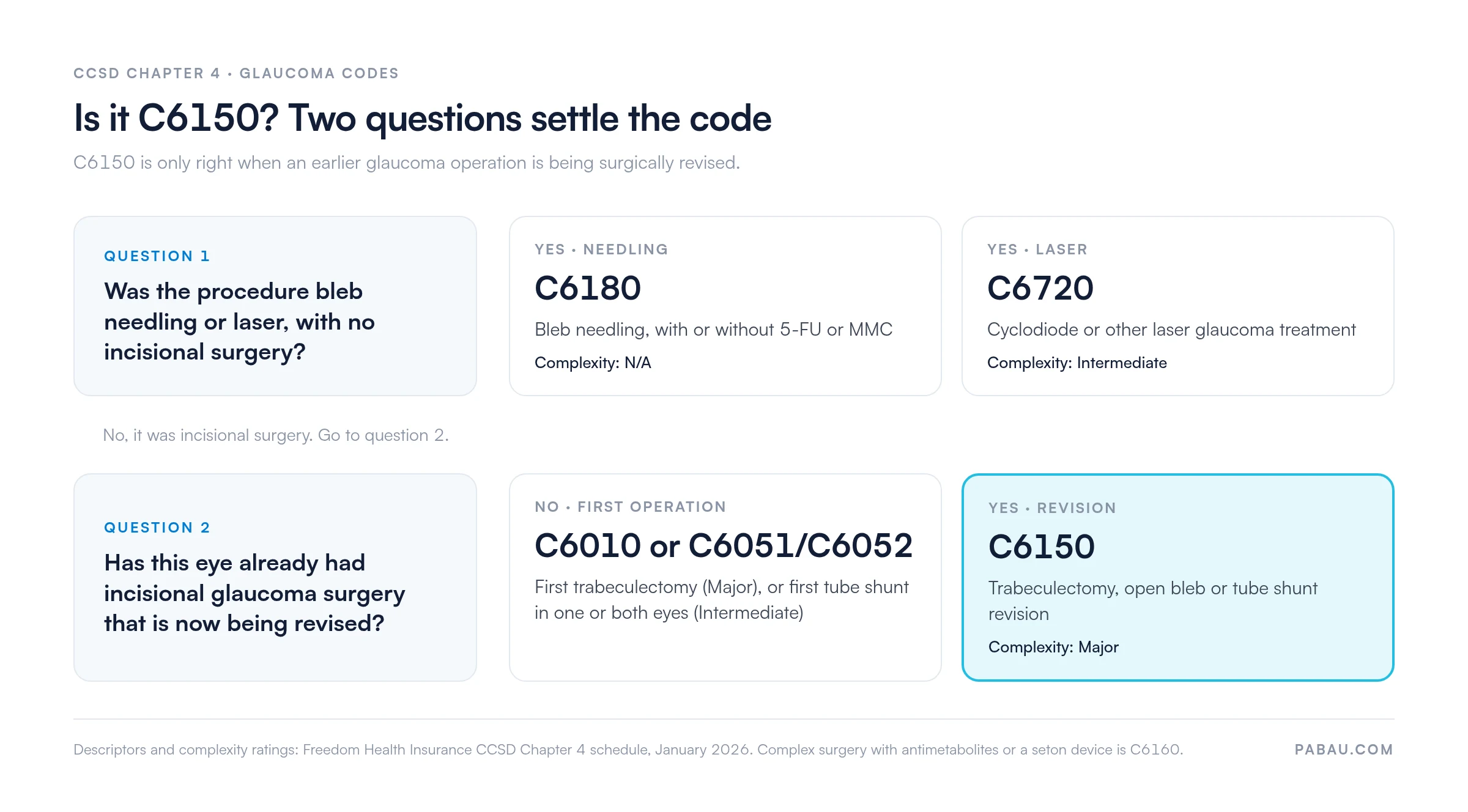
The complexity ratings differ too. C6150 is Major, while primary tube surgery is Intermediate, so the surgeon’s and anaesthetist’s fees change with the code. Check current fees and descriptors on each insurer’s provider portal before quoting a patient.
Knowing the exclusions prevents unbundling errors and incorrect code selection. The following are outside the scope of C6150.
Bleb needling is one of the most frequent follow-up procedures after trabeculectomy, and it has a dedicated code. C6180 covers “Bleb needling +/- antimetabolites (including topical or local anaesthetic)”. It sits in section 4.5 (conjunctiva) of Chapter 4, not alongside C6150 in section 4.8.
So a needling episode, with or without 5-FU or MMC, is billed as C6180 rather than C6150. That holds whether the needling happens at the slit lamp or in theatre. Freedom Health Insurance’s 2026 schedule lists a £100 surgeon fee for C6180 and no anaesthetist fee.
C6150 is the right code when the surgeon goes further and surgically revises the filtration site. Examples include open bleb revision, excision of an encapsulated bleb, or resuturing of the scleral flap. The operative note should make that difference plain. Freedom Health’s schedule pays £550 for C6150 against £100 for C6180, so insurers look hard at which one was billed.
A standalone subconjunctival injection with no needling is neither C6180 nor C6150. It maps to C4340 (subconjunctival injection). Verify every code against the current CCSD schedule before submitting.
Tube shunt revision covers a range of surgical scenarios: repositioning a migrated tube, relieving tube occlusion, patching an eroding tube or adjusting flow. Where the operative record confirms that the original device is being revised rather than removed and replaced, C6150 is the appropriate code.
Revision and replacement are billed differently, so the note has to say which one happened. Revision means the original device stays in place after the procedure. Inserting a new tube is aqueous shunt tube surgery, which is C6051 or C6052, so a replacement case can involve a different code sequence. Confirm the combination with the insurer before submitting, as complex tube shunt cases are a common audit finding.
For cross-referencing complex ophthalmic procedure combinations, the Healix fee schedule publishes CCSD-based fee information that is useful alongside each insurer’s own schedule.
A C6150 operative note must show that an earlier glaucoma operation exists and that the current procedure surgically revises it. It must also record how anaesthesia was given. Missing any one element gives the insurer grounds for refusal.
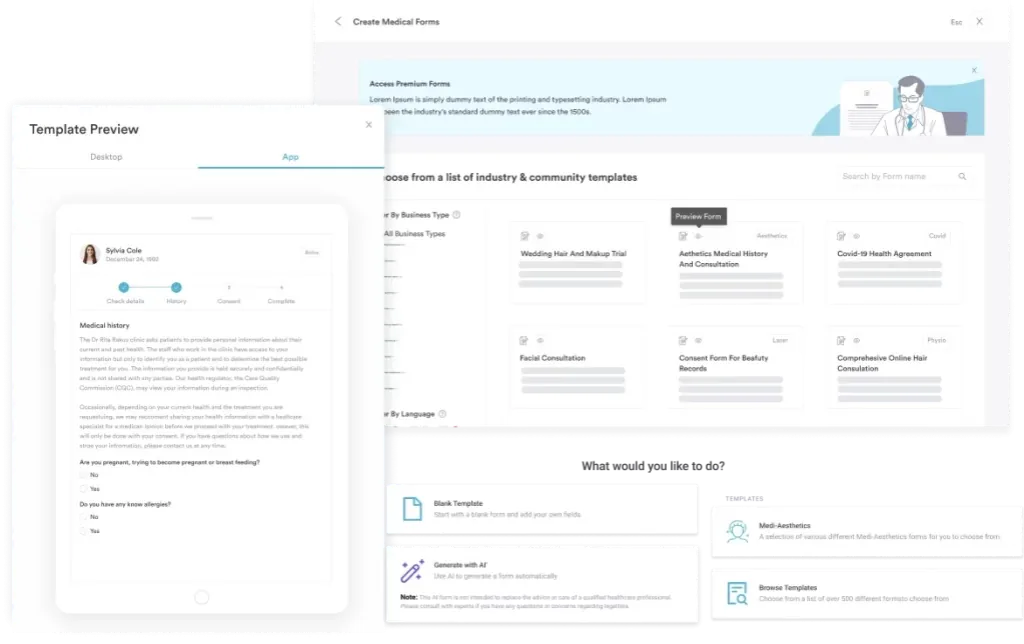
A procedure-specific operative note template prompts the surgeon to capture each of these fields at the time of surgery. With Pabau’s digital forms, the practice builds that template once and reuses it for every revision. Structured records also make insurer audit queries faster to answer.
UK private medical insurers expect glaucoma surgery to be authorised before it goes ahead. Operating without a valid authorisation reference is a leading cause of outright refusal. Requirements differ by insurer, and policies change, so always check each insurer’s provider portal. The table below summarises typical requirements.
Consultants moving from the NHS into private ophthalmology often underestimate the admin of tracking authorisation across several insurers. Recording each patient’s authorisation reference, expiry date and approved code in one system prevents billing delays. Use the Bupa CCSD procedure codes reference to cross-check code recognition before submitting.
External portal links for reference: Bupa code search, AXA Health SpecialistForms, and Aviva fee schedule.
Most C6150 claims stand alone, but some revision episodes involve more than one procedure. A few rules keep a combined claim clean.
Most C6150 denials are avoidable. They cluster around a small number of administrative and documentation failures rather than clinical disputes.
A short check before submission catches most of these errors while the invoice is still in the practice. The tip below lists the four points worth confirming on every C6150 claim.
Before submitting any C6150 claim, run a four-point check. Confirm the authorisation reference is valid and unexpired, and that the operative note names the prior surgery. Check the procedure was a surgical revision rather than needling (C6180) or laser (C6720). Finally, confirm the billing consultant number matches the operating surgeon.
Private ophthalmology practices submitting CCSD claims juggle several jobs at once. They track authorisation across insurers, invoice with the correct code and keep operative records detailed enough to survive audit. Practice management software like Pabau brings those jobs into one system.
Pabau stores CCSD procedure codes against services, so billing staff select C6150, C6010 or C6180 from a set list rather than typing them. Pabau ties invoices to the procedure code, which reduces transcription errors. It also records authorisation reference numbers against each booking. Claims are submitted electronically through Healthcode claims management to insurers such as Bupa, AXA Health and Aviva.
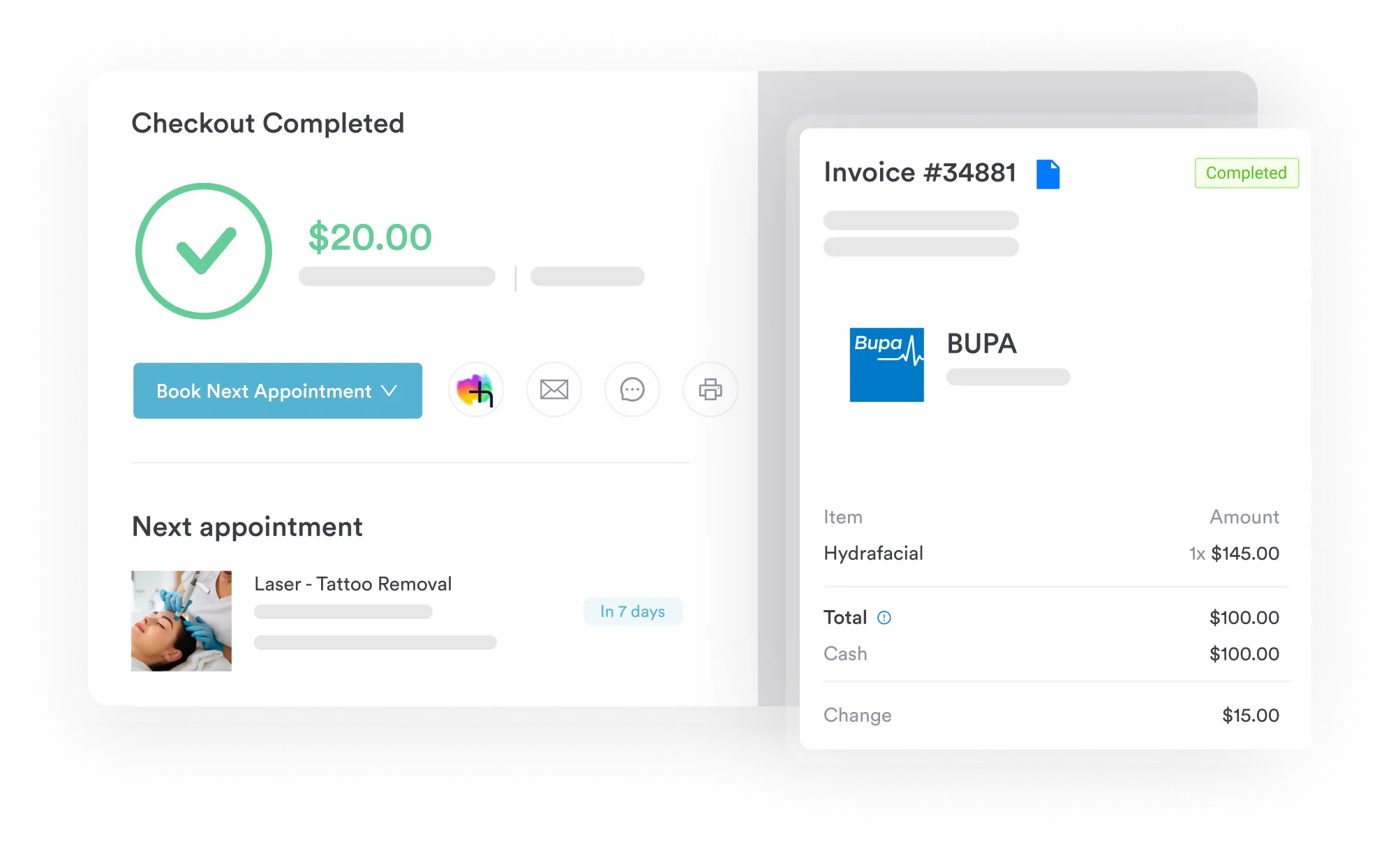
The outcome is fewer refused lines and faster payment. Practices with several consultants or sites keep billing, operative records and theatre scheduling in one system, so month-end reconciliation stops meaning three spreadsheets.

Pabau helps UK private ophthalmology practices manage CCSD codes, track pre-authorisation status and submit claims through Healthcode. See it in action.

An insurer pays C6150 when the notes prove two facts: an earlier glaucoma operation, and a surgical revision of it. So the work that protects the claim happens in theatre, long before the invoice is raised.
Name the original operation, record the revision technique and the anaesthetic method, and confirm authorisation before the patient is listed. That costs a few minutes per case and removes the most common grounds for refusal. To see how Pabau keeps CCSD coding, authorisation and Healthcode claims in one workflow, book a demo.

Need the wider CCSD reference for Bupa? Bupa CCSD procedure codes covers code structure, Chapter 4 eye codes and submission guidance for Bupa-recognised consultants.
Checking how fees vary by code? Bupa procedure codes fee schedule explains how CCSD fee bands and reimbursement work across surgical specialties.
Billing another anterior chamber procedure? CCSD Code C6930 covers anterior chamber injection, another eye-chapter code that ophthalmology practices bill regularly.
Combining glaucoma and cataract work? CCSD Code C7123 covers phacoemulsification of cataract, useful when an insurer applies multiple-procedure rules.
CCSD Code C6150 is the code for revision of previous glaucoma surgery, including topical local anaesthetic, under the UK private medical insurance schedule. It covers surgical revision of an earlier trabeculectomy, open bleb revision and glaucoma drainage device revision. A prior incisional glaucoma operation must already exist.
Yes. The descriptor includes topical local anaesthetic, so the surgeon’s fee already covers topical or local anaesthetic given by the surgeon. Charging it as a separate line is an unbundling error. An anaesthetist who attends to give sedation or a general anaesthetic bills their own fee under the same code.
No. Bleb needling, with or without antimetabolites such as 5-FU or MMC, has its own CCSD code, C6180. That applies whether the needling happens at the slit lamp or in theatre. C6150 is used only when the surgeon surgically revises the filtration site, for example with an open bleb revision.
The operative note should record the type and date of the prior glaucoma surgery. It should state the indication, such as raised IOP, an encapsulated bleb or tube migration. It should also describe the technique, the anaesthetic method and a post-operative IOP measurement. Missing elements give the insurer grounds for refusal.