HCPCS code C1731: Catheter billing, OPPS reimbursement, and denial guide
HCPCS code C1731: Official descriptor and code series context HCPCS code C1731 i...

Last Updated: Oct 8, 2026
Billable Code
CCSD code C2910 is the UK private procedure code for puncto-canaliculoplasty: Surgery on the lacrimal punctum, the canaliculus, or both.
It covers torn canaliculus repair and punctal dilatation. CCSD has no standalone punctoplasty code, so punctal-only work also codes as C2910.
Let Pabau's smart automation suggest the right codes, reduce claim denials, and keep your practice compliant—effortlessly.
Automate repetitive tasks and focus on what matters most—your patients.
Reduce coding errors and ensure compliance with the latest regulations.
Clean claims, fewer denials, and faster reimbursements.
Powerful insights and reporting to help your practice thrive.
HIPAA compliant SOC 2 certified GDPR-compliant Trusted by 4,000+ clinics worldwide

CCSD code C2910 covers puncto-canaliculoplasty: Surgery on the punctum, the canaliculus or both, including torn canaliculus repair and punctal dilatation.
Punctal-only work falls within C2910, because CCSD has no standalone punctoplasty code.
Primary indications are punctal stenosis, canalicular stenosis, a torn canaliculus, post-infective scarring, and drug-induced obstruction.
Operative notes must document laterality, technique, and whether a stent was placed, because missing detail is a leading denial reason.
A stent placed during C2910 isn’t separately coded under C2550, which covers lacrimal intubation as a sole procedure.
Pabau’s claims management software helps private ophthalmology practices track C2910 submissions, manage pre-authorization workflows, and reduce claim errors.
CCSD code C2910 is the procedure code for puncto-canaliculoplasty in the UK private healthcare coding schedule. The official descriptor is “Puncto-canaliculoplasty.” It covers surgery on the lacrimal punctum, the canaliculus, or both. The punctum is the small opening at the inner corner of the eyelid. The canaliculus is the narrow channel leading from the punctum toward the lacrimal sac.
It is a Chapter 4 code in the CCSD code set, listed under the lacrimal system subchapter with reference Fd.043. It is used in UK private medical insurance (PMI) billing rather than NHS tariff coding.
C2910 is broader than its name suggests. CCSD created it by merging two older codes: C2910 “Repair of torn canaliculus” and C2920 “Dilatation of lacrimal punctum under G.A.” So C2910 covers torn canaliculus repair and punctal dilatation alike. Punctal-only work falls within C2910, and the code does not require canalicular involvement.
CCSD has no standalone punctoplasty code. The current C2920 is a different procedure: Insertion of canalicular or punctal plugs. Coders who reach for a separate punctal code alongside C2910 are coding a procedure the schedule does not split out.
Puncto-canaliculoplasty works on one or both of two adjacent structures. The punctum is the tear drainage inlet on the eyelid margin. The canaliculus is the 8–10 mm channel that carries tears from the punctum to the lacrimal sac.
The procedure is typically performed under local anesthesia as a day case. Operative time usually runs from 20 to 45 minutes, depending on the extent of the problem and whether a stent is placed.
The steps below describe a full punctal and canalicular repair. Punctal-only cases stop after dilatation or punctoplasty, and they still code as C2910.
Anesthesia is most commonly topical plus local infiltration for minor cases. General anesthesia is occasionally used for pediatric patients or complex reconstructions.
Epiphora (overflow tearing) caused by obstruction at the punctal or canalicular level is the primary driver for puncto-canaliculoplasty. The procedure is indicated when conservative management has failed. Imaging or probing should confirm the obstruction sits at the punctum or canaliculus rather than the nasolacrimal duct.
Common clinical indications include:
Pre-operative workup typically records the syringing result, probing findings, and any dacryocystography or dacryoscintigraphy. That record supports the C2910 claim as well as the clinical decision.
The CCSD lacrimal system section contains several codes that are easily confused with C2910. The distinguishing principle is anatomical level. C2910 covers work on the punctum, the canaliculus, or both. The related codes cover plugging, probing, sole-procedure intubation, or a bypass into the nose (dacryocystorhinostomy). The map below follows the tear’s path from the eyelid to the nose.
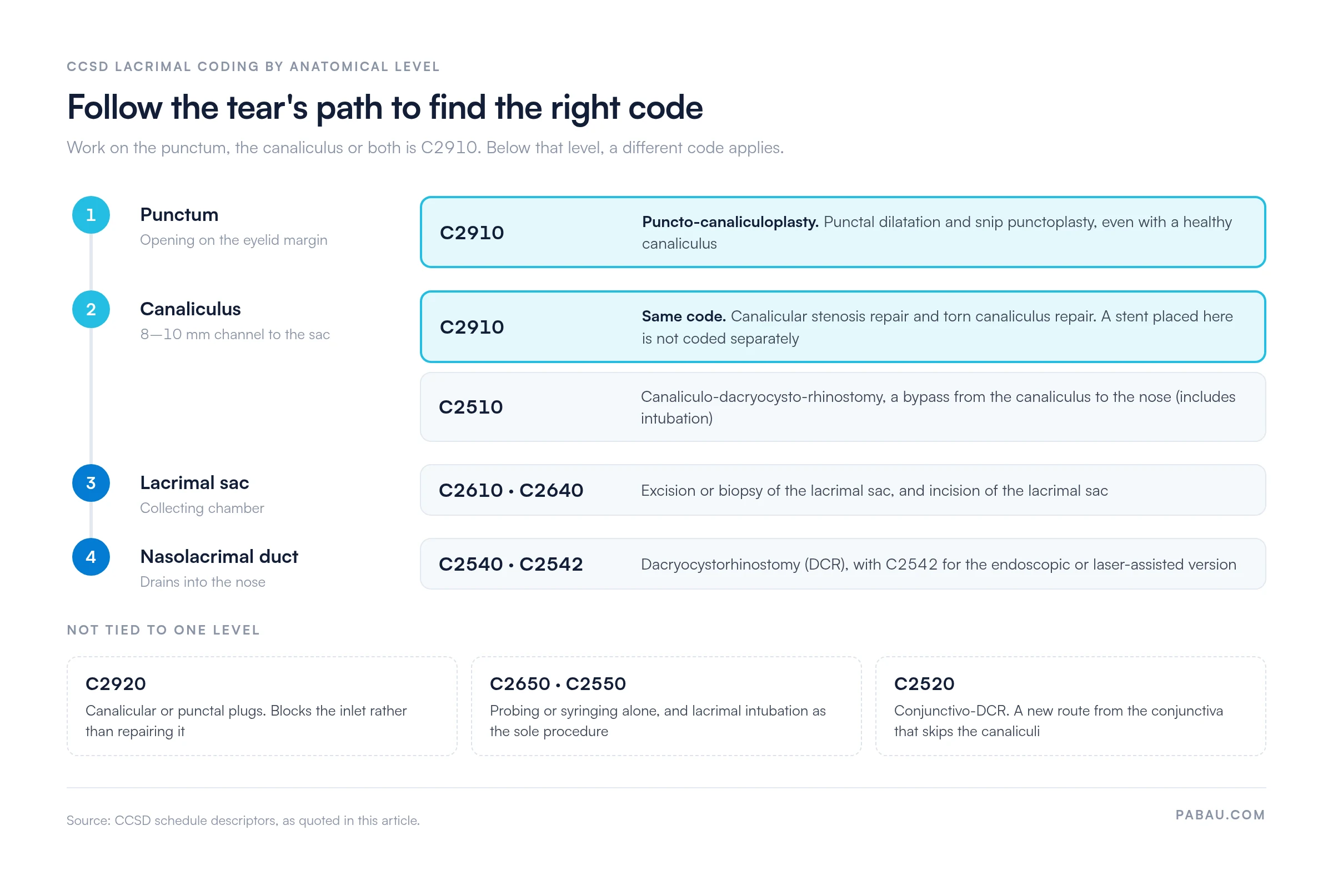
The lacrimal section also covers surgery on the sac itself. Excision or biopsy of the sac codes as C2610, and incision codes as C2640. Neither touches the punctum or canaliculus.
Punctal dilatation and snip punctoplasty both code as C2910, whether or not the canaliculus is also treated. CCSD has no standalone punctoplasty code, so there is no second punctal code to add.
Don’t read the old C2920 descriptor into the current one. Today C2920 means Insertion of canalicular or punctal plugs. Lacrimal intubation on its own bills as C2550, but a stent placed during C2910 does not.
Where the obstruction sits at the lacrimal sac or nasolacrimal duct, a DCR code (C2540 or C2542) fits instead. Where a canaliculus-to-nose bypass is built, C2510 applies. Check the operative note states which structure was treated, then match it to the descriptor.
A C2910 claim is only as strong as the operative note supporting it. UK private insurers audit lacrimal surgery claims closely. A note that doesn’t say whether the punctum, the canaliculus, or both were treated invites a query. One that reads like a DCR invites recoding.
The operative note for a C2910 claim should document all of the following:
For diagnosis coding, pair C2910 with the ICD-10 code describing the indication. Punctal and canalicular stenosis fall within the H04.5x range (stenosis and insufficiency of lacrimal passages).
A torn canaliculus is an injury, so it pairs with an ICD-10 injury code from the S00–T98 chapter instead. Verify the precise code against current ICD-10 tables before submitting, because insurers check specificity during medical necessity review.
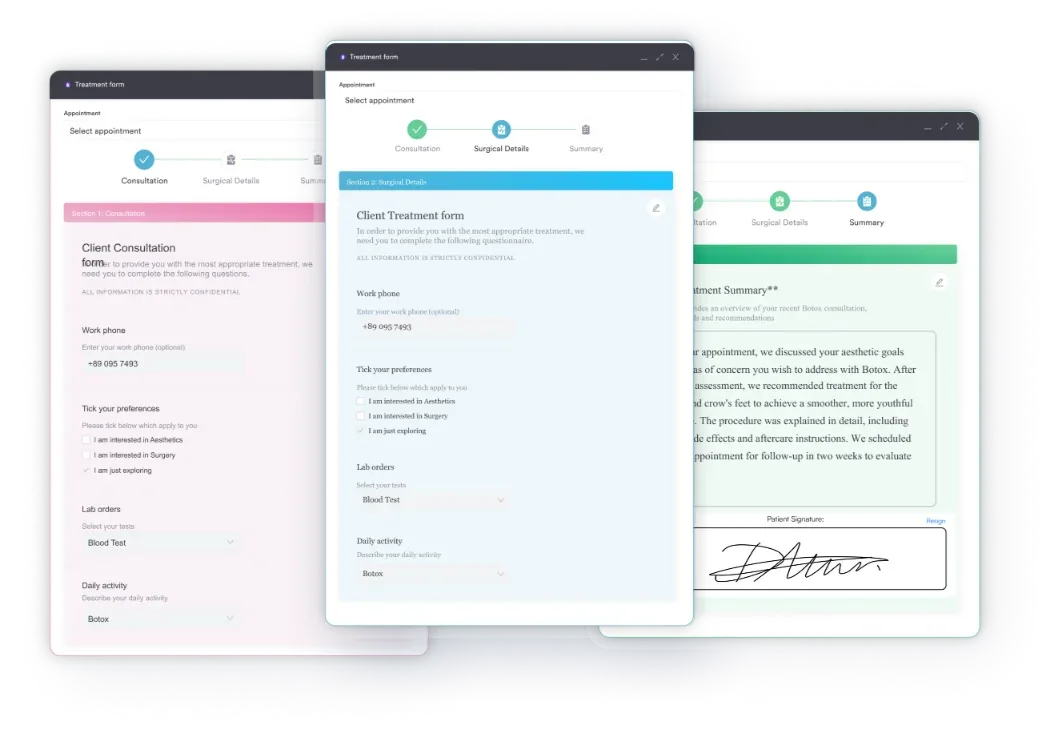
Digital consent and operative forms that capture laterality, technique, and the stent decision as structured fields reduce documentation errors before submission. In Pabau’s clinical forms software, the operative form prompts your team to complete the fields a claim needs at the point of care.
Bilateral cases: Where C2910 is performed on both eyes in the same operative episode, insurer rules differ. Most UK private insurers want either separate left and right line items with a bilateral reduction, or a bilateral modifier.
Check the CCSD Technical Guide (October 2025 edition) for the current bilateral coding business rules, and confirm with each insurer, as policies vary. Don’t assume a single line item at double the fee will be accepted.
Request a copy of the pre-operative syringing result and probing record alongside the operative note before submitting a C2910 claim. Insurers increasingly request this documentation during medical necessity review, and having it ready reduces turnaround time on queries.
Most major UK private medical insurers require pre-authorization for elective surgical eye procedures, and puncto-canaliculoplasty generally falls within that requirement. The table below reflects the general position of the main payers. Verify current rules with each insurer’s specialist coding or authorization team, because policies are reviewed annually and differ by policy type.
Recognition of specific CCSD codes varies across insurers and policy generations. Confirm C2910 recognition with each insurer’s specialist coding team before the procedure date. This matters most for newer or corporate policies, where the schedule in use may differ from the standard CCSD publication.
Our guide to Bupa CCSD codes shows how Bupa recognizes and reimburses CCSD-coded procedures. The Bupa procedure fee schedule and AXA Health portal are the most frequently updated references for the two largest UK payers.
C2910 claims fail for a predictable set of reasons. Most denials trace back to a thin operative note or the wrong code, and both can be caught before submission. The table below lists the most frequent denial triggers and the recommended resolution for each.
Before any C2910 claim goes out, check for a pre-authorization reference and an operative note that names the structures treated. A structured pre-submission review using private ophthalmology claims management tools can catch both problems before the claim leaves the practice.
Several concurrent coding questions arise when C2910 is part of a broader lacrimal or oculoplastic episode. The general rule from the CCSD schedule is that overlapping procedures on the same site in one session aren’t billed together. Distinct procedures or distinct sites may be billable together, subject to multiple procedure discount rules.
Verify every concurrent code decision against the current CCSD Technical Guide and confirm it with the insurer before submission. Business rules are reviewed annually. They may also differ between insurer fee schedules built on the same CCSD base schedule.
Record the stent type in the operative note, but don’t add C2550 for a stent placed during C2910. C2550 covers lacrimal intubation as a sole procedure. If an insurer queries the stent, check the CCSD Technical Guide before you respond.
In many private ophthalmology practices, the C2910 claim depends on three separate trails. The surgeon dictates the operative note, the billing team chases pre-authorization by email, and the stent decision lives in someone’s memory. Each handoff is a chance for a vague note, a missing approval, or a stray C2550 line.
Pabau pulls those three trails into one patient record. Operative and consent forms capture laterality, the structures treated, and the stent decision as structured fields. Claims management then tracks each submission from pre-authorization to payment and surfaces denial patterns by code and insurer.
The result is fewer queries on C2910 claims and faster payment when an insurer does ask for evidence. Your team spends less time rebuilding the story after a denial.
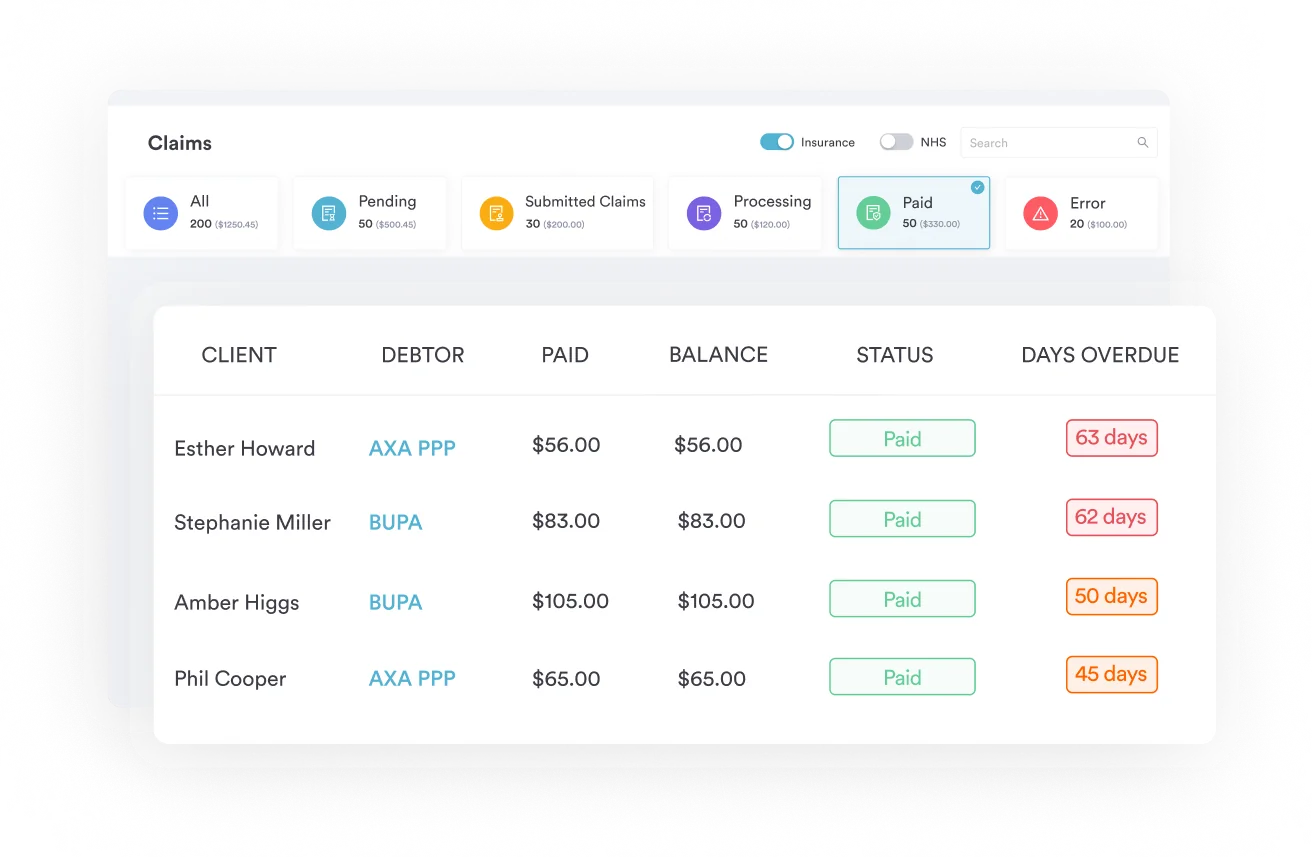

Pabau helps UK private practices track CCSD claim submissions, manage pre-authorization workflows, and catch documentation errors before they reach the insurer.

C2910 is wider than its name suggests, and that is where most coding mistakes start. Treat it as the single code for punctal and canalicular repair, including punctal-only work. Then stop looking for a punctoplasty or stent code to add beside it.
The claims that get paid first are the ones settled before surgery. Secure pre-authorization, agree any bilateral billing with the insurer, and make the operative note say exactly which structures were treated. The trade-off is a few minutes of admin per case against weeks of correspondence after a denial.
Book a demo to see how Pabau helps private ophthalmology practices submit accurate C2910 claims the first time.

Working with Bupa for ophthalmology procedures? Bupa CCSD codes and schedule guide covers how Bupa recognizes and reimburses CCSD-coded private procedures.
Need the full Bupa fee reference? Bupa procedure code fee schedule sets out the current fee levels and billing rules for Bupa-recognized codes.
Billing a stent on its own? CCSD code C2550: Lacrimal intubation billing guide explains when intubation stands as the sole procedure and how to document it.
Is the obstruction in the lacrimal sac? CCSD code C2640: Incision of lacrimal sac covers the code for opening the sac rather than repairing the canaliculus.
Removing or sampling sac tissue? CCSD code C2610: Excision or biopsy of lacrimal sac walks through the documentation insurers expect for sac excision and biopsy.
CCSD code C2910 is the UK private healthcare procedure code for puncto-canaliculoplasty. It covers surgery on the lacrimal punctum, the canaliculus, or both, including torn canaliculus repair and punctal dilatation. It sits in Chapter 4 (Eye and orbital contents) of the CCSD schedule, under the lacrimal system subchapter. It is used on claims to UK private medical insurers.
C2910 treats the punctum, the canaliculus, or both, at the top of the tear drainage system. A dacryocystorhinostomy (DCR) creates a new passage from the lacrimal sac into the nasal cavity, bypassing the nasolacrimal duct. CCSD codes DCR as C2540, or C2542 when endoscopic or laser assisted. The two address different levels and are not interchangeable.
Yes, most UK private medical insurers require pre-authorization for elective surgical eye procedures, including puncto-canaliculoplasty. Bupa, AXA Health, Freedom Health, Aviva, and Cigna UK all typically require prior approval. Confirm with each insurer’s specialist coding or authorization team before the procedure date, as rules vary by policy type.
No. CCSD has no standalone punctoplasty code. C2910 was created by merging the old C2910 (Repair of torn canaliculus) and C2920 (Dilatation of lacrimal punctum under G.A.). Punctal-only work therefore codes as C2910. The current C2920 is a different procedure: Insertion of canalicular or punctal plugs.
C2910 most commonly pairs with ICD-10 codes in the H04.5x range, which covers stenosis and insufficiency of lacrimal passages. A torn canaliculus is an injury, so it pairs with an ICD-10 injury code from the S00–T98 chapter instead. Verify the precise code against current ICD-10 tables based on the pathology documented. Subcode specificity affects insurer medical necessity review.
The most frequent rejection reasons are missing pre-authorization, operative notes that don’t say which structures were treated, and incorrect laterality coding. Another is billing C2550 for a stent placed during C2910, when C2550 covers lacrimal intubation as a sole procedure. Checking all four before submission removes most avoidable C2910 denial risk.