

CCSD code G5100: Bypass of duodenum billing guide
CCSD code G5100 bills a bypass that leaves the duodenum in place CCSD code G5100...

Last Updated: Oct 16, 2026
A4730 is the CCSD code for percutaneous cordotomy of spinal cord. Under CT or X-ray guidance, a consultant places a needle electrode in the spinothalamic tract of the upper cervical cord. After testing its position, they make a radiofrequency lesion that interrupts pain signals.
UK private medical insurers use the code, mostly for one-sided cancer pain such as that caused by pleural mesothelioma. Insurer schedules grade it Major Plus, and most insurers expect pre-authorisation. Claims go through Healthcode with a WHO ICD-10 diagnosis code, and CCSD adds no modifiers.
Let Pabau's smart automation suggest the right codes, reduce claim denials, and keep your practice compliant—effortlessly.
Automate repetitive tasks and focus on what matters most—your patients.
Reduce coding errors and ensure compliance with the latest regulations.
Clean claims, fewer denials, and faster reimbursements.
Powerful insights and reporting to help your practice thrive.
HIPAA compliant SOC 2 certified GDPR-compliant Trusted by 4,000+ clinics worldwide

CCSD code A4730 covers percutaneous cordotomy of spinal cord, an image-guided radiofrequency lesion of the spinothalamic tract used mainly for one-sided cancer pain.
CCSD is the UK private medical insurance schedule used by Bupa, AXA Health, Aviva and Vitality, and A4730 claims are invoiced through Healthcode.
Most insurers expect pre-authorisation for A4730, so secure a written reference before the procedure date and quote it on the invoice.
Pair A4730 with a WHO ICD-10 code for the underlying condition, such as C45.0 for mesothelioma of pleura. G89.3 is a US code and has no place on a UK claim.
CCSD codes carry no modifiers, so the operative note must state the side treated, the imaging used and the lesion details in plain words.
CCSD code A4730 is the UK private-insurance procedure code for percutaneous cordotomy of spinal cord. A consultant passes a needle through the side of the neck, usually at the C1–C2 level, under CT or X-ray guidance. An electrode at the needle tip is positioned in the spinothalamic tract, tested, and then used to make a radiofrequency lesion that interrupts pain signals.
The code comes from the CCSD schedule, maintained by the Clinical Coding and Schedule Development Group. Its members are Bupa, AXA Health, Aviva and Vitality, and most other UK private medical insurers bill on the same schedule. National Friendly’s schedule of fees grades A4730 as a Major Plus procedure.
A4730 applies only to the percutaneous, needle-based approach. Open operations on the cord are coded elsewhere on the schedule, A4500 among them, and our library of private practice CCSD codes lists the alternatives. Getting that boundary right is the first check on any cordotomy invoice.
Percutaneous cordotomy interrupts part of the spinothalamic tract, the pathway that carries pain and temperature signals from the body to the brain. Because the tract crosses over in the cord, a lesion on one side relieves pain on the opposite side of the body. The consultant reaches the tract through the skin, so no open spinal surgery is needed.
The procedure usually runs in six stages:
The patient’s responses during testing are what make the procedure safe. They are also what an insurer’s clinical reviewer looks for in the operative note.
Percutaneous cordotomy is reserved for severe, one-sided pain that has not responded to medication and less invasive procedures. Insurers weigh the indication when they review pre-authorisation, so the referral letter needs to make the case clearly.
The indications a clinical reviewer expects to see include:
Cases to flag early: midline or two-sided pain is a poor fit for the procedure. Cordotomy on both sides of the cervical cord carries a serious risk of breathing and bladder problems. A plan for the second side needs its own clinical justification and its own pre-authorisation.
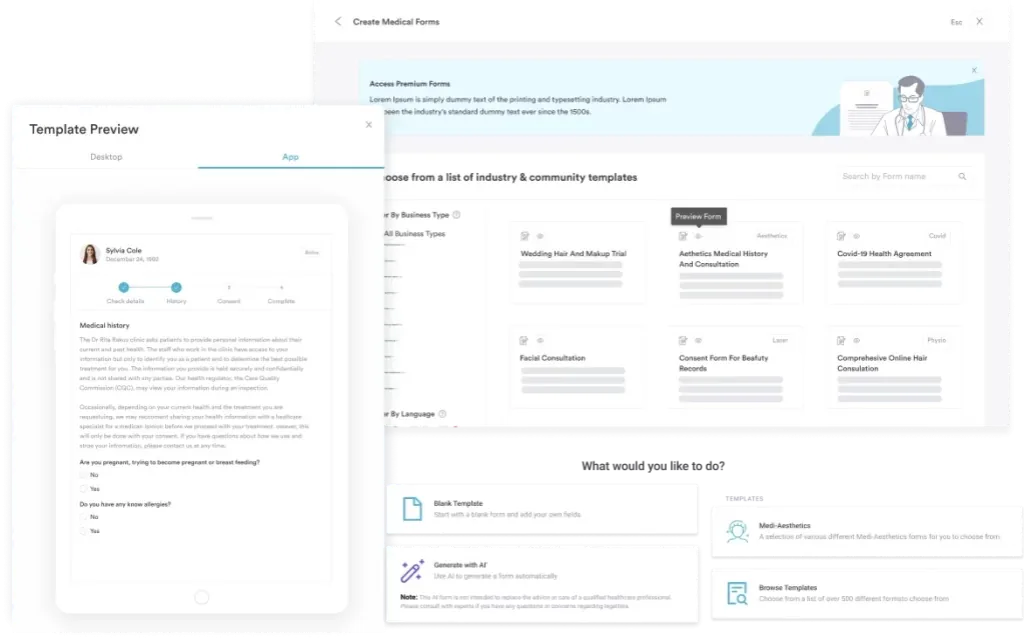
The operative note is the main evidence behind an A4730 invoice. A generic spinal procedure note that skips the cordotomy-specific steps is a common reason an insurer queries the claim. Digital intake and clinical forms help consultants record the same structured details on every case.
UK private claims pair every CCSD procedure code with an ICD-10 diagnosis code from the WHO classification. Use the UK edition, available through the NHS Classifications Browser. Lead with the underlying condition, and add a pain code only as supporting detail.
A common error comes from US-sourced guidance. G89.3 (neoplasm-related pain) exists only in ICD-10-CM, the US version, and not in the WHO edition used in the UK. An invoice carrying it will fail the insurer’s code validation.
Most UK private medical insurers expect pre-authorisation before a procedure of this complexity. Each insurer sets its own rules on top of the CCSD code, and they differ by policy. Confirm the pathway with the patient’s insurer before the procedure date is confirmed.
A pre-authorisation request normally includes the proposed CCSD code, the ICD-10 diagnosis, the consultant’s details and the planned date. Send the oncology letter, imaging report and a summary of failed treatments with it. Tracking authorisation status by patient reduces the risk of treating without cover.
Build a standard A4730 pre-authorisation pack: the oncology letter, the imaging report showing tumour location, a failed-treatment summary and a functional status score. Having it ready before booking avoids chasing records after the procedure.
A4730 sits among the spinal cord codes on the CCSD schedule, and choosing between them turns on the approach and the device. The neighbouring codes below appear under these descriptors in current insurer schedules. For how an insurer applies the wider schedule, see our guide to Bupa’s CCSD schedule, the most widely used UK insurer schedule.
CCSD code A4730 and CPT code 63600 describe the same kind of procedure, a percutaneous lesion of the spinal cord for pain. They belong to different countries, though, and neither is accepted in the other’s system. A claim carrying the other country’s code fails at the insurer, however well the notes support it.
There is no official crosswalk between the two. A UK practice treating an overseas patient should ask that patient’s insurer which code set it accepts before invoicing.
Most A4730 problems come from missing paperwork rather than coverage disputes. Pairing a documentation checklist with the booking, as medical billing compliance frameworks recommend, catches most of them before the invoice goes out. The four checks below map onto the rejection causes in the table that follows.
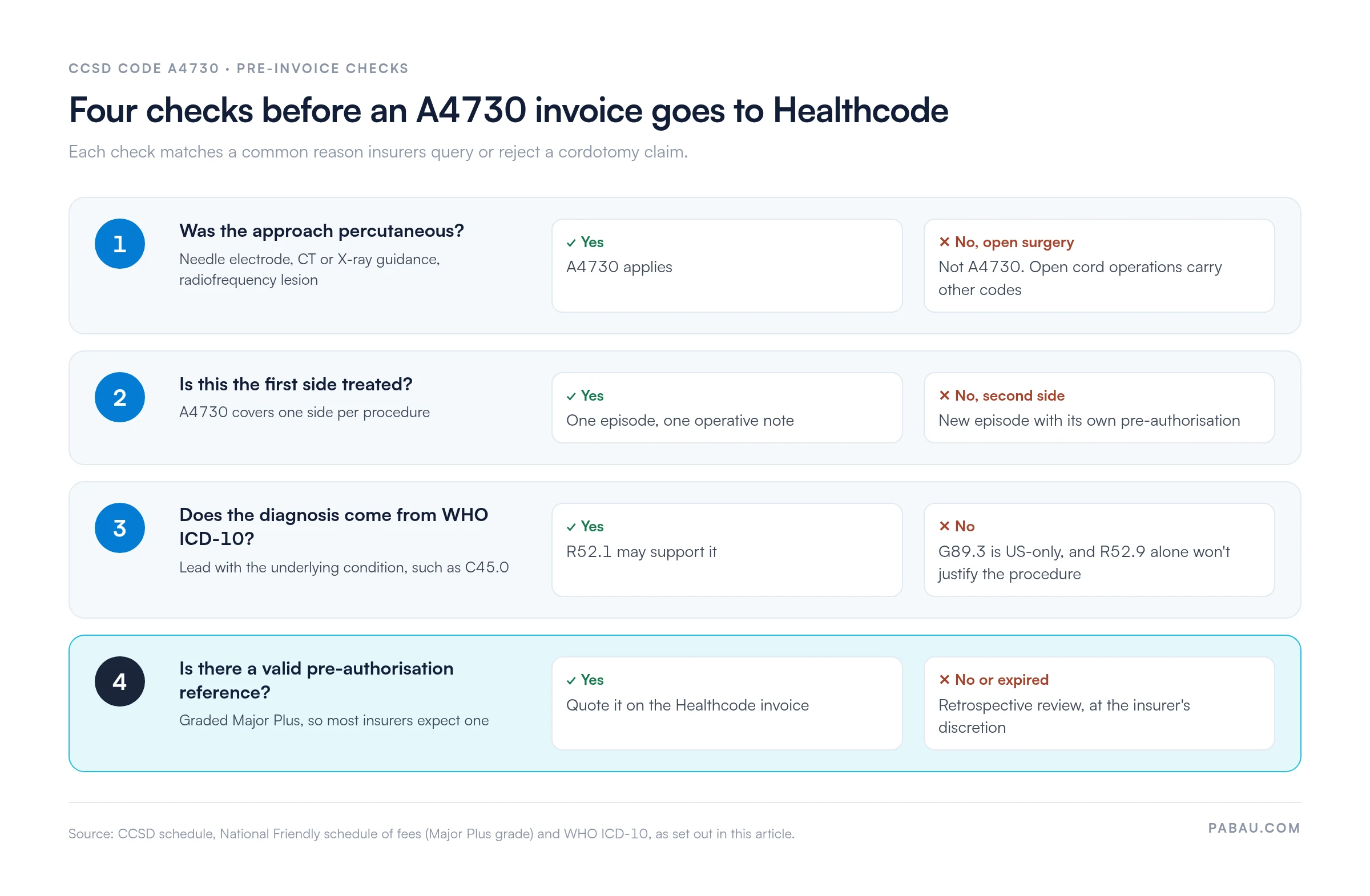
Healthcode is the electronic billing platform most UK private medical insurers use for consultant and hospital invoices. An A4730 invoice that goes out complete the first time avoids most of the problems above.
Most neurosurgical billing teams keep the operative note in one system, the authorisation reference in an email and the invoice in a third. For a code billed as rarely as A4730, that split is where references get lost and follow-ups slip.
Pabau, the practice management software we build for private practices, keeps referral letters, consent forms and operative notes on the patient record. The pre-authorisation reference sits on that same record, so billing staff can see it before the date is booked.
When the invoice is ready, Pabau’s claims management pulls the details already on the record into it and sends it to the insurer through Healthcode. Your team still chooses the CCSD and ICD-10 codes. Pabau then tracks each claim from submitted to paid, so a queried A4730 invoice shows up early.
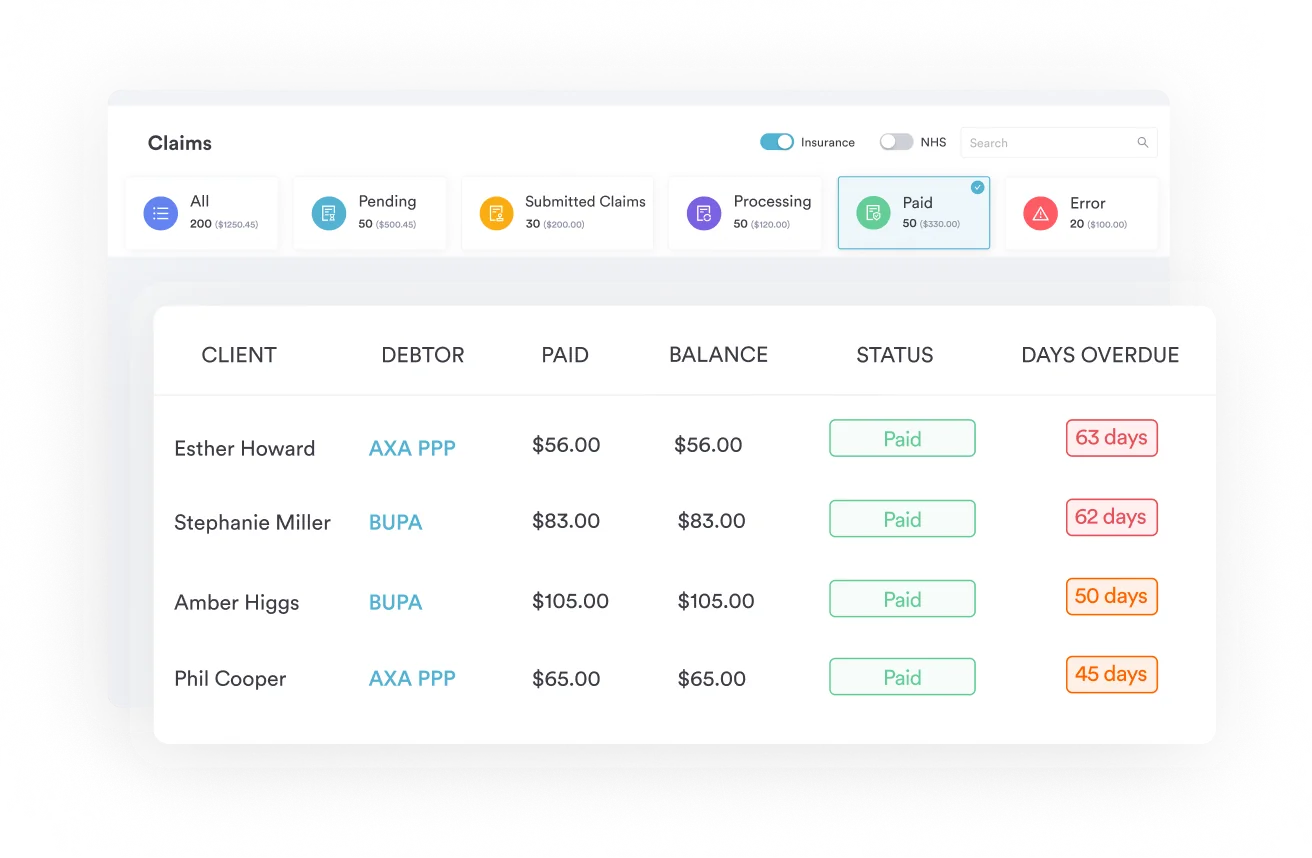

Pabau keeps operative notes, pre-authorisation references and Healthcode claim status on one patient record, so your team can send A4730 invoices with fewer queries.

A4730 is billed rarely, and that is what makes it risky. Teams see it too seldom to build habits around it, so staff end up working from memory instead of a checklist.
Treat every cordotomy as a planned billing event. Secure the pre-authorisation before the date is confirmed, and check the operative note against the documentation list. Then take the diagnosis code from the UK edition of ICD-10.
The trade-off is a few minutes of checks per case against weeks of chasing a queried claim for a palliative patient. Book a demo to see how Pabau keeps notes, authorisations and Healthcode claims together for private neurosurgical practices.

Need the wider insurer picture? Bupa CCSD codes explains how the Bupa schedule is structured and what to check before billing private procedures.
Billing an intramedullary excision? CCSD code A4400 walks through pre-authorisation and ICD-10 pairing for partial excision of spinal cord.
Weighing an intrathecal pump instead? CCSD code A4850 covers implantation and removal of an intrathecal drug delivery system for refractory pain.
Billing a CT-guided spinal procedure? CCSD code V4740 explains how insurers treat a percutaneous spinal biopsy under CT control.
Want fewer queried invoices? Claims management software shows how Pabau sends and tracks private insurance claims through Healthcode.
CCSD code A4730 covers percutaneous cordotomy of spinal cord. Under CT or X-ray guidance, a consultant places a needle electrode in the spinothalamic tract of the upper neck. After testing its position, they make a radiofrequency lesion. The lesion interrupts pain signals from the opposite side of the body. UK private medical insurers use the code, and claims are invoiced through Healthcode.
Code the underlying condition from the UK edition of ICD-10, such as C45.0 for mesothelioma of pleura or a C34 code for lung cancer. R52.1 (chronic intractable pain) can add context alongside it. Avoid sending R52.9 as the only code. G89.3 is a US ICD-10-CM code, so it does not belong on a UK claim.
Most UK private medical insurers, including Bupa, AXA Health, Aviva and Vitality, expect pre-authorisation for a procedure like A4730. Rules vary by insurer and policy, so check with the insurer before the procedure date. Record the written reference and quote it on the Healthcode invoice.
The usual cause is a missing or expired pre-authorisation. A diagnosis code that does not support the procedure, or an operative note that does not describe a percutaneous cordotomy, also triggers queries. Claims also stall when the insurer has not recognised the consultant, or when a second side is invoiced without its own authorisation.



