



CCSD code G5100: Bypass of duodenum billing guide
CCSD code G5100 bills a bypass that leaves the duodenum in place CCSD code G5100...

Last Updated: Oct 16, 2026

CCSD code 0660U is the cotinine level (urine) test in the CCSD Diagnostic Schedule, Chapter 34 Pathology, used to confirm tobacco or nicotine exposure via cotinine, nicotine’s main metabolite.
Practices should confirm the current fee and benefit terms for 0660U through the login-gated CCSD schedule at ccsd.org.uk, since these can change between insurer fee-schedule updates.
Pre-authorisation requirements for CCSD code 0660U vary by insurer (Bupa, AXA Health, Vitality, Aviva, Allianz Care); confirm with each insurer before treatment to avoid claim denials.
Practice management software like Pabau supports electronic submission of CCSD-coded invoices directly to major UK private health insurers, reducing manual errors and speeding up reimbursement.
CCSD code 0660U is the cotinine level (urine) test listed in the CCSD Diagnostic Schedule, the coding system used for UK private healthcare billing. Cotinine is the main metabolite of nicotine, so testing for it confirms recent tobacco or nicotine exposure.
This guide covers how 0660U fits within the CCSD Schedule, its clinical uses, documentation requirements, which insurers accept it, and how to submit claims correctly the first time.
The CCSD Schedule itself is access-controlled through the official CCSD website, run by Grant Thornton UK LLP, so always confirm the current fee and any narrative updates for 0660U through your registered login before submitting a claim. Practices new to this system should also read up on moving into private practice for broader context on billing structures.
CCSD code 0660U appears in the CCSD Diagnostic Schedule, under Chapter 34 (Pathology), sub-chapter 34.1.1 Biochemistry. It identifies a cotinine level test carried out on a urine sample.
Cotinine is the primary metabolite of nicotine, so measuring it in urine is the standard biochemical marker for confirming recent tobacco or nicotine exposure.
The CCSD (Clinical Coding and Schedule Development) group maintains two schedules: a Procedural Schedule for surgical and interventional work, and a Diagnostic Schedule for pathology, imaging, and other diagnostic investigations.
Procedure codes use letter prefixes such as G, S, H, or W. Diagnostic and pathology codes instead follow a 4-digit numeric stem plus a trailing specimen-type letter — among them A, B, C, D, F, H, L, M, O, S, T, and U — that identifies the sample type.
Other CCSD biochemistry codes follow the same pattern.
In 0660U, the trailing U denotes urine. That specimen-letter format is why the code sits in the Diagnostic Schedule rather than the Procedural Schedule, regardless of the numeric stem it carries.
0660U is a UK CCSD code and should not be confused with similarly-formatted codes from other countries’ coding systems. US practices track smoking status separately.
Always cross-reference 0660U against the CCSD Technical Guide (updated October 2025) before submitting a claim. The Technical Guide sets out business rules, coding conventions, and the criteria for code inclusion that govern how every CCSD code should be interpreted and applied.
Cotinine testing under CCSD code 0660U supports three main clinical uses in UK private practice: smoking-cessation monitoring, pre-operative or pre-transplant assessment, and smoking-status verification.
Smoking-cessation programmes request a cotinine level to confirm a patient’s compliance, since self-reported abstinence is unreliable. A positive result despite a reported quit date usually triggers a review of the cessation plan.
Pre-operative and pre-transplant assessments use the same test to flag continued nicotine exposure that could affect surgical risk or transplant eligibility. This applies to organ-transplant work-ups, where later complications might be coded under ICD-10 code T86.10, and to patients whose notes carry ICD-10 code F17.210 or ICD-10 code Z87.891 for a nicotine-dependence history.
Insurers may also request the test to verify smoking status declared on a policy application. Confirm with the insurer whether cotinine testing is a condition of any related benefit before invoicing.
When applying CCSD code 0660U, confirm that:
For GP clinic software users treating patients in the private sector, keeping pathology charges like 0660U separate from procedural codes in the billing system remains fundamental to clean claims. Mixing the two in the wrong code table is one of the most common reasons insurer portals reject claims at submission.
Practices subject to CQC regulation should also note that diagnostic coding accuracy forms part of clinical governance obligations. For more on CQC’s role in healthcare, including how it intersects with billing documentation, that article covers the key compliance touchpoints. Additionally.
Inadequate documentation is the leading cause of CCSD claim rejections. Every claim for CCSD code 0660U needs a paper trail that supports both the clinical decision and the diagnostic charge applied.
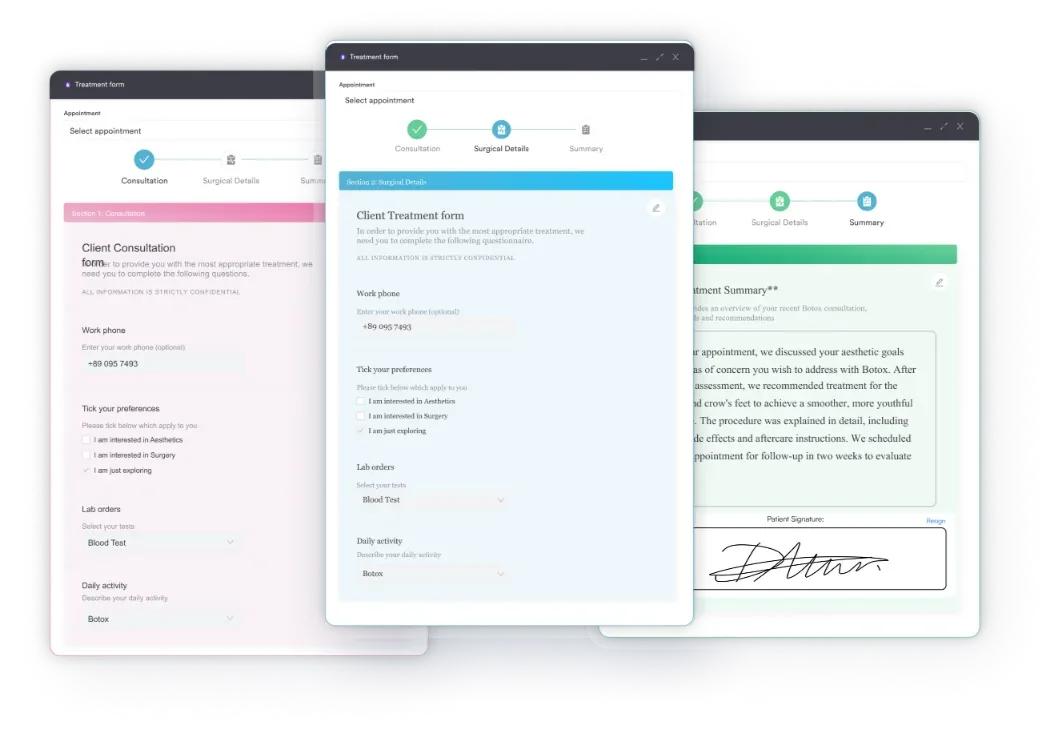
Using digital forms to capture patient insurance details and consent at the point of booking reduces the risk of missing mandatory fields before the appointment. This also creates a time-stamped audit trail, which insurers increasingly request during claims reviews.
For practices handling patient data under UK GDPR, maintaining documentation securely is both a regulatory and contractual obligation. Follow the UK GDPR compliance checklist to ensure your record-keeping for CCSD code 0660U meets the standards set by the Information Commissioner’s Office.
You should also follow best practices for managing patient data across all documentation workflows, including those tied to diagnostic billing.
Before submitting a claim for CCSD code 0660U, run a pre-submission check: confirm the pre-authorisation reference is on the invoice, verify the patient’s policy is active for the date of service, and ensure the result is filed in the patient record. Catching missing details before submission takes two minutes and saves two weeks of chasing.
Pre-authorisation requirements for CCSD code 0660U depend on the patient’s insurer and policy terms. No universal rule applies across all UK private health insurers. Confirming requirements before the diagnostic service is delivered is the safest approach, because retrospective authorisation is not guaranteed and is often refused.
For practices working with patients referred by private GP referrals, the referral letter often doubles as the basis for a pre-authorisation request, so having it ready before contacting the insurer streamlines the process significantly.
Pre-authorisation requirements and benefit limits change annually when insurers update their fee schedules. Always verify current rules directly with the insurer rather than relying on prior-year guidance.

Pabau connects UK private practices directly to insurer submission workflows. Attach CCSD codes, pre-authorisation references, and clinical documentation in one place, then submit electronically. Fewer rejected claims, faster payment.

Electronic submission is the standard expected by all major UK private health insurers. Paper invoices are accepted by some insurers but create slower processing times and higher rejection rates because manual keying errors are common.
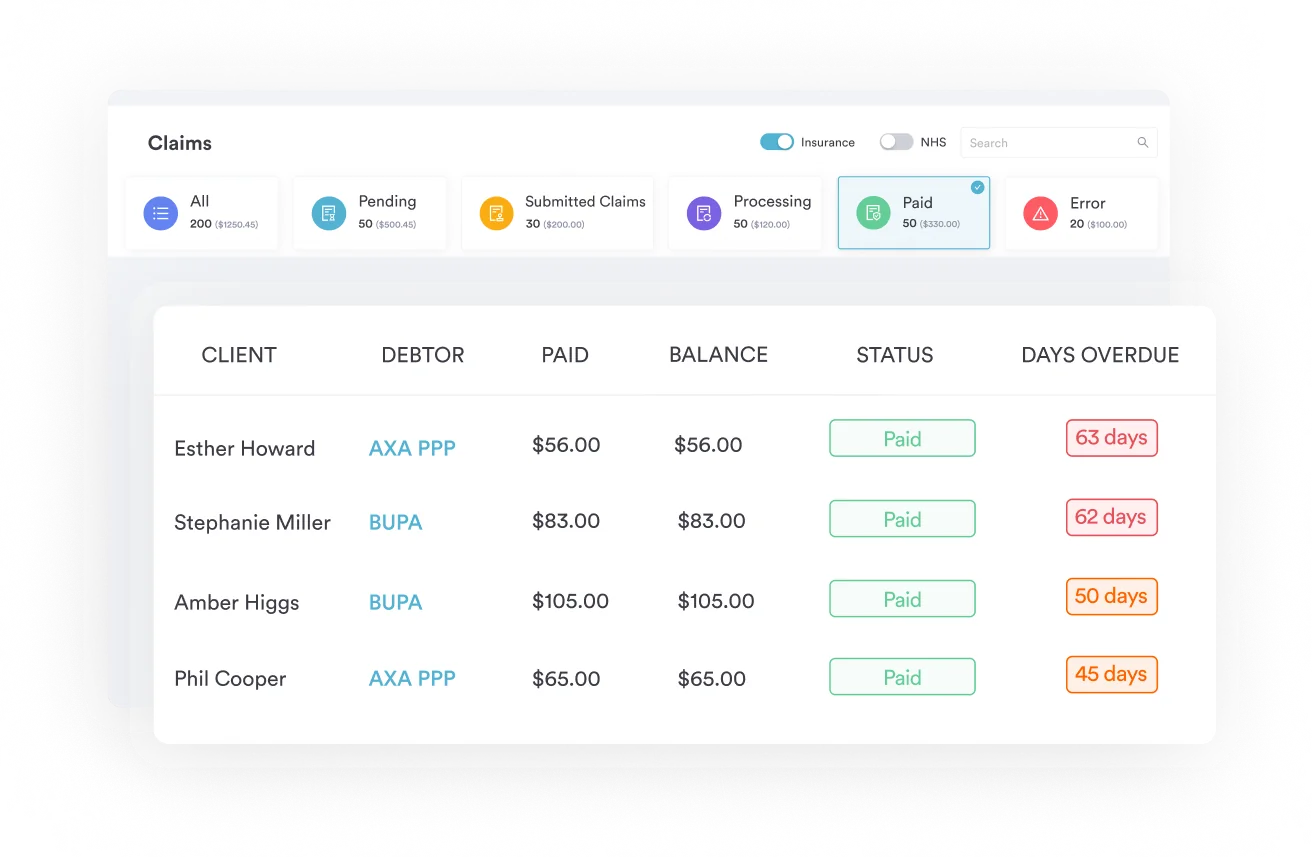
Using claims management software that integrates CCSD coding reduces the risk of manual errors at each of these steps. Pabau’s claims management tools let practices attach CCSD codes directly to invoices and track submission status without switching between systems.
Flag CCSD code 0660U in your billing system as a diagnostic (pathology) code, not a procedure code. If your system separates these code types, placing 0660U in the wrong table can cause the claim to fail at the insurer’s validation stage before a human ever reviews it.
When billing for a diagnostic investigation, it is common for multiple CCSD codes to appear on the same claim. Understanding which codes can be used alongside CCSD code 0660U, and which are excluded or subsumed, avoids unbundling disputes with insurers.
Practices billing across multiple CCSD chapters benefit from the Bupa CCSD codes guide, which covers the Bupa-specific coding principles and chapter structures that apply across the CCSD Procedural and Diagnostic schedules.
For the broader fee schedule context.
Billing accuracy for CCSD code 0660U sits at the intersection of several regulatory obligations. UK private healthcare providers are subject to CQC oversight (in England), UK GDPR requirements from the ICO, and contractual obligations to each insurer under their recognition agreements.
Overstating a diagnostic service or applying CCSD code 0660U to a service not covered by its narrative is a contractual breach with the insurer and potentially a fraud risk. Insurer audit activity in UK private healthcare has increased since 2022, with PHIN (Private Healthcare Information Network) reporting requirements adding another layer of data accuracy obligations for registered providers. Tracking which plans carry an authorization requirement for a service saves the appeal later.
Robust compliance management software helps practices maintain audit-ready records for every CCSD-coded claim. Having a clear trail from referral request through pre-authorisation to invoice and payment confirmation means that any insurer audit can be answered quickly and without disruption to normal operations.
Claim rejections for CCSD code 0660U most often trace back to three avoidable mistakes: placing the code in the wrong table, submitting without a pre-authorisation reference, or missing a mandatory invoice field. Fix those three points and most denials disappear.
Pabau’s claims management software gives UK private practices a single workflow for attaching CCSD codes, tracking pre-authorisation references, and submitting invoices electronically to insurers including Bupa, AXA Health, Vitality, and Aviva. To see how it fits into your billing process, book a demo with the Pabau team.

List Item #1
List Item #2
CCSD code 0660U is the cotinine level (urine) test in the CCSD Diagnostic Schedule, Chapter 34 (Pathology), sub-chapter 34.1.1 Biochemistry. It identifies a urine test for cotinine, the main metabolite of nicotine, used to confirm tobacco or nicotine exposure.
CCSD codes are the standard coding system UK private health insurers use to identify procedures and diagnostic services for billing. Procedure codes use letter prefixes such as G, S, H, or W, while diagnostic and pathology codes use a 4-digit numeric stem plus a specimen-type letter, as in 0660U’s trailing U for urine. All major UK insurers, including Bupa, AXA Health, Aviva, and Vitality, use CCSD codes to process provider claims.
Obtain a pre-authorisation reference from Bupa before providing the service, then create an invoice including your provider registration number, the patient’s Bupa membership number, the CCSD code, date of service, and the agreed fee. Submit electronically via Bupa’s provider portal or through a practice management system with insurer submission integration. Bupa’s code search tool at codes.bupa.co.uk allows you to verify code details before submission.
Most major UK private health insurers, including Bupa, AXA Health, Aviva, Vitality Health, Allianz Care, and The Exeter, use CCSD codes as their standard for identifying procedures and diagnostic services. Individual benefit limits and pre-authorisation requirements vary by insurer and by policy, so always verify coverage for a specific CCSD code with the patient’s insurer before delivering the service.
Register for CCSD member access at ccsd.org.uk to search the login-gated schedule. The CCSD Technical Guide (updated October 2025) explains the coding structure, chapter organisation, and business rules. Individual insurer portals (Bupa’s code search, AXA Health’s specialist code lookup, Vitality’s fee finder) also allow procedure-level code verification against each insurer’s accepted schedule.



