ICD-10 Code Y76.0: Diagnostic obstetric and gynecological devices
ICD-10 Code Y76.0: Definition and billable status ICD-10 Code Y76.0 is a valid, ...

Last Updated: Oct 23, 2026
Billable Code Specific Code
M35.2 is the billable ICD-10-CM code for Behcet's disease.
In practice, active findings such as uveitis, oral ulcers, or a deep vein thrombosis are coded alongside M35.2 as additional diagnoses. They never replace it once the provider has documented the disease as established.
Under CMS ICD-10-CM coding guidelines, every HIPAA-covered electronic transaction in the US carries ICD-10-CM diagnosis codes. Specifically, for Behçet's disease that means M35.2, with concurrent codes added where the record supports them.
Let Pabau's smart automation suggest the right codes, reduce claim denials, and keep your practice compliant—effortlessly.
Automate repetitive tasks and focus on what matters most—your patients.
Reduce coding errors and ensure compliance with the latest regulations.
Clean claims, fewer denials, and faster reimbursements.
Powerful insights and reporting to help your practice thrive.
HIPAA compliant SOC 2 certified GDPR-compliant Trusted by 4,000+ clinics worldwide

ICD-10 code M35.2 is the billable ICD-10-CM code for Behçet’s disease, valid for FY2026 claims from October 1, 2025.
Behçet’s disease is a rare systemic vasculitis, and it sits under the non-billable parent category M35 in chapter M00-M99.
One code carries the diagnosis, so document active manifestations such as oral ulcers, uveitis, and skin lesions as additional diagnoses.
The International Criteria for Behçet’s Disease, or ICBD 2014, is the current diagnostic standard, and a score of 4 meets the threshold.
Practice management software like Pabau keeps rheumatology and multi-specialty notes in one record, so M35.2 documentation holds up under payer review.
M35.2 is a specific, billable ICD-10-CM diagnosis code. Specifically, it is valid for claims in the FY2026 code year, effective October 1, 2025. In practice, use it for any encounter where Behçet’s disease is active, under evaluation, or being managed.
The parent code M35 is a non-billable header, so never submit it alone on a claim. By contrast, M35.2 is the child code that carries the clinical detail payers expect. In practice, you can confirm its current billable status in the CDC/NCHS ICD-10-CM web tool, which mirrors the official Tabular List.
Practice management software like Pabau keeps the coded diagnosis attached to the encounter record, so a coder can see what the note supports. That check happens before billing, which is where a non-billable header code would otherwise slip through.
Behçet’s disease is a rare, chronic systemic vasculitis, meaning inflammation of blood vessels throughout the body. Specifically, it is autoimmune-mediated, with both genetic susceptibility and environmental triggers involved. In particular, the strongest known genetic association is with HLA-B51.
Prevalence is highest along the ancient Silk Road trade route, from East Asia through the Middle East to the Mediterranean. In fact, that history is why some literature still calls it Silk Road disease. US prevalence is low, so it qualifies as a rare disease.
Rheumatologists and ophthalmologists in tertiary care still see it regularly. For example, other systemic vasculitides carry their own codes.
Clinicians use “disease” and “syndrome” for the same condition, and both map to M35.2. In practice, the ICD-10-CM Alphabetic Index is what makes that equivalence explicit.
Multi-specialty practices that see autoimmune patients need one client record for all of it. In turn, that record holds rheumatology notes, ophthalmology findings. When every clinician writes into the same file, the coder is not chasing three systems for one encounter.
Two criteria sets are in clinical use. First, the 1990 International Study Group, or ISG, criteria required recurrent oral ulceration at least three times in 12 months. In addition, two of the following features had to be present:
Second, the International Criteria for Behçet’s Disease (ICBD 2014) has since replaced ISG in most clinical and research settings. It scores findings by points instead of running a checklist. In turn, that change recognizes that vascular and neurological disease carry diagnostic weight on their own.
A total of 4 points or more meets the ICBD threshold. In practice, documentation should record which criteria were met, and at which encounter. Where the workup includes a pathergy test or HLA-B51 typing, filing those lab results against the record keeps the score verifiable.
Osteopaths treating these conditions can document diagnoses and sessions in osteopathy practice software.
Coders working Behçet’s encounters need the full symptom spectrum. Not every symptom earns its own code, but documenting each one strengthens the M35.2 assignment and informs concurrent coding.
Each active manifestation in the record may warrant a concurrent code alongside M35.2. The next section lists the ones reported most often. Practices using digital intake forms for rheumatology visits can pre-populate organ-system review fields, so active symptoms are captured before the provider writes the note. Practices that age their receivables weekly catch claims approaching a filing limit while an appeal is still possible. Coding names the service; medical billing gets it submitted, adjudicated and paid.
Three things around M35.2 cause most classification errors. In particular, the index entry, the parent code, and the single exclusion note are each worth a moment.
The ICD-10-CM Alphabetic Index lists Behçet’s syndrome and points it to M35.2. However, the Tabular List carries no separate Includes note for the term. So it is an index entry rather than a tabular inclusion, and either way the two terms produce one code.
M35.2 sits in the M35 category, Other systemic involvement of connective tissue. M35 in turn sits in the M30-M36 block, Systemic connective tissue disorders. Neither is billable, so M35.2 is the four-character code that carries billable status.
The same block structure appears in the WHO ICD-10 classification, which ICD-10-CM builds on with additional character detail.
M35 carries one Excludes1 note, for reactive perforating collagenosis, coded L87.1. In other words, an Excludes1 note means the two conditions are never reported together on the same encounter. Accordingly, check the AAPC ICD-10-CM code range for the sibling codes under this category.
For practices handling complex autoimmune documentation.
M35.2 codes the primary diagnosis, and active manifestations are coded concurrently. In short, the table below lists the codes reported most often in Behçet’s encounters.
Code M35.2 first, then the manifestation codes as additional diagnoses. Do not swap M35.2 for a symptom code once the disease is established and documented. For example, Behçet’s arthropathy indexes to M14.8-, and M35.2 is sequenced ahead of it.
Degenerative joint disease is a separate diagnosis, not a substitute. Where a patient also carries knee osteoarthritis coded M17.5 or thumb-base disease coded M18.4, those codes stand on their own.
Document every active organ-system manifestation at each Behçet’s encounter, even if it is unchanged from the prior visit. Payers reviewing rare disease claims look for continuous clinical justification. A note that says only ‘follow-up Behçet’s’ gives a reviewer a basis to query medical necessity. Name the active findings and tie them to the ICBD score.
Correct code assignment is half the work. Still, the documentation behind it has to survive a payer audit.
Assign M35.2 when the provider documents Behçet’s disease as established. Instead, do not assign it from signs and symptoms alone. During the workup, code the presenting manifestations individually until the diagnosis is confirmed in the record.
For outpatient visits focused on Behçet’s management, M35.2 is usually the principal diagnosis. If the patient presents for an urgent uveitis flare, the uveitis code may sequence first. M35.2 then becomes an additional diagnosis. In short, sequencing follows what drove the encounter, per CMS coding guidelines.
Concurrent uveitis and other ocular codes require laterality in ICD-10-CM: right eye, left eye, or bilateral. Unspecified laterality codes exist, but they raise denial risk. As a result, the record should name the involved eye at every ocular encounter.
Structured encounter forms can make laterality a required field at the point of care. In turn. Consistent records also support HIPAA-compliant record-keeping for a condition tracked over years.
On an inpatient claim with M35.2 as the principal diagnosis, the code groups into a connective tissue disease MS-DRG. However, MS-DRG assignments change with each fiscal year revision. Verify the FY2026 grouping against the current CMS grouper files before the claim goes out.
Records and referral letters use several terms for this condition. Still, all of them map to M35.2.
A term alone is not enough to assign the code. Instead, verify the clinical context supports the systemic diagnosis first. “Silk Road disease” in particular deserves a chart check, since the phrase also gets used loosely.
M35 holds several sibling codes that come up in a Behçet’s differential or in related connective tissue diagnoses. Two of them are headers rather than codes you can bill.
For example, M35.81 covers multisystem inflammatory syndrome and M35.89 covers other specified involvement. Reaching for M35.0 or M35.8 on a claim is the same error as reaching for M35, since none of the three are valid codes.
Never report M35.9 when a specific child code is documented and available. Consequently, unspecified codes invite medical necessity review. Standardized workflows that default to the most specific documented code keep that from happening.
Run a periodic audit of M35.9 claims in your practice management system. Any M35.9 claim whose encounter note names Behçet’s, Sjögren’s, or another specific condition has been miscoded. These are straightforward amendments that recover specificity and reduce re-audit risk.
Right now, a Behçet’s patient’s history is usually spread across systems. For example, the rheumatology note lives in one place, the ophthalmology letter in another, and the ICBD score in a paper chart. When a payer asks what supported M35.2 in March, someone spends an afternoon assembling the answer.
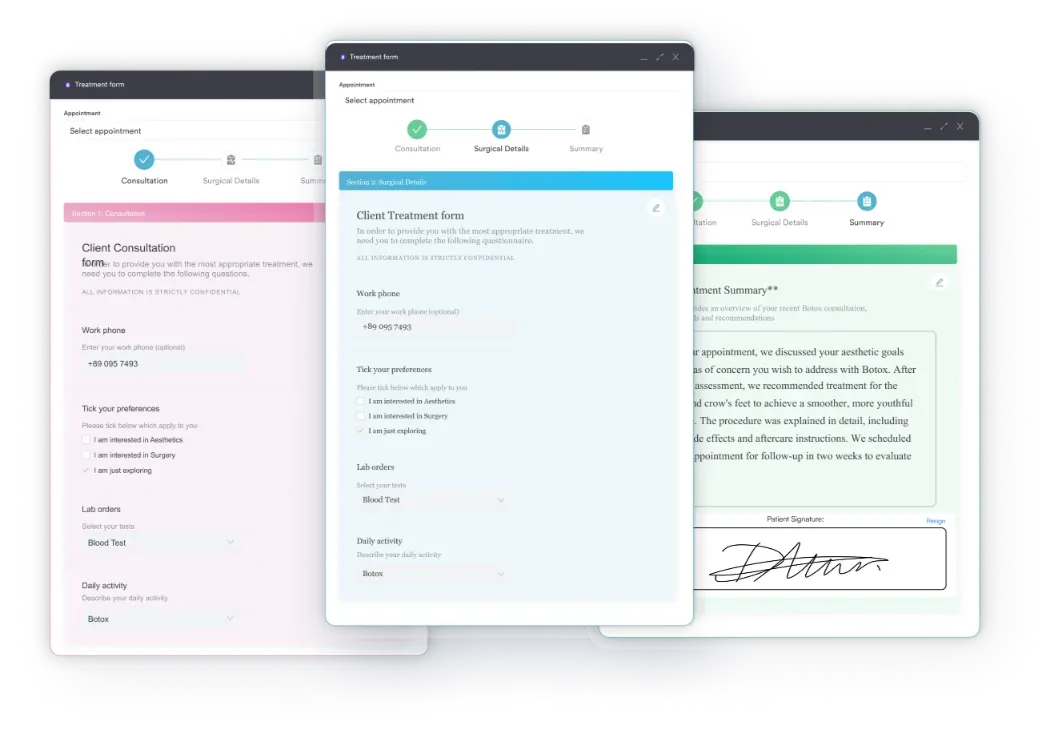
Pabau holds all of it in one client record. In turn, custom forms capture the organ-system review and the ICBD criteria as structured fields, so the score is never buried in free text. Meanwhile, photos, lab results, and letters attach to the same timeline.
Similarly.
The outcome is a record that answers a documentation request without a hunt. In fact, thin notes are the most common reason a rare disease claim gets questioned, and the fix belongs at the point of care.

Pabau brings client records, digital forms, and billing into one system. Practices coding complex diagnoses like M35.2 can capture every active finding as a structured field. The documentation behind the code is then there when someone asks for it.

Rare disease coding asks more of the record than routine billing does. Specifically, M35.2 gives you one billable assignment for Behçet’s disease. In turn, holding on to it means the note shows active findings, the ICBD criteria met, and laterality for anything ocular.
Specificity costs a few minutes at the encounter and saves hours at review. In short, that is the trade-off worth remembering. As a result, a practice that captures the organ-system review as a structured field never reconstructs it later.
Pabau’s client records and configurable forms build that habit into the workflow, so nothing falls between the clinical note and the bill. Book a demo to see how Pabau handles rheumatology and multi-specialty documentation.

Coding another systemic vasculitis? ICD-10 code M30.0 walks through polyarteritis nodosa documentation and the codes reported with it.
Need the giant cell arteritis pairing? ICD-10 code M31.5 covers the combined arteritis and polymyalgia rheumatica assignment.
Documenting a necrotizing vasculopathy? ICD-10 code M31.8 explains when the other specified code is the right choice.
Coding a gait abnormality claim instead? Gait abnormality coding guide explains when R26.89 applies instead of a catch-all code for walking and mobility impairments.
ICD-10 Code M35.2 is the billable ICD-10-CM diagnosis code for Behçet’s disease, a rare systemic vasculitis causing inflammation of blood vessels throughout the body. Specifically, it reports the condition for any encounter where the disease is active, under evaluation, or being managed. In turn, the code is effective October 1, 2025 for FY2026 billing.
Yes. M35.2 is a specific, billable ICD-10-CM code valid for HIPAA-covered claim submission. By contrast, its parent, M35 (Other systemic involvement of connective tissue), is a non-billable header code and must never be submitted alone on a claim.
The current standard is the International Criteria for Behçet’s Disease (ICBD 2014), a point-based system. A score of 4 or more qualifies. Specifically, ocular lesions, oral aphthosis, and genital aphthosis score 2 points each. Skin lesions, CNS manifestations, vascular involvement, and a positive pathergy test score 1 point each. By contrast, the older ISG 1990 criteria required recurrent oral ulcers plus two additional features.
There is no difference for coding purposes, and both terms map to M35.2. The ICD-10-CM Alphabetic Index lists Behçet’s syndrome and directs it to M35.2. However, the Tabular List carries no separate Includes note for the term.