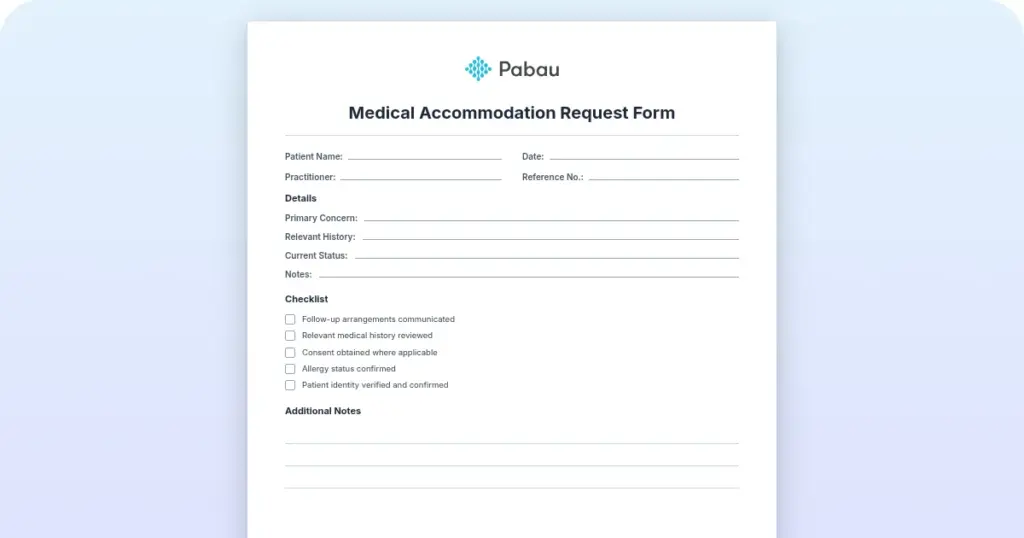
Medical accommodation request form
A medical accommodation request form is how an employee and their healthcare pro...

1
Last Updated: Oct 7, 2026

Fresha dropped its subscription-free model in 2025. It now runs on paid plans: Independent at $19.95 per month and Team at $14.95 per bookable team member.
On top of the subscription, Fresha charges a 20% one-time commission (minimum $6) on new clients booked through its marketplace, plus card processing fees.
Reviewers rate Fresha highly for ease of use, marketplace exposure, and strong mobile apps. It scores 4.8 out of 5 on Capterra.
Fresha suits salons, spas, and wellness businesses. Regulated medical aesthetic clinics that need deep clinical documentation often move to practice management software like Pabau.
This Fresha review pulls together what verified users say on Capterra, Trustpilot, and G2, alongside where the platform fits and where it falls short. If you run a salon, spa, or aesthetic practice, here’s an honest look. We cover what Fresha does well, what it costs, and who it suits.
Fresha has built a huge following among salons, barbershops, and independent beauty and wellness professionals. The reviews split along a clear line. Solo operators and small teams praise how quickly they got started and how the marketplace brought in new bookings. Practices with heavier documentation or compliance needs tend to run into limits.
Fresha is a booking and business management platform for salons, spas, and wellness businesses. It’s used by hundreds of thousands of professionals across more than 120 countries, and it’s best known for its consumer marketplace. Clients can search the Fresha directory, find a nearby business, and book in a few taps.
The platform covers scheduling, payments, marketing, inventory, and client records in one place. Fresha started life as a free, subscription-free tool and made its money through payments and marketplace commissions. That changed in 2025, when it moved to paid subscription plans.
It’s a strong fit for salons, barbershops, nail and beauty studios, and solo practitioners who want low upfront cost and a built-in discovery channel. It wasn’t built as a medical or clinical practice management system, and that distinction matters once regulated treatments enter the picture.
Fresha packs a broad feature set into an interface reviewers consistently call easy to learn. Here’s what you get across the platform:
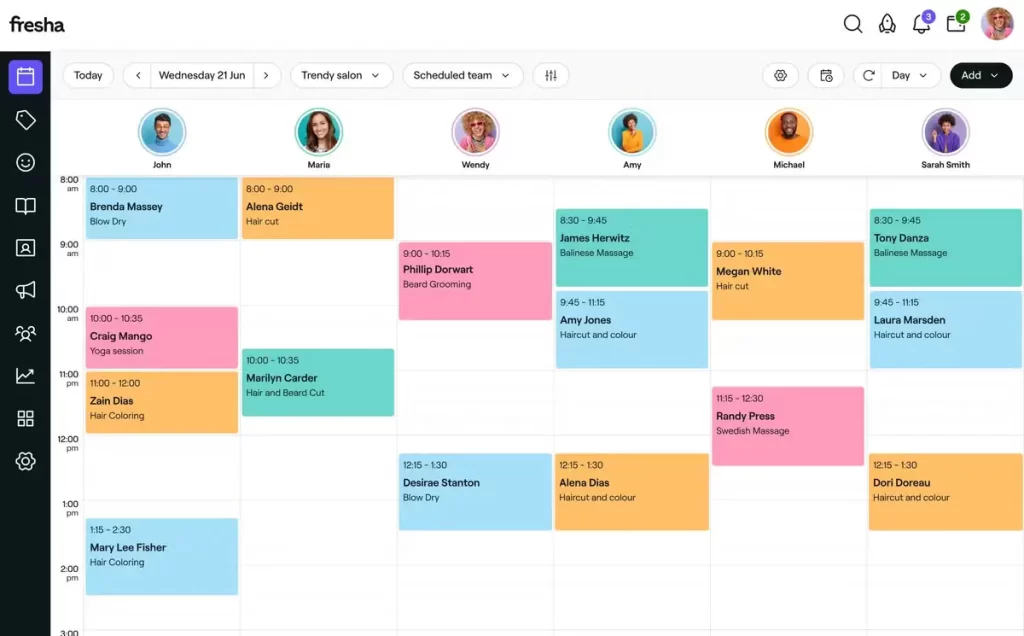
Fresha starts at $19.95 per month for a solo user (the Independent plan) or $14.95 per month per bookable team member (the Team plan), having moved off its free model in 2025. Its pricing is the most-discussed topic in Fresha reviews, and it’s worth reading carefully. Fresha’s fees stack in three parts: the subscription, a marketplace commission on new clients, and card processing fees.
| Plan | Monthly price | Who it’s for |
|---|---|---|
| Independent | $19.95/month | Solo practitioner (one calendar) |
| Team | $14.95/month per bookable team member | Salons and spas with a team |
| Enterprise | Custom pricing | Businesses with 20+ team members |
The marketplace commission is where costs can surprise people. Fresha charges a 20% one-time fee (minimum $6) on each new client who finds you through its marketplace. Returning clients, and clients who book through your own site, Google, or social channels, are free.
Before you choose Fresha, run the numbers on your new-client volume. A business bringing in 100 new marketplace clients a month pays at least $600 in commission (100 x $6 minimum), before card processing. If most of your bookings are returning clients from your own channels, the marketplace fee matters far less.
Fresha’s 4.8 out of 5 on Capterra reflects genuine satisfaction in its core market. For solo operators and small beauty businesses, it delivers real value.
Fresha reviews on verified platforms are consistently positive on ease of use and value. Scheduling, the marketplace, and the mobile experience are the features users cite most often as reasons they stay.
Here’s how Fresha rates across public review platforms at the time of writing:
| Review platform | Average rating | Notes |
|---|---|---|
| Capterra | 4.8 / 5 | Around 1,450 business reviews, strong on ease of use |
| Trustpilot | 4.7 / 5 | Over 6,500 reviews, more mixed on billing |
| G2 | 4.2 / 5 | Fewer reviews, similar themes |
| Google Play (client app) | 4.9 / 5 | Over 110,000 consumer reviews of the booking app |
The positive themes are consistent: fast setup, marketplace bookings, and a clean mobile app. The negative themes are just as consistent. Billing and unexpected charges come up repeatedly, alongside the cost of marketplace commissions at higher volumes. For businesses performing regulated treatments, the gap in clinical documentation is a recurring note, which we cover below.
Fresha makes the most sense for salons, spas, and independent beauty and wellness professionals who want a low-cost booking system and a built-in way to reach new clients.
It’s a strong fit if you:
Fresha is a weaker fit for:
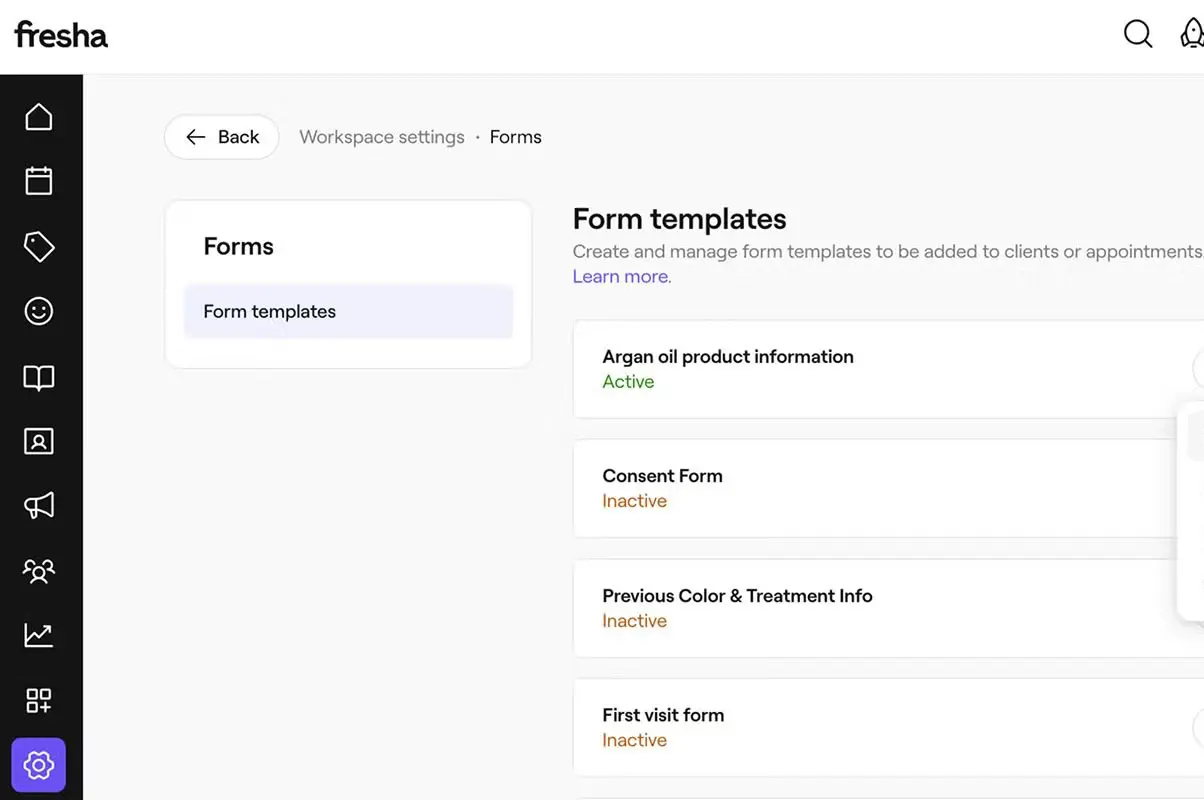
Fresha isn’t trying to be a medical records system, and that’s the source of most of its limits for clinical practices. The platform added forms and client notes, so basic intake and consultation capture is there. What it lacks is the depth regulated treatments demand.
For a med spa running injectables, that gap is real. Structured treatment notes tied to each service, consent workflows built for prescription-only treatments, and before-and-after photos filed against the client record are operational requirements, not nice-to-haves. Scattered or missing documentation creates legal and regulatory risk under frameworks like HIPAA in the US or the Care Quality Commission (CQC) in the UK.
Cost predictability is the other ceiling. For a busy practice acquiring lots of new clients through the marketplace, the 20% commission can add up faster than a flat subscription would. And multi-location groups tend to find the platform better suited to single sites than to coordinated clinical operations across several.
The Fresha alternatives most salons and spas evaluate include Vagaro, Booksy, Square Appointments, GlossGenius, and Mangomint. Each targets a similar beauty and wellness market with its own take on pricing and features. Scheduling-first tools appear on shortlists too; our Setmore review covers one popular budget option.
For medical and aesthetic practices, the more relevant comparison is a purpose-built clinical platform. Practice management software like Pabau sits in a different category from a salon marketplace. Where Fresha is a consumer booking platform with a business layer on top, Pabau is an all-in-one practice management system built for healthcare and medical aesthetics. You can see how Pabau compares to Fresha feature by feature on the comparison page.
Three differences stand out for clinics weighing the two:
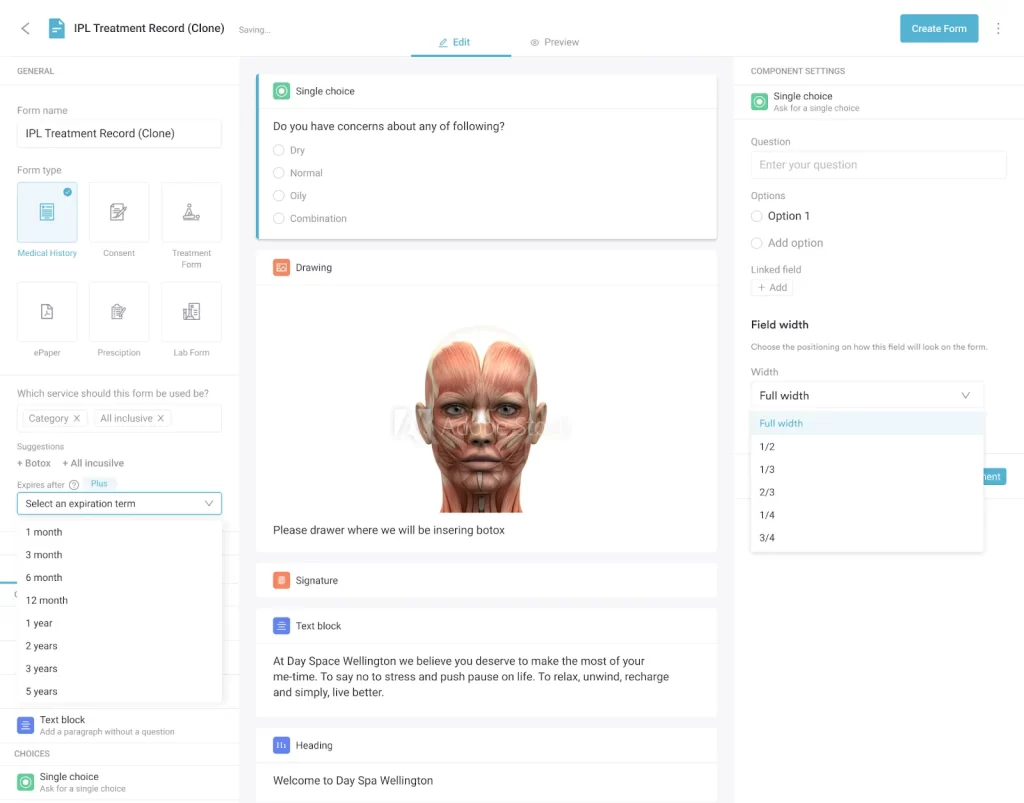
The pricing models differ too. Pabau uses a subscription that scales with your team and locations, and every plan includes every feature, with no per-booking or marketplace commission on client volume. That keeps costs predictable as you grow. You can see current pricing at pabau.com/pricing.

From built-in consent forms and treatment notes to before-and-after photos and multi-location scheduling, Pabau is built for the practices Fresha wasn’t designed to serve. Book a personalized demo to see it in action.

Fresha earns its strong reviews in the market it was built for. For a salon, barbershop, or solo beauty business that wants low upfront cost, easy setup, and marketplace exposure, it’s a genuinely good option, and the ratings back that up.
The picture changes once a business crosses into regulated clinical territory. Documented consent, structured treatment notes, before-and-after photos, and multi-location clinical workflows aren’t optional for a medical aesthetic clinic. If your practice has moved beyond simple booking into clinical treatment, book a demo with Pabau to see how it handles the full workflow, from first booking to documented outcome.

Weighing Fresha against another salon platform? Fresha vs Vagaro breaks down how the two compare on pricing, features, and fit for different business types.
Running a medical spa and need clinical workflows? Medical spa software covers how Pabau supports scheduling, documentation, and compliance for med spa operations.
Want a direct, feature-by-feature comparison? Pabau vs Fresha lays out how both platforms stack up for clinic owners making a decision.
Not anymore. Fresha was subscription-free for years, but it moved to paid plans in 2025. The entry plan, Independent, is $19.95 per month, and Team is $14.95 per month per bookable team member. A 20% one-time commission (minimum $6) still applies to new clients booked through the Fresha marketplace, and card processing fees apply on top.
Fresha has three tiers: Independent ($19.95/month for a solo user), Team ($14.95/month per bookable team member), and Enterprise (custom pricing for 20+ team members). On top of the subscription, expect a 20% marketplace commission (minimum $6) on new clients from the directory, plus card processing fees of about 2.29% + $0.20 in person and 2.79% + $0.20 online. Confirm current rates at fresha.com.
The most common complaints involve billing and unexpected charges, difficulty resolving disputes with support, and costs that stack as marketplace commissions and processing fees add up. Some users also report appointment reminders that failed to send. Regulated clinics cite the lack of deep clinical documentation.
Fresha has intake and consultation forms plus client notes, but it wasn’t built for regulated medical environments. It lacks the structured treatment charting, consent workflows for prescription-only treatments, and integrated before-and-after photo records that aesthetic clinics need. Practices subject to HIPAA or CQC rules usually need a purpose-built clinical platform.
For salons and spas, common Fresha alternatives include Vagaro, Booksy, Square Appointments, GlossGenius, and Mangomint. For medical and aesthetic clinics that need clinical documentation, consent, and multi-location tools, practice management software like Pabau is the stronger fit.
Yes. Fresha is an established platform used by hundreds of thousands of professionals across more than 120 countries, with strong ratings for ease of use. The recurring criticisms center on stacking costs and thin clinical documentation, not on reliability or trustworthiness.