Hell’s Itch pain scale
The Hell’s Itch pain scale is a numeric rating system that quantifies the ...

1
Last Updated: Oct 5, 2026

UltraShape is an FDA-cleared non-invasive body contouring treatment using pulsed focused ultrasound (PFUS) technology to destroy subcutaneous fat cells without heat, anesthesia, or downtime.
Three treatment sessions spaced two weeks apart are standard; contraindications include pregnancy, active skin infections, and metal implants in the treatment area.
Pre-treatment consultation forms must screen candidacy and contraindications; informed consent forms must document treatment risks, expected outcomes, and realistic timeline (visible results typically appear 4-12 weeks post-final session).
Pabau’s digital form builder and automated multi-session workflow management enable clinics to standardise UltraShape consultations, capture e-signed consent, track treatment progress, and automate aftercare messaging without paper.
A ready-to-use aftercare instruction guide for patients following their UltraShape body contouring sessions. Covers post-treatment care, hydration, activity restrictions, expected timeline, and contact protocols for complications.
Download templateClinics offering medical spa software and body contouring treatments need more than just the device-they need structured patient documentation that protects the practice and sets realistic expectations. The software half of that setup has its own total cost of ownership, which our list of the best medical spa systems compares. This UltraShape template kit gives you three clinic-ready documents: a pre-treatment consultation checklist, an informed consent form covering treatment risks and contraindications, and post-session aftercare instructions. All three can be customised to your clinic’s protocols and digitised for e-signature capture and automatic patient record filing.
UltraShape Power is an FDA-cleared non-invasive body contouring treatment that uses pulsed focused ultrasound (PFUS) technology to mechanically destroy fat cells in the subcutaneous layer-the area beneath the skin surface. Unlike thermal fat reduction devices, UltraShape produces no heat, requires no anesthesia, and involves zero downtime. Patients can return to normal activities immediately after treatment.
Treated fat cells are eliminated by the body’s natural metabolic processes. Three sessions, spaced two weeks apart, are the standard protocol. Results become visible 4-12 weeks after the final session as the body continues clearing destroyed adipocytes.
For clinics, thorough pre-treatment consultation and informed consent documentation are non-negotiable. Contraindications-such as pregnancy, active skin infection, and metallic implants in the treatment zone-must be screened before scheduling. A med spa consultation form template standardises this screening and protects your practice from liability.
Understanding the technology helps your team explain it to patients and troubleshoot concerns. Pulsed focused ultrasound energy is delivered via a handheld applicator that targets the subcutaneous fat layer while leaving skin, muscle, and other tissues unharmed. The acoustic energy creates mechanical pressure that disrupts cell membranes of adipocytes-destroying the fat cell structure without burning surrounding tissue.
Sessions last approximately 60 minutes. Energy settings and pulse patterns vary by treatment area and patient body composition. Your clinic’s UltraShape manual specifies exact protocols. Patients report a warm sensation and mild acoustic vibration but no pain; discomfort is minimal because there is no heat damage.
UltraShape is cleared for non-invasive fat reduction in the abdomen, flanks, and thighs-the three most common body contouring zones. Treatment areas must have a minimum fat layer thickness (typically 1.5-2 cm) to be suitable. Ideal candidates are those with localised fat deposits and relatively good skin elasticity.
Before preparing clients for cosmetic consultations, your intake form should confirm candidacy via a structured checklist. Good candidates are typically BMI 18.5-29.9, with realistic expectations about fat reduction (not total weight loss or skin tightening). Patients who have never had liposuction in the treatment area and maintain stable weight are ideal. Those with unrealistic goals, significant weight fluctuation, or previous procedures in the target zone may not be suitable and should be counselled accordingly.
Digital forms sit at the center of practice management software, feeding records, billing, and follow-ups from one entry.
Every UltraShape clinic must use a contraindications screening form to identify patients who should not receive treatment. Absolute contraindications (do not treat) include:
Relative contraindications (use caution, require medical director assessment) include recent importance of consultations for aesthetic practitioners to define clinic policy include thyroid disorders, use of photosensitising medications, and previous body contouring in the same area. Your consent form must document that the medical director has reviewed and approved treatment for relative contraindication cases.
Standard UltraShape protocol is three sessions, 2 weeks apart. Each session addresses the full treatment area (abdomen, flanks, thighs, or a subset thereof). Session length is typically 60 minutes for a full abdomen or 30-45 minutes for flanks only.
Energy settings and pulse frequencies vary by the device firmware and are specified in your clinic’s UltraShape manual. Operators must be trained on device safety interlocks and proper applicator positioning. Your treatment protocol documentation should specify your clinic’s standard settings, how operators adjust for patient feedback (heat sensation, comfort), and when a session should be terminated or rescheduled.
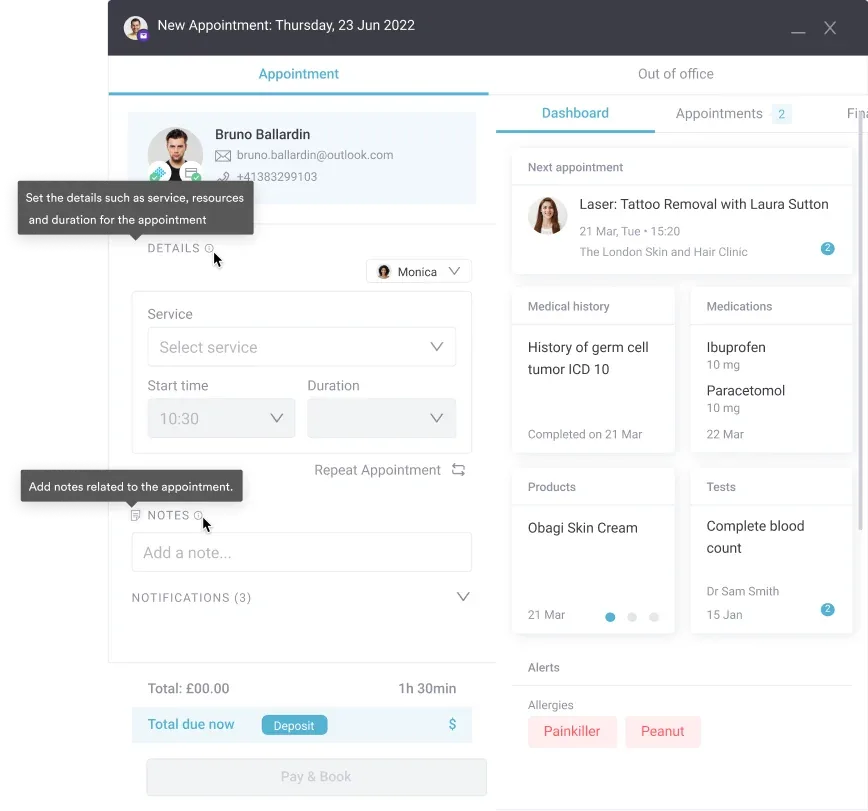
Your booking system should enforce the 2-week interval between sessions. Many clinics use automated multi-session treatment workflows to schedule all three sessions at the first visit, send appointment reminders, and flag when a patient misses a session (reducing the common problem of incomplete treatment protocols).
Set realistic patient expectations in writing. Destroyed fat cells are gradually cleared by the lymphatic and metabolic systems over 4-12 weeks. Most patients notice initial changes (clothes fit better, mild definition improvement) around week 4-6. Maximal results appear by 12 weeks post-final session.
Typical fat reduction in treated areas is 20-40% volume reduction over the full treatment course. Results vary based on baseline fat thickness, patient metabolism, and post-treatment lifestyle. Patients who gain weight after UltraShape may regain fat in the treated area (though treated areas accumulate fat more slowly than untreated zones).
Your consultation form is the foundation of informed consent and safe treatment. It should capture: patient identification and contact details, treatment goals (what specific areas, desired outcome), medical history (surgeries, allergies, autoimmune conditions, pregnancy status), current medications and supplements, previous body contouring procedures, realistic expectation assessment (show before/after gallery and explain the 4-12 week timeline), and contraindication screening via checklist.
The consultation form also documents the clinician’s assessment: suitability for treatment, recommended session number, specific treatment areas, estimated session cost, and any relative contraindications requiring medical director sign-off. A digital digital consultation forms system allows patients to complete the form on a tablet in the clinic waiting area, auto-populates their contact and medical history from the patient record, and flags missing contraindication responses in red before the consultation even starts. Medical spa EMR software builds on that same digital intake, keeping records searchable long after the consultation.

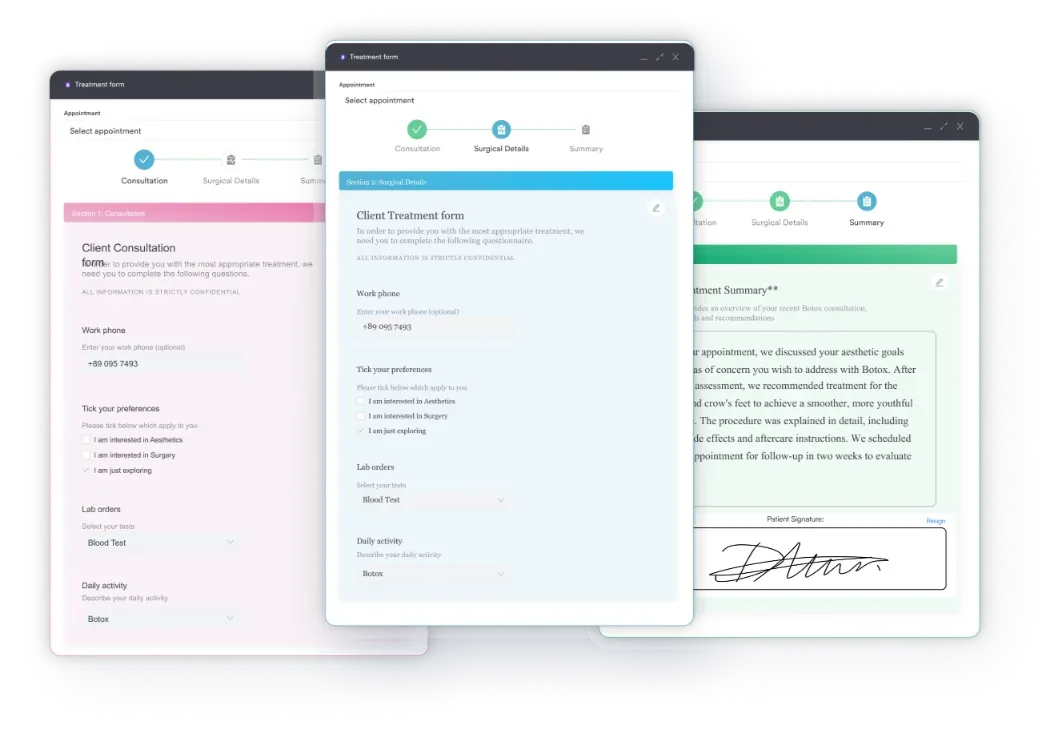
Your informed consent document must explain the treatment in plain language, list common and rare side effects, document contraindications the patient has confirmed they do not have, state expected outcome realism, explain the 2-week session interval and 12-week results timeline, and require patient signature with date and printed name. Include a medical director signature line if your jurisdiction requires it.
Common side effects (redness, swelling, mild bruising, temporary firmness in the treatment area) typically resolve within 24-48 hours. Rare complications (nerve irritation, allergic reaction to ultrasound gel, seroma) should be listed with contact instructions if they occur. The consent form must state that UltraShape is non-invasive and does not require anesthesia, but that results vary and are not guaranteed.
Many clinics use form capture and e-signature systems to ensure consent forms are signed electronically, timestamped, and filed automatically in the patient record with an audit trail. This protects against liability and enables instant access to the signed form during an audit or complaint.
Post-treatment aftercare messaging is critical to patient satisfaction and results. Immediately after an UltraShape session, instruct patients to: hydrate well (drink at least 2-3 litres of water daily for the first week to support lymphatic clearance), avoid strenuous exercise for 24-48 hours (light walking is fine), avoid direct sun exposure in the treatment area for 48 hours, avoid heat treatments (hot tubs, saunas) for 24-48 hours, and apply cool compresses if swelling or redness persists.
Patients should expect some mild redness, swelling, and firmness immediately after treatment; these are normal and resolve quickly. Reassure them that results are not immediate-the body is still clearing destroyed fat cells, so patience is essential. Many clinics automate aftercare instruction delivery via SMS or email immediately after session check-out, then send follow-up messages at 1 week and 4 weeks post-session reminding patients to hydrate, maintain stable weight, and schedule their next session.
Book a demo to see how Pabau eliminates paper forms and fragmented workflows for body contouring clinics. With Pabau, consultation forms are digital, pre-populated from the patient record, and auto-scored for contraindications-reducing clinic admin and ensuring no screening question is missed. Consent forms are captured with e-signature, timestamped, and filed instantly in the patient record.
For the critical 2-week protocol, Pabau’s automated workflows schedule all three sessions at intake, send appointment reminders via SMS 48 hours before each session, and flag no-shows so you can reschedule them quickly. Post-session, automated aftercare messaging reminds patients to hydrate and stay out of the sun-no manual text sending required.
UltraShape is a proven non-invasive fat reduction treatment, but clinic success depends on structured documentation and patient communication. The three templates in this kit-consultation form, informed consent document, and aftercare instructions-cover the essential clinic workflows. Customise them to your protocols, digitise them for efficiency, and link them to automated patient journey reminders. Clinics that standardise their documentation and automate follow-up see higher protocol completion, better patient satisfaction, and faster time-to-results. A medical spa business plan template applies that same structure to growth decisions, not just patient paperwork.

List Item #1
List Item #2
New List Item
UltraShape Power is an FDA-cleared non-invasive body contouring device that uses pulsed focused ultrasound (PFUS) energy to mechanically destroy fat cells in the subcutaneous layer without heat, anesthesia, or downtime. Acoustic waves disrupt adipocyte cell membranes; the body’s lymphatic system clears the destroyed cells over 4-12 weeks.
Three sessions spaced two weeks apart is the standard protocol. Results typically become visible 4-6 weeks after the final session, with maximal results by 12 weeks as the body completes clearance of destroyed fat cells.
Absolute contraindications include pregnancy, active skin infection, metal implants in or near the treatment area, and uncontrolled diabetes. Relative contraindications (requiring medical director assessment) include thyroid disorders and recent other body contouring in the same area.
UltraShape is FDA-cleared for the abdomen, flanks, and thighs. Treatment areas must have at least 1.5-2 cm of subcutaneous fat to be suitable.
Informed consent documents protect your clinic by documenting that the patient understands treatment risks, realistic results timeline, and contraindications. Aftercare instructions optimise patient outcomes by guiding hydration, activity, and sun avoidance-reducing complications and improving satisfaction.