Antipsychotic medication list
An antipsychotic medication list is a structured reference that organizes psychi...

2
Last Updated: Oct 13, 2026

A sleep questionnaire is a validated, patient-reported screening tool that measures sleep quality, daytime sleepiness, insomnia severity, or sleep apnea risk in a standardized, scored format.
The four most widely used adult instruments are the Pittsburgh Sleep Quality Index (PSQI) for overall sleep quality, the Epworth Sleepiness Scale (ESS) for daytime sleepiness, the Insomnia Severity Index (ISI) for insomnia severity, and STOP-BANG for obstructive sleep apnea risk.
Each instrument has its own score range and cutoff: a PSQI score above 5, an ESS score of 11 or higher, an ISI score of 15 or higher, or a STOP-BANG score of 3 or higher all point to a problem that needs a closer look.
Practice management software like Pabau lets clinicians deliver these questionnaires through digital intake forms and store scores in the patient record, so results are ready before the visit and easy to track over time.
A downloadable template covering the most widely used adult sleep-screening instruments — the PSQI, ESS, ISI, and STOP-BANG. Use it to gather structured, validated information about a patient’s sleep quality, daytime sleepiness, insomnia symptoms, or sleep apnea risk before deciding on next steps.
Download templateA sleep questionnaire is a validated screening tool that helps clinicians spot patients who report poor sleep quality, excessive daytime sleepiness, insomnia symptoms, or a high risk of obstructive sleep apnea. Download the free PDF template above, then use the sections below to pick the right instrument, score it, and fit it into your intake workflow.
A sleep questionnaire is a standardized, patient-reported instrument that gathers objective, validated information about a patient’s sleep quality, daytime symptoms, and sleep-related risk factors. Unlike an informal question about how someone slept, each instrument follows a fixed set of items and a published scoring method, so results are comparable across patients and over time.
Sleep questionnaires split into two broad groups. Some measure sleep quality and insomnia symptoms over the past month, such as the Pittsburgh Sleep Quality Index (PSQI) and the Insomnia Severity Index (ISI). Others screen for a specific condition, such as excessive daytime sleepiness with the Epworth Sleepiness Scale (ESS) or obstructive sleep apnea risk with the STOP-BANG questionnaire.
Most take 5 to 10 minutes to complete and can be delivered on paper or digitally. They typically ask about sleep duration, perceived sleep quality, snoring or breathing symptoms, and daytime function, then produce a numerical score that maps to a published cutoff.
It is a screening and severity-assessment tool, not a diagnostic test. A high score is a reason to investigate further, not a diagnosis. Depending on the result, that might mean a closer clinical history, a referral to primary care or a sleep medicine specialist, or an overnight sleep study, also called polysomnography.
A positive screen does not, by itself, confirm primary insomnia, coded as F51.01, or obstructive sleep apnea.
Four validated instruments cover most adult sleep-screening needs in general and specialty practice. Each targets a different domain and takes only a few minutes to complete.
The PSQI is the most detailed of the four and produces seven component scores alongside its global score. If PSQI is your primary instrument, our PSQI template covers the full 19-item questionnaire and component-level scoring in more depth.
Each instrument sums its own items into a total score, and each has its own published cutoff. Scoring one against another instrument’s thresholds isn’t valid, so keep the four ranges below separate.
Pittsburgh Sleep Quality Index (PSQI): Sum all 19 items into a global score from 0 to 21. A score above 5 indicates poor sleep quality, with a sensitivity of around 89.6% and a specificity of around 86.5% for identifying sleep disorders. See our PSQI template for the seven component scores behind that global number.
Epworth Sleepiness Scale (ESS): Patients rate how likely they are to doze off in eight everyday situations on a 0-3 scale, for a total from 0 to 24. Scores from 0 to 10 sit within the normal range; a score of 11 or higher indicates excessive daytime sleepiness and supports a closer look at conditions like sleep apnea or narcolepsy.
Insomnia Severity Index (ISI): Seven items are each scored 0 to 4, for a total from 0 to 28. A score of 0-7 shows no clinically significant insomnia, 8-14 is subthreshold insomnia, 15-21 is moderate insomnia, and 22-28 is severe insomnia. A score of 15 or higher is the threshold most often used to flag a patient for a clinical insomnia work-up.
STOP-BANG: Score one point for each “yes” answer across the eight items (snoring, tiredness, observed apnea, high blood pressure, BMI over 35, age over 50, neck circumference over 40 cm/16 in, and male gender), for a total from 0 to 8. A score of 0-2 is low risk, 3-4 is intermediate risk, and 5-8 is high risk for moderate-to-severe obstructive sleep apnea. At a cutoff of 3 or higher, STOP-BANG has a sensitivity of around 93% for moderate-to-severe OSA.
Across all four instruments, a positive screen is a reason to investigate further, not a diagnosis. Interpretation should always factor in the patient’s broader clinical picture rather than a single score in isolation.
Practices that digitize paper scales with software for capturing forms cut scoring errors and filing time.
Building a sleep questionnaire into routine intake catches sleep problems earlier and gives you an objective starting point for the conversation. Five steps cover most practice settings.
A sleep questionnaire is useful anywhere a patient’s sleep, breathing, or daytime function is part of the clinical picture.
A ready-made sleep questionnaire template offers clear clinical and operational advantages over asking about sleep informally.
Clinical benefits: A validated, structured screen catches problems an informal conversation might miss, and gives you an objective score to track over time. A structured patient record with questionnaire scores makes it easy to compare a patient’s results visit to visit.
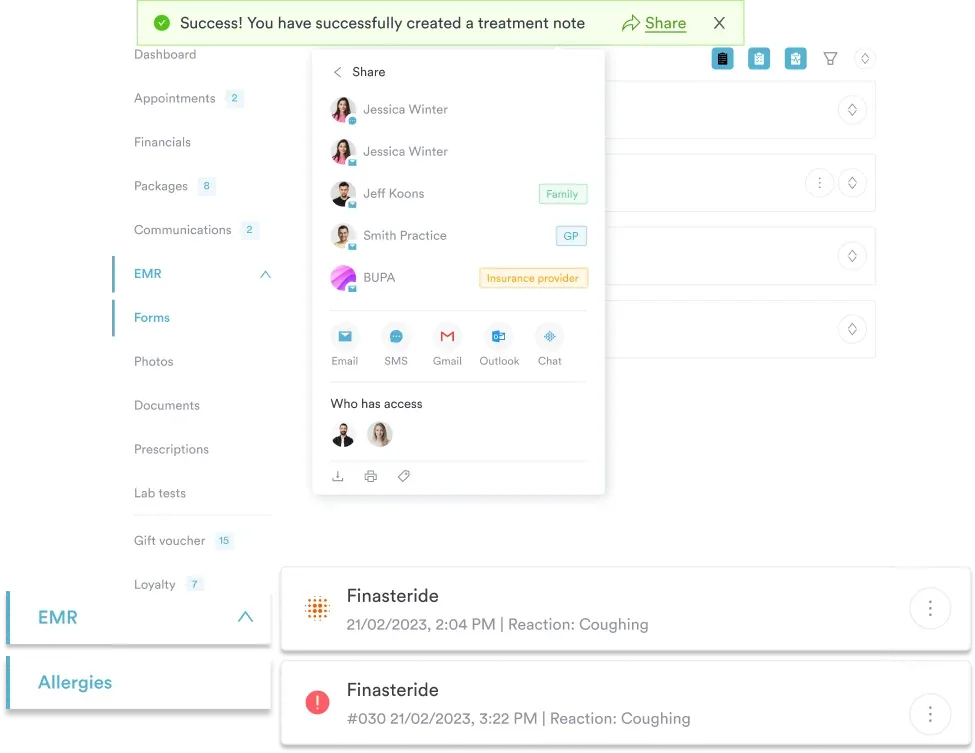
Workflow benefits: A ready-to-use template removes the need to build your own sleep screen from scratch. Patients can complete it from home or in the waiting room, which frees up staff time and means the score is ready before the clinician walks in.
Documentation benefits: A dated, scored questionnaire in the chart supports your referral decisions and strengthens the record if a patient’s case is reviewed later. It also gives patients a concrete explanation for why you’re recommending a sleep-medicine referral or a sleep study, rather than relying on your impression alone.
If a patient screens positive on both the ESS and STOP-BANG, say so explicitly in any referral you write. Excessive daytime sleepiness plus a high apnea-risk score points toward the same underlying problem, and clinicians on the receiving end (sleep medicine or ENT) benefit from knowing both scores upfront.
Paper sleep questionnaires are easy to lose and awkward to score consistently. Digital intake removes both problems.
That saves the front desk from chasing paper forms and means nothing gets missed on a busy day.
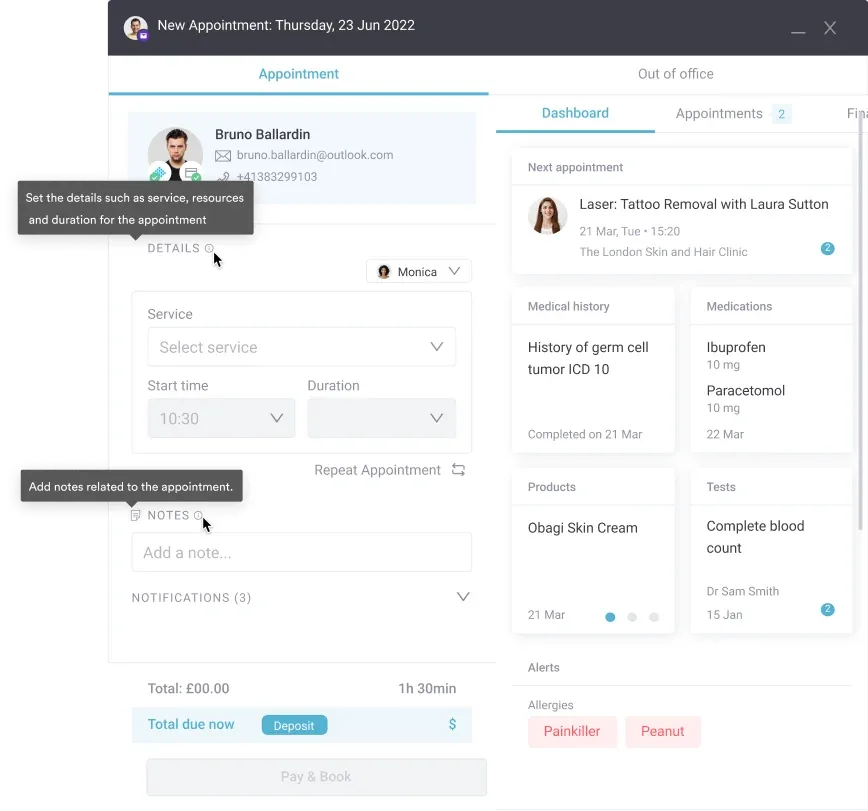
For practices that see a mix of sleep complaints, customizable intake forms let you route the right questionnaire to the right visit type. A snoring or fatigue complaint pulls the ESS or STOP-BANG, while a general sleep-quality or insomnia concern pulls the PSQI or ISI.
Multi-location practices benefit most: a standardized digital template means every clinician screens the same way, and a patient seen at a different site still has their full sleep-screening history available.

Replace paper sleep questionnaires with automated digital intake forms. Pabau’s intake platform captures PSQI, ESS, ISI, and STOP-BANG responses, scores them automatically, and stores results in the patient record so you can track them over time.

A sleep questionnaire is a brief, validated screen that flags patients at risk of poor sleep quality, excessive daytime sleepiness, insomnia, or obstructive sleep apnea. The PSQI, ESS, ISI, and STOP-BANG each cover a different piece of that picture, and each comes with its own score range and cutoff.
A positive screen on any of them supports the case for further evaluation, whether that’s a closer clinical history, a sleep-medicine referral, or a sleep study, but none of them confirm a diagnosis on their own.
Building sleep screening into digital intake. Download the sleep questionnaire template above and start using it at your next visit where sleep is part of the picture.

Looking for printable exercises to build reasoning skills? Critical thinking worksheets cover logical reasoning, inference, and evidence evaluation for a range of age groups.
Screening for a mood or personality disorder alongside a sleep complaint? The BPD worksheet gives DBT therapists a structured way to track symptoms between sessions.
Screening for addictive behavior patterns during recovery? Cross Addiction Worksheet assesses addiction history, triggers, and coping strategies to spot behavior transfer.
A sleep questionnaire is a validated, patient-reported tool used to screen for sleep problems such as poor sleep quality, excessive daytime sleepiness, insomnia, or obstructive sleep apnea. It gives clinicians an objective, scored starting point for deciding whether a patient needs further evaluation or referral.
Each instrument screens for a different problem. The Pittsburgh Sleep Quality Index (PSQI) measures overall sleep quality over the past month, the Epworth Sleepiness Scale (ESS) measures daytime sleepiness, the Insomnia Severity Index (ISI) measures insomnia severity, and STOP-BANG screens for obstructive sleep apnea risk. Many practices use more than one, depending on the patient’s presenting complaint.
No. Sleep questionnaires are screening and severity-assessment tools, not diagnostic instruments. A high score means a patient is at elevated risk and needs further evaluation, which may include a clinical history, a sleep-medicine or ENT referral, or an overnight sleep study (polysomnography) to confirm a diagnosis.
Most take 5 to 10 minutes. The Epworth Sleepiness Scale and STOP-BANG are the quickest, at around 5 minutes each, while the 19-item PSQI can take closer to 10 minutes. Digital delivery through intake forms often reduces completion time further.
For patients starting treatment, repeating the questionnaire every 4 to 8 weeks captures meaningful change. For general monitoring, a quarterly or annual repeat is common in primary care. Frequency should depend on the severity of the initial score and how quickly the clinical picture is expected to change.