HIPAA compliant texting: What you can send patients & how to communicate securely
HIPAA compliant texting is possible when a text holds no protected health inform...

Last Updated: Oct 16, 2026

Lecture notes are a condensed record of the key concepts from a class, not a transcript of everything the speaker said.
Preparing before class, capturing main ideas during it, and reviewing within 24 hours will do more for retention than fast typing.
The Cornell method, the outline method, and mind mapping each suit different material, so match the layout to the subject.
Reviewing within a day works because recall drops fast once a session ends, a pattern known as the Ebbinghaus forgetting curve.
Qualified practitioners can use the same template for training days, so course notes turn into documentation the whole team works from.
A printable pack with three layouts: Cornell, outline, and mind map. Each one has space for pre-class preparation, structured capture during the session, and consolidation once it ends.
Download templateTaking good lecture notes is one of the most underrated academic skills. Most students try to transcribe every word and end up with pages they never reopen. Capturing a session well means knowing what to listen for, how to lay the page out, and what to do afterward.
This guide covers the three note-taking methods that hold up under research, plus the routine that makes any of them work. It also shows how the same template carries over to clinical training days. Notes taken in a lecture hall stay useful long after you qualify.
Lecture notes are a written record of the key concepts, examples, and details from a teaching session. A transcript captures every word. Notes distill the session into something you can revise from.
Students who review their notes within 24 hours retain far more than those who leave it a week. That follows Ebbinghaus’s forgetting curve, a documented pattern showing how quickly recall drops once a session ends.
The routine around your note-taking matters as much as the layout you pick. Split the session into three phases: preparation, active listening, and review.
No single method suits every student or every subject. Cornell, outline, and mind mapping are the three most studied. The table below matches each one to the material it handles best.
Cornell divides the page into three parts. The cue column on the left takes about a quarter of the width and holds questions or keywords. The notes column on the right holds the content, and a summary strip runs along the bottom.
You fill the notes column during the session. Afterward you add cue words that would prompt recall of the detail beside them. The university’s own Cornell note-taking system guidance is worth reading once.
The structure forces the 24-hour review on you. Going back to add cue words means re-reading the whole page while the material is still fresh.
Outline notes use indentation and numbering to show hierarchy, from main topic down to supporting detail. It suits material with a built-in order, like pharmacology, procedural steps, or a historical timeline.
The payoff is that you can see at a glance which idea is primary. The weakness is fragmentation. If the speaker jumps between topics, your outline follows.
Outline pages also condense well. A term of notes collapses into a one-page reference, the way a medical coding cheat sheet does.
A mind map starts with the session topic in the middle. Branches run outward to related concepts, examples, and the links between them. Color and simple icons help the page stick in memory.
It plays to spatial memory and shows how ideas connect. It falls apart when one session covers several unrelated subtopics.
A finished map often ends up looking like a counseling theories chart, with one idea per branch and the distinctions visible side by side.
Handwriting wins narrowly on conceptual understanding. Typing wins on volume. Which one you pick matters less than whether you go back to the page.
Handwritten notes show a small but measurable edge on conceptual questions. A widely cited 2014 study by Mueller and Oppenheimer put that down to speed. Writing is slower, so you have to select and rephrase rather than transcribe.
Typed notes capture more detail and keep up with a fast speaker. The risk is typing on autopilot without processing any of it.
So use whichever one you will actually review within a day. A beautiful handwritten set left untouched for a week loses to typed notes read the same evening.
AI transcription tools turn recorded audio into a structured outline, and some generate summaries or flashcards from it. They take the mechanical part of capture off your hands, which helps most with recorded sessions you can replay.
Two limits are worth knowing. Recording only helps if you had permission to record in the first place. And the output still needs a human edit, because a summary that reads well can still be wrong.
Treat AI notes as a first draft. Run them through the same 24-hour review and write your own summary at the end. That is where the learning happens, not in the transcript.
Our download combines the Cornell layout with an outline capture area, and it gives you a section for each phase of the session.
Lectures do not stop when you qualify. Practitioners sit through device training, injectables courses, safeguarding updates, and continuing professional development, known as CPD. The same before, during, and after routine applies, but the notes now have a second job.
A student’s notes only have to serve the student. A practitioner’s notes usually have to change how a team works. A technique learned on a Saturday course has to reach the treatment room on Monday. That means writing it into a protocol, a consent form, or a note template.
So add one more line to the summary strip, naming what changes in practice. Therapy practices running on psychology practice software can attach the agreed wording straight to the client record. Allied health teams on speech therapy software do the same with scoring protocols.
Training providers see both sides of this. Our case study with MATA Training Academy pairs a course provider with a working practice. One session there is teaching for one group and a protocol update for the other.
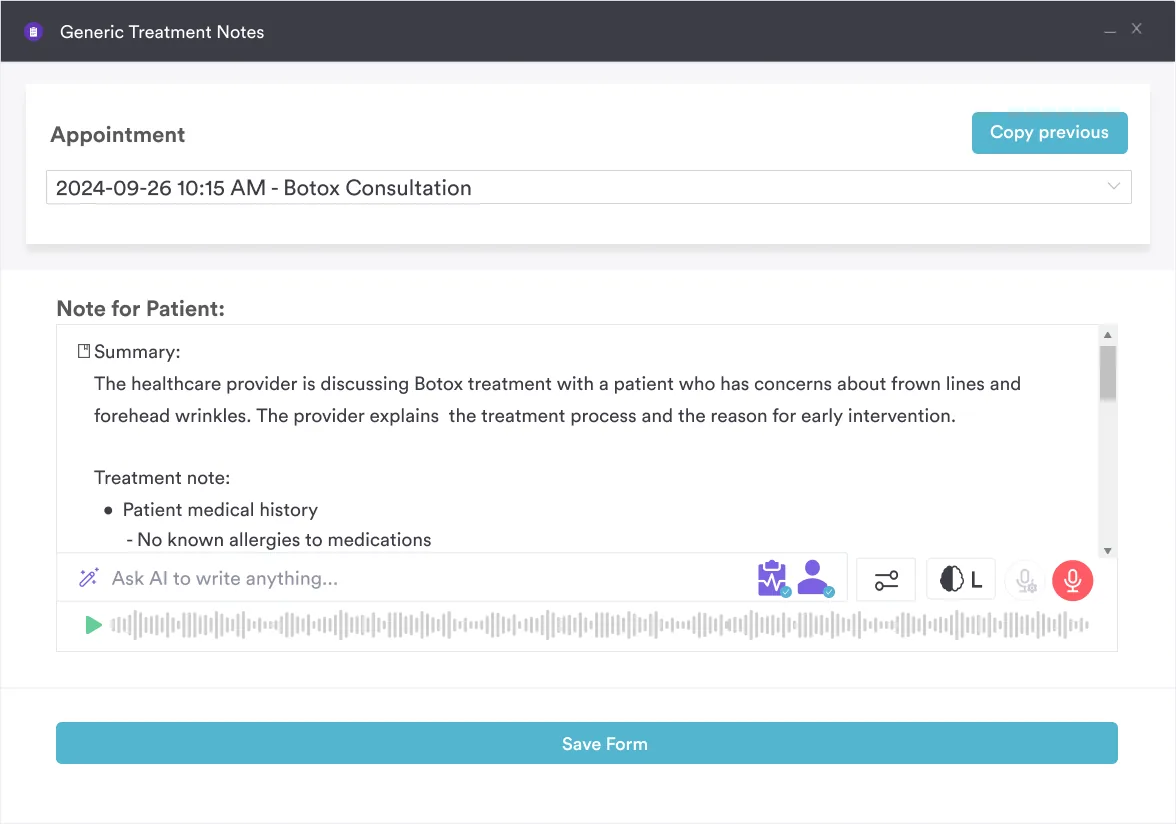
Training notes usually live in a notebook or a shared drive. The person who attended the course remembers what changed. Everyone else finds out when they get it wrong.
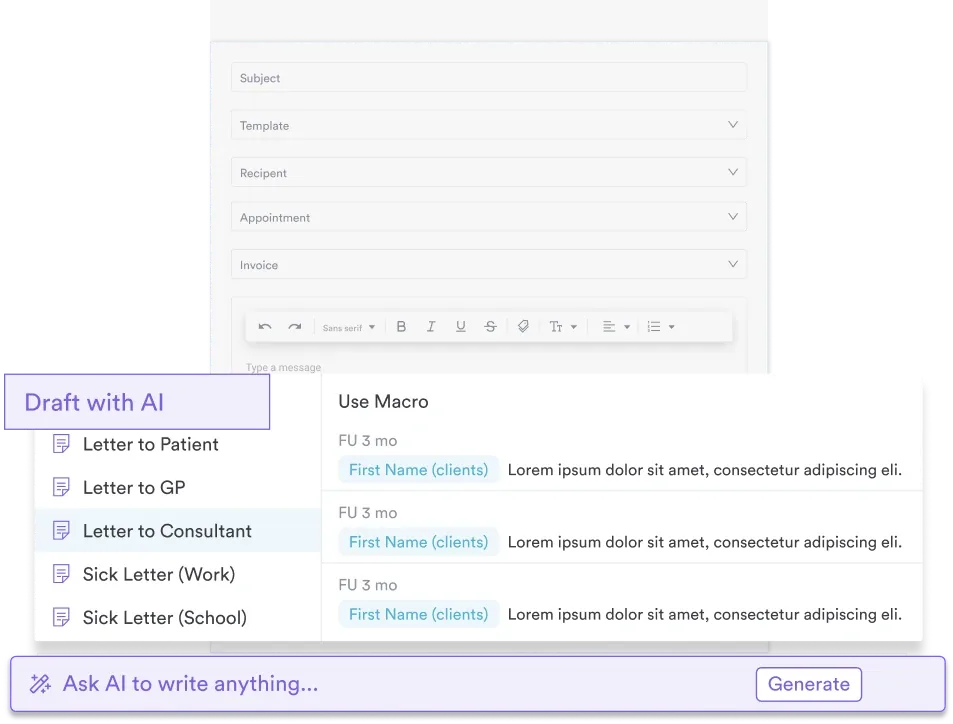
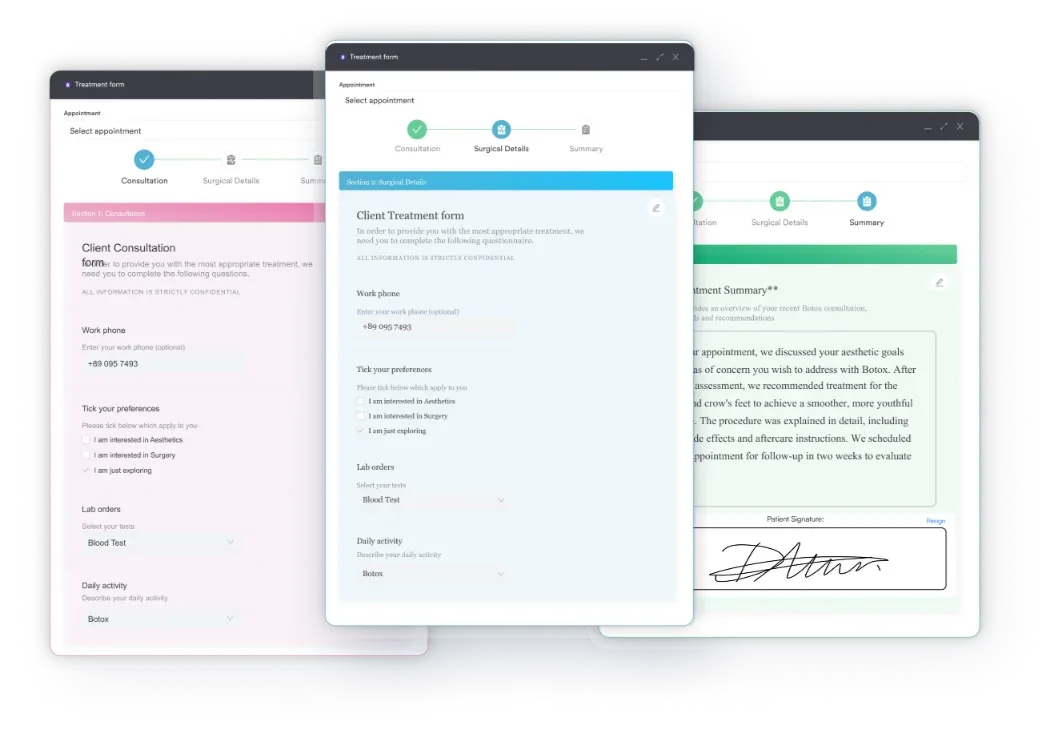
Practice management software like Pabau gives those notes somewhere to land. You can build the new step into a treatment note template, update the consent wording, and set the follow-up the course recommended. The next appointment then prompts the whole team, not only the person who sat in the room.
Pabau Scribe, does the same job inside the consult. It drafts the note from the conversation so the clinician can keep their attention on the patient. You read it and sign it off, exactly as you would edit an AI transcript of a lecture.
The outcome is that CPD stops being a certificate in a folder. What the team learned shows up in the records they use every day, and it stays there when someone leaves.

Pabau keeps your treatment note templates, consent forms, and follow-up steps in one place. A change from a training course then reaches every clinician on the next appointment.

The method you choose matters less than the routine around it. Pick the layout that fits the subject, then protect the 24-hour review. That single habit will do more for you than any format on the page.
If you are taking notes as a professional rather than a student, one more step earns its keep. Decide what changes in practice, write it down, and put it somewhere your team will see it. A note nobody acts on is just paper.
Book a demo to see how Pabau turns training notes into the templates, forms, and follow-ups your team works from every day.

Teaching character analysis in the classroom? Character traits worksheet guides K-6 students through naming traits, citing evidence, and reflecting on the story’s characters.
Setting client expectations before a tattoo session? Tattoo pain chart maps which body parts hurt most, helping studios set client expectations beforehand.
Onboarding a new client at your practice? Veterinary new client form captures pet and owner details upfront so staff can focus on animal care.
Preparing for an attorney appointment? Will preparation worksheet organizes assets, beneficiaries, and executor choices before your attorney appointment.
Want to run your practice from your phone? Pabau GO mobile app lets practitioners manage consultations, capture consents and photos, and take payments on the go.
The Cornell method is the safest default, because it works across most subjects and builds the 24-hour review into the layout. The outline method suits sequential material like pharmacology or procedural steps. Mind mapping suits visual learners working on conceptual topics. Try all three with the template and keep the one that produces notes you return to.
Your own notes from a lecture are not a retrievable source, so APA 7 treats them as personal communication. Cite them in the text only, like this: (J. Smith, personal communication, March 3, 2026). No reference-list entry is needed. If the instructor handed the material out, it is retrievable. That does get a reference entry, with a bracketed description such as [Class handout] or [PowerPoint slides].
Recall drops fastest in the hours right after a session, a pattern described by the psychologist Hermann Ebbinghaus as the forgetting curve. A review inside a day catches the material before that drop and moves it toward long-term memory. It is one of the most consistently supported study habits there is.
Handwriting shows a small edge on conceptual understanding, while typing captures more detail. The deciding factor is which one gets you back to the page within 24 hours. If typing makes daily review likely, type. If handwriting slows you down enough to think, write by hand.
No, because the processing is the point. AI transcription speeds up capture, but it does nothing for the part that builds recall. Treat the output as a draft, then review it, correct it, and write your own summary within 24 hours.