Free model waiver form + what it is and when your practice needs one
A model waiver form is a signed document that lets a healthcare practice use a p...

5
Last Updated: Sep 29, 2026

Fat dissolving injections aftercare starts the moment treatment ends and runs for roughly 2 to 14 days, depending on the product and area treated.
The first 24 to 48 hours matter most. Patients should avoid heat, strenuous activity, and alcohol, and use cold compresses to reduce swelling.
Massaging the treated area for about 15 minutes a day for two weeks supports fat clearance and helps prevent hard lumps.
Practice management software like Pabau helps you hand out aftercare instructions, capture consent, and send automated recovery reminders from one patient record.
A ready-to-use aftercare guide for fat dissolving injection treatments covering immediate post-treatment protocols, recovery timelines, activity restrictions, swelling management, dietary guidance, and clinical warning signs.
Download templateA fat dissolving injections aftercare template hands every patient the same clear, written recovery instructions before they leave your treatment room. That consistency is what turns variable results into predictable ones: patients who follow the protocol bruise less, swell less, and see cleaner fat reduction. This guide covers the aftercare that matters for treatments like Aqualyx, Kybella, DesoBody, and DesoFace. Once patients leave with these instructions, retention becomes the next job, one our med spa management software comparison covers for every platform it ranks.
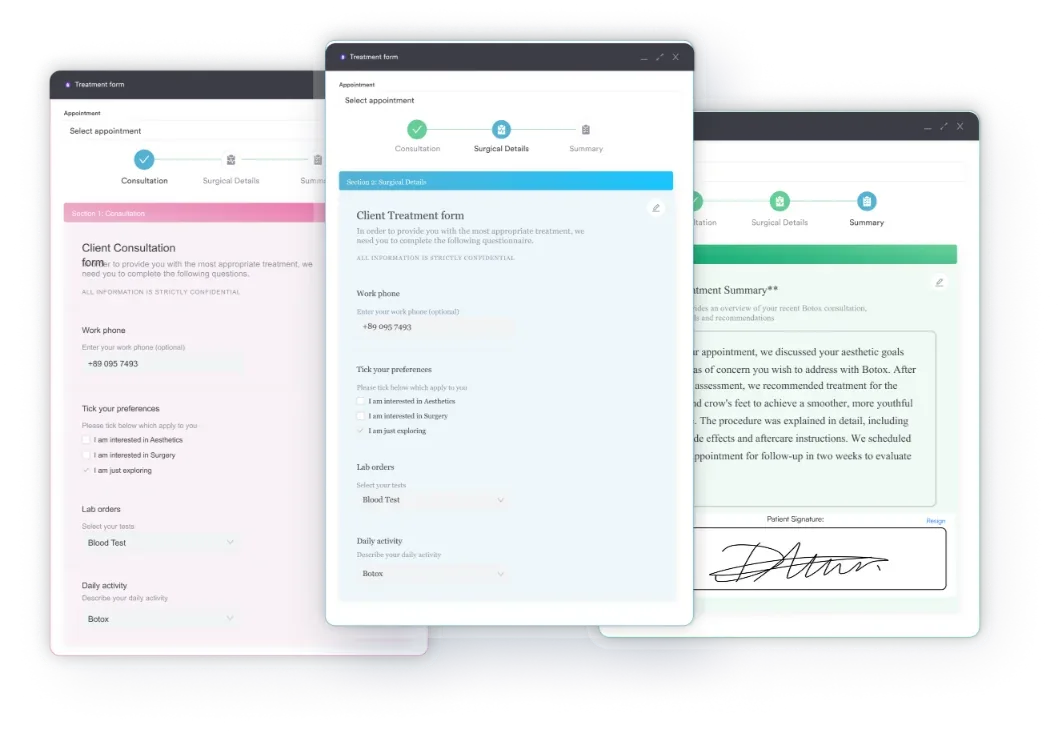
A fat dissolving injections aftercare template is a structured document patients receive right after treatment. It sets out what to expect during recovery, which activities to avoid, dietary considerations, and the warning signs that warrant an urgent call to your practice.
These treatments use deoxycholic acid, the active ingredient in Kybella and Aqualyx, to break down the membranes of fat cells. Once the cells rupture, the body clears the released fat through the lymphatic system over several weeks, typically four to six. Good aftercare supports that process and lowers the risk of infection, uneven results, and heavy bruising.
Providing clear, written aftercare is also part of good practice. In the UK, CQC standards and MHRA oversight of injectable products expect it, and US state medical boards and med spa rules set the same expectation. Either way, patients should leave understanding their recovery and its risks. Practices in the UAE face similar oversight, and choosing capable medical spa software in the UAE helps meet DHA and NABIDH requirements around aftercare records.
Effective aftercare delivery follows five steps that fold patient education, compliance tracking, and clinical oversight into your treatment workflow.
The template suits a range of practice types and roles across aesthetics and medical spas:
Digital forms sit at the center of practice management software, feeding records, billing, and follow-ups from one entry.
A structured aftercare template supports four areas that directly shape treatment outcomes and your reputation.
The first 48 hours are the most important window. The injected compound is actively breaking down fat cell membranes, and the body’s inflammatory response is at its peak. What the patient does now directly affects how much they swell and bruise.
A patient portal that stores aftercare guides lets patients pull up these instructions from home, which cuts call-ins during the critical first 48 hours.
Knowing what counts as normal versus what needs clinical attention is the difference between a calm patient and one who panics and seeks emergency care.
Expected side effects. Mild redness, swelling, tenderness, bruising, and a firm lump at the injection site for one to two weeks are normal. Swelling usually peaks at day two to three and settles by day seven to 14. Bruising resolves within two to three weeks. These effects are temporary and need no treatment.
Hard lumps. Firm nodules in the treated area are common, especially in the first four to six weeks. They are localized inflammation and partially dissolved fat, and they usually soften with massage and time. Reassure patients this is expected, not a complication. Any lump that lasts beyond eight weeks or causes pain should be reviewed.
When to contact your practice right away. Increasing pain beyond mild tenderness, signs of infection (warmth, pus, fever), asymmetrical or spreading swelling, difficulty breathing or speaking if the face or neck was treated, or numbness and tingling all warrant an urgent call.
A gradual return to activity reduces swelling and bruising. Your template should lay out a clear timeline.
Nutrition and hydration are easy to overlook, but they support the lymphatic system as it clears the destroyed fat cells.
These guidelines reinforce the broader point:
Massage is one of the most useful things a patient can do to improve fat dissolving results. Your template should give explicit, step-by-step guidance.
Massage encourages lymphatic drainage, calms localized inflammation, and stops fat remnants from settling into hard lumps. Patients who skip it or do it inconsistently are more likely to end up with persistent lumping.
Fat dissolving injections are used across several body areas, and aftercare shifts slightly by location.
Submental fat (double chin). This is the most common area. Swelling is visible and can briefly affect speech or swallowing. Advise patients to avoid tight necklines, avoid sleeping flat, and limit extended talking for the first 48 hours. Keep neck massage gentle to protect the surrounding muscles.
Abdomen and stomach. Abdominal swelling can feel firmer and take a little longer to settle, up to three weeks. Advise loose clothing over the area. Massage is safe here but should stay clear of the area around the navel to avoid tissue trauma.
Flanks and thighs. Larger areas tend to swell more. Extended cold compress use over five to seven days often helps. Patients should avoid compression garments unless you have specifically approved them.
The core aftercare principles hold across products, but timelines and protocols differ by formulation and injection depth.
Your template should record which product was used so patients get product-aligned expectations. If you use more than one, keep separate template versions or add product-selection checkboxes to a single flexible template. Alastin skincare follows the same logic, with its own aftercare instructions for microneedling, laser, peels, and HydraFacial.
Fat dissolving injections give semi-permanent results when patients understand the maintenance reality. Your template should set realistic expectations.
Once fat cells are destroyed, they do not grow back. But the remaining fat cells in the area can still expand with weight gain. To hold results, patients need to maintain their weight through diet and exercise. Significant weight gain can erode the visible result over one to two years.
You can improve patient engagement during recovery by scheduling a follow-up at around eight weeks to assess results, talk through maintenance, and decide whether repeat treatments are warranted. That touchpoint also surfaces any delayed complications and reinforces the value of aftercare for future treatments.
Clear escalation guidance prevents unnecessary emergency visits while making sure genuine complications get timely attention.
Encourage patients to reach out rather than guess.
Pro tip: add a one-page “when to call” card to your aftercare packet. Patients often misplace multi-page guides but hold on to a single visual reference.
Aftercare runs both ways. Your internal workflow matters as much as patient compliance.
Document at treatment. Record the exact product, injection sites, volume, depth, and any pre-treatment contraindications such as medications, allergies, or pregnancy. You will need this if a patient calls with a complication.
Capture acknowledgment. Have patients sign or digitally confirm they received and understood the aftercare template. This protects your practice and creates accountability.
Set a follow-up. Schedule a review at two weeks to check swelling, any lumping, and patient satisfaction, and to discuss repeat treatments if needed.
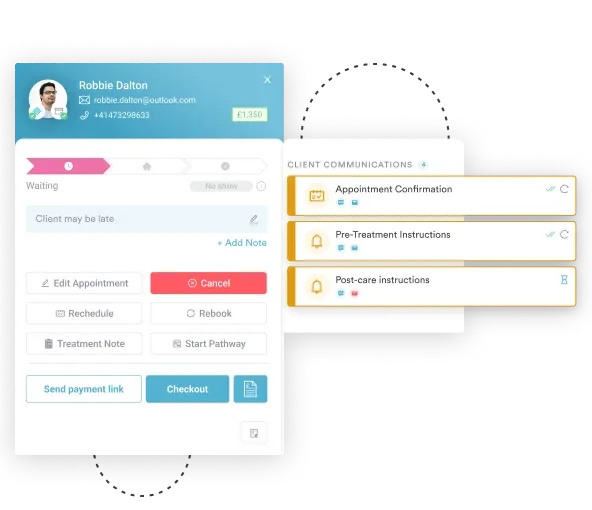
Patient care management inside one system keeps aftercare records, follow-up appointments, and long-term outcomes tracked together rather than scattered across ad-hoc notes.
A clear, written template. Standardize your aftercare through templates, automation, and consistent follow-up and you reduce complications, lift satisfaction, and build a reputation for safe, reliable treatments. Book a demo to see how Pabau delivers and tracks aftercare instructions with automated reminders and detailed patient records.
Fat dissolving injections aftercare is a structured set of post-treatment instructions covering activity restrictions, diet, swelling management, massage, and clinical warning signs. Patients receive it right after treatment to optimize results and prevent complications.
Swelling usually peaks at day two to three and settles within 7 to 14 days, depending on the product, area, and individual healing. Some patients have mild residual swelling for up to three weeks. Cold compresses in the first 48 hours reduce its severity.
Yes. Firm nodules are common in the first two to four weeks and reflect localized inflammation and partially dissolved fat. Massage of about 15 minutes a day for two weeks helps them resolve. Lumps lasting beyond eight weeks should be reviewed clinically.
Avoid strenuous exercise and the gym for 24 to 48 hours. Light walking is fine straight away. Resume moderate activity such as gentle yoga or swimming after day three, and return to full-intensity workouts after day 7 to 14 as swelling settles.
Avoid heat (saunas, hot baths), strenuous activity, alcohol, and touching the treated area for the first 48 hours. Keep avoiding intense exercise for about a week and alcohol for at least 72 hours. Follow any area-specific advice, such as loose clothing over a treated abdomen.
The core aftercare is the same, since Kybella and Aqualyx both use deoxycholic acid. The main difference is timeline: Kybella swelling can last up to two weeks and is often more pronounced, especially under the chin, so cold compresses and gentle neck massage matter more in the first days.
Most patients recover within 1 to 2 weeks. Swelling settles by day 7 to 14 and bruising fades within two to three weeks, though larger areas such as the abdomen can take up to three weeks to fully calm down. Downtime is minimal, so most people return to work the same or the next day.
Lean on anti-inflammatory foods such as oily fish, berries, leafy greens, and turmeric, and keep protein intake up to support healing. Cut back on salt and processed food, which worsen fluid retention and prolong swelling, and drink 2 to 3 liters of water a day to help the lymphatic system clear the released fat.
Coffee in moderation is fine, but caffeine is mildly dehydrating, so balance each cup with extra water. Some practices advise fasting for a few hours around an abdominal treatment, which includes the milk in coffee. Alcohol is the drink to avoid outright for at least 48 to 72 hours, since it widens blood vessels and increases bruising.
Visible fat reduction develops gradually over four to six weeks as the body clears the destroyed fat cells, and most areas need several sessions spaced four to six weeks apart. Final results settle once swelling has fully resolved, and they last long term as long as weight stays stable.