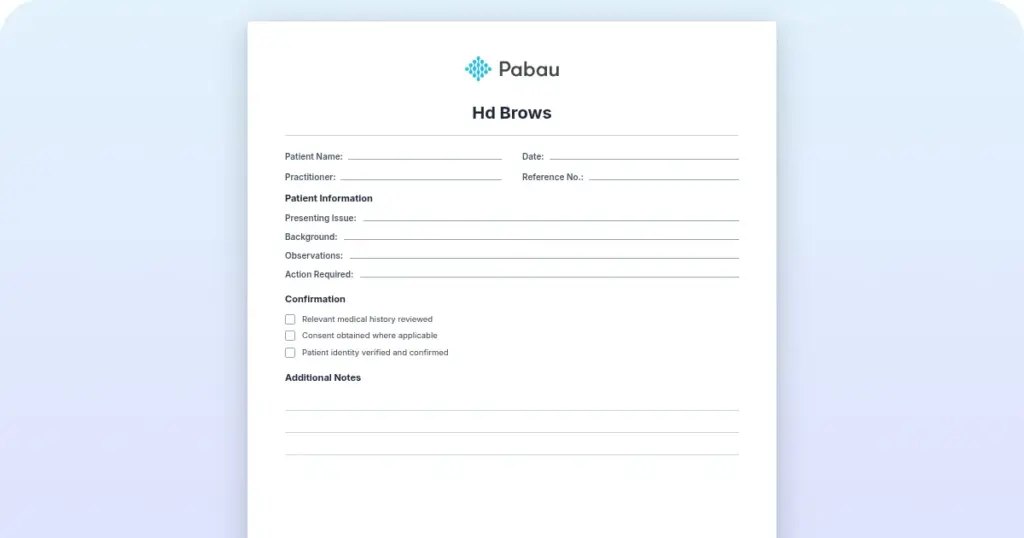
HD Brows consultation form: Free template and guide
HD Brows is a seven-step brow treatment that combines consultation, tinting, wax...

2
Last Updated: Oct 13, 2026

A clinician-facing, printable aftercare advice template designed for skin booster (hyaluronic acid injectable) treatments.
Covers immediate post-treatment care, side effects to expect, product restrictions, and a timeline for results and recovery.
Includes red-flag symptoms and clear instructions on when to contact the clinic for clinical safety.
Integrates with Pabau’s automated aftercare workflows to send digital copies via SMS or email to patients post-injection.
A ready-to-use aftercare advice template covering patient details, post-treatment care instructions, immediate side effects, skincare product guidance, results timeline, and clear guidance on when to contact the clinic.
Download templateSkin booster treatments deliver visible results through hyaluronic acid micro-injections, but those results only hold up when patients follow proper skin booster aftercare. This template gives practitioners a ready-to-print, brandable pre- and post-care resource to hand every patient after their injection appointment, so the do’s, don’ts, and warning signs go home in writing instead of being half-remembered from a rushed doorway conversation. Behind each injection appointment sit charting and scheduling, two areas our roundup of the top med spa software compares.
A skin booster aftercare template is a structured, patient-facing document that provides post-treatment care instructions following hyaluronic acid injectable procedures (Profhilo, Juvederm Volite, Restylane Skinboosters, Seventy Hyal 2000, and similar products). The template guides patients through the critical first 72 hours post-injection and beyond, clarifying what to expect, what to avoid, and when to seek clinical advice.
From a clinical standpoint, a standardized aftercare template serves as a safety and compliance document. It protects your practice by ensuring every patient receives consistent, evidence-based guidance in writing. It also reduces follow-up calls. Patients get clear expectations about side effects, results timing, and maintenance frequency.
Aesthetic clinics and dermatology practices use these templates as part of informed consent workflows, alongside pre-treatment consultations. They are typically printed or emailed immediately post-treatment. Some practices also send them by automated SMS or email for immediate reinforcement.
The first 24 hours set how well the result settles, so this is the part patients most need in writing. The guidance below applies across the common hyaluronic acid skin boosters — Profhilo, Restylane Skinboosters, Juvederm Volite, and Seventy Hyal 2000 — with product-specific maintenance flagged where it differs. Build these points into the template so every patient leaves with the same instructions.
What to avoid after a skin booster:
What to do instead:
Patients want to know what is normal and when. Mapping recovery day by day in the template heads off the anxious calls about redness or small bumps, because they can see it was expected.
First 6 hours. Leave the treated area completely alone — no touching and no washing. The micro-injection channels need time to close so water, soap, and bacteria can’t get in.
First 24 hours. Expect redness, mild swelling, small bumps at the injection points, and sometimes light bruising. These skin booster side effects are normal and usually settle on their own. Keep makeup, heat, and exercise out.
24 to 72 hours. Side effects fade for most patients within 72 hours, and many report their skin already looks more hydrated within the first day. A light layer of makeup is usually fine again after 72 hours.
Week 1. Bumps and bruising should be gone. Keep active ingredients out of the routine and apply SPF daily. Hydration and glow become noticeably more obvious around the seven-day mark.
Weeks 2 to 8. Skin boosters work gradually. Results build over the following weeks and typically peak around 6 to 8 weeks as the hyaluronic acid hydrates the skin from within.
Most protocols run 2 to 3 sessions spaced 2 to 4 weeks apart. Profhilo usually needs two sessions four weeks apart, then maintenance every six months, and Restylane Skinboosters follow a similar pattern.
The template is designed for immediate, practical use by clinic teams. Follow these five operational steps to integrate it into your aftercare workflow:
Practices that standardize this workflow reduce patient anxiety, lower complaint rates, and demonstrate professional aftercare standards to regulatory bodies like the CQC.

Send aftercare templates automatically via SMS or email post-appointment. Reduce manual follow-up calls and ensure every patient receives consistent guidance.

This template is built for aesthetic practitioners and practice teams across several specialties. Medical spas and beauty clinics administering skin boosters use it daily, while dermatologists performing in-office micro-injection treatments rely on it to standardize patient education. Plastic surgery practices fold it into wider aftercare protocols alongside other injectables.
Practitioners running a skin clinic or a medical spa benefit from a template library, so they can customize and hand out aftercare guidance quickly across different treatments and patient groups.
The template is equally valuable in UK private clinics (subject to MHRA and CQC oversight) and international aesthetic practices, as the core aftercare principles (avoid rubbing, skip active ingredients, protect from sun, monitor for infection) are universally consistent for intradermal hyaluronic acid injections.
Compliance and safety. Providing written aftercare guidance demonstrates professional care standards expected by CQC, JCCP, and professional indemnity insurers. You have a documented record that every patient received consistent, evidence-based guidance.
Reduces patient complications. Clear “do” and “don’t” lists prevent patients from applying irritating products (retinol, glycolic acid), massaging treated areas too early, or exposing skin to excessive sun — all of which can compromise results or trigger prolonged side effects.
Reduces follow-up calls. When patients have a written reference they can review at home, fewer anxious calls come through about normal side effects (mild swelling, redness, small bumps). This saves admin time and improves patient experience.
Standardizes team communication. Every practitioner on your team delivers the same message. Patients see consistency and professionalism, which builds confidence in your practice and treatment protocols.
Supports results and retention. Patients who follow aftercare properly get better, longer-lasting results. Satisfied patients rebook for maintenance.
Design your template header with your clinic logo, opening hours, and a prominent emergency contact line. Patients who feel they can reach you quickly if concerns arise are more likely to follow aftercare instructions carefully and recommend your clinic to others.
A robust aftercare template sits within a broader consent and safety framework. Before patients even receive aftercare advice, they must complete a pre-treatment consultation and sign an informed consent document outlining the risks, benefits, and realistic expectations of skin booster treatment.
Common risks to mention in consent include:
Most side effects settle within 3 to 5 days. Results appear gradually over 2 to 3 weeks as the hyaluronic acid hydrates the skin, and peak at 6 to 8 weeks. They typically last 6 to 12 months depending on the product. Profhilo runs two sessions four weeks apart, then maintenance around every six months, and Restylane Skinboosters follow a similar pattern.
Your aftercare template should reinforce these timelines and clarify that results are gradual, not immediate. This sets realistic expectations and prevents patient disappointment post-treatment. Combine the template with a dermal filler consent forms framework covering statutory disclosure obligations for your jurisdiction. UK clinics must comply with NHS guidance on cosmetic procedures and CQC standards; US clinics must comply with state-specific regulations.
Aesthetic practices increasingly use practice management software like Pabau to store, track, and automate aftercare delivery. A digital template stored in Pabau is emailed or texted to the patient automatically right after their appointment, with their name and treatment details already filled in.
This workflow delivers three benefits:
UK aesthetic practices must meet Joint Council for Cosmetic Practitioners standards for documentation. Storing signed or dated aftercare advice copies in patient records demonstrates compliance with MHRA oversight of medicines and devices, CQC expectations for clinical governance, and professional indemnity insurance requirements.
A skin booster aftercare template does two jobs at once. It protects patients with clear, evidence-based guidance, and it protects your practice with a documented record that aftercare was communicated consistently and in writing. Better-informed patients run into fewer avoidable complications, which improves both satisfaction and results.
Ready to streamline your aftercare delivery? Schedule a demo of Pabau’s automated aftercare workflows and see how digital templates cut admin time while making sure every patient leaves your practice with personalized, professional aftercare guidance in hand.

Offering Botox or filler treatments too? Anti-wrinkle treatment consent form covers risks, contraindications, aftercare, and photo consent for Botox and fillers.
Want more consultations to turn into bookings? Performing consultations that convert covers structure, automation, and digital tools for a high-converting consultation.
Running a multi-practitioner clinic? Aesthetic practitioner qualifications and regulatory compliance ensures your team understands scope-of-practice rules and documentation standards across different UK regulatory bodies.
It is a clinician-facing, printable patient education document that provides post-treatment care instructions following hyaluronic acid injectable procedures. It covers what to do and avoid in the first 24-72 hours, expected side effects, results timeline, and when to contact the clinic.
The core aftercare principles (avoid rubbing, skip active ingredients, use SPF, monitor for infection) are universal for intradermal hyaluronic acid. However, maintenance frequency varies: Profhilo typically needs two sessions 4 weeks apart then 6-monthly, while Restylane Skinboosters follow a similar pattern. Customize the template to reflect the specific product and your practice’s recommended protocol.
Include: clinic contact details and emergency numbers, practitioner name and qualifications, clear product name (e.g. “Profhilo HA Injectable”), side effect timeline (redness/swelling typically 3-5 days), red-flag symptoms (signs of infection, severe reaction), and storage/handling of any prescribed aftercare products. File a copy in the patient record and maintain an audit trail showing delivery.
Yes. Modern clinic software like Pabau supports automated SMS or email delivery of aftercare templates immediately post-appointment, with patient details pre-filled. This ensures timely delivery, reduces manual admin, and creates a digital audit trail of when the patient received guidance.
List red-flag symptoms: signs of infection (increasing redness, warmth, pus), severe allergic reaction (swelling beyond treated area, difficulty breathing), persistent numbness or loss of sensation, severe pain, or changes in vision. Provide clear contact details and expected response time, and advise seeking emergency care (call 999 in the UK) if symptoms are severe.
Most visible side effects — redness, swelling, small bumps, and any bruising — settle within 72 hours, and the skin usually looks fully recovered within a week. The hydrating result itself builds over the following weeks. A cold compress in the first 24 hours, plus no heat or exercise, helps the healing along.
Leave the treated area untouched for the first 6 hours so the injection channels can close. After that, patients can cleanse gently with lukewarm water and a fragrance-free, non-irritating wash. Keep scrubbing, hot water, and active ingredients like retinol or acids out for the first week.
Small bumps at the injection points are normal in the first 24 to 72 hours and usually smooth out on their own as the hyaluronic acid disperses. A light cold compress helps. Advise patients not to massage the area unless you have told them to, and to contact the clinic if a lump is hard, growing, painful, or still there after two weeks.