

HCPCS code E0198: Water pressure pad billing guide
HCPCS code E0198 is a water pad for a standard mattress HCPCS code E0198 is the ...

Last Updated: Oct 13, 2026
L3906 is the HCPCS Level II code for wrist hand orthosis, without joints, may include soft interface, straps, custom fabricated, includes fitting and adjustment.
Orthotic claim denials rarely come from picking the wrong code family. They come from getting the details wrong inside the right family. HCPCS Code L3906 sits in the wrist-hand orthosis (WHO) series alongside four closely related codes, and each one describes a different device configuration. Bill L3906 for a prefabricated orthosis or forget the KX modifier, and the claim bounces. According to CMS, HCPCS Level II codes for durable medical equipment are among the most frequently audited claim types under Medicare Part B.
Let Pabau's smart automation suggest the right codes, reduce claim denials, and keep your practice compliant—effortlessly.
Automate repetitive tasks and focus on what matters most—your patients.
Reduce coding errors and ensure compliance with the latest regulations.
Clean claims, fewer denials, and faster reimbursements.
Powerful insights and reporting to help your practice thrive.
HIPAA compliant SOC 2 certified GDPR-compliant Trusted by 4,000+ clinics worldwide
Orthotic claim denials rarely come from picking the wrong code family. They come from getting the details wrong inside the right family. HCPCS Code L3906 sits in the wrist-hand orthosis (WHO) series alongside four closely related codes, and each one describes a different device configuration.
Bill L3906 for a prefabricated orthosis or forget the KX modifier, and the claim bounces. According to CMS, HCPCS Level II codes for durable medical equipment are among the most frequently audited claim types under Medicare Part B.
This guide covers everything billing professionals, occupational therapists, and orthotists need to bill HCPCS Code L3906 correctly, including
HCPCS Code L3906 is a Level II HCPCS code maintained by CMS for billing a wrist hand orthosis (WHO) that is custom fabricated, without joints, and may include a soft interface, straps, and related components.
It falls under the durable medical equipment (DME) benefit of Medicare Part B, meaning the device must meet strict medical necessity standards before a claim will process.
The “without joints” designation is the key clinical differentiator. L3906 covers static wrist-hand orthoses that immobilize the wrist and hand in a fixed position. It does not cover devices with hinged or articulated joints, which fall under separate codes in the same L39xx series.
Eligible providers must be enrolled as DMEPOS suppliers with Medicare to bill L3906. Provider eligibility has nuanced payer-specific rules, so verify with your MAC before submitting claims as a non-traditional supplier type.
Practices using occupational therapy software that integrates HCPCS code libraries can reduce the manual lookup step when billing WHO codes. The primary eligible provider types are listed below.
Medicare Part B covers L3906 as durable medical equipment when the device is medically necessary for the beneficiary’s condition. Coverage is governed by Local Coverage Determinations (LCDs) issued by each Medicare Administrative Contractor (MAC), so check your jurisdiction’s current LCD before billing.
Practices fitting orthotics alongside manual therapy often run the whole caseload in osteopathy practice software.
The 2026 Medicare fee schedule allowable for L3906 varies by MAC jurisdiction.
According to the CMS fee schedule lookup tool, DMEPOS allowable amounts are updated annually and differ across jurisdictions. Always verify current rates directly through the CMS DMEPOS fee schedule tool before billing, as figures shift each January.
Reimbursement is subject to the 20% beneficiary coinsurance after the Part B deductible is met. Modifier use directly affects whether a claim pays at the full allowable or gets adjusted or denied outright.
Modifier selection is where most L3906 claims succeed or fail. Each modifier signals a specific clinical or administrative condition to the payer. Using the wrong modifier, or omitting a required one, triggers automatic adjudication issues.
The KX modifier is not optional. According to Noridian’s DME MAC guidance on the KX modifier, attaching KX to a claim is the supplier’s attestation that all LCD coverage criteria are met and that medical necessity documentation is on file. Billing KX without supporting documentation creates compliance exposure at audit.
Incomplete documentation is the leading cause of post-payment audits on custom orthotic claims. Every L3906 claim needs a complete clinical record supporting medical necessity at the time of service. Good digital intake and clinical forms reduce the risk of missing fields when claims go to audit.
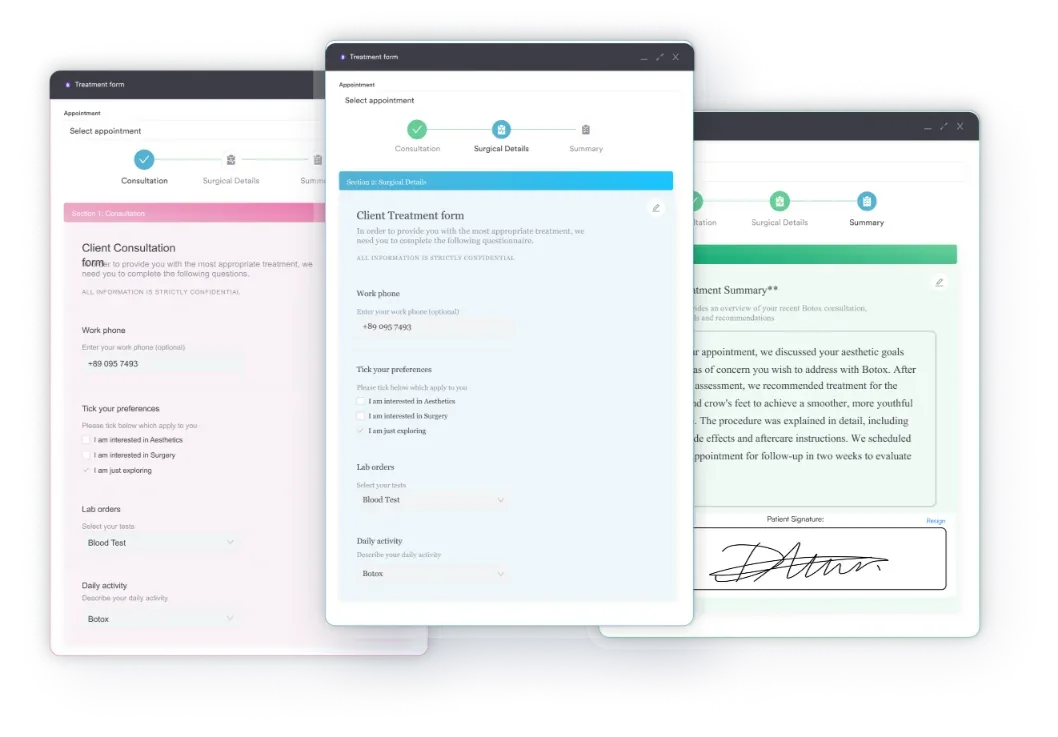
Customizable consent and intake forms
The documentation package for L3906 should include all of the following before the claim is submitted. For broader context on maintaining compliance documentation for therapy practices, see the linked guide.
Maintaining patient compliance records alongside clinical documentation also supports audit defense by demonstrating ongoing medical necessity for the device.
The distinction between custom fabricated and prefabricated determines which code to bill. Billing L3906 (custom fabricated) for a device that was actually prefabricated or off-the-shelf is one of the most common compliance errors in DME orthotic billing and a primary target of OIG enforcement actions.
A practical rule: if the device was ordered from a distributor or selected from a catalog and adjusted to fit, it is prefabricated. If it was constructed from raw or semi-finished materials specifically for this patient, document every fabrication step and bill L3906. Maintaining accurate medical forms for healthcare practices that capture fabrication details protects against audit findings on this distinction.
The ICD-10-CM diagnosis code paired with L3906 must justify the medical necessity of a custom fabricated wrist hand orthosis. The list below reflects commonly used diagnoses based on AAPC’s HCPCS code reference and standard crosswalk data. This is not an exhaustive or payer-approved list; medical necessity must justify each pairing, and payers may have LCD-specific diagnosis code requirements.
Always confirm diagnosis code pairings against your MAC’s current LCD for wrist-hand orthoses before submitting. An incorrect diagnosis pairing is a common audit trigger even when the device itself is appropriately billed.
The L39xx series covers the full range of wrist and wrist-hand orthoses under Medicare DME billing. Choosing the wrong code from this family is a frequent source of claim denials and audit findings. Review the CPT and HCPCS billing reference guides on Pabau for context on how orthotic HCPCS codes are structured. The table below shows the key distinctions across the WHO code family.
The real custom-vs-prefabricated decision inside this family is L3906 vs L3908: both describe the same static, wrist-extension-control WHO, and the only difference is fabrication method. L3906 is custom fabricated for the individual patient; L3908 is prefabricated and sold off-the-shelf, with no molding or custom work involved. L3900 and L3901 are not prefabricated alternatives to L3906 at all — they belong to a different device class entirely, describing custom fabricated, dynamic flexor-hinge wrist hand finger orthoses (WHFOs) that assist grasp function (opening and closing the hand), not static immobilization. L3904 is also custom fabricated, but describes an external powered, electric WHO rather than a passive static device. Don’t use L3900, L3901, or L3904 in place of L3906 based on cost or availability — each describes a functionally different device, and billing one for another is a coding error regardless of fabrication method.
Most L3906 claim problems trace back to a small set of recurring errors. Addressing these proactively, before submission, prevents the downstream cost of appeals and audits. Practices that use paperless documentation for compliance workflows reduce the risk of missing records at audit significantly. Most avoidable denials on this code trace back to eligibility verification that was never run. Most avoidable denials on this code trace back to eligibility verification that was never run. Most avoidable denials on this code trace back to eligibility verification that was never run. Most avoidable denials on this code trace back to eligibility verification that was never run. Most avoidable denials on this code trace back to eligibility verification that was never run. Most avoidable denials on this code trace back to eligibility verification that was never run. Most avoidable denials on this code trace back to eligibility verification that was never run.
Manual HCPCS code lookup creates a friction point between clinical documentation and claim submission. When an occupational therapist or orthotist identifies the right code during treatment, that information still has to move into a billing system accurately, with the right modifier and the right ICD-10 code attached. Each manual step is an opportunity for error.
Pabau’s claims management software embeds HCPCS code workflows directly within the clinical documentation environment. Teams can configure L3906 claims with modifier prompts (KX, GA, GZ, NU) built into the submission workflow, reducing the risk of omission at the point of claim generation.
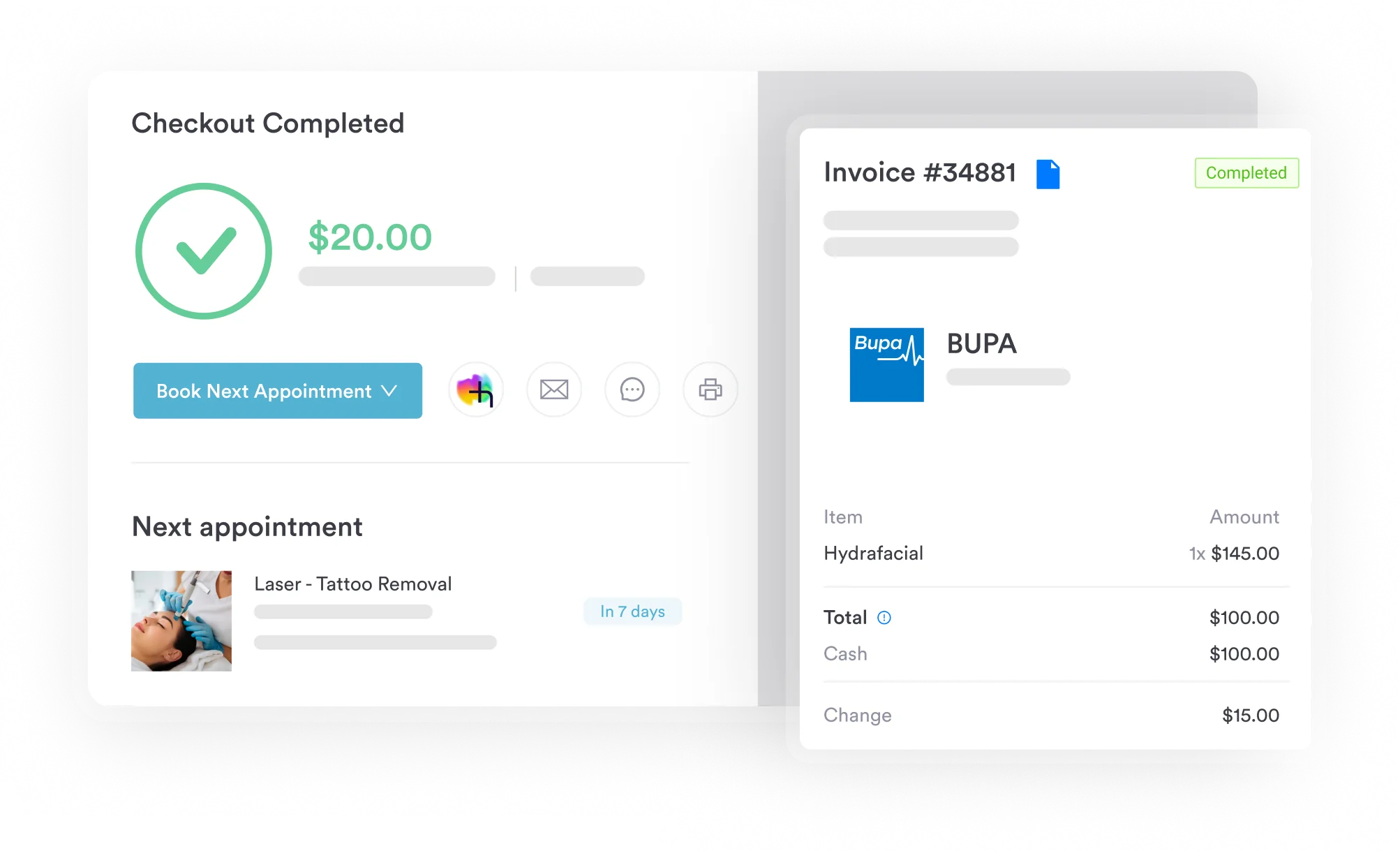
For practices managing EHR integration for billing workflows, connecting clinical notes directly to claim generation eliminates the lookup-to-claim transfer step entirely. D
Documentation captured during assessment, including fabrication records, fitting notes, and diagnosis codes, feeds directly into the claim rather than requiring a separate manual entry. This is especially useful for high-volume OT and orthotics practices billing multiple DME codes per session.
Pabau also supports structured medical forms for healthcare practices that can be configured to capture fabrication details, delivery confirmation, and ABN signatures within the same digital record, keeping audit-ready documentation in one place rather than spread across paper files and separate systems.
HCPCS Code L3906 is a precise code with precise requirements.
The custom fabricated designation, the KX modifier requirement, and the without-joints distinction are not administrative details. They are the clinical and compliance criteria that determine whether the claim pays or triggers a denial and audit. Getting these right means documenting fabrication accurately, selecting the correct code from the L39xx family, and building modifier logic into the submission workflow before claims leave the practice.
Pabau brings clinical documentation and claims submission into a single workflow, so the fabrication records, modifier logic, and diagnosis pairing behind an L3906 claim are captured once and carried straight through to the payer. To see how Pabau supports DME and orthotic billing.
What is HCPCS Code L3906 used for?
HCPCS Code L3906 is a Level II HCPCS code used to bill for a custom fabricated wrist hand orthosis (WHO) without joints under Medicare Part B and other payers. It covers devices built specifically for an individual patient from raw or semi-finished materials, and may include a soft interface and straps.
What is the difference between L3906 and L3908?
L3906 and L3908 are the true custom-vs-prefabricated pair in the static wrist hand orthosis (WHO) family: L3906 is custom fabricated without joints, while L3908 is the prefabricated, non-molded, off-the-shelf version of the same wrist-extension-control device. L3900 is a different device class entirely — a custom fabricated, dynamic flexor-hinge wrist hand finger orthosis (WHFO) built to assist grasp function — and is not a prefabricated alternative to L3906.
What modifiers are required when billing HCPCS Code L3906 to Medicare?
The KX modifier is required when billing L3906 to Medicare to certify that medical necessity criteria are met and documentation is on file. The NU modifier is typically added to indicate new equipment. If coverage is uncertain and an ABN has been signed, use GA instead of KX.
Is L3906 covered by Medicare Part B?
Yes, L3906 is covered under Medicare Part B as durable medical equipment when medical necessity is documented and the claim meets the requirements of the applicable Local Coverage Determination (LCD). Coverage is not guaranteed; it depends on the beneficiary’s diagnosis and the MAC’s current LCD criteria.
Can an occupational therapist bill HCPCS Code L3906?
Occupational therapists may bill L3906 in certain circumstances, but direct billing eligibility for HCPCS L-series orthotic codes varies by MAC jurisdiction and payer. OTs should verify billing eligibility with their Medicare Administrative Contractor before submitting L3906 claims under their own provider number.
What ICD-10 codes are commonly used with L3906?
Common ICD-10-CM diagnoses paired with L3906 include G56.0x (carpal tunnel syndrome), S63.xxx (wrist and hand sprains/dislocations), M25.5x (wrist/hand joint pain), and M19.03x (primary osteoarthritis of the wrist). Each pairing must be clinically justified and consistent with your MAC’s LCD for wrist-hand orthoses.



