

HCPCS code E0198: Water pressure pad billing guide
HCPCS code E0198 is a water pad for a standard mattress HCPCS code E0198 is the ...

Last Updated: Oct 13, 2026
E1300 is the HCPCS Level II code for whirlpool, portable (overtub type).
Let Pabau's smart automation suggest the right codes, reduce claim denials, and keep your practice compliant—effortlessly.
Automate repetitive tasks and focus on what matters most—your patients.
Reduce coding errors and ensure compliance with the latest regulations.
Clean claims, fewer denials, and faster reimbursements.
Powerful insights and reporting to help your practice thrive.
HIPAA compliant SOC 2 certified GDPR-compliant Trusted by 4,000+ clinics worldwide

HCPCS code E1300 describes a portable, overtub-type whirlpool bath. It is an active Level II HCPCS DME code billed by DMEPOS suppliers.
Medicare classifies portable whirlpool equipment as a personal comfort item, so it excludes E1300 from Part B coverage regardless of documentation.
Modifier GY marks E1300 as statutorily excluded. NU, UE, and RR still describe whether the unit is new, used, or rented on a self-pay or secondary-payer claim.
Pabau’s claims management software helps DME suppliers document self-pay whirlpool sales correctly and track requirements across covered and excluded HCPCS codes alike.
HCPCS code E1300 covers a portable whirlpool bath of the overtub type. It sits within the E-series of the Healthcare Common Procedure Coding System Level II.
The Centers for Medicare and Medicaid Services (CMS) maintains and updates this system annually. E-series codes (E0100 through E8002) cover durable medical equipment (DME). E1300 is a DMEPOS code billed by enrolled DME suppliers, not by physicians or hospitals on the CMS-1500.
The code is maintained by CMS, which publishes the full HCPCS Level II master file annually. Verify the current descriptor against AAPC’s HCPCS code search or the CMS HCPCS master file before billing for a new fiscal year. Descriptors occasionally receive minor editorial revisions.
The code applies to a portable whirlpool unit that fits over the side of a standard bathtub or sits in a basin. The unit turns the tub into a hydrotherapy bath. Unlike a permanently installed whirlpool tub, the overtub unit can move between rooms or be removed after a treatment session. A separate code, E1310, covers the non-portable, built-in version of the same equipment. Denial codes in medical billing group the reasons a payer refuses, and the group decides the fix.
Clinically, whirlpool hydrotherapy supports wound care, edema management, musculoskeletal rehabilitation, and post-surgical recovery. Physicians commonly order the portable unit for patients with diabetic foot wounds, burn injuries, or chronic venous insufficiency. It also suits orthopedic conditions that benefit from water agitation therapy.
Practices managing patients with wound care or post-surgical recovery need to track which patients received a DME order. That tracking is part of physical therapy documentation workflows.
Accurate equipment classification at the point of prescription prevents billing mismatches downstream. That matters especially since the patient or a secondary payer, rather than Medicare, usually ends up covering the cost.
Medicare Part B does not cover HCPCS code E1300. CMS classifies portable whirlpool equipment as a personal comfort item under its Medicare DME coverage guidance. The exclusion falls under Sections 1861(n) and 1862(a)(6) of the Social Security Act. That exclusion applies regardless of the patient’s diagnosis or how well the supplier documents medical necessity.
The exclusion is specific to portable units. A built-in whirlpool bath, billed under HCPCS code E1310, can be covered when the patient is homebound. Coverage also requires a condition for which the whirlpool provides a substantial therapeutic benefit that justifies its cost.
Medicare’s contractor reviews each E1310 claim individually; there is no equivalent review path for the portable E1300 unit, because the category itself is excluded.
Because E1300 is excluded at the benefit-category level, no volume of clinical documentation moves Medicare toward covering it. Suppliers sometimes assume a strong physician order and diagnosis code will support the claim the way it would for other DME items. For E1300, it will not.
Documentation still matters for two other reasons. It supports a claim to a secondary or commercial payer with its own coverage rules. It also gives the patient a clear record of why Medicare denied the claim.
Practices billing across multiple patient types benefit from occupational therapy documentation workflows that capture the clinical rationale at the point of care. That record protects the practice even when the underlying HCPCS code is not billable to Medicare.
DMEPOS suppliers who deliver E1300 equipment still need a clean paper trail, even though Medicare will not pay the claim. Submitting the correct HCPCS code, modifier, and supporting documentation protects the supplier if a patient later disputes the charge or a secondary payer requests records.
Because E1300 is excluded rather than subject to coverage criteria, the modifier that matters most simply tells Medicare’s system the exclusion is known and expected.
Do not append GA or KX to an E1300 claim. Both modifiers imply the item could be covered given the right documentation, and neither applies to a benefit-category exclusion. Using them to bill Medicare risks looking like a deliberate miscoding rather than an honest error.
A complete file protects the supplier even without Medicare reimbursement.
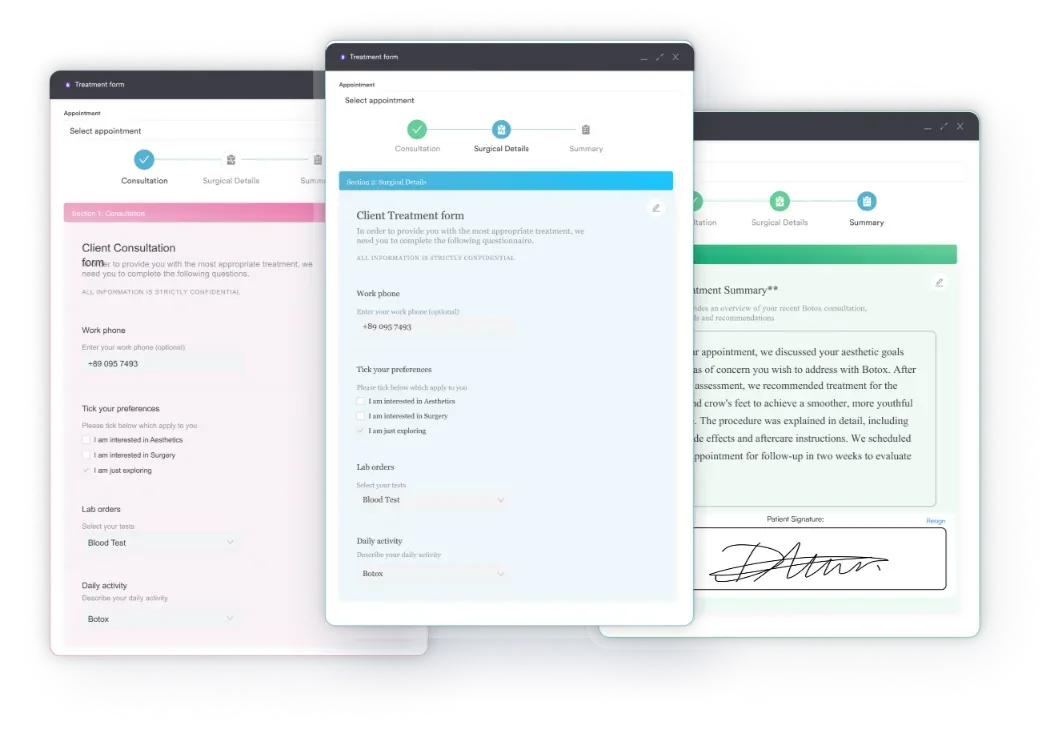
Keeping this documentation organized across a patient caseload is easier with digital intake forms. They capture physician orders, consent records, and delivery confirmations in a single patient record. Practices using electronic medical forms report fewer disputes over what a patient did or did not sign at delivery.
Because Medicare excludes E1300 from the DME benefit, there is no annual CMS fee schedule allowable for this code. The DMEPOS fee schedule tool returns no payable amount for E1300. A personal comfort item never has one, because Medicare has nothing to price.
Suppliers typically collect payment directly from the patient at delivery, or bill a secondary or commercial payer with its own whirlpool coverage policy. Confirm that policy in writing before delivery. Coverage rules for portable whirlpool equipment vary far more between commercial payers than they do across Medicare’s DME MAC jurisdictions.
For practices managing multiple DME billing codes, cross-referencing E1300 against related equipment codes like E0197 helps billing teams confirm each code’s coverage status early. That check works whether the code turns out to be Medicare-payable or excluded like E1300.
Confirm E1300’s exclusion status directly with the CMS DMEPOS fee schedule tool before quoting a Medicare patient a price. Enter E1300 and check for a payable amount; an empty result confirms the exclusion. Then set the patient’s out-of-pocket price and get a signed acknowledgment before delivery, rather than after a denial arrives.
Whirlpool and hydrotherapy equipment spans a small family of adjacent HCPCS codes, and coverage differs sharply between them. Confirming which code matches the delivered equipment, and whether that code is even payable by Medicare, is the first step in avoiding a billing error.
E1310 is the only code in this family that Medicare may cover. Coverage applies only to a homebound patient whose condition justifies the cost of a built-in unit. E1300 and E1301 describe portable equipment, which Medicare treats as a personal comfort item regardless of the clinical picture.
For broader DME code navigation, comparing E1300 to other codes like other codes like L3000 helps billing teams apply consistent code-selection logic across equipment categories.
These recurring errors show up whenever a supplier treats a benefit-category exclusion like a documentation problem instead of what it actually is.
HIPAA-compliant documentation practices protect practices regardless of which payer is billed. For a broader compliance framework, see HIPAA compliance requirements. It covers the documentation retention and security rules that apply across DME and clinical billing environments.
Practices billing multiple DME codes benefit from understanding which HIPAA obligations apply to their specific billing and patient data workflows.
Build a pre-delivery checklist specific to E1300: written order on file, signed financial-responsibility acknowledgment, and secondary-payer policy verified in writing if one applies. Have proof of delivery ready to sign at drop-off. Running this checklist before delivery avoids the awkward conversation that follows when a patient assumes Medicare paid for equipment it never covers.
Many DME suppliers discover a Medicare exclusion like E1300’s only after a claim denies, sometimes weeks after the equipment is already with the patient.
Practice management software like Pabau flags a code’s coverage status at the point of order, before delivery. That lets the front desk collect a signed acknowledgment the same day, instead of chasing a signature after a denial arrives.
Pabau keeps the physician order, the patient’s acknowledgment, and the delivery confirmation attached to a single patient record. That means a self-pay E1300 sale and a covered E1310 claim both get documented with the same rigor.

Pabau links physician orders, signed patient acknowledgments, and delivery confirmations to a single record. DME suppliers know a code’s coverage status before a claim ever goes out.

HCPCS code E1300 is active, but it does not behave like a typical DME benefit. Medicare treats portable whirlpool equipment as a personal comfort item and excludes it outright, and no documentation changes that outcome.
The built-in equivalent, E1310, is the one code in this family with a coverage pathway. Even then, coverage applies only to a homebound patient whose condition justifies the cost.
Pabau’s claims management tools help practices flag a code’s coverage status before a claim goes out. An E1300 sale then gets billed as self-pay or secondary-payer from the start, instead of as a Medicare claim that was always going to deny. To see how Pabau handles DME billing documentation for both excluded and covered codes, book a demo.

Supplying equipment for home hemodialysis patients? HCPCS code A4870 covers the plumbing and electrical work those installations require, billed separately from the dialysis equipment itself.
Billing anesthesia for cardioversion? CPT code 00410 covers anesthesia for cardioversion and when Medicare pays it apart from CPT 93618.
Coding anesthesia for a thoracotomy? CPT code 00541 covers anesthesia for thoracotomy procedures that use one-lung ventilation.
HCPCS code E1300 is a Level II HCPCS durable medical equipment code that describes a portable, overtub-type whirlpool bath. DMEPOS suppliers use it to bill for a unit that turns an existing bathtub into a hydrotherapy bath for wound care, edema, or rehabilitation.
No. Medicare Part B excludes HCPCS code E1300 as a personal comfort item under Sections 1861(n) and 1862(a)(6) of the Social Security Act. The exclusion applies regardless of diagnosis or documentation; only the non-portable, built-in equivalent, E1310, has a coverage pathway, and only for homebound patients.
Suppliers append GY to signal that the item is statutorily excluded from the Medicare benefit. NU, UE, or RR still describe whether the unit is new, used, or rented on the claim line. Modifiers like KX or GA imply the item could be covered with the right documentation, so they do not apply.
Keep the physician’s written order, a signed acknowledgment that the patient understands Medicare will not pay for the item, and a signed proof of delivery. If billing a secondary or commercial payer, also keep written confirmation of that payer’s own whirlpool coverage policy.
The closest related codes are E1301 (whirlpool tub, walk-in, portable), E1310 (whirlpool, non-portable, built-in type), E0160 (sitz bath equipment), and E1399 (miscellaneous DME). E1310 is the only one of these Medicare may cover, and only for a homebound patient whose condition justifies the equipment’s cost.
Yes, E1300 can appear on the same claim or invoice as other DME items when a patient receives multiple pieces of equipment. Each item must be documented and billed under its own correct code. Do not bill E1300 as though it were E1310; the two describe different equipment and follow different coverage rules.



