

HCPCS code E0198: Water pressure pad billing guide
HCPCS code E0198 is a water pad for a standard mattress HCPCS code E0198 is the ...

Last Updated: Oct 13, 2026
A4918 is the HCPCS Level II code for venous pressure clamp, for hemodialysis, each.
Official descriptor: Venous pressure clamp, for hemodialysis, each. HCPCS Code A4918 is a Level II code maintained by the Centers for Medicare and Medicaid Services, known as CMS, which administers the Healthcare Common Procedure Coding System (HCPCS). It falls within the A4900 series, which covers miscellaneous dialysis supplies and equipment.
The venous pressure clamp is a small but functionally critical device in hemodialysis circuits. It clamps the venous blood line to control flow, prevent backflow, or manage line disconnection, regardless of whether the patient’s vascular access is a fistula, a graft, or a catheter.
Creating that access is billed separately. Because the clamp itself is billed per unit, each one used in a treatment session represents one billable item under HCPCS Code A4918.
Let Pabau's smart automation suggest the right codes, reduce claim denials, and keep your practice compliant—effortlessly.
Automate repetitive tasks and focus on what matters most—your patients.
Reduce coding errors and ensure compliance with the latest regulations.
Clean claims, fewer denials, and faster reimbursements.
Powerful insights and reporting to help your practice thrive.
HIPAA compliant SOC 2 certified GDPR-compliant Trusted by 4,000+ clinics worldwide

HCPCS Code A4918 describes a venous pressure clamp for hemodialysis, billed per unit under HCPCS Level II.
Medicare Part B may cover A4918 when billed by an eligible DME supplier or dialysis facility with documented medical necessity.
Medicaid coverage varies by state; verify with your state program before billing, as managed care plans may apply different rules.
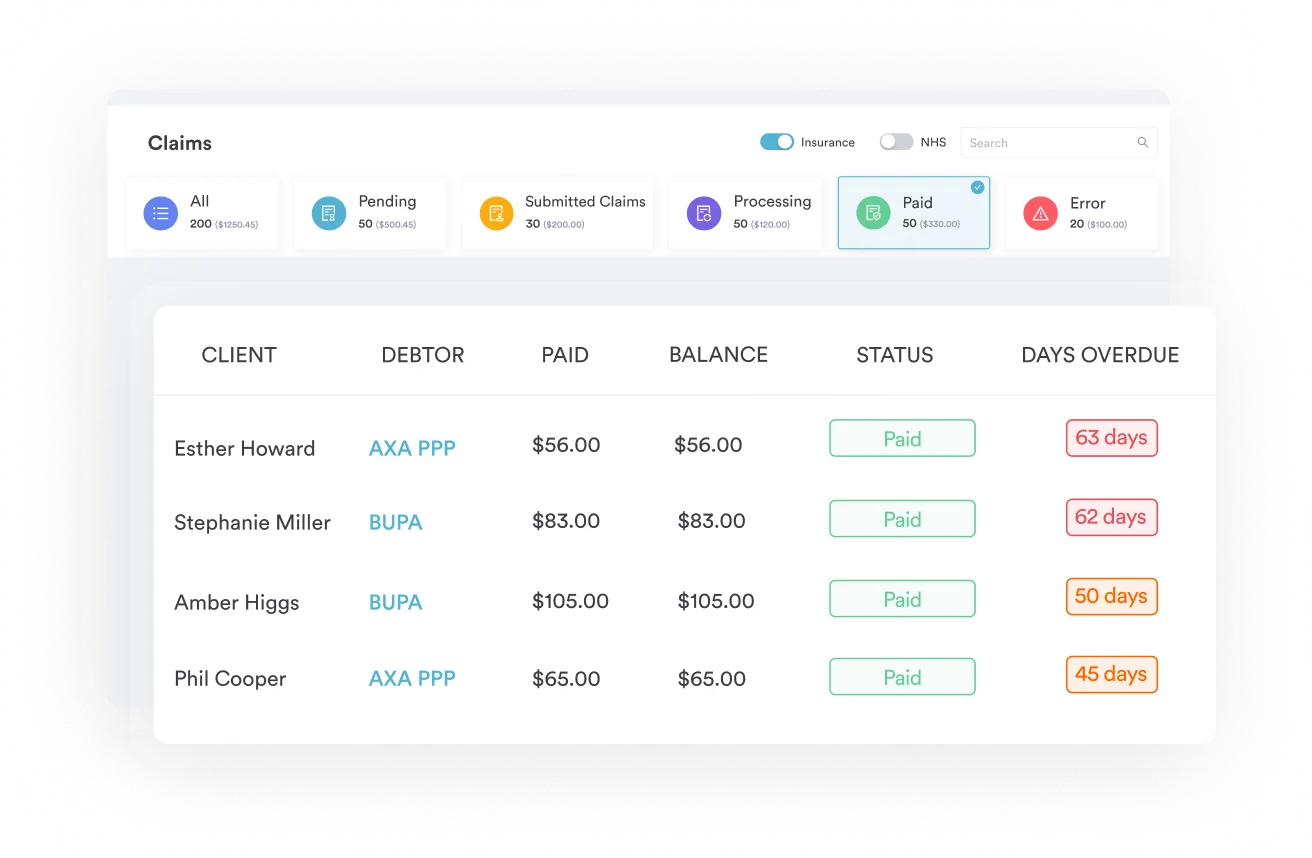
Pabau’s claims management software supports HCPCS code entry, unit billing, modifier assignment, and diagnosis code pairing in one workflow.
CMS publishes updated HCPCS fee schedule rates annually. The reimbursement methodology for A4918 is important to understand before billing: dialysis supply codes in the A4900 series are typically contractor-priced, meaning the Medicare Administrative Contractor (MAC) for your jurisdiction sets the allowable rate rather than a single national figure applying uniformly.
Use the Physician Fee Schedule tool to retrieve the current national and MAC-specific rates for A4918. Rates are subject to annual update; any figure published before the current CMS release should be treated as approximate.
Because A4918 rates are contractor-priced rather than nationally uniform, billing teams should contact their MAC directly or reference the MAC’s published HCPCS allowable schedule for the most accurate current figure.
Medicare Part B is the primary payer for dialysis supplies, including the venous pressure clamp, when the item is supplied to an end-stage renal disease (ESRD) patient receiving hemodialysis. Coverage is not automatic; specific criteria govern who may bill and under what conditions.
Who can bill HCPCS Code A4918 to Medicare is determined by whether the patient is receiving dialysis in a facility or at home. Dialysis facilities billing under the ESRD bundled payment system and independent DME suppliers serving home dialysis patients follow different billing pathways.
Confirm eligibility with your MAC, as billing by the wrong entity type can trigger a claim denial or compliance review. Understanding medical office compliance requirements is essential when establishing your billing workflow for dialysis supplies.
The physician order behind the claim often starts in primary care.
Maintaining clean, accurate records across all patient encounters supports successful claims. Proper medical forms for clinical documentation help ensure the physician order and medical necessity evidence are captured at the right point in the workflow.
Before submitting A4918 claims, download the current Local Coverage Determination from your MAC’s website. Coverage criteria for dialysis supplies can be updated mid-year, and LCDs override general Medicare guidance when they differ.
Medicaid coverage for HCPCS Code A4918 is not uniform across the United States. Coverage depends on the state’s Medicaid program design, whether the patient is enrolled in managed care or fee-for-service, and any state-specific coverage policies for dialysis supplies.
Because Medicaid coverage is state-administered, never assume coverage based on another state’s policy. Always verify with the specific state Medicaid program or managed care plan before providing the item. Following strong EHR security practices also protects your practice during any Medicaid audit process.
With built-in inventory tracking, every dressing or catheter billed under these codes matches recorded stock movement.
HCPCS Code A4918 is billed per unit, meaning each venous pressure clamp supplied equals one unit on the claim. Billing teams frequently encounter denials from two errors: submitting incorrect units or omitting a required modifier. Working through a compliance checklist before submission reduces these errors significantly.
For HCPCS code lookups and crosschecks, the AAPC HCPCS lookup tool provides current descriptor and code status information. Maintaining HIPAA-compliant billing practices across your workflow protects both claim integrity and patient data.

Pabau’s claims management software lets your billing team enter HCPCS codes, assign units and modifiers, attach supporting diagnosis codes, and track claim status in one place – reducing manual errors and speeding reimbursement.

Medicare and most payers require specific documentation to support an A4918 claim. Missing or incomplete records are the leading cause of post-payment audits and recoupment demands for dialysis supply codes. Using digital forms for clinical documentation helps ensure the required elements are captured consistently at the point of care.

Coders should cross-reference documentation requirements against the applicable MAC LCD before submitting claims. The same documentation logic applies across HCPCS Level II supply items: the diagnosis code on the claim must directly support the medical necessity of the item billed.
That principle holds even for unrelated kidney conditions. A claim for unspecified kidney failure.
HCPCS Code A4918 sits within the A4900 series of miscellaneous dialysis supplies. Coders working in dialysis facilities should be familiar with adjacent codes in this series to select the correct code and avoid miscoding between similar supply items.
For additional context on HCPCS Level II structure, the PGM Billing HCPCS lookup tool provides free code search using current CMS data.
A4927 (non-sterile gloves, billed per 100) and A4930 (sterile gloves, billed per pair) are the most commonly confused pair of codes in this range, since both cover gloves used during hemodialysis but describe different products billed in different units. Non-sterile gloves are appropriate for routine access care, while sterile gloves are required for procedures involving a sterile field, such as catheter insertion or exit-site care.
Because A4927 is billed in lots of 100 and A4930 is billed per pair, submitting either code with the other’s quantity convention — for example, billing A4930 in units of 100 — creates a quantity mismatch that payers flag for medical review or automatic denial.
For a full breakdown of each code, see the A4927 non-sterile gloves guide and the A4930 sterile gloves guide.
Every claim submitted with HCPCS Code A4918 must include at least one ICD-10-CM diagnosis code that establishes medical necessity for the venous pressure clamp. The diagnosis must reflect the patient’s clinical condition driving hemodialysis.
The following codes are the most frequently paired diagnoses in this context, though the appropriate code always depends on the individual patient’s documented condition. Kidney failure often develops alongside broader metabolic conditions.
The ICD-10-CM code selected must be documented in the treating physician’s notes and must directly support the need for the specific supply item. The code on the claim must reflect what is documented in the medical record, not the coder’s assumption of the most likely diagnosis.
This documentation-first principle also covers complications that develop over years of dialysis. Aluminum bone disease.
Entering HCPCS Code A4918 correctly in your billing system prevents downstream errors that trigger payer edits or denials. The steps below reflect standard workflow for dialysis supply billing, though specific field names will vary by software platform.
Efficient EHR integration for billing workflows ensures that diagnosis codes, orders, and claim data flow between clinical and billing teams without manual rekeying.
Pabau’s claims management software supports HCPCS code entry, unit assignment, modifier management, and diagnosis code linking within a single billing workflow. Teams billing across multiple patients and supply items can manage claim status and track outstanding items from the same dashboard, reducing the manual reconciliation work that typically accumulates when billing systems are fragmented.
The same unit-and-modifier logic applies across the wider HCPCS Level II list.
For practices building out their broader billing infrastructure.
Run a quarterly audit of A4918 claims against delivery records. Verify unit counts match dispensing logs, and confirm that ICD-10 codes on claims reflect current physician documentation. Discrepancies between claims and records are the most common trigger for Medicare post-payment review.
Most A4918 claim denials stem from preventable errors: missing modifiers, mismatched units, or ICD-10 codes not documented in the clinical record. Getting those elements right at submission is far less costly than managing recoupment demands after the fact.
Pabau’s claims management software gives dialysis billing teams a structured workflow for entering HCPCS Code A4918, linking diagnosis codes, and tracking claim status from submission through payment. To see how it fits your billing process, book a demo with the Pabau team.

Billing a cardiac stress test drug? Regadenoson (Lexiscan) billing guide covers J2785 unit increments for the coronary vasodilator used in myocardial perfusion imaging.
Billing an IV iron infusion? Sodium ferric gluconate billing guide explains J2916 unit counts for Ferrlecit and the JW or JZ wastage modifier.
HCPCS Code A4918 is a Level II code that describes a venous pressure clamp for hemodialysis, billed per unit. It falls within the A4900 series of miscellaneous dialysis supplies maintained by CMS and is used by dialysis facilities and DME suppliers to bill for this specific hemodialysis supply item.
A4918 may be covered under Medicare Part B when the patient has end-stage renal disease, a physician order is on file, and medical necessity is documented. Coverage depends on whether the item is billed within the ESRD bundled payment or as a separate DME benefit for home hemodialysis patients. Check your MAC’s LCD for jurisdiction-specific coverage criteria.
A4918 is contractor-priced, meaning your Medicare Administrative Contractor (MAC) sets the allowable rate rather than a single national figure. Retrieve the current rate from the CMS Physician Fee Schedule lookup tool or your MAC’s published HCPCS allowable schedule, as rates are updated annually on January 1.
Medicaid coverage for A4918 varies by state. Fee-for-service Medicaid programs set their own coverage policies and reimbursement rates, while managed care organizations may apply separate prior authorization requirements. Always verify coverage with the specific state Medicaid program or managed care plan before providing the item.
Required documentation includes a signed physician or practitioner order, medical necessity justification in the clinical record, the date of service, at least one linked ICD-10-CM diagnosis code (typically N18.6 for ESRD), and quantity delivered. DME suppliers must also retain proof of delivery. Confirm exact requirements against your MAC’s LCD.
Modifier requirements for A4918 depend on MAC policy. The KX modifier is commonly used to indicate that coverage criteria are documented as met. GA and GZ modifiers may apply in advance beneficiary notice situations. Confirm applicable modifiers with your MAC before submission, as incorrect modifier use creates compliance and audit risk.



