

HCPCS code E0198: Water pressure pad billing guide
HCPCS code E0198 is a water pad for a standard mattress HCPCS code E0198 is the ...

Last Updated: Oct 13, 2026
A4760 is the HCPCS Level II code for dialysate solution test kit, for peritoneal dialysis, any type, each.
Knowing whether A4760 is billed as a standalone claim matters just as much. Most Medicare ESRD beneficiaries never see this code on an individual claim at all - more on that in the Medicare coverage section below.
A4760 is a HCPCS Level II code, short for Healthcare Common Procedure Coding System. Unlike CPT codes, which are maintained by the American Medical Association and describe physician services and procedures, HCPCS Level II codes are maintained by CMS.
HCPCS Level II codes cover supplies, equipment, drugs, and non-physician services not captured in the CPT code set.
The phrase "any type" in the descriptor is intentional - A4760 applies regardless of which peritoneal dialysis modality the patient uses. Billers sometimes query whether separate codes exist for continuous ambulatory peritoneal dialysis (CAPD) versus automated/cycler-assisted variants; for the test kit itself, A4760 covers the supply across all modalities.
Let Pabau's smart automation suggest the right codes, reduce claim denials, and keep your practice compliant—effortlessly.
Automate repetitive tasks and focus on what matters most—your patients.
Reduce coding errors and ensure compliance with the latest regulations.
Clean claims, fewer denials, and faster reimbursements.
Powerful insights and reporting to help your practice thrive.
HIPAA compliant SOC 2 certified GDPR-compliant Trusted by 4,000+ clinics worldwide

HCPCS Code A4760 describes a dialysate solution test kit for peritoneal dialysis (PD), any type, each – a Level II HCPCS supply code maintained by CMS.
For most Medicare ESRD beneficiaries, A4760 is bundled into the dialysis facility’s ESRD Prospective Payment System (PPS) payment rather than billed as a standalone claim; Part B DMEPOS billing only applies in narrower circumstances outside that bundle.
When A4760 genuinely is billed as a standalone DMEPOS claim, reimbursement rates vary by geographic locality – always pull current figures from the CMS DMEPOS fee schedule before submitting, as amounts change annually.
Practice management software like Pabau includes claims management tools for submitting, tracking, and reconciling private-insurer and corporate claims, a separate workflow from Medicare’s own DMEPOS claims process, but useful for keeping the rest of a practice’s billing organized.
Peritoneal dialysis filters waste from the blood using the patient’s peritoneal membrane as a natural filter. A sterile dialysate solution is introduced into the peritoneal cavity, allowed to dwell, and then drained – carrying metabolic waste products with it. Monitoring the composition of that dialysate is essential for patient safety and treatment effectiveness.
The dialysate solution test kit described by A4760 allows patients and care teams to verify dialysate quality at the point of use. Common checks include glucose concentration, pH level, and sterility indicators.
Errors in dialysate composition can cause serious complications, so regular testing is a standard part of home peritoneal dialysis protocols endorsed by nephrology clinical guidelines.
Diabetes is a leading cause of the kidney failure that leads to peritoneal dialysis. Insulin pump supplies used by these patients.
Even though the kit is used in the home setting by patients managing their own therapy, it isn’t typically billed as a standalone home-supply claim.
Since January 1, 2011, CMS’s End-Stage Renal Disease Prospective Payment System (ESRD PPS) bundles the cost of home dialysis supplies and equipment – including A4760 – into a single per-treatment payment made to the dialysis facility, whether the supply is furnished directly by the facility or arranged through an outside supplier.
That change effectively eliminated the old “Method II” pathway that once let DME suppliers bill Medicare directly for home dialysis items. Standalone Part B DMEPOS billing for A4760 now applies only in narrower circumstances outside the ESRD PPS bundle.
Practices handling patient care management for home dialysis populations need clear internal workflows to confirm which pathway applies before a supply claim is built.
Medicare covers dialysate solution test kits for peritoneal dialysis patients when medical necessity criteria are met, but coverage flows through two different pathways depending on the billing scenario. For the large majority of Medicare ESRD beneficiaries, A4760 is included in the bundled ESRD PPS payment made to the dialysis facility – it is not billed as a standalone claim.
Standalone Medicare Part B DMEPOS billing for A4760 applies only in narrower circumstances that fall outside the ESRD PPS bundle. Coverage in either pathway is subject to applicable Local Coverage Determinations (LCDs) and National Coverage Determinations (NCDs) issued by CMS and Medicare Administrative Contractors (MACs).
Billers should always check the current CMS ESRD PPS Consolidated Billing list and the applicable LCD before submitting a claim, since both the bundled item list and coverage criteria can be updated independently of the code itself.
This bundling is the central billing fact for A4760: since the ESRD PPS took effect on January 1, 2011, CMS folded nearly all home dialysis supplies and equipment – including peritoneal dialysis test kits – into the facility’s bundled per-treatment payment, closing off the option for DME suppliers to bill Medicare separately for most ESRD-related home supplies.
That is a different mechanism from the Monthly Capitation Payment (MCP), which compensates the treating nephrologist for a month of physician management services, not for supply items like A4760. The two terms should not be conflated when documenting a billing decision.
Before submitting A4760 as a standalone claim, billers should confirm the supply genuinely falls outside the ESRD PPS bundle – for example, a documented non-ESRD-related use, which requires the AY modifier.
Reviewing HIPAA compliance requirements alongside CMS’s ESRD PPS consolidated billing guidance helps practices avoid inadvertent double-billing errors.
For the majority of Medicare ESRD beneficiaries, A4760 doesn’t carry its own separate reimbursement rate at all. Its cost is absorbed into the ESRD PPS base rate CMS pays the dialysis facility per treatment, which is updated annually.
A standalone DMEPOS fee schedule rate for A4760 only comes into play in the narrower circumstances where the item is billed outside the ESRD PPS bundle.
In those cases, rates are locality-based, meaning the allowed amount varies depending on the geographic pricing area where the supplier delivers or ships the supply. The CMS fee schedule tool covers physician services; for standalone DMEPOS billing of A4760, the relevant reference is the CMS DMEPOS fee schedule published annually.
Because DMEPOS fee schedule rates for standalone A4760 claims change each calendar year and vary by locality, specific dollar figures are not published here – any rate stated in a static article can be outdated within weeks of a CMS update. Always pull current rates directly from CMS before billing.
The AAPC HCPCS code lookup provide current code descriptions and cross-references, though for authoritative payment amounts, the CMS ESRD PPS and DMEPOS fee schedule files remain the definitive source.
Before billing A4760 as a standalone claim, confirm that the supply genuinely falls outside the dialysis facility’s ESRD PPS bundle – for most ESRD beneficiaries, it doesn’t. Submitting A4760 separately when the facility’s bundled ESRD PPS payment already covers it typically results in a denial that requires manual review and resubmission – catching this at the coverage-pathway verification stage saves the full rework cycle.
An inventory management tool flags when supply usage and supply billing drift apart.
Most A4760 supply costs are absorbed into the dialysis facility’s ESRD PPS bundled payment and never reach a DME supplier’s own claim at all. The guidance below applies to the narrower cases where a standalone Medicare Part B DMEPOS claim for A4760 is appropriate.
In those cases, the supplier must be enrolled as a Medicare DMEPOS supplier and meet applicable accreditation and supplier standards. Claims are submitted on the CMS-1500 form (or electronic equivalent) with the A4760 code, the correct place of service, and supporting documentation attached or available for audit.
Good billing workflows depend on organized documentation and clean handoffs between clinical and billing teams. Practice management software like Pabau helps keep patient records, prescriptions.
Its claims management tools also handle the private-insurer and corporate side of a practice’s billing – submitting, tracking, and reconciling those claims with no double data entry. That’s a separate workflow from the Medicare DMEPOS claims process covered in this guide, but keeping both organized reduces the overall administrative load on a billing team.
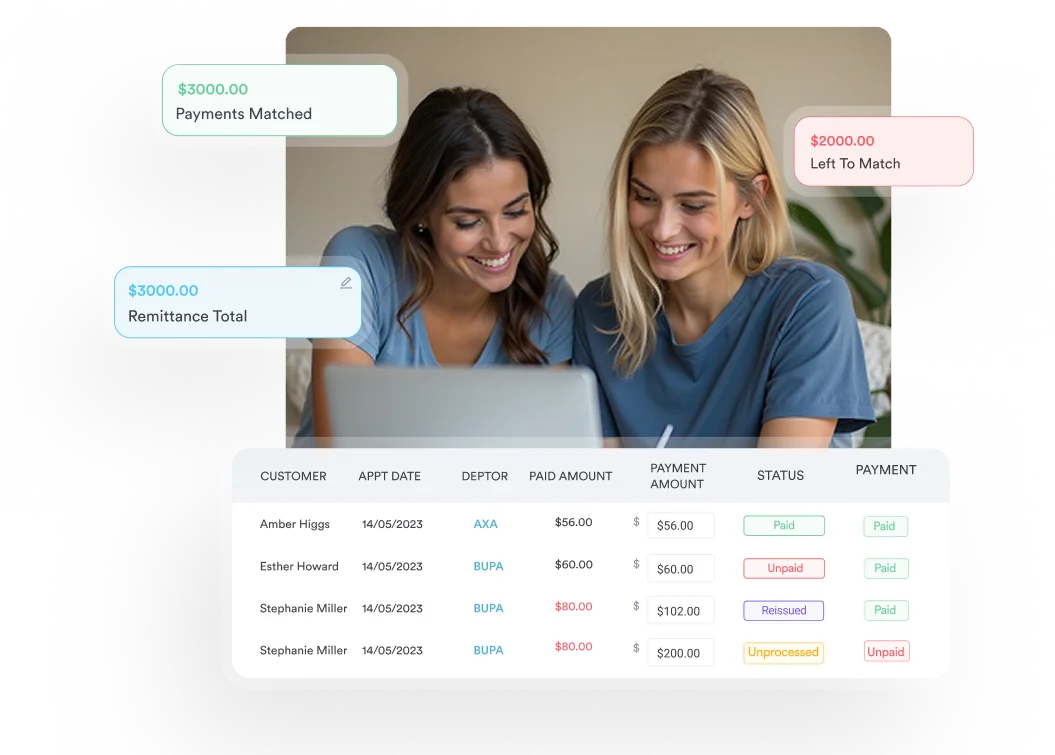
This documentation matters most in the narrower scenario where A4760 is billed as a standalone Part B DMEPOS claim rather than absorbed into the ESRD PPS bundle, but CMS and MACs still expect the underlying medical necessity record to exist either way.
The claim record should demonstrate that the patient is actively receiving peritoneal dialysis under a physician’s supervision and that the test kit is required as part of the prescribed regimen.
Primary care and nephrology practices coordinating that referral often rely on GP practice management software to keep the physician’s order and plan of care attached to the right patient record. The following documentation elements should be on file before billing a standalone claim:
Maintaining organized medical documentation at the practice level reduces audit exposure. Consistent nursing documentation and physician notes give a MAC’s post-payment reviewer a clear, structured record instead of a retroactive documentation scramble.
Practices can also review HIPAA compliance requirements to ensure documentation storage and access controls meet federal standards alongside CMS billing rules.

Practice management software like Pabau helps you submit, track, and reconcile private-insurer and corporate claims with no double entry, so your team spends less time chasing paperwork and more time on patient care.

A4760 rarely stands alone on a dialysis supply claim. Patients on home peritoneal dialysis require a range of supplies billed under adjacent HCPCS codes. Dialysate solution is itself coded by volume band, and A4722 covers a fluid volume above 1,999 cc up to 2,999 cc.
Understanding the full peritoneal dialysis supply code set helps billers recognize which items are already covered by the ESRD PPS bundle and reduces the risk of a bundling error or inadvertent unbundling on the rare standalone claim.
Always confirm bundling status at the claim level before assuming any of these codes can be billed standalone. A4760, A4728, A4900, and A4671 all appear on CMS’s ESRD PPS Consolidated Billing list, meaning the default expectation is that the dialysis facility’s bundled payment already covers them, not a separate DME supplier claim.
Review CMS’s ESRD PPS consolidated billing guidance and your MAC’s local coverage policy before submitting any of these codes on a standalone claim, and confirm which items, if any, genuinely fall outside the bundle for a given patient.
Practices tracking high-volume DMEPOS claims may find it helpful to review their patient data management tools to ensure supply records and delivery confirmations are stored securely and retrievably for post-payment audit requests.
Run a quarterly review of any standalone peritoneal dialysis supply claims you do submit outside the ESRD PPS bundle, to catch A4760 denials tied to missing CMNs, expired physician orders, or a bundling edit. DMEPOS audits typically focus on documentation and bundling eligibility rather than coding accuracy, so the code is usually right even when the pathway or paperwork trail is not.
A common source of billing errors for dialysis supply claims is routing the service through CPT instead of HCPCS Level II. The two code systems serve distinct purposes, and confusing them results in denials that require significant rework to correct.
For dialysate solution test kits, there is no CPT equivalent. The supply is billed exclusively through the HCPCS Level II system, whether it reaches Medicare through the facility’s bundled ESRD PPS claim or, in narrower cases, a standalone DMEPOS claim.
Understanding this distinction is foundational for any coder working with DMEPOS accounts, since Level I (CPT) and Level II (HCPCS) codes follow separate structures, maintainers, and fee schedules. For practices managing both physician billing and DMEPOS supply billing, keeping the two coding pathways clearly separated in your billing workflow documentation prevents cross-system errors. A coding error surfaces as a cash flow problem weeks later, which is why the healthcare revenue cycle is measured end to end. Common claim denial codes repeat by specialty, so the pattern is worth reading before reworking.
This is one area where reviewing the differences between a practice management vs EMR setup can clarify which tools handle which coding workflows in a multi-specialty environment. Practices seeking to standardize their supply billing also benefit from reviewing how practice management simplification reduces duplicate coding effort across billing teams.
Most A4760 denials are preventable. The code itself is straightforward. Denials usually trace back to misjudging whether the ESRD PPS bundle already covers the supply, incomplete documentation, or a lapsed supplier enrollment. Getting the bundling call right before a claim is built eliminates most of that rework.
Practice management software like Pabau doesn’t submit your Medicare DMEPOS claims for you, but it does help practices manage the private-insurer and corporate side of their billing – submitting, tracking, and reconciling those claims with no double entry.
If your team wants to see how that fits alongside the DMEPOS documentation workflow covered in this guide, book a demo.

Billing a nandrolone decanoate injection? Nandrolone decanoate billing guide covers J2320 unit rules for injectable nandrolone that a patient cannot self-administer.
HCPCS Code A4760 is a Level II supply code that describes a dialysate solution test kit for peritoneal dialysis, any type, each. It is maintained by CMS, and for most Medicare ESRD beneficiaries it is bundled into the dialysis facility’s ESRD PPS payment rather than billed as a standalone Part B DMEPOS claim.
Yes, but for the large majority of ESRD beneficiaries A4760 is included in the facility’s bundled ESRD PPS payment rather than paid as a separate Part B DMEPOS claim. Standalone DMEPOS billing applies only in narrower circumstances outside the bundle, and is subject to applicable Local Coverage Determinations issued by the patient’s Medicare Administrative Contractor; verify the current LCD and the CMS ESRD PPS consolidated billing list before billing.
Key related codes include A4728 (dialysate solution, non-dextrose containing, 500 mL), A4900 (CAPD supply kit), and A4671 (disposable cycler set used with cycler dialysis machine, each). Nearly all of these, along with A4760, appear on CMS’s ESRD PPS Consolidated Billing list, so the default assumption should be that the dialysis facility’s bundled payment already covers them, not a standalone supplier claim.
For most ESRD beneficiaries, A4760 doesn’t need to be billed separately at all – it’s included in the dialysis facility’s bundled ESRD PPS payment. In the narrower cases where a standalone Part B DMEPOS claim applies, bill on a CMS-1500 form (or electronic equivalent) with place of service 12 (home) for home-delivered supplies. The billing entity must be an enrolled Medicare DMEPOS supplier. Attach or retain the treating nephrologist’s order, certificate of medical necessity, and delivery confirmation for audit readiness.
CPT codes, maintained by the AMA, describe physician services and procedures (such as nephrology evaluation visits). HCPCS Level II codes, maintained by CMS, cover supplies, equipment, and drugs – including dialysis supplies like A4760. There is no CPT equivalent for the dialysate solution test kit; A4760 is the correct and only code for this supply category.
For most ESRD beneficiaries, A4760 doesn’t have its own separate reimbursement rate – its cost is absorbed into the CMS ESRD PPS bundled base rate paid to the dialysis facility, which updates annually. A standalone DMEPOS fee schedule rate only applies in the narrower cases where A4760 is billed outside the ESRD PPS bundle, and that rate varies by geographic pricing locality. Always retrieve current figures directly from CMS before billing; rates published in static references may be outdated within weeks of a fee schedule revision.



